Thursday, July 25, 2013

Blame the Mothers: Fat Children Equals Child Abuse?


I thought these research abstracts, published recently, deserved to be displayed together for sheer irony.

The first shows the parent-blaming inherent in the "childhood obesity epidemic" public health campaigns.

The second points out the unfair nature of this parent-blaming and the sexist, mother-blaming nature of most of the media messages around public health campaigns against child obesity.

The third helps refute the common idea that fat kids eat excessively and that fatness is always related to the amount of calories consumed.

Unfortunately, it is only the first message only that is being communicated to the public these days. Here's the typical take-away message that many people get from childhood obesity public health campaigns:
If a child is fat, it's THE PARENTS' FAULT, and they are bad parents to have "let" their child get that way (and it's especially the mother's fault because it's her job to see that everyone is healthy).   
Parents of fat children have failed in their duties as a parent, and perhaps their child should even be taken from them. 
If a child is "morbidly obese," then the parent has allowed him to become that way, and that is a form of child abuse. 
Like the attitudes behind this lawyer's comment:
The idea here is that a minor who is morbidly obese has an unacceptable amount of health risks due to, basically, the gross negligence of their parents...they have to be taught to lead a healthy lifestyle, which they obviously haven’t been taught yet thus far.
"Gross negligence of their parents"?  Because no child could possibly be morbidly obese unless their parent was force-feeding them huge amounts of junk, right?
The state will step in and stop parents who won’t feed their kids. Why shouldn't the state step in and stop parents who keep shoveling food down their kids’ throats?
"Shoveling food down their kids' throats"? Really?  Because children can only be obese if they are consuming huge amounts of calories?  Because their parents are lazy or ignorant and don't know anything about feeding "healthy" food?  Because all that's needed for fat kids to slim down is to unplug the TV/computer and exercise a little restraint at the dinner table, right?

The societal pressure on parents of fat children is tremendous.  Look at some of these quotes from people about the stories on removing fat children from parental custody.
-I get extremely frustrated when I see an obese child. I mean, REALLY frustrated. I immediately look to the parent to see why this child is overweight. Is the parent obese as well? Is it just carelessness? Does the parent not see it? Does the child have a thyroid problem? Can they not afford healthier food? All these questions run through my mind, and yes, in that very moment I do want to snatch the child away from the parent. I want to bring the child into my home and introduce them to REAL food, that nourishes their growing body....
-I get sooooo angry when I see obese kids too. I literally want to punch the parents in the face and tell them to wake up!!   
This idea that parents are solely responsible for making a child fat and that this is tantamount to bad parenting and child abuse drives so much of the discussion around "childhood obesity" hysteria these days, yet this perception is fundamentally flawed.

A fat child does not equal child abuse.

Let's say it again:

A FAT CHILD DOES NOT EQUAL CHILD ABUSE.  

Yet there are a number of health and social care professionals that seem to believe it does:
Does allowing a child to become morbidly obese qualify as child abuse? Some health and social care professionals believe it is a question that needs to be considered more seriously... 
"It is my view that child obesity should be treated as a form of child mistreatment, as any type of under-feeding is," says Joanna Nicolas, a child protection consultant who has been a social worker for 17 years. 
"If a child is obese it is a form of abuse because of the physical impact on the child, the implications for their future health and the psychological impact," she told Radio 4's The Report.
This is parent-blaming at its worst. It is a reflection of negative public health discussion that views obesity as a entirely voluntary state, caused by bad habits, laziness, and/or ignorance about nutrition, and a condition that is supposedly easily modifiable by reasonable behavior.

Yet if obesity were so easy to prevent and/or treat, why hasn't been it taken care of by now? Why don't the many obesity intervention programs out there result in more permanent weight loss? Why do most weight loss intervention studies tellingly not include long-term follow-up? Why do study after study show only a small number of people losing weight and keeping it off long-term? Why do many people who initially lose weight end up heavier in the long-term after dieting? Are that many people really that weak-willed and ignorant?

Why do many super-obese people who have SURGERY to restrict their stomachs and re-route their intestines still remain clinically obese, even after losing lots of weight? Why do they often remain fat to some degree (and even regain lots of weight after a couple of years) despite being unable to eat a lot of food or absorb many nutrients from the food they do eat?

Could it be that fatness is related to factors other than just intake and output?

The only way healthcare and social professionals can explain the tremendous statistical failure of diet programs is by blaming fat people themselves.  In their view, it can't be the fault of the diet/lifestyle programs, it can't possibly be from some metabolic difference, nor can it be because there are strong biological mechanisms for defense of body weight.

No, it must be fat people's own intransigence, laziness, ignorance, lack of self-discipline, or unwillingness to change habits that is behind their continued fatness.

In other words, it has to be fat people's fault because these healthcare folks NEED it to be their fault.  They need to believe in a paradigm where it's fat people's fault because otherwise, it questions everything they believe in and the very nature of their own body privilege.

And because this is the narrative that society wants to hear, this is the message they are given, over and over again in the media.  Read the stories featured in the media and see how rare it is to see a message that doesn't conform to this paradigm. As Abigail Saguy discussed in her excellent article for the Washington Post:
The way we talk about fatness as a medical issue and a public health crisis brought on largely by reckless personal choices may be worsening anti-fat prejudice and related health problems.
Well, it certainly is worsening the prejudice and pressure that parents of fat children experience.  If the trend keeps going the way that it is in some areas, there will be more and more blame put onto the parents of fat children, and more efforts to take fat children away from their parents in order to "save" them.

And that is just incredibly frustrating and alarming to the parents of fat children everywhere.


References

J Law Med. 2012 Sep;20(1):124-51. Childhood obesity, parental duties of care and strategies for intervention. Nolan EJ.   PMID: 23156652
Childhood obesity is an increasingly serious issue which causes significant health problems among children. There are numerous causes of childhood obesity. However, the ultimate responsibility for the problems and costs associated with an obese child should be attributed to that child's parents. Parents owe a duty of care to their child and, when their child is obese, have arguably breached that duty. However, if parents were required to pay their child damages, this would arguably be problematic and of little utility. Rather, intervention strategies should be implemented which seek to treat and prevent childhood obesity and to address the identified causes of childhood obesity.
Appetite. 2012 Nov 24. pii: S0195-6663(12)00448-5. doi: 10.1016/j.appet.2012.11.005. [Epub ahead of print] "Fat is your fault": Gatekeepers to health, attributions of responsibility and the portrayal of gender in the Irish media representation of obesity. BrĂșn AD, McCarthy M, McKenzie K, McGloin A.  PMID: 23186694
We investigated the representation of obesity in the Irish media by conducting an inductive thematic analysis on newspaper articles (n=346) published in 2005, 2007 and 2009 sampled from six major publications. The study analysed the media's construction of gender in discussions of obesity and associated attributions of blame. Three dominant themes are discussed: the caricatured portrayal of gender, women as caregivers for others, and emotive parent-blaming for childhood obesity. Men were portrayed as a homogenous group; unaware and unconcerned about weight and health issues. Dieting and engaging in preventative health behaviours were portrayed as activities exclusively within the female domain and women were depicted as responsible for encouraging men to be healthy. Parents, specifically mothers, attracted much blame for childhood obesity and media messages aimed to shame and disgrace parents of obese children through use of emotive and evocative language. This portrayal was broadly consistent across media types and served to reinforce traditional gender roles by positioning women as primarily responsible for health. This analysis offers the first qualitative investigation into the Irish media discourse on obesity and indicates a rather traditional take on gender roles in diet and nutrition.
Pediatrics. 2012 Oct;130(4):e936-42. doi: 10.1542/peds.2012-0605. Epub 2012 Sep 10.
Self-reported energy intake by age in overweight and healthy-weight children in NHANES, 2001-2008. Skinner AC, Steiner MJ, Perrin EM.  PMID: 22966024
...METHODS: We examined dietary reports of children ages 1 to 17 years by using the National Health and Nutrition Examination Survey, 2001-2008 (N=12648)... CONCLUSIONS: In a nationally representative cross-sectional sample, overweight and obese girls older than 7 years and boys older than 10 years reported consuming fewer daily calories than their healthy-weight peers....


Thursday, July 18, 2013

One Little Pound: Boy Scouts and Arbitrary Weight Limits


My oldest son is at Scout Camp this week.

This is not just any Scout Camp, mind, but one of THE ultimate Scouting experiences you can have.  It's a huge national gathering of Scouts called "Jamboree."  Thousands of Scouts attend, mostly from the U.S., but also some from all over the world.

Jamboree only happens every few years and it incorporates all kinds of "High Adventure" opportunities.  This year's Jamboree is being held for the first time in a brand-new facility in West Virginia. They expect over 50,000 participants, staff, and visitors. This is a VERY BIG DEAL in the Scouting world.

My son's Jamboree troop flew into Washington D.C. and spent some time sight-seeing, visiting Gettysburg and other spots of historic interest, and then traveled on to the area around Beckley, West Virginia and the brand-new Summit Bechtel Family National Scout Reserve facility near the New River Gorge area.

This is especially meaningful for me, because part of the extended family that had been unknown to me until just recently grew up right in this area.  My son will be tramping through family stomping grounds, just by coincidence.  How cool is that?

This National Jamboree is the Scouting experience of a lifetime, and my son is the Senior Patrol Leader (SPL) of his Jamboree troop, which is basically the student leader of his entire troop. This is a huge honor and great leadership opportunity for him. He is very close to becoming an Eagle Scout, the ultimate Scout achievement (attained by only 2% of Scouts), and I'm sure this will be one of his most memorable Scouting experiences of all time.

But he almost didn't get to do it.  You know why?

Yup. His weight.

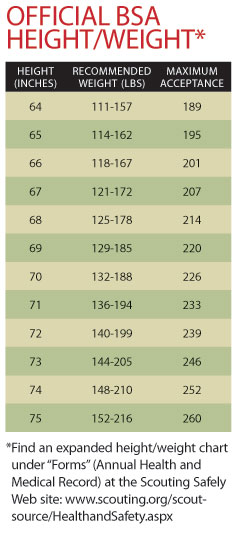
According to the published BSA High Adventure guidelines, my son weighed exactly the maximum allowed for his height.  If he had weighed even one pound more, he might not have been allowed to go. (*See update below)

I find these weight limits to be outrageous and egregiously unfair. I understand the impulse from which they come, but the way they are applied is short-sighted and wrong.

Boy Scout Weight Limits - Details

A couple of years ago, the Boy Scouts put into effect strict weight limits that prevent people who don't meet these limits from participating in High Adventure programs. This applies to both Scouts and their adult chaperones.

This doesn't mean that the Scouts are preventing fat kids and adults from participating in Boy Scouts. Not at all. Fat folks are still welcome to Scouts...but they can't participate in every activity or outing. And disturbingly, there is now an underlying message of judgment and condemnation around body size being pushed by Scout leadership.

The bottom line is that people of size can participate in most Scout activities and outings, but can't participate in High Adventure programs.

High Adventure programs are ones where participants are more than 30 minutes away from access to medical attention and where activities tend to be more strenuous, like long backpacking trips, whitewater rafting, rope courses, zip lines, mountain biking, rock climbing, etc. In other words, some of the most fun stuff Scouts can do.

Looking at the height/weight limit chart and calculating BMIs from the chart, the cutoffs fall pretty universally at a BMI between 32 and 33.

So they are letting those in the "overweight" (BMI 25-29) or just barely into the "obese" category (BMI 30-32) participate in High Adventure programs.  How very magnanimous of them.  But how did someone determine what level of "obesity" is too much for High Adventure program?  What research proves that a BMI of 33 is too heavy to safely participate?

According to the Scouting website:
The Annual Health and Medical Record is based on several evidence-based sources, including the revised Dietary Guideline for Americans from the U.S. Department of Agriculture and the Department of Health and Human Services, and has been successfully deployed by our high-adventure bases.
Well, frankly, that doesn't say much. Notice the Scouts don't cite specific evidence, just general "evidence-based sources." That's not enough. I'd like to see the evidence that these cut-offs for participation are justified. Likely all these sources say is that a person with an obese BMI is at greater risk for blood pressure and blood sugar etc. issues, not that they all automatically have these things or that there is a sudden spike of risk starting at a BMI of 33.

The guidelines do make room for an end-run around them if you can meet body-fat percentages instead.  In other words, if you are one of the many athletes that fall into the "obese" category based solely on BMI, then you can bypass the weight guidelines if your body fat falls below 15% for males, 20% for females.  But of course, to do that, you have to pay for an expensive specialized body fat test instead, which few people are going to do. Not to mention the fact that many fit folk and even some athletes don't meet those particular body-fat cutoffs, let alone most regular folk. The body-fat requirements would eliminate most people from participation, not just fat ones.

So basically, this escape clause around the weight limits is a dead end. They've created the appearance of flexibility while not being flexible at all.

Here's my gripe:

These weight/height guidelines are extremely arbitrary and they don't take actual fitness into account, just weight and body fat. 

What's really important here is the question of FITNESS. Is the individual in question fit enough to participate safely in these activities?

The problem here is that Scout officials are assuming that weight, BMI, and/or body fat percentages are an adequate surrogate for fitness, BUT THEY ARE NOT.

Plenty of kids with a BMI of 33 or more are quite fit, and plenty of kids with a BMI less than that are not fit. Allowing participation in High Adventure activities based only on BMI will arbitrarily restrict a lot of kids from participating in the very coolest Scout activities, even though many of them are perfectly fit enough to do these activities safely. And that's just wrong.

Jamboree vs. High Adventure Weight Cut-Offs
Update: It's important to note that I learned yesterday (after I had written this post) from recent stories that there are actually two different sets of cut-offs, one for High Adventure trips (no one with a BMI greater than 33), and a slightly more liberal one for Jamboree (no one with a BMI greater than 40). 
[They justified the "morbidly obese" cut-off at Jamboree because the brand-new Jamboree site in West Virginia is very hilly and there is a lot of walking involved.  As if kids with a BMI over 40 are not able to walk several miles a day or go up and down hills!]
Here's the crucial point: Scouts with BMIs between 32 and 40 were allowed to attend Jamboree if they provided additional information to Jamboree medical staff that proved they were healthy enough for the activities. That means my son would have been able to go to Jamboree after all, even if he'd weighed a bit more. 
However, that's news to our family. The official medical form we were given for Jamboree cited weight limits that aligned with the stricter High Adventure standards. And the wording on the Scouting "Medical Forms FAQ" lists the Summit Bechtel Reserve as one of the "High Adventure Bases." So we thought he had to meet the strict standards.
Somehow we got wrong information about this. The point is moot because my son made the cut on the lower High Adventure limits─barely─by being the exact weight specified on the medical form as the "maximum allowable weight."  But we sure sweated it. 
Whether or not the more liberal Jamboree cutoffs would have allowed my son to go, the bottom line is that there are still Scouting activities and camps he would not be allowed to attend if he were one pound heavier, which I find ridiculous because he is a very active and fit kid.  And that is why I'm going to go ahead and publish this post, despite yesterday's discovery of slightly more flexible Jamboree cut-offs.

I want my son to be able to do the High Adventure trips in the future, and as the High Adventure cut-offs stand, he may or may not be able to do them. That's the real point here.
More on the Weight Limits

Here's a little more background on the High Adventure weight limits and why they were put into effect. According to an article on the new restrictions from a Scouters magazine:
The Annual Health and Medical Record, which takes effect in January 2010, restricts participation in high-adventure activities based on standardized height/weight ratios. For wilderness outings where health care is 30 minutes or more away, Scouts deemed too overweight won’t be allowed to participate....
[Ruth T. Reynolds RN, BSN, and medical coordinator for the Boy Scouts of America] doesn't apologize for that. She says the BSA intends the new forms to be in line with the Scout Oath: “I will keep myself physically strong, mentally awake, and morally straight.” She argues that, “We as Scouters are not taking responsibility for who we are. The Scout Law says a Scout has 12 important characteristics, but it doesn't say a Scout is sedentary, fat, or unhealthy.”
Leaders say Scouting must confront the issue of obesity, the biggest health threat facing children today, as part of its commitment to child advocacy. 
“Our role is clear,” [Chief Scout Executive Robert J. Mazzuca] says, “We must continue to aggressively create and promote programs that help build healthier lifestyles for our Scouts. As leaders, we must do all we can to set the example for encouraging these healthy choices, not only for our Scouts, but for their parents and peers as well. Their future is Scouting’s future.”
I am so disappointed in these Scout leaders, perpetuating this kind of stereotyping and prejudice about fatness to our Scouts. What kind of example are they setting for our youth with this kind of bigoted talk?

Yes, the Scout Oath says they will keep themselves physically strong, but many fat kids are physically strong. (My "obese" son is physically much stronger than a number of his thinner troop-mates.) Many Scouts with a BMI over 32 can absolutely meet the rigorous physical standards needed for High Adventure activities.  I know my son can and does.

Furthermore, being fat doesn't always mean you are sedentary or unhealthy.  It really ticks me off to see a Scout leader in the national organization conflating these things. Sadly, these leaders have been brainwashed by the public health obesity campaigns that assume that fat people can't possibly be healthy, fit, strong, or active. The truth is that these things are separate issues, but they are not being treated as such.

I was also disappointed to see that some of the articles in Scouts publications recycle the old myth, "This generation will be the first not to outlive its parents" because of obesity.  Folks, there is absolutely no statistical evidence to back up that claim and its time people stopped making it, but it still gets passed around as if it's truth. To see it in a Scouting article is especially frustrating.

Many Scout leaders also decry too much time in front of screens (TV or computer) and the lack of exposure to the outdoors, what some people call "Nature Deficit Disorder." They link it to obesity. (As if a fat person only ever sits in front of the TV or computer and never gets outside, and as if no thin person ever spent much time in front of a screen.) They cite Scouting as the answer:
Jason Barlow, area commissioner for the Northeast Region, uses public service announcements aired on local radio stations as an answer to obesity: “Our kids are spending too much time indoors, online, and logged on to the computer. At Scout camp ‘logged on’ means putting more wood on the campfire and ‘online’ means catching a great trout for dinner. Scouting will get your son unplugged from screen time and plugged into the great outdoors, where he will develop character and leadership skills.”
While I completely agree that this generation spends too much time in front of screens, I reject the common assumption that this is the main factor that drives childhood obesity. It can be a factor for some, but just unplugging the screens won't make fat kids thin, and plenty of thin kids get far too much screen time without becoming obese.  Using BMI as a cutoff to make assumptions about who gets enough outdoor time and who gets too much screen time is wrong.

Weight Limits for Adult vs. Kids

In many articles, the media attention to this issue has focused on the limits this puts on adult volunteers who must chaperone Scout trips. But to me, the issue is much more about weight limits for kids.

To be fair to the BSA, there are some reasonable concerns driving these weight limits. High Adventure excursions go out into the wilderness and are far from medical help.  The BSA was presumably seeing out-of-shape adults going on these trips as chaperones and then encountering medical issues far in the wilderness, where it was a struggle to help them. They were concerned about liability of having middle-aged, Weekend Warrior parents who over-estimated their fitness having a heart attack in the middle of nowhere on a Scouting Trip.  As a Scouting FAQ notes:
Standards are put in place to protect the health and well-being of all participants. The participant that is not healthy enough to participate in a given activity puts himself/herself and others at risk. No one wants a Scout or Scouter to be placed in a situation that is risky or could lead to permanent disability or death.
So while I'm not a fan of the arbitrary nature of adult weight limits, I understand the impulse they come from.  Middle-aged adults are more at risk for heart attacks and other problems, and there are some who are probably not fit enough to safely participate in some of these activities.  What a terrible thing it would be for a boy to go with his dad on a wilderness backpacking trip, only to see him die of a heart attack on the trail because they couldn't get him to medical help in time.

So I get where the BSA is coming from on this concern.  They want to minimize the risk of something awful like this happening.

The problem I have with these weight limits, though, is that they judge a person's fitness solely by weight.  And that's just not a very accurate or reliable method of judging fitness.

The BSA simply doesn't buy into the possibility that a fat person can be fit enough to do these High Adventure activities.  They've totally bought into the myth that fat automatically equals unhealthy, unfit, and someone who never exercises. This ignores the fact that fat people can be fat and fit.

It also conveniently ignores the fact that many thinner people are very unfit and at strong risk for heart attacks too.  I can think of several men I've known over the years who would have met the BSA adult weight requirements to go on High Adventure outings, and yet who had heart attacks or strokes in their 30s or early 40s just doing normal activities. They weren't fat, but they weren't fit. They certainly were fortunate that their medical crises didn't take place in the woods─but under the Scout guidelines they would have been eligible to go.

Yes, I'm sure there are plenty of fat parents who aren't fit enough to go on some of these High Adventure treks. But I'm also sure that there are some fat parents who are (and who did it many times before this new guideline was put into place). And I'm also sure that there are plenty of adults with a "normal" BMI who really aren't fit enough to participate safely.

To me, it should be about proving fitness, not assuming fitness based only on arbitrary cut-offs.

And really, is a 16 year-old fat kid at the same risk for a heart attack as a middle-aged fat adult? Are teens really dropping like flies from heart attacks on wilderness treks?  I don't think so.  And to me this is why these arbitrary limits are even more ridiculous for kids.  Fat kids are not at the same kind of risk for the kind of disastrous scenarios they are most concerned about.

OK, fatness is a mild risk factor for lower-extremity injuries in kids. This may be because of an increased mass causing more force in a fall, but it may also be because supportive equipment is not designed for larger bodies or because coaches don't know how to help larger bodies safely. Still, the absolute risk is still quite low, and very few kids will experience such an injury, fat or not.  It's certainly not worth banning a kid from an activity across the board.

So while I understand the impulse behind weight limits, to me the reasoning is even more ridiculous for kids.  Again, you can't tell someone's fitness from their BMI.  As NAAFA's recent press release on the issue noted:
One mother reported to NAAFA in 2009 that her son was having issues attending Philmont High Adventure Boy Scout Camp in Cimmaron, NM. "Philmont has a weight standard and anyone over this standard is labeled unhealthy and cannot participate. I tried to explain to them that my son plays football, wrestles and runs relays, shot put, discus thrower, in track & field and [is] a weight lifter. During the summer he swims, weightlifts and conditions for football. He has been conditioning for Philmont by hiking for 2-3 hours with a 50 pound pack on his back for the last 2 months. He weighs 261 lbs. and has been eating a 1200 - 1400 calorie diet trying to lose weight. Unfortunately he only lost 3 pounds... According to Philmont medical staff if he doesn't weigh below 246, he will be sent home. It didn't matter to them if he is active, only his weight number. I have watched my son condition for football and he can run circles around other players that are what society deems healthy."
Frankly, neither kids nor adults should be banned from High Adventure activities based only on their BMI. Standards should be fitness-based instead.

My Own Kids

My son throwing discus at a Track and Field meet
Let me clarify my son's situation.  We're not talking about a kid here who has mobility or fitness concerns.  My son is an extremely healthy 16 year-old who is very active and in great shape.

Interestingly, he would never be identified as obese by most people.  He really doesn't look "fat." I have more familiarity with Body Mass Index guidelines than most, but even I was deeply surprised at his last check-up to find out that he is considered to have an "obese" BMI.

He is a very solidly-built kid, like his dad and paternal grandfather. Not "big-boned" in the way that people use to make excuses, but truly big-boned in that he has a very substantial frame and is built solidly and muscularly. He doesn't have six-pack abs, mind, but he's plenty fit.

In years past, he played soccer, swam on a swim team, skied, and did track and field. He regularly does long hikes with the Scouts, he got his Kayaking merit badge last year in Alaska, and he just earned the BSA Lifeguard Merit Badge, a demanding achievement that few Scouts attain.

This is not an out-of-shape kid. He truly is plenty fit enough to do demanding programs, and there are a lot of skinnier kids in his troop that are a lot less fit than he is. Yet he is the one who wouldn't get to attend a High Adventure trek if he weighed one more pound.

Given his build, he will probably always be close to the edge of the limits allowed for any High Adventure trips he might want to do in the future.  He's an ambitious and adventurous kid, and I want him to be able to have these adventures while he can.  But I worry that any little fluctuation will bar him from participating.

In addition, I worry about him trying to manipulate his weight to meet these stupid guidelines, like the Scout in the NAAFA press release.  Boys are less at-risk for eating disorders than girls, but they do still get them.  Wrestlers and jockeys are notorious for them because of the strict weight limits enforced by those sports.  I don't think my son will go down that path, but I do worry about it if the Scouts keep being so uptight about these cut-offs.

But I'm not just worried about my older son.

I'm even more worried and sad for my younger son (who is just hitting puberty) because he likely won't meet the height-weight guidelines unless his upcoming growth spurt changes something drastically. He was always an average-sized kid until shortly before puberty, when his weight suddenly increased drastically. You can see that he has very strong insulin resistance because he has acanthosis nigricans (darkened skin around his neck and armpits) and lots of skin tags. I think he has the male version of my PCOS. If he's like me, that means it will impact his weight and make it very difficult to lose to "normal" levels.

Once he hits his growth spurt, I'm sure he'll outgrow some of the weight (as many kids do), but I doubt if he'll ever lose enough to meet these Scout weight cutoffs. That means he likely won't be allowed to go on High Adventure activities. And I'm outraged at that on his behalf.

He is not quite as fit as his older brother, mind, but he's worked hard at improving his fitness, whatever his weight. He works out every morning on our treadmill, and he goes for hikes with the local Scouts (he's out on Wilderness Survival this week). He played soccer for many years, swam, skied, and also participated in Track and Field. But he's still heavier than his brother and definitely heavier than the High Adventure cut-offs.

I will continue to encourage him to work on his fitness, just for the sake of his insulin resistance and general health, but I doubt he'll ever be a "normal" size.  And I'm concerned he'll get discouraged and stop when he realizes he may never meet the weight cutoffs for High Adventure programs.

I want him to get the concept that exercise and fitness are not for the purpose of losing weight or meeting arbitrary weight standards, but rather for the purpose of health and feeling good in his body.  But these Scout guidelines make getting that across more difficult.

And that's another reason that I dislike these Scouting weight cut-offs so much.

Final thoughts

I'm not without sympathy for the BSA here. I don't envy the Scout leadership some of the tough risk-management decisions they have to make. I agree there is room for concern about out-of-shape folks taking part in activities that they aren't ready for. I don't think it's unreasonable for the Scouts to put some limits on participation in strenuous, back-country activities that take place far from medical help.

But these height-weight guidelines just seem too arbitrary. They don't take into account fitness, which is the real question here, but instead use BMI as a surrogate for fitness. That's wrong.

Too many BSA leaders have bought into the notion that weight = fitness level. This is the caustic result of public health campaigns about obesity, that leaders can't even consider the possibility that fatness and fitness are two different things.

But they are two different things.  Conflating them means that many people who could safely participate in High Adventure activities will automatically be denied access to them, while others who may not be fit enough get to take part in them, endangering themselves and the people around them.

To me, the rhetoric we've heard from Scout leaders on these guidelines represents holier-than-thou attitudes about obesity from naturally skinny leaders who don't have a clue about how someone could possible have a BMI greater than 30.  Their bodies don't work that way, so they assume everyone's bodies should work similarly. They believe that if we all just ate better, turned off the screens, and got outside, we'd all have a BMI of 22. But it just doesn't work that way for many of us.

My oldest son was lucky that he just managed to squeeeeak past the fascist weight cut-offs, but we were sweating it for a while, not knowing that there was a bit more flexibility for Jamboree. But the guidelines allow NO wiggle room whatsoever for the High Adventure activities. You either make the weight cutoff or you don't go, period.

What a loss that would be for him.....but even more, what a loss for the Scouts. They are all about training leaders for a new generation, and he is an outstanding leader, if I do say so myself (not that I'm biased!). Yes, he can continue as a leader in non-High Adventure outings, but that's not the same.

And even non-High Adventure outings are starting to lean towards weight restrictions.  As the Annual Health and Medical Record Form notes:
Enforcing the height/weight limit is strongly encouraged for all other events, but it is not mandatory.
This is apparently meant to encourage anyone exceeding the High Adventure standards to lose weight, but the way the statement is phrased fills me with dread. How long till these draconian limits are enforced in non-High Adventure activities?  How many local troops are going to start enforcing these limits for regular scout outings, not just High Adventure ones?

The Scouts just don't seem to see that they are shooting themselves in the foot here. They already have a problem with kids dropping out before they finish the program; if fat kids aren't allowed to do the most fun activities, that will only increase drop-outs from the program. In addition, these limits will lead to fewer adults being available to chaperone Scout outings. They have trouble already getting enough adult chaperones to meet requirements. This will only increase that problem.

Furthermore, the publicity surrounding these weight limits may backfire. Instead of helping Scouts lose weight, it may discourage many families with fat kids never to join Scouts in the first place. Why would they join something where they couldn't participate in everything, and where this kind of fat-phobic rhetoric gets modeled by leaders?  How can they trust that their child will be treated respectfully and not be subjected to yet more weight-loss pressure and fat-hate propaganda?

Scouts are against bullying, but the kind of fat-hate language and stereotyping being used by Scout leaders in some of the articles about the weight limits certainly has more than a whiff of weight bullying and prejudice in them. What a poor example they are setting for the kids. I can't emphasize how disappointed I am in the Scout leadership about that.

If we weren't already part of Scouts and my husband an Eagle Scout himself, frankly I'd be thinking twice about having them in Scouts at all. In fact, I almost decided not to publish this blog post because I'm concerned that just writing about this issue may discourage some of my fat readers to avoid Scouts completely. (Many want to now; see the comments in this blog post here.)

And that would be a tragedy, because whatever you think of some of their policies, Scouts is an excellent organization that offers OUTSTANDING programs. I can't say enough good things about that part of Scouts. No, I don't agree with all their policies, but we have chosen to give our sons the benefits of Scouts and work from the inside to change things about Scouts with which we don't agree. Scouting just has too many positive things about it to abandon.

Scouting helps children develop responsibility, self-reliance, first-aid skills, fitness, wilderness knowledge, community service, and other important life skills. Most importantly, it helps develop character and excellent leadership skills. It has been a TREMENDOUSLY positive influence on both of my sons, especially in their leadership abilities. I can't say enough about the benefits they have experienced.

I don't come from a Scouting family or a camping background; my boys are only in Scouts because my husband was a Scout and wanted to pass that on. Having seen what it's done for my sons, I'm a big believer in Scouts now, despite having disagreements with some Scout policies. But these weight limits are pushing me near the breaking point.

The Scout fitness-fascist leaders hope that these weight limits will motivate fat folks to get off their butts and lose weight, and that the end result will be a more fit society.  They think it will motivate fat people to lose weight if they are not allowed to participate in some activities.

I think they're wrong. I think fat kids in Scouts will only feel more isolated and stigmatized, opt out of the more challenging outings, drop out at earlier ages, or worse yet, won't join Scouts at all. And that will hardly promote Scouting's goal of improving society's fitness levels, getting more kids out into nature, and developing future leaders.

I don't think the answer is more restrictive weight limits, but rather more inclusiveness and emphasis on fitness as the goal, instead of on arbitrary weight limits.

The goal of increasing fitness in Scouts is a valid one.  But this is not the way to encourage it.

Thursday, June 27, 2013

I Hope You're Enjoying Life Because It Will Be Over Soon


Here's another example of the bias some fat women face when they try to see a doctor.  And care providers wonder why some fat people tend to avoid going to the doctor?  

From My OB Said What?!?:
“You’re hugely fat, I hope you’re enjoying life because it’ll be over soon.” – Family practice doctor to female patient
This was said to a woman who was at the family practice doctor because she had PCOS and was experiencing recurrent miscarriages. She recounts [my emphasis]:
I spent 10 minutes telling him of my history, at his request, at which he responded that PCOS is just a label, and my only problem was I was eating too much, I had no hormone problems at all – not that he’d done any tests, if he had he would've found the huge hormone problems. 
When I complained to the clinic, I was told by the Practice Manager that it would be ‘tantamount to child abuse to assist me in pregnancy when I clearly didn't look after myself’.
Here we are again, back to medical bullying.

This situation has a number of problems with it, starting with the perception by some in the medical world that PCOS isn't a real condition, that it's just fat people eating too much and wanting to blame something besides their own habits for their problems. As we have seen in our PCOS series, this isn't true. PCOS is a real condition, it's often genetically linked, and weight gain and difficulty losing weight is part of the condition for many women. But that's a different post.

Another problem is denying fat women access to fertility assistance simply because of their weight, a problem which is rampant in the medical world these days. Or the idea among some fertility docs that helping someone who is fat get pregnant is "tantamount to child abuse." That's a whole different rant.

No, today, let's look at the most obvious problem with this comment, which is pulling The Death Card on the fat person seeking health care, and then using that as a justification for denying them the right to be a parent.

The Death Card

"I hope you're enjoying life because it'll be over soon."

Really?!?! What makes a doctor think they should say something like this to a patient, ANY patient?

NO ONE KNOWS HOW LONG ANYONE HAS TO LIVE.

Even if the patient before you has terminal cancer, there is just no predicting with any accuracy how long that person has. And being fat is NOT terminal cancer.

At the extremes of obesity it's possible it may shorten life somewhat, but not every study agrees that obesity decreases lifespan. It may be that mortality effects are more related to underlying metabolic conditions than to obesity itself.

Furthermore, with some conditions, obesity is associated with increased mortality, while with others, it is associated with less mortality. And the risk of mortality may differ by ethnicity and socioeconomic status as well.

And it's so hard to tease out the effects of weight from the effects of other factors like weight cycling, physical activity and fitness, the stress of weight stigma and discriminatory practices, and co-morbid metabolic conditions that may be causing the obesity in the first place.

And what is the impact of under- or over-treatment of fat people by healthcare professionals on mortality rates? Research shows that obese people receive fewer cancer screenings, and are routinely underdosed with antibiotics, anti-coagulants, chemotherapy and other medicines. If fat people had optimal healthcare treatment that was appropriate for their size and unique needs, what impact might that have on outcomes?

Bottom line, it's hard to say for sure how weight affects life length exactly, and there is certainly NO way to predict how long any individual's life will be.  

Nor is it clear that weight loss always improves life expectancy. In some studies, it actually increases mortality rates instead. Moreover, it often leads to weight regain and weight cycling, which may be associated with greater mortality or increased cardiovascular risk than weight stability.

Implications

Sadly, the care provider in the quote above reflects the common belief of many medical folks that fat people are about to keel over and die at any moment, which is not true. Most fat people will live a reasonable lifespan.

Some evidence suggests that very high weights may impact lifespan ─ but only modestly. Care providers who say things like "You won't live till 40 if you don't lose weight" are full of baloney.

Furthermore, not all research supports an effect of obesity on lifespan, and it's difficult to untangle the influence of other common co-existing factors from the influence of obesity itself. Nor is it a slam-dunk that weight loss always improves outcome or lengthens life.

Bottom line, the topic of obesity and its effects on health is a complex one, and simplistic approaches just don't work well. Scare tactics and exaggerations are inappropriate and lead to abusive and discriminatory practices.

For example, the time bomb perception is what leads some government authorities in some areas to deny fat people the right to adopt children, because they are afraid the parents won't live long enough to raise the child to adulthood. This is nonsense. On average, fat people will live plenty long enough to raise children to adulthood.

Or it leads to doctors denying fertility treatment to fat women until they reach a certain BMI. Or it leads other care providers and people in the media to try and scare fat women out of pregnancy unless they lose a great deal of weight first, telling them that they won't survive pregnancy, or that they won't live to see their child grow up.

Trying to scare fat people (especially young women of childbearing age) into believing that they are about to keel over at any moment is straight-up medical bullying. And denying them the right to adopt or pulling The Death Card to scare them out of pregnancy on this basis is just plain wrong.

Untangling the complicated web of interaction between risk factors and weight status is difficult, and no care provider has any business making dire predictions for individuals.  

Monday, June 24, 2013

Google Reader Feed Changes

Here’s a message from the new administrator of Notes From The Fatosphere:
On 30th June, Google Reader will cease to exist. The Fatosphere feed has been moved to Feedly. Until the beginning of July, readers will be able to access NFTF via either Google Reader or Feedly, but from July 1st, you will need a Feedly account to continue to receive the feed.

All you need to do is go to Feedly.com, sign in with your google reader email and password, and follow the instructions to migrate your account from GR to Feedly.

If you don’t currently get the NFTF feed and want to do so, you can sign up at feedly.com for a new Feedly account. You will need either a gmail address, or a Google account for this. Then, once your account is set up, just type ‘notes from the fatosphere’ into the add content box and you’re done.

Tuesday, June 18, 2013

Cesarean Scar Pregnancy: Another Complication on the Rise from High Cesarean Rates

Cesarean Scar Pregnancy, Kung 2006

As a follow-up to Cesarean Awareness Month, we have been focusing on some of the rarer possible downstream complications of cesareans.  Today we discuss Cesarean Scar Pregnancies. Warning ─ this one's not for the faint of heart.

Again, I would reiterate that many cesareans are truly life-saving and necessary, and many others are probably prudent.  However, cesareans are not without risks and should not be done lightly. The extremely high cesarean rates in certain areas of this country and around the world has very distinct public health implications, both in the immediate period around the cesarean and for years afterwards. In particular, the long-term implications of cesareans are under-recognized.

We've already discussed abnormal placental implantation (placenta previa, placenta accreta, placenta increta, placenta percreta), which is one of the most significant risks to future pregnancies after cesarean section.  As a follow-up to this, we also discussed placenta previa in more detail. 

Another potential very serious complication of pregnancies after prior cesarean is an ectopic pregnancy in the cesarean scar itself.

Cesarean Scar Pregnancy

An "ectopic" pregnancy is one that implants outside of the uterus.  Most often, ectopic pregnancies are tubal (in the Fallopian tubes), but sometimes they occur outside of uterus in the abdomen, in the cervix, etc.

However, with the rise in cesarean rates, care providers are now seeing an increase in the previously extremely rare situation of an ectopic pregnancy implanting in the cesarean scar. 

This is called Cesarean Scar Pregnancy, or CSP.

The main symptom is usually vaginal bleeding during early pregnancy; sometimes this is painless and sometimes it is accompanied by significant abdominal pain.  Very high hCG levels are another symptom that raises the suspicion for CSP. However, some women with CSP have no obvious symptoms at first.

Since many pregnancies experience early spotting, most women don't take vaginal bleeding in the first trimester too seriously.  However, women with a prior cesarean and significant bleeding/abdominal pain may want to consider an early vaginal ultrasound, just in case, especially if it is accompanied by very high hCG levels.

A few care providers feel that every women with a prior cesarean should have an ultrasound in very early pregnancy to check for CSP, although this is by no means standard. The downside to this, of course, is that any prenatal testing carries with it potential for false positives and unnecessary worry.

If you do choose to have an ultrasound in early pregnancy after a prior cesarean, certain things should be checked for. According to a recent 2012 review, the following sonographic findings should raise the suspicion level for a Cesarean Scar Pregnancy:
  • No fetal parts in the uterine cavity or cervix
  • A thin myometrial layer between the bladder and gestational sac
  • A triangular-shaped gestational sac
  • A gestational sac that is close to the bladder and uterine wall
  • Presentation of arteriovenous malformation in the area
Because the non-sonographic symptoms are unclear and easy to ignore at first, many cases of CSP go undetected initially. Even when the patient presents with symptoms to a care provider, the diagnosis may be missed; the 2012 review found that about 13% of CSP are missed or misdiagnosed at first.

Thus, some CSP patients only get recognized once the uterus has ruptured and they are in hypovolemic shock.  Many of these patients have to undergo a hysterectomy to stop the bleeding.

Bottom line, the longer a Cesarean Scar Pregnancy continues, the worse the outcome in most cases. Therefore, most resources agree that it's important to recognize and deal with a CSP as early as possible. If the CSP is caught early, outcomes improve and fertility can often be preserved.

Transvaginal ultrasound is usually reasonably accurate for diagnosing CSP, although the diagnosis can still be missed even with ultrasound. Often color flow Doppler imaging is helpful.  Occasionally an MRI may be used if other results are ambiguous.

Prior cesarean is not the only risk factor for Cesarean Scar Pregnancy.  A history of uterine infections and prior D&C procedures are also risk factors, as is a short inter-pregnancy interval after a cesarean.  Treatment with In Vitro Fertilization may also be associated with CSP, although this is not clear. Some authors have speculated that recent uterine suturing technique changes (single-layer, various suture materials) may also have an effect, though there is little data to support or refute this.

Obviously having a prior cesarean scar is the most important risk factor for CSP.

Ethical Dilemmas

When CSP occurs, nearly all clinicians believe that there is little choice but to end the pregnancy because the growing pregnancy will quickly become life-threatening to the mother, and the fetus is extremely unlikely to survive anyhow. This places parents in the very difficult position of having to make a choice to end a pregnancy in order to save the life of the mother.

A few providers have managed a Cesarean Scar Pregnancy expectantly. This has been done for those who object to termination under any circumstances, in parents who hope to avoid the difficult choice to end a pregnancy, or in hopes that the pregnancy will move into the uterus with time and become viable.

Since a Cesarean Scar Pregnancy is rarely sustainable and will often miscarry on its own with time; some parents hope that taking a wait-and-see approach can relieve them of the difficult choice to end a pregnancy. However, this approach does present significant risk to the mother.

There have been a few extremely rare instances of Cesarean Scar Pregnancies that resulted in viable infants. Usually these are pregnancies where the gestational sac grows towards the uterus, eventually becoming mostly intrauterine pregnancies. Even then, most doctors recommend a planned cesarean at 28-30 weeks as a precaution against later uterine rupture, and usually assume that placenta accreta accompanies the CSP (making hysterectomy a distinct possibility).

Continuing the pregnancy in hopes of being the rare exception that results in a live baby is understandable but risks life-threatening complications because uterine rupture is very common as a CSP progresses. The 2012 review notes that patients advised to take a "wait and see" approach often ended up with an emergency hysterectomy and infant death anyhow.

There are no easy choices here. Women need to know that the further a Cesarean Scar Pregnancy progresses, the riskier the outcome. As one study points out:
It is likely that if a developing pregnancy in a caesarean section scar were to continue to the second or third trimesters, there would be a substantial risk of uterine rupture with catastrophic haemorrhage, with a high risk of hysterectomy causing serious maternal morbidity and loss of future fertility. There is also a danger of invasion of the bladder by the growing placenta. A pregnancy that protrudes through the scar, if viable, can implant on other abdominal organs and continue to grow as a secondary abdominal pregnancy.
As a result, women may experience uterine rupture, major hemorrhages, and internal damage to nearby organs. Many lose their fertility permanently via hysterectomy.  Occasionally, women have lost their lives with a Cesarean Scar Pregnancy, although this is very unusual in developed countries now because of the use of ultrasound for early detection.

Clearly, this is a dilemma with far-reaching consequences and there are no easy answers.

Treatment

Cesarean Scar Pregnancy Diagram, Zhang 2012

Most clinicians believe that the only reasonable treatment for a Cesarean Scar Pregnancy is to end the pregnancy, but the best method for that is still being debated.

There are a wide variety of treatments used for CSP, including D&C, systemic methotrexate, local injection of methotrexate, Uterine Artery Embolization, laparoscopic or hysteroscopic surgical treatments, and others. The relative rarity of CSP makes it hard to know which approach is best and therefore the standard of care on this is still evolving.

A 2012 survey of case reports in the medical literature found that there has been a huge variety of treatments for Cesarean Scar Pregnancies, but that many resulted in significant morbidity (44%).  They reviewed the various treatments used and analyzed the results.

According to the 2012 survey, D&C (Dilation and Curettage) was the most common treatment used for CSP, but it was associated with high rate complications (nearly 62%), and often resulted in hemorrhage. The authors concluded that this was not a good choice for treatment of a CSP.

The authors also found that giving methotrexate systemically to the mother was associated with a 62% morbidity rate.  This was because secondary treatments were often needed and these had a high complication rate. The authors recommended against this treatment too.

In Uterine Artery Embolization (UAE), an interventional radiologist inserts a small catheter into an artery in the leg, runs it up to the arteries that feed the uterus, and injects small particles to reduce blood flow to the uterus. UAE had a complication rate of 46%, so the authors recommended against UAE as a single treatment for CSP. However, UAE is often used in conjunction with or after other therapies to help reduce severe bleeding.

Operative hysteroscopy (examination of the inside of the uterus with a fiber-optic tube inserted via the cervix, then surgical intervention as needed) had a much better complication rate of 18%.

Injecting methotrexate directly into the gestational sac was the treatment associated with the least maternal morbidity in the review. When combined with an intramuscular injection of methotrexate, the complication rate was slightly less than 10%. After this injection, the body slowly breaks down the leftover tissues, so treatment must be followed long-term to be sure everything is resolving fully, but there is less need for surgical intervention and all its risks.

One problem was that many care providers did not realize that methotrexate treatment results in a temporary increase in hCG levels, leading them to use secondary interventions that led to complications:
Many of the complications reported in the literature review resulted because clinicians were not aware that increases in hCG concentrations could be expected with the treatment, Dr. Timor-Tritsch noted. 
"Many secondary treatments were triggered not by bleeding, but by the observation of a post-treatment increase the hCG cycle and vascularity," he said. "The treatments often resulted in escalation of the critical situation and often hysterectomy." 
"Knowledge of the naturally occurring increase of the hCG volume in blood vessels with a slow resolution could have avoided a secondary resolution," Dr. Timor-Tritsch said.
Other treatment options include laparotomy or laparoscopy. This is a surgical excision of the gestational sac and repair of the uterus via opening the abdomen up (laparotomy) or doing the surgery through a small hole in the abdomen (laparoscopy).

After a cesarean scar pregnancy, it may take a while for the mother to recover.  Bleeding may continue off and on for quite a while.  Treatment with methotrexate often takes several months to resolve the situation ─ in some reports, it took up to a year. Often follow-up testing is needed.  And of course, emotional support is needed, since the parents have just been through a very difficult ordeal.

Although most women with a CSP do not choose to have another pregnancy, some do. If the CSP was caught early enough and their uterus was able to be preserved, subsequent pregnancy is certainly possible. Researchers generally suggest that the mother wait a good while before trying to conceive again, since closely-spaced pregnancies may be a risk factor for CSP. Furthermore, if methotrexate or other drugs were part of the treatment, it may take a while for all traces of these drugs to be out of the mother's body. So waiting a while before attempting to conceive again may be a good idea.

Although there are risks, outcomes are reasonably good in pregnancies after CSP. Most authors recommend careful early surveillance of a post-CSP pregnancy in case of repeat Cesarean Scar Pregnancy or abnormal placentation. There is a somewhat higher rate of miscarriage and repeat CSP, and the risk for uterine rupture and placenta accreta is also higher. Case reports have occasionally recorded deaths in mother and/or baby due to uterine rupture in a pregnancy after CSP, so careful monitoring of the pregnancy may be appropriate.

Many post-CSP pregnancies are delivered by planned repeat cesarean section because of the perceived potential for uterine rupture, although it is difficult to estimate the actual risk for uterine rupture under these circumstances.  On the other hand, some authors advocate for vaginal birth in order to avoid further scarring of the uterus. The number of pregnancies after prior CSP is so small that it's difficult to draw any conclusions about the best course of action.

Incidence of Cesarean Scar Pregnancy

Although Cesarean Scar Pregnancy is thankfully still rare, it is on the rise, and likely will continue to rise in parallel with cesarean rates.  

Of course, it's important to note that absolute numerical risk of this complication is low. Very few women with prior cesareans experience this complication. Therefore, as an individual mother, it's unlikely that you would experience a cesarean scar pregnancy.

However, from a public health point of view, it's also important to note that the more cesareans that are done world-wide, the more women are susceptible to this problem and the more cesarean scar pregnancies we will see, even while they remain a rare risk for any one individual.  

The incidence of Cesarean Scar Pregnancy (CSP) is difficult to pinpoint because of its relative rarity and the diversity of baseline cesarean rates in various areas.  This is also a fairly new area of research, with mostly case reports rather than population-wide studies.

But its increase can be noted if you look closely at the research.  One 2002 study notes, "Only 19 cases have been reported in the English medical literature since 1966."

However, a 2004 study, only two years later, looked for case reports that were made after 2002, and found 66 new case reports in only two years. A recent 2012 survey of the literature found 751 case reports. Obviously, the incidence appears to be on the rise.

The increase in case reports may be partly due to higher cesarean rates, but also is probably due to increased awareness of CSP and a willingness to document them as a complication of prior cesareans.  But there's little doubt doctors are seeing them in greater numbers than in the past.

Exact numbers will depend on the study and the underlying risk factors of the population, such as how high its cesarean rate is, how many women have been exposed to D&C (another risk factor for CSP), the usual parity of the population etc. Even so, some general numbers can be found.

One review found a rate of 1 cesarean scar pregnancy per 1800 - 2200 normal pregnancies (all pregnancies, prior cesarean or not).  Another study found a similar rate of 1 CSP per 1800 normal pregnancies.

However, that doesn't tell you what your risk for CSP is if you've had a prior cesarean.

An Israeli study found the CSP rate more along the lines of 1 CSP per 3000 normal pregnancies, but this dropped to a rate of 1 CSP per 531 pregnancies in women who had had cesareans in the past.

Rounded up slightly, about 0.2% of women who had cesareans experienced a Cesarean Scar Pregnancy in a later pregnancy.

Interestingly, this is beginning to approach the incidence of uterine rupture in spontaneous labor among women with a prior cesarean (which is generally around 0.4 - 0.5%).

Interestingly, about half the time Cesarean Scar Pregnancy occurred in a woman with only one prior cesarean.  It is not clear from research whether multiple prior cesareans increases the risk for CSP, but it is clear that when CSP does occur, it can happen in women with only one prior cesarean.

That's why preventing every unnecessary cesarean matters.

Conclusion

Cesarean Scar Pregnancy is an extremely serious problem. Although rare, its incidence is on the rise in parallel with the high rate of cesareans being done these days.

Because it is rare, this is not a complication that individual mothers with a history of prior cesarean should lose much sleep over.  However, from a public health point of view, it is a concern.

Because many cesareans are done because of VBAC bans, out of fear of liability, for convenience, as a routine repeat cesarean, or for other questionable indications, the increasing rate of Cesarean Scar Pregnancy is a sadly avoidable nightmare in many cases. 

This is yet another reason why it's so important to care providers to make sure that Vaginal Birth After Cesarean remains accessible, and why they need to prevent as many unnecessary first cesareans as possible.


References


Obstet Gynecol Surv. 2002 Aug;57(8):537-43. Ectopic pregnancy within a cesarean scar: a review. Fylstra DL. PMID: 12187153
Implantation of a pregnancy within the scar of a previous cesarean delivery is the rarest of ectopic pregnancy locations. Only 19 cases have been reported in the English medical literature since 1966. If diagnosed early, treatment options are capable of preserving the uterus and subsequent fertility. However, a delay in either diagnosis or treatment can lead to uterine rupture, hysterectomy, and significant maternal morbidity. Although expectant and medical managements have been reported, termination of a cesarean scar pregnancy by laparotomy and hysterotomy, with repair of the accompanying uterine scar dehiscence, may be the best treatment option.
Hum Reprod Update. 2004 Nov-Dec;10(6):515-23. Epub 2004 Sep 16. Ectopic pregnancies in a Caesarean scar: review of the medical approach to an iatrogenic complication. Maymon R, Halperin R, Mendlovic S, Schneider D, Herman A. PMID: 15375087
...Sixty-six new cases were reported since 2002, possibly reflecting the increasing number of Caesareans currently being performed as well as the more widespread use of the transvaginal scan allowing their earlier detection. Analysis of these women's obstetric history revealed that those at risk for pregnancy in a Caesarean scar appear to have a history of dilatation and curettage, placental pathology, ectopic pregnancy, and IVF. Twenty-one out of 39 for which this information was available (54%) had undergone multiple (> or =2) Caesareans and 13 had previous dilatation and curettage, which might also be an associated factor....
J Ultrasound Med. 2012 Sep;31(9):1449-56. Cesarean scar pregnancy: sonographic and magnetic resonance imaging findings, complications, and treatment. Osborn DA, Williams TR, Craig BM. PMID: 22922626
A cesarean scar (ectopic) pregnancy occurs when a pregnancy implants on a cesarean scar. This condition is an uncommon but potentially devastating occurrence. The incidence is increasing as cesarean deliveries become more common. Early recognition of the salient sonographic findings is critical because a delay can lead to increased maternal morbidity and mortality. Magnetic resonance imaging is a valuable troubleshooting tool when sonography is equivocal or inconclusive before therapy or intervention. Early diagnosis by sonography directs therapy and improves outcomes by allowing preservation of the uterus and future fertility. We review the imaging features, differential diagnosis, complications, and treatment of cesarean scar pregnancies in the first trimester.
J Clin Ultrasound. 2007 May;35(4):212-5. Sonographic diagnosis of cesarean scar pregnancy at 16 weeks. Smith A, Ash A, Maxwell D. PMID: 17366559
Cesarean scar pregnancy is rare. However, there has been a rapid increase in the reporting of such cases in recent years. Most of the cases reported in the literature were diagnosed early in the first trimester. Possible management options proposed are pertinent to an early diagnosis. We present a case of a cesarean scar pregnancy diagnosed at 16 weeks that posed a dilemma with regard to management. The patient subsequently suffered a ruptured uterus, which was preserved at surgery.
J Clin Ultrasound. 2008 Oct;36(8):504-11. doi: 10.1002/jcu.20471. First-trimester diagnosis of cesarean scar ectopic pregnancy. Moschos E, Sreenarasimhaiah S, Twickler DM.  PMID: 18393379
Once considered extremely rare, implantation of a pregnancy within the scar of a previous cesarean section is becoming more common. In fact, its incidence is now higher than that of cervical ectopic pregnancies. We identified 5 cases of ectopic pregnancy implanted in a prior cesarean section scar at our institution since 2004. We outline the criteria for the first-trimester sonographic diagnosis of cesarean scar ectopic pregnancy, including a new sign of lower uterine segment ballooning, which has previously not been reported. Clinicians must have a heightened awareness of this serious and potentially fatal pregnancy complication.
J Ultrasound Med. 2011 Sep;30(9):1179-84. Fertility performance and obstetric outcomes among women with previous cesarean scar pregnancy. Maymon R, Svirsky R, Smorgick N, Mendlovic S, Halperin R, Gilad K, Tovbin J. PMID: 21876087
...METHODS: We conducted a retrospective study in a large tertiary hospital in Israel. The study included 18 women with a diagnosis of cesarean scar pregnancy between 2000 and 2009. RESULTS: The incidence of cesarean scar pregnancy among our parturient patients was 1 per 3000 for the general obstetric population and 1 per 531 among those with at least 1 cesarean delivery. Sixteen were treated primarily with methotrexate. Two were treated primarily by surgery, and 2 more were treated by surgery after failed methotrexate treatment. After cesarean scar pregnancy treatment, 7 women conceived spontaneously, and 1 conceived by in vitro fertilization-intracytoplasmic sperm injection. The remaining 10 (55%) did not wish to conceive again. Two of the women who became pregnant (25%) had recurrent cesarean scar pregnancy. CONCLUSIONS: This study shows encouraging results for fertility performance and obstetric outcomes after treatment of cesarean scar pregnancy. Nevertheless, the risk of recurrent cesarean scar pregnancy is not negligible.
Obstet Gynecol. 2006 Jun;107(6):1373-81. Cesarean scar ectopic pregnancies: etiology, diagnosis, and management. Rotas MA, Haberman S, Levgur M. PMID: 16738166
...Fifty-nine articles that met the inclusion criteria provided data on the clinical presentation, diagnosis, and treatment modalities of 112 cases of cesarean delivery scar pregnancies. TABULATION, INTEGRATION, AND RESULTS: Review of the 112 cases revealed a considerable increase in the incidence of this condition over the last decade, with a current range of 1:1,800 to 1:2,216 normal pregnancies. More than half (52%) of the reported cases had only one prior cesarean delivery. The mean gestational age was 7.5 +/- 2.5 weeks, and the most frequent symptom was painless vaginal bleeding...Expectant management of 6 patients resulted in uterine rupture that required hysterectomy in 3 patients. Dilation and curettage was associated with severe maternal morbidity. Wedge resection and repair of the implantation site via laparotomy or laparoscopy were successful in 11 of 12 patients. Simultaneous administration of systemic and intragestational methotrexate to 5 women, all with beta-hCG exceeding 10,000 milli-International Units/mL required no further treatment. CONCLUSION: Surgical treatment or combined systemic and intragestational methotrexate were both successful in the management of cesarean delivery scar pregnancy. Because subsequent pregnancies may be complicated by uterine rupture, the uterine scar should be evaluated before, as well as during, these pregnancies.
Management of Cesarean Scar Pregnancy

Ultrasound Obstet Gynecol. 2003 Mar;21(3):220-7. First-trimester diagnosis and management of pregnancies implanted into the lower uterine segment Cesarean section scar. Jurkovic D, Hillaby K, Woelfer B, Lawrence A, Salim R, Elson CJ. PMID: 12666214
...The management of Cesarean section scar pregnancies included transvaginal surgical evacuation, medical treatment with local injection of 25 mg methotrexate into the exocelomic cavity and expectant management. RESULTS: Eighteen Cesarean section scar pregnancies were diagnosed in a 4-year period. The prevalence in the local population was 1 : 1800 pregnancies. Surgical treatment was used in eight women and it was successful in all cases. The respective success rates of medical treatment and expectant management were 5/7 (71%) and 1/3 (33%). Five women (28%) required blood transfusion and one woman (6%) had a hysterectomy. CONCLUSIONS: Cesarean section scar pregnancies are more common than previously thought. When the diagnosis is made in the first trimester the prognosis is good and the risk of hysterectomy is relatively low.
Curr Opin Obstet Gynecol. 2011 Dec;23(6):415-21. doi: 10.1097/GCO.0b013e32834cef0c. Caesarean scar pregnancy: a review of management options. Litwicka K, Greco E. PMID: 22011956
...CSP is a type of ectopic gestation associated with a high risk of serious complications. The cause of this condition and the best management are still unclear. However, some medical and surgical treatment modalities have been suggested. The main objectives in the clinical management of CSP should be the prevention of massive blood loss and the conservation of the uterus to maintain further fertility, women's health and quality of life. Current data suggest that expectant management should not be recommended, whereas there are accumulating data suggesting that early diagnosis offers single or combined medical and surgical treatment options avoiding uterine rupture and haemorrhage, thus preserving the uterus and fertility. SUMMARY: No universal treatment guidelines for the management of CSP have been published up to now. The lack of data on the best evidence should encourage any individual case report and further multicentre studies for recommendations establishment.
Clin Perinatol. 2008 Sep;35(3):519-29, x. doi: 10.1016/j.clp.2008.07.003. Placenta accreta and cesarean scar pregnancy: overlooked costs of the rising cesarean section rate. Rosen T.  PMID: 18952019
An unintended consequence of the rising cesarean section rate is abnormal placentation in subsequent pregnancies, leading to the clinical complications of placenta accreta and cesarean scar pregnancies. Both of these clinical entities are associated with high rates of maternal morbidity and mortality. This article reviews the potential mechanisms by which uterine scarring may lead to abnormal trophoblast invasion, the association of cesarean section with placenta accreta and scar pregnancies, current management, and suggestions for future research to reduce the incidence of these potentially devastating complications of pregnancy.
Am J Perinatol. 2010 Feb;27(2):111-20. doi: 10.1055/s-0029-1224874. Epub 2009 Jun 5. Cesarean scar ectopic pregnancy: case series and review of the literature. Sadeghi H, Rutherford T, Rackow BW, Campbell KH, Duzyj CM, Guess MK, Kodaman PH, Norwitz ER. PMID: 19504427
...We present four cases of cesarean scar ectopic pregnancy diagnosed within a 6-month period between 2007 and 2008. Their initial presentations and management are discussed, followed by a review of the published literature summarizing both diagnostic and management recommendations.
BJOG. 2007 Mar;114(3):253-63. Caesarean scar pregnancy. Ash A, Smith A, Maxwell D. PMID: 17313383
...Transvaginal ultrasound and colour flow Doppler provides a high diagnostic accuracy with very few false positives. A delay in diagnosis and/or treatment can lead to uterine rupture, major haemorrhage, hysterectomy and serious maternal morbidity. Early diagnosis can offer treatment options of avoiding uterine rupture and haemorrhage, thus preserving the uterus and future fertility. Management plan should be individually tailored. Available data suggest that termination of pregnancy is the treatment of choice in the first trimester soon after the diagnosis. Expectant treatment has a poor prognosis because of risk of rupture. There are no reliable scientific data on the risk of recurrence of the condition in future pregnancy, role of the interval between the previous caesarean delivery and occurrence of caesarean scar pregnancy, and effect of caesarean wound closure technique on caesarean scar pregnancy. In this article, we aim to find the demography, pathophysiology, clinical presentation, most appropriate methods of diagnosis and management, with their implications in clinical practice for this condition.
J Reprod Med. 2011 Jul-Aug;56(7-8):356-8. Cesarean scar ectopic pregnancy: a case report of failed combination local and systemic methotrexate management requiring surgical intervention. Stevens EE, Ogburn P. PMID: 21838169
BACKGROUND: Cesarean scar ectopic pregnancies have been diagnosed with increasing frequency in the last decade. There is no consensus of management for these pregnancies; however, prior reports have suggested best results using either combination methotrexate therapy or surgical excision. CASE: We present a case of failed systemic and local methotrexate therapy requiring operative management. CONCLUSION: Cesarean scar ectopic pregnancies can have disastrous outcomes, including uterine rupture, massive hemorrhage and maternal death. Although this is the first case to report a failure of the combination therapy, major morbidities did not occur. We believe this is due to our choice of expedient surgical management.
J Obstet Gynaecol. 2012 Oct;32(7):621-3. doi: 10.3109/01443615.2012.698665. Caesarean scar pregnancy: a precursor of placenta percreta/accreta. Sinha P, Mishra M. PMID: 22943704
In the last decade, diagnosis of caesarean scar (CS) pregnancy and abnormal placental invasion has gone up significantly. It appears that the history of previous caesarean section is the predisposing factor common to both conditions. Until now, these are treated as a separate entity and therefore managed differently. Recent available evidence suggests that these are not a separate entity but rather a continuum of the same condition. If the caesarean scar pregnancy is managed expectantly in the 1st trimester, most likely it evolves into placenta accreta. This leads invariably to peripartum hysterectomy for postpartum haemorrhage (PPH) and severe maternal morbidity. Early diagnosis and intervention may give a favourable outcome.
Ultrasound Obstet Gynecol. 2004 Mar;23(3):247-53. Cesarean scar pregnancy: issues in management. Seow KM, Huang LW, Lin YH, Lin MY, Tsai YL, Hwang JL. PMID: 15027012
...METHODS: During a 6-year period, 12 cases of Cesarean scar pregnancy were diagnosed using transvaginal color Doppler sonography and treated conservatively to preserve fertility...RESULTS: The incidence of Cesarean scar pregnancy was 1:2216 and its rate was 6.1% in women with an ectopic pregnancy and at least one previous Cesarean section...Patients were treated as follows: transvaginal ultrasound-guided injection of methotrexate into the embryo or gestational sac (n = 3), transabdominal ultrasound-guided injection of methotrexate (n = 2), transabdominal ultrasound-guided injection of methotrexate followed by systemic methotrexate administration (n = 2), systemic methotrexate administration alone (n = 2), dilatation and curettage (n = 2), or local resection of the gestation mass (n = 1). Eleven of the 12 patients preserved their reproductive capacity; the remaining patient, treated by dilatation and curettage, underwent a hysterectomy because of profuse vaginal bleeding. The Cesarean scar mass regressed from 2 months to as long as 1 year after treatment. Uterine rupture occurred in one patient during the following pregnancy at 38 + 3 weeks' gestational age. CONCLUSION: Ultrasound-guided methotrexate injection emerges as the treatment of choice to terminate Cesarean scar pregnancy. Surgical or invasive techniques, including dilatation and curettage are not recommended for Cesarean scar pregnancy due to high morbidity and poor prognosis.
BJOG. 2011 Aug;118(9):1136-9. doi: 10.1111/j.1471-0528.2011.02891.x. Epub 2011 Apr 12. Transvaginal removal of ectopic pregnancy tissue and repair of uterine defect for caesarean scar pregnancy. He M, Chen MH, Xie HZ, Yao SZ, Zhu B, Feng LP, Wu YP. PMID: 21481146
From December 2009 to April 2010, six patients with caesarean scar pregnancies (CSPs) underwent the transvaginal removal of ectopic pregnancy tissue and repair of a uterine defect. Transvaginal surgery was performed uneventfully in all cases. The operating time ranged from 45 to 80 minutes. Blood loss ranged from 50 to 150 ml. Serum ÎČ-hCG (ÎČ-subunit of human chorionic gonadotrophin) levels declined to normal levels within a month for all patients, and all patients recovered without complications. Our results show that the transvaginal removal of ectopic pregnancy tissue and repair of the uterine defect is effective, safe, and minimally invasive for patients with CSP.
J Obstet Gynaecol Res. 2007 Dec;33(6):873-7. Three-dimensional ultrasonographic diagnosis and hysteroscopic management of a viable cesarean scar ectopic pregnancy. Ozkan S, Calißkan E, Ozeren S, Corakçi A, Cakiroğlu Y, Coßkun E. PMID: 18001457
...No therapeutic modality is suggested to be entirely efficacious and safe for preserving uterine integrity. We present here a 29-year-old woman with vaginal bleeding and a gestational sac with a viable embryo of 6 weeks of age that was implanted in a cesarean section scar. Serum beta-hCG levels were 16 792 mIU/mL. Following an unsuccessful treatment course of systemic methotrexate, the patient underwent operative hysteroscopy. Minimally invasive hysteroscopic resection of the ectopic gestational mass without major complication appears to be an alternative therapeutic approach with minimal morbidity and preservation of future fertility.
Am J Obstet Gynecol. 2012 Nov;207(5):386.e1-6. doi: 10.1016/j.ajog.2012.09.012. Epub 2012 Sep 17. Bilateral uterine artery chemoembolization with methotrexate for cesarean scar pregnancy. Shen L, Tan A, Zhu H, Guo C, Liu D, Huang W. PMID: 23107082
OBJECTIVE: The objective of the study was to assess the efficacy of uterine arteries embolization (UAE) for the treatment of cesarean scar pregnancies (CSP). STUDY DESIGN: Forty-six women with CSP were identified between March 2008 and March 2010. All of the patients underwent UAE combined with local methotrexate. RESULTS: Forty-five patients were successfully treated. One patient had an emergency hysterectomy after 20 days because of massive vaginal hemorrhage. The mean time until normalization of serum ÎČ-human chorionic gonadotrophin was 37.7 days, and the mean time until CSP mass disappearance was 33.3 days. The mean hospitalization time was 10.5 days. The complications were mainly fever and pain, which were alleviated with symptomatic treatment. All 45 patients had recovered their normal menstruation at follow-up. CONCLUSION: Bilateral uterine artery chemoembolization with methotrexate appears to be a safe and effective treatment for CSP and causes less morbidity than current approaches.
Am J Obstet Gynecol. 2012 Jul;207(1):14-29. doi: 10.1016/j.ajog.2012.03.007. Epub 2012 Mar 10. Unforeseen consequences of the increasing rate of cesarean deliveries: early placenta accreta and cesarean scar pregnancy. A review. Timor-Tritsch IE, Monteagudo A. PMID: 22516620
...We reviewed the literature concerning the occurrence of early placenta accreta and cesarean section scar pregnancy. The review resulted in several conclusions: (1) the diagnosis of placenta accreta and cesarean scar pregnancy is difficult; (2) transvaginal ultrasound seems to be the best diagnostic tool to establish the diagnosis; (3) an early and correct diagnosis may prevent some of their complications; (4) curettage and systemic methotrexate therapy and embolization as single treatments should be avoided if possible; and (5) in the case of cesarean scar pregnancy, local methotrexate- and hysteroscopic-directed procedures had the lowest complication rates.
J Reprod Med. 2012 Jan-Feb;57(1-2):61-4. Late-first-trimester cesarean section scar ectopic pregnancy with placenta increta: a case report. Overcash RT, Khackician ZH. PMID: 22324271
...CASE: A 21-year-old, gravida 3 para 2 woman was diagnosed at 13.5 weeks' gestation by pelvic ultrasound and magnetic resonance imaging with a cesarean scar ectopic pregnancy and placenta increta. Surgical removal of the pregnancy via exploratory laparatomy with intraoperative use of vasopressin minimized initial blood loss. However, extraction of the placenta increta resulted in uncontrolled bleeding, requiring a supracervical hysterectomy. CONCLUSION: This is the first case report, to our knowledge, of a late-first-trimester cesarean section scar ectopic pregnancy with placenta increta. Early identification of the ectopic pregnancy may allow for more conservative, nonsurgical management. However, with a more advanced gestational age and placenta increta, surgical management is most appropriate to minimize associated maternal risks. A transverse wedge resection of the implantation site, uterine artery embolization, uterine artery ligation, endovascular balloon catheters, or uterine artery tourniquet may help decrease bleeding during surgical extraction of the pregnancy and placenta increta, and also may prevent a hysterectomy.
Reproductive Outcomes After Cesarean Scar Pregnancy

Hum Reprod. 2007 Jul;22(7):2012-5. Epub 2007 Apr 20. Reproductive outcomes of women with a previous history of Caesarean scar ectopic pregnancies. Ben Nagi J, Helmy S, Ofili-Yebovi D, Yazbek J, Sawyer E, Jurkovic D. PMID: 17449510
...METHODS: The study included those women who received treatment for their Caesarean scar pregnancies between April 1999 and October 2005. Their ability to conceive, the time it took to become pregnant and outcomes of subsequent pregnancies were all recorded. RESULTS: 40 women with Caesarean scar pregnancies were managed in our unit. The uterus was conserved in 38/40 cases. Follow-up data were available in 29/38 (76%) of women. Twenty-four out of 29 (83%) attempted to become pregnant. Twenty-one out of 24 [88%, 95% confidence interval (CI): 75-100] women conceived spontaneously. Twenty out of 21 (95%, 95% CI: 86-100) pregnancies were intrauterine and one woman (5%, 95% CI: 0-14) had a recurrent scar ectopic. Thirteen out of 20 (65%, 95% CI: 44-86) intrauterine pregnancies appeared normal. Nine out of 13 (69%) were delivered by Caesarean section. Seven out of 20 (35%, 95% CI: 14-56) intrauterine pregnancies ended in spontaneous abortions. CONCLUSIONS: Our study shows that reproductive outcomes following treatment of caesarean scar ectopic pregnancies are favourable. The risk of complications including recurrent scar implantation appears to be low.
Obstet Gynecol. 2008 Feb;111(2 Pt 2):541-5. doi:10.1097/01.AOG.0000287295.39149.bd. Recurrent ectopic pregnancy in a cesarean scar. Holland MG, Bienstock JL. PMID: 18239016
BACKGROUND: Ectopic pregnancy in a cesarean scar is a rare but well-recognized potential complication of cesarean delivery. Multiple risk factors exist, including prior uterine surgery, a history of uterine infections such as endomyometritis, and a brief interval between uterine surgery and subsequent conception...CASE: This patient presented for a dating ultrasound examination at 4 6/7 weeks of gestation. Her history was significant for an ectopic pregnancy in her cesarean scar 3 years prior that was managed by surgical resection. The initial ultrasound examination was suspicious for a recurrent ectopic pregnancy in her cesarean scar. The diagnosis was confirmed on repeat ultrasonography at 6 weeks of gestation. She was treated with methotrexate, and the pregnancy resolved without complication. CONCLUSION: Ectopic pregnancy in a cesarean scar is an important diagnosis to consider in a woman who has had a history of cesarean delivery and whose early ultrasonography shows a thin, lower uterine segment or a low implantation site. If the diagnosis is not clear on initial ultrasound examination, the patient should be followed up with serial ultrasound examinations. Once recognized, patients with this complication may be treated either surgically or medically as indicated by the clinical situation.