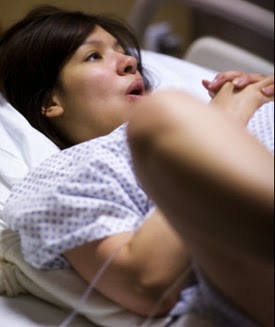
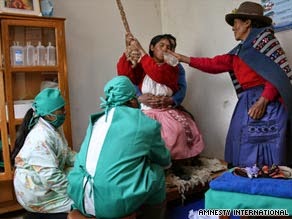
Just a brief post this week to link to a spot-on wonderful article from Midwife Thinking on supporting women's natural pushing instincts. It goes very well with my series on birth positions.
I know that birth professionals truly mean well, but directed pushing and inflexible positioning can harm women and babies. It's time for these practices to stop.
That's not to say that coaching or help is never needed during pushing, but too often it is given when it is not needed and is harmful far too often. I know I personally experienced directed pushing or inflexibility towards positioning in several of my births, and I know many other women who have too. It's still all too common in many places. In fact, it's rare NOT to see directed pushing in hospitals, and many doctors finish their residencies have seen only reclining or semi-reclining positions.
Some outdated practices during pushing even actively harm women and babies, yet are still used at times. A friend of mine experienced damage from these outdated techniques only a year or two ago. This must change!
Read the excellent article from Midwife Thinking on supporting natural pushing instincts here.
Typically their positions were more upright so as to use gravity to help move the baby down, although other positions were seen as well.
Today, though, let's talk about one practice found in both traditional societies and in modern hospital obstetrics that may actually be harmful ─ fundal pressure.
Fundal Pressure
As we have mentioned before, although ancient societies had a great deal of birth wisdom, ancient is not always better. Just because an ancient society used a particular position or technique does not necessarily make it a good idea.
One technique that is occasionally found in some ancient or tribal cultures that is not supported by research is Fundal Pressure (pushing down on the top of the mother's uterus to try to hurry up labor or force a baby out).
Sadly, this is one ancient practice that is still found in the modern obstetric world ─ but it shouldn't be. It is probably not helpful and is often harmful ─ especially when used during shoulder dystocia.
Managing a difficult labor in Siam by
pulling down for fundal pressure;
Englemann book*
Several cultures used the pressure of a birth helper's arm to press down on the woman's uterus during labor. Usually this was just added during a difficult birth as a last resort, since few other options existed and a cesarean was only done if the mother had already died or was dying. Most of the time, it was truly an option of last resort.
Using a sheet to exert fundal pressure during labor;
Drawing by G. Devy from Witkowski book*
However, sometimes it was used routinely during labor in certain cultures and times, as in the image above from California in about 1840. Although this downward squeeze was less forceful and more gradual than other fundal pressure techniques, it also holds some risks.
Although not common, fundal pressure was a technique seen in some ancient cultures. However, its use in modern settings is highly questionable.
Still Used in Many Hospitals
Fundal Pressure on a birthing mother Photo credit: Lieve Blancquaert, WHO Reproductive Health Library
This ancient technique was brought into the hospital because in the mid-20th century, women birthed flat on their backs with feet elevated into stirrups (the "lithotomy" position). Usually the women were heavily drugged and had difficulty helping the baby to move down. Babies needed to be born as quickly as possible because of frequent fetal distress due to the drugs and the on-the-back position. As a result, hospitals tied women down, cut giant episiotomies to widen the vagina, and had nurses use fundal pressure to push while the doctor used forceps to pull the baby out as quickly as possible.
Despite the fact that such dangerous drugs are not used anymore, fundal pressure is a technique still seen in some hospitals. In the medical literature, it is often called the Kristeller Maneuver, after Samuel Kristeller, the doctor who wrote about its use.
Fundal pressure is when someone presses down on the top of the mother's uterus, on the area nearest her ribs at full term. Sometimes it's done with steady continuing downward pressure, as when an arm or a tightening abdominal binder is used, and sometimes it was a series of short, sharp, very forceful pushes on the top of the uterus during contractions (Kristeller's Maneuver**).
It is most often added during a slow labor, or when the mother is perceived as not being able to push very hard because she is tired or has an epidural. Care providers theorized it would increase intra-abdominal pressure, resulting in greater expulsive forces. In some areas of the world, it is added routinely during pushing to get the baby out faster.
Some hospitals have even been experimenting lately with routinely using an inflatable abdominal binder on women with epidurals, who may have difficulty moving the baby down through the pelvis because the muscles in that area are partially paralyzed from the epidural. [This is probably similar to the sheets used in the California picture in the last section, a slow squeeze downward.]
Fundal pressure used to be used routinely in U.S. hospitals, but its use has declined. However, some do still use it.
Listening to Mothers II, a 2006 survey of birthing women in the United States, found that 17% of mothers reported having fundal pressure applied during their births. If nearly 1 in 5 mothers are still experiencing fundal pressure that recently, then it is still a fairly common intervention that must be examined closely.
Some care providers utilize fundal pressure in the belief that it shortens labor, especially in the pushing stage. A Cochrane Review and the World Health Organization review have found few randomized controlled trials on its use and have concluded that there is not enough good evidence to evaluate this practice.
However, a randomized controlled trial published after the Cochrane review found no reduction in the duration of pushing. Even in studies that have found modest effects on the length of pushing, this was offset by a trade-off of risks, including an increase in perineal lacerations, anal sphincter tears, urinary problems afterwards for the mother, and increased admissions to the Neonatal Intensive Care Unit (NICU) for the baby.
Henci Goer has written a great review of the research examining fundal pressure in labor. She concluded that there are no real benefits, and that more mothers experienced anal sphincter tears and more babies experienced nerve damage injury when fundal pressure was used.
One review suggested that many more injuries from fundal pressure go unreported because the providers are afraid of being sued:
Much of the data about maternal-fetal injuries related to fundal pressure are not published for medical-legal reasons; however, anecdotal reports suggest that these risks exist. Unfortunately, it is therefore difficult to quantify with any degree of accuracy the exact number of maternal-fetal injuries that are directly related to use of fundal pressure to shorten an otherwise normal second stage of labor. However, there is enough evidence to suggest that if injury does occur when fundal pressure is used, there are significant medical-legal implications for the health care providers involved.
Obviously, there can be serious harms with the use of fundal pressure. Yet because of widespread fear around being sued, many of these harms are probably being under-reported, helping to keep this practice alive.
Fundal Pressure During Shoulder Dystocia
Image from elpartoesnuestro.es
Fundal pressure during labor results in little benefit and is associated with some degree of harm. It is a practice that should be stopped.
However, fundal pressure when a baby's shoulders get stuck (shoulder dystocia) is CLEARLY harmful. It should have been abandoned long ago ─ yet it is still practiced in many institutions. Vacuum extraction/forceps plus fundal pressure seems to be a particularly dangerous combination.
Suprapubic Pressure for shoulder dystocia.
This is not the same as fundal pressure
Please note that suprapubic pressure is different from fundal pressure. Suprapubic pressure is a common and accepted maneuver for use with shoulder dystocia. It puts pressure on the mother's pubic symphysis joint ─ down low, not up high like fundal pressure. It is done to try to push the baby's top shoulder (which is stuck behind the pubic symphysis in a shoulder dystocia) under the bone. It accomplishes this by pushing the baby's impacted shoulder down and through, or by pushing the baby's shoulders towards each other, thereby reducing their width and helping them to move through.
Please note that we are also not talking about postpartum fundal massage. This is a technique sometimes done after the baby is delivered to try and help the uterus contract more efficiently and to help reduce significant postpartum bleeding.
Fundal pressure during labor, on the other hand, is pressing forcefully on the TOP of the mother's uterus (the "fundus," which is near the ribs at term), usually while pushing, to try and give more force to move the baby through the pelvis. Here is a picture of what fundal pressure in labor looks like.
Fundal pressure. The pushing is at the top of the uterus (fundus),
unlike suprapubic pressure, where the pushing is much lower,
on the mother's pubic symphysis pelvic joint
Fundal pressure is harmful in shoulder dystocia because the baby's shoulder is already trapped behind the pubic symphysis and pushing harder doesn't resolve the problem, but rather rams the baby harder into the mother's bones.
Fundal pressure combined with the care provider pulling on the baby's head/neck area can damage the baby's nerves, resulting in Brachial Plexus Palsy (BPP). Although many cases of BPP resolve with time, some do not, leaving the baby permanently damaged.
Research shows that the risk for Brachial Plexus Palsy increases in the presence of fundal pressure. One review of obstetric maneuvers for shoulder dystocia states (my emphasis):
Excessive force must not be applied to the fetal head or neck and fundal pressure must be avoided. These activities are unlikely to free the impaction and may cause fetal and maternal injury.
Another review notes that BOTH the Royal College of Obstetricians and Gynaecologists (RCOG) from the U.K. and the American College of Obstetricians and Gynecologists (ACOG) from the U.S. recommend against fundal pressure for shoulder dystocia:
In any case fundal pressure should not be used for the treatment of SD because it could worsen the impaction, with subsequential risk of fetus or mother injury.
In fact, the most recent guidelines on managing shoulder dystocia from ACOG state outright (their emphasis): "CAUTION: NEVER USE FUNDAL PRESSURE."
Similarly, RCOG's latest guidelines state, "Fundal pressure should not be used."
However, despite these recommendations and research that fundal pressure worsens outcomes, recent studies suggest that fundal pressure is still used too often when shoulder dystocia is encountered.
Fundal Pressure Around the World
Image from elpartoesnuestro.es
Unfortunately, fundal pressure is not a remnant of the past. It is still being used today.
Sometimes it is the slow steady downward pressure of an arm, as in the picture above, and sometimes an inflatable belt substitutes for the arm so the nurse doesn't have to be present all the time. And sometimes it is still the short, sharp downward pushes on the fundus (as Kristeller described), seen in the video below.
The good news is that use of fundal pressure has decreased in U.S. hospitals. In 1990, one nationwide survey of hospital nurses found that 84% of their hospitals used fundal pressure at times, but a study from 2005-6 in a Maryland hospital found a huge drop to a 5.9% rate of fundal pressure.
However, also remember that the Listening to Mothers II Survey in the same year reported that 17% of women had experienced fundal pressure during their labors. That's nearly 1 in 5 women.
Recent online discussion has suggested that it is most common in mid-Europe and Eastern Europe, as well as many Spanish-speaking countries. Korean hospitals seem to be pushing the inflatable abdominal binder as a way to use fundal pressure on women with epidurals. Italian hospitals have also investigated inflatable binders.
One hospital in Egypt reported recently that fundal pressure was used in 24% of the births there. A Brazilian study reported the use of fundal pressure in 37% of births.
A recent large study from Japan surveyed 1,430 hospitals and found that 89% of hospitals reported using fundal pressure in at least some of their births. Among the women who birthed vaginally, about 11% experienced fundal pressure. The survey documented six cases of uterine rupture and one maternal death due to complications from fundal pressure. Obviously, this practice can be associated with significant harms, yet the authors did not call for ending its use, only for clearer indications and better training on its use.
One recent study from Spain found that when pushing phases were "prolonged," doctors used fundal pressure nearly 70% of the time. The Ministry of Health and the Spanish Society of Ginecology and Obstetrics (SEGO) estimated that in 2010, the Kristeller Maneuver was used in at least 26% of births. As a result, there is a major campaign to stop the use of fundal pressure in Spanish hospitals at elpartoesnuestro.es.
The above youtube video graphically shows the Kristeller Maneuver in a classic lithotomy birth from 2007. Be warned, it's a very rough video to watch.
There are a number of other youtube videos that showsimilarscenes of fundal pressure, usually with the woman flat or nearly flat on her back. (Be aware that some of them are graphic and involve episiotomies.) Every time I see one of these videos, I think how much simpler and safer it would be to simply get the woman into an upright position instead of using fundal pressure.
From the ease of finding such videos, it seems clear that fundal pressure is a technique still used in many countries today, frequently in concert with on-the-back positioning and episiotomy. It is still an accepted practice in far too many countries. It is time for this barbaric practice to STOP.
A Recent U.S. Fundal Pressure Story
Although less common in the U.S., fundal pressure is still sometimes used in U.S. hospitals too ─ even during shoulder dystocia when it CLEARLY contra-indicated.
In fact, a personal friend of mine had fundal pressure used on her ONE year ago this month when she experienced a shoulder dystocia in the hospital. It is in honor of that child's upcoming first birthday that I write this post.
I wasn't at the birth, but from the description of a nurse and midwife (who was acting as a doula) and the grandmother, the pulling force on the baby and the fundal pressure used on the mother was quite excessive.
I questioned them very closely about what exactly was done, and it seems clear that indeed it was fundal pressure and not suprapubic pressure that was done ─ and done very strongly. The traction on the baby was also VERY significant. Frankly, it's truly a miracle this baby did not sustain a BPP injury.
In the end, the baby's arm was broken and her ability to move was damaged for several months. The mother suffered significantly postpartum as well, with excessive bleeding, retained placental fragments, swelling, an infection, and urinary retention for more than a week. The mother needed a D&C eventually to get out all the placental fragments, and she had a long hard physical recovery.
With treatment (mostly Craniosacral Therapy, which is amazing for birth trauma), the baby is doing well now. Her broken arm has healed and she seems to have regained full use of it. They still have some concerns about her movement, but by and large she seems to have healed. She is lucky that she (apparently) didn't suffer more permanent damage, considering the amount of force that was used. The mother has also physically recovered, but was emotionally quite traumatized. Indeed, both the grandmother and the doula were left with significant emotional scars as well.
It's important to acknowledge that the mother had insulin-dependent Gestational Diabetes, a strong risk factor for shoulder dystocia, but the baby was average-sized and perfectly proportionate. The mother was also average-sized, athletic, and in very good shape, yet she still had a significant case of GD.
Because of her GD, it's possible this mother may truly have had a difficult shoulder dystocia no matter how the birth was managed, but it seems to me there is a good chance this highly traumatic birth could have been avoided if the mother had not been induced, kept in bed, kept on her back, and had fundal pressure and traction used in her birth. The doula (who is also nurse and midwife, remember) felt strongly that this birth had been badly managed.
And of course, the mother has been told that she HAS to have a cesarean for any subsequent children, which she is naturally happy to consider after the emotional and physical trauma of this birth. So the mother will likely endure the invasive trauma and all the risks of surgery in the future for a situation that might have been avoided (or at least better handled).
I am outraged by the subpar treatment this mother received, angry that her baby was endangered, and APPALLED that fundal pressure was used during a shoulder dystocia in this day and age, despite all the professional recommendations to the contrary.
Remember, this story happened only last year, and it was in the U.S. where fundal pressure is fairly uncommon now. Imagine how many stories similar to my friend's story must be happening in non-U.S. hospitals, where fundal pressure is far more common. This practice must stop.
Summary
Image from elpartoesnuestro.es
Fundal pressure was done in tribal societies, but was done largely as a desperate, last-measure resort in a difficult and prolonged labor. Since they did not have recourse to a safe cesarean as an alternative during a difficult labor, fundal pressure became part of the folk tradition. Although a few cultures did use it as a regular part of their labor practices, it was mostly reserved for prolonged, obstructed labors.
While much wisdom can be gained from tribal and historic birthing practices, that doesn't mean that everything they did is appropriate anymore. We do have safer and more humane alternatives for some things nowadays; fundal pressure is not the only option anymore when faced with a long, hard labor.
Fundal pressure came into use in hospital settings in response to highly-drugged mothers in order to get the babies out as quickly as possible. The potential harm from fundal pressure was seen as less dangerous than the risk for fetal distress from drug exposure and hypoxia (low oxygenation).
However, birth conditions today are much different than they were in the mid-1900s. While many women are still exposed to drugs through epidurals today, the fetal exposure in epidurals is considerably lower than the IV drugs of the past, and the drugs used now are safer than the ones used previously. Labor does not have to be rushed in order to minimize the risk for fetal distress and hypoxia anymore.
There are simpler, safer and more humane alternatives to fundal pressure during labor.Research shows that these include:
Simply get the mother more upright. This helps the mother work with gravity instead of having to push against it. A Cochrane review shows that this can shorten labor significantly
Avoid routine epidurals. Research shows that epidurals are a significant risk factor for malpositions and stalled labor. Although women should always have the choice for epidurals if they want them, many could go without epidurals if they had better support during labor and alternative options for pain relief (like water immersion).
If an epidural is used, utilize delayed pushing and passive fetal descent. In many hospitals, once full dilation is reached, the mother is instructed to push immediately and forcefully. However, substantial research shows advantages to delaying pushing, letting the mother "labor down" first, using passive fetal descent before active pushing is begun
Be more patient instead of rushing labor. Oftentimes, baby just needs time to shift into a better position for birth or for its head to mold more fully. Once that is done, many cases of "stalled labor" progress just fine. Avoid arbitrary timelines and judge each case individually
Be more proactive if the baby is malpositioned. Many cases of prolonged labor are due to a poorly-positioned baby. If mobility, positions, and more time do not work, consider manual rotation of the baby, as this has a high rate of success with far less risk than fundal pressure
If none of these techniques help, then a cesarean can be considered. Although cesareans are a significant surgery and should not be used without true need, they are far safer now than they used to be. Sometimes they can be the best choice in a long, hard, non-progressive labor.
Similarly, even during the obstetric emergency of shoulder dystocia, there are FAR better alternatives than fundal pressure:
McRoberts plus Suprapubic Pressure - The first procedure usually recommended for shoulder dystocia is to flex the mother's knees back towards her shoulders (McRoberts maneuver), combined with suprapubic pressure. These two maneuvers together resolve about half of all shoulder dystocias without need for further maneuvers
Internal Rotational Maneuvers - There are a number of maneuvers that involve the care provider putting their hands inside the mother and helping the baby rotate its shoulders into an oblique (diagonal) presentation, which gives more room for the baby to get out. In addition, the posterior arm can be delivered, which reduces the width of the shoulders
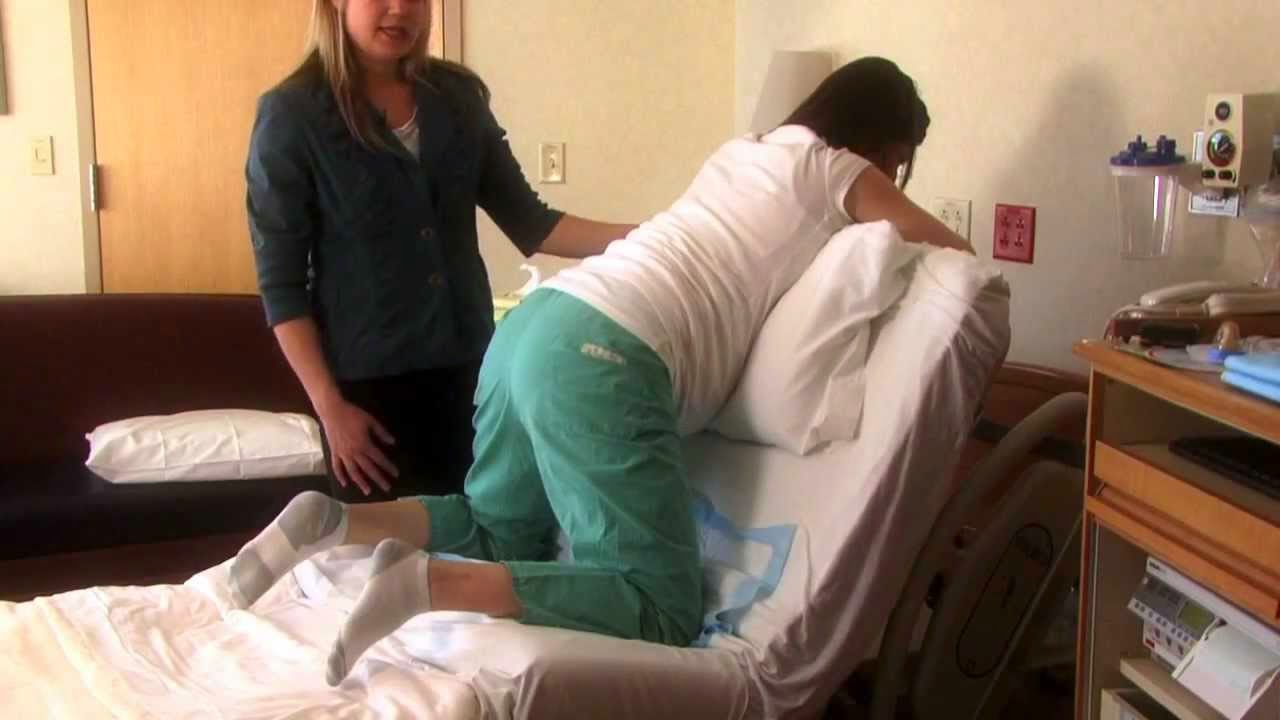
Move the Mother's Position - Many midwives know that moving the mother is often even more effective than internal maneuvers. Although most doctors have not been trained in these maneuvers anymore, rolling the mother onto all fours (the Gaskin maneuver), moving her into an asymmetric position so that one hip is higher than the other, or raising the mother's pelvis and having her arch her back strongly (Walcher's Position) are all positional changes that can work for resolving shoulder dystocia. Many of these were recommended in old obstetric textbooks but have gone out of routine practice; it is time for these to be re-explored in modern obstetrics
To summarize, research suggests that there is no real benefit from fundal pressure during labor. Any possible benefits of a slightly shorter labor in a very few studies have been offset by more perineal damage, more babies in the Neonatal Intensive Care Unit (NICU), and more fetal nerve damage. Furthermore, sometimes fundal pressure can even result in catastrophic damage such as uterine ruptures, uterine prolapse, or even deaths.
Furthermore, fundal pressure during shoulder dystocia is a disaster waiting to happen. Every major organization recommends against its use during shoulder dystocia, yet my friend's horrendous story from only a year ago shows that it is STILL being used in response to shoulder dystocias, despite these recommendations. It is time for hospitals to make a concerted educational effort to eliminate its use.
There are other options that work just as well or better than fundal pressure, and with far less risk. Upright positions, fewer epidurals, delayed pushing, more mobility, more patience, and manual rotation are all options to help a labor that is slower than expected. If shoulder dystocia occurs, McRoberts position plus suprapubic pressure resolves most cases; other maneuvers usually resolve the rest. Fundal pressure in a shoulder dystocia only makes the problem worse and often damages the baby or mother.
Although the use of fundal pressure has decreased, more education is obviously needed, both against "routine" fundal pressure during pushing, and particularly against fundal pressure during shoulder dystocia.
With all we know about the risks of fundal pressure and its lack of any real benefit, it is appalling that fundal pressure is still being used during labor or shoulder dystocia in many hospitals around the world. It is clearly a procedure that is outdated and associated with far too many risks.
Unlike our ancestors, we have other options now. There is just no excuse for fundal pressure to still be in such common use in the world today.
References
Obstet Gynecol Surv. 2005 Sep;60(9):599-603. The role of uterine fundal pressure in the management of the second stage of labor: a reappraisal. Merhi ZO1, Awonuga AO. PMID: 16121114
Among the maneuvers that are used in the second stage of labor, uterine fundal pressure is one of the most controversial. The prevalence of its use is unknown. We reviewed the existing literature to assess whether there is justification for the use of fundal pressure in the contemporary management of the second stage of labor. Only one randomized, controlled study and a few prospective studies, review articles, and case reports have been published. No confirmed benefit of the procedure has been documented and a few adverse events have been reported in association with its use. Alternative management strategies in the second stage of labor exist and should be considered whenever possible. In conclusion, the role of fundal pressure is understudied and remains controversial in the management of the second stage of labor. We believe that caution should be exercised using this maneuver until it is proven to be safe and effective....
MCN Am J Matern Child Nurs. 2001 Mar-Apr;26(2):64-70; quiz 71. Fundal pressure during the second stage of labor. Simpson KR1, Knox GE. PMID: 11265438
The role of fundal pressure during the second stage of labor is controversial and can result in clinical disagreements between nurses and physicians. Clearly the time for resolution of this issue is not when there is a physician request at the bedside in front of the patient. A prospectively agreed upon plan specifying how this request will be addressed is ideal. In order to develop this plan, risks, benefits, and alternative approaches to the use of fundal pressure should be reviewed by an interdisciplinary perinatal team. Much of the data about maternal-fetal injuries related to fundal pressure are not published for medical-legal reasons; however, anecdotal reports suggest that these risks exist. Unfortunately, it is therefore difficult to quantify with any degree of accuracy the exact number of maternal-fetal injuries that are directly related to use of fundal pressure to shorten an otherwise normal second stage of labor. However, there is enough evidence to suggest that if injury does occur when fundal pressure is used, there are significant medical-legal implications for the health care providers involved. This article will review what is currently known about fundal pressure including risks, benefits, and alternative approaches. In that context, suggestions will be offered for a safe approach to managing the second stage of labor.
J Obstet Gynaecol Res. 2014 Apr;40(4):946-53. doi: 10.1111/jog.12284. Epub 2014 Jan 15. Fundal pressure during the second stage of labor in a tertiary obstetric center: a prospective analysis. Moiety FM1, Azzam AZ. PMID: 24428496
...This was a prospective observational study set in a tertiary teaching and research obstetric hospital [in Egypt]. A total of 8097 women in labor between 37 and 42 gestational weeks with a singleton cephalic presentation were enrolled. Subjects were subdivided into two groups: fundal pressure group (n=1974 women) and control group (n=6123 women). The primary outcome measure was the duration of the second stage. The secondary outcome measures were maternal outcomes (immediate or delayed) and neonatal outcomes. RESULTS: The prevalence of fundal pressure in our center was 24.38%. Fundal pressure maneuver significantly shortened the duration of the second stage among primiparous women, increased the risk of severe perineal laceration and admission to neonatal intensive care unit in comparison to the non-fundal group. Delayed maternal outcomes showed significant increase in dyspareunia and de novo stress urinary incontinence in the fundal pressure group. CONCLUSION: Although fundal pressure maneuver shortens the duration of the second stage of labor among primiparous women, it should not be used except when indicated, and under strict guidelines owing to its adverse maternal and fetal outcomes.
J Turk Ger Gynecol Assoc. 2010 Jun 1;11(2):95-8. doi: 10.5152/jtgga.2010.07. eCollection 2010. Shortening the second stage of labor? Mahendru R1. PMID: 24591907
...A pilot study comprising 209 primigravidae between 37 and 40 gestational weeks with singleton fetus in cephalic presentation admitted to the delivery suite were considered and were randomly allocated into two groups: I (n=101) and II (n=108), with or without manual fundal pressure, respectively, during the second stage of labor...RESULTS: There were no significant differences in the mean duration of the second stage of labor and secondary outcome measures. Significant adverse findings having no mention in the earlier literature, were noticed which were: one case each of retained placenta and uterine prolapse besides increased evidence of maternal exhaustion and perineal injuries (including one case of complete perineal tear) in the group where fundal pressure was exercised. CONCLUSION: Application of uterine fundal pressure in a delivering woman was not only ineffective in shortening the second stage of labor but added to the risks during parturition.
...In this prospective observational study, the station of the fetal head was measured using the angle of progression (intrapartum ultrasound) just prior to the intervention of the managing obstetrician in 52 women with prolonged second stage of labor. The managing obstetricians were blinded to the sonographic results. The decision of performing a Kristeller maneuver was taken by the obstetricians based on digital palpation and their experience...RESULTS: Kristeller maneuver was performed in 36/52 (69.2%) cases. There were no significant differences between the Kristellerand the non-Kristeller group regarding the angle of progression. There were no significant differences between both groups with respect to delivery mode, perineal tears, episiotomy, bleeding, Apgar score, and umbilical artery pH value. CONCLUSIONS: Our study failed to define any criteria followed by obstetricians when performing a Kristeller maneuver in cases of prolonged second stage of labor. There was no relation between the angle of progression and the decision to perform a Kristeller maneuver.
Acta Obstet Gynecol Scand. 2009;88(3):320-4. doi: 10.1080/00016340902730326. The effect of uterine fundal pressure on the duration of the second stage of labor: a randomized controlled trial. Api O1, Balcin ME, Ugurel V, Api M, Turan C, Unal O. PMID: 19172441
...One hundred ninety-seven women between 37 and 42 gestational weeks with singleton cephalic presentation admitted to the delivery unit. METHODS: Random allocation into groups with or without manual fundal pressure during the second stage of labor...CONCLUSION: Application of fundal pressure on a delivering woman was ineffective in shortening the second stage of labor.
Arch Gynecol Obstet. 2009 Nov;280(5):781-6. doi: 10.1007/s00404-009-1015-2. Epub 2009 Mar 5. Use of uterine fundal pressure maneuver at vaginal delivery and risk of severe perineal laceration. Matsuo K1, Shiki Y, Yamasaki M, Shimoya K. PMID: 19263062
...All vaginal delivery records between 1 January 2005 and 30 April 2006 were evaluated...Six hundred sixty-one vaginal deliveries were evaluated. Fundal pressure maneuver was performed in 39 cases (5.9%, 95% CI 4.4-7.1)...One case of shoulder dystocia following uterine fundal pressure maneuver was reported (2.5 vs. 0%). Episiotomy (76.9 vs. 44.9%, P < 0.001) and vacuum extraction (41.0 vs. 3.8%, P < 0.001) were frequently performed with uterine fundal pressure maneuver. Uterine fundal pressure maneuver increased the risk of severe perineal laceration (28.1 vs. 4.8%; odds ratio 2.71, 95% CI 1.03-7.15, P = 0.045). The risk of severe perineal laceration was synergistically increased with the concurrent use of uterine fundal pressure maneuver with vacuum extraction and episiotomy. CONCLUSION: Uterine fundal pressure maneuver during the second stage of labor increased the risk of severe perineal laceration. The use of the maneuver must be cautioned and careful attention must be paid to its application.
J Perinat Med. 2014 Nov 8. pii: /j/jpme.ahead-of-print/jpm-2014-0284/jpm-2014-0284.xml. doi: 10.1515/jpm-2014-0284. [Epub ahead of print] Uterine rupture after the uterine fundal pressure maneuver. Hasegawa J, Sekizawa A, Ishiwata I, Ikeda T, Kinoshita K. PMID: 25389983
...A questionnaire was sent to 2518 institutions in Japan. We received a response from 1430. RESULTS: Of reporting institutions, 89.4% used fundal pressure in at least some of their deliveries. Among the 347,771 women who delivered vaginally in this study, 38,973 (11.2%) were delivered with the assistance of fundal pressure. There were six cases of uterine rupture associated with uterine fundal pressure, with one case resulting in maternal death secondary to amniotic fluid embolism....
*Historical birth illustrations were taken from the following resources. [Be aware that these books are products of their times and contain outdated attitudes and language]
The illustrations by Georges Devy in "A History of Childbirth of All the People" by G. J. Witkowski (1887) [see the National Library of Medicine website]
**Ginekol Pol. 2008 Apr;79(4):297-300. [Kristeller's procedure--Expressio fetus, its genesis and contemporary application]. [Article in Polish] Waszyński E1. PMID: 18592869
The aim of the article is to introduce the original version of Kristeller's procedure - Expressio fetus. The author of the procedure, Samuel Kristeller, was bom in 1820 in Ksiaz Wielkopolski. He worked as a physician in Gniezno, then in Berlin. He is known as the creator of the described procedure - pushing out the foetus...In 1867, Kristeller published a study in which he described a procedure, of which he was the author, of pushing out the foetus (manual assistance), its technique, conditions and recommendations for its application. The main idea of the procedure meant strengthening uterine contractions during labour by massaging the uterus and pressing it many times shortly, towards the long axis of the birth canal. Nowadays this procedure has become warped in its form; there remains also the controversy whether or not to use external force directed on the uterine fundus during labour, due to the risk of intrauterine foetal anoxia and other complications.
The view most women have during birth in most hospitals
We have been talking about birthing positions, both for labor (first stage) and for pushing out the baby (second stage).
Specifically, we are most interested in "alternative" birth positions, ones that are under-utilized in the hospital.
Part One of this series discussed Historical and Traditional Birth Positions because in ancient times and in traditional cultures, birth positions were typically more varied. Upright positions were common, although all positions can be found in ancient artwork.
In contrast, in hospitals today, most women give birth in very limited positions, usually one of three ─ either completely lying back ("lithotomy," "supine," or "dorsal recumbent"), partially reclined ("Semi-Fowlers" or "semi-recumbent"), or semi-sitting with knees widely abducted and pulled back and the chest and head rounded forward ("C" position).
Uniformity of Positions in the Hospital
Most women in the hospital give birth like this
Sadly, while care providers pay lip service to mobility in labor, their actions speak differently. Most women in labor are encouraged to lay back in labor in either a slightly reclined or semi-sitting position. Laying on the side is well-accepted in most hospitals but is often under-utilized.
Although progress has been made and some providers now "allow" women to labor or push in any position, their tune often changes when it's time for the baby to actually come out. At that point, most women are required (or so strongly pressured that it's basically a requirement) to lie back or to use a semi-sitting, knees-back position.
As we mentioned in Part One of the series, one survey of U.S. birthing women as recently as 2005 reported that 92% of the women gave birth in either semi-reclining/reclining or semi-sitting positions.
If all those women find these positions comfortable and truly want to give birth in them, that's no problem. However, many women report wanting to use other positions and being actively discouraged or even forbidden from using them. [I know I was actively discouraged from other positions in one of my hospital births.]
This practice is so widespread that many medical students never see a birth in any position other than lying back or semi-sitting. One medical student reported in 2013 (my emphasis):
I finished my Obstetrics and Gynecology clerkship 5 weeks ago. I did my clerkship at a large, and rather posh, private hospital that is affiliated with my medical school. There are some great doctors there, but I was sometimes aghast at the rather aggressive approach to delivery that many took. The cesarean section rate for the last year was 47%, well above the national average of 33%, and most labors were artificially augmented. I did not witness a single VBAC (Vaginal Birth After Cesarean), and was told that only one of the house attendings would perform them.
On the first day of my clerkship, I asked the clerkship director if women delivered in a variety of positions or if they were restricted to delivering in lithotomy (what many today think of as the “traditional” birthing position with the mother on her back with her feet in stirrups). The director seems to be a rather progressive woman...and she gave me a rather knowing look and said “I know what you’re getting at, but unfortunately everyone here delivers lying down”.
Indeed, as I went through my rotation, all the vaginal deliveries I saw were done in the semi-reclined position that is common in western hospitals.
Although there are hospital care providers out there that are comfortable attending births in alternate positions, the vast majority of hospital births, even today, are in the un-physiological laying back or semi-sitting positions.
These positions are less than ideal because they:
make the mother work against gravity
decrease the pelvic outlet by restricting free movement of the sacrum and tailbone during birth
compress the main artery that brings blood to the uterus, causing a tendency towards low oxygen to the baby, fetal distress, and maternal "supine hypotension"
These are not ideal circumstances for a safer and easier birth. Despite this, it has been very difficult to get alternative positions accepted into regular practice in many hospitals.
Barriers to Alternative Positions
There are many cultural and technological factors that influence birth position. But if "alternative" positions used to be the norm, why has cultural practice changed so markedly? Frankly, there are a number of factors at work here, including:
Recent Historical Precedent
Pervasive Cultural Image of Birth
Ease of Interventions
Care Provider Comfort and Convenience
Care Provider Training
Let's take a closer look at each one of these.
Historical Precedent
Historical medical factors are central to why women no longer birth in upright positions most of the time.
These factors are no longer relevant, yet the tradition of reclining birth became so strongly ingrained that this position is considered the norm for childbirth even now.
Hospital birth in the old days
When birth came into the hospital, women usually gave birth lying down because they were heavily drugged. Many were even tied down during contractions. As a result, women were usually flat on their backs with their legs strapped into stirrups because they could not hold their legs up themselves. Doctors often had to use forceps to help the baby negotiate its way out, and they needed the women in a position that gave them maximum access to the perineum.
Modern hospital birth, still ready for the episiotomy
Furthermore, because of the forceps and the heavy-duty drugs given to laboring women, an episiotomy to speed up the birth was considered mandatory in many hospitals, and this was easier in a prone or lying-back position. Sadly, ease of episiotomy is still one of the reasons doctors like the lithotomy or semi-sitting position today, as the modern picture above shows.
Most women these days are not so drugged that they need to be prone in bed, forceps have mostly fallen out of use, and research has shown over and over how harmful routine episiotomies are. There is little need for women to be prone in bed for birth anymore, yet the tradition persists.
Although historically it is understandable that this tradition of lying/sitting for birth developed in the highly-technological and interventive hospital births of the mid-20th century, there really is no good reason to insist on these positions for all births anymore.
Pervasive Cultural Image of Birth Sadly, this historical precedent for reclining birth became programmed into our media images of birth until it has become our pervasive cultural image of birth. This is one of the strongest influences on maternal positioning today.
In movies and on TV, women almost always give birth in the prone or semi-sitting position, probably because it's all the writers and viewers know from their own lives and the lives of their friends and relatives.
Years ago, I worked on a play which had a birth scene in it from the pioneer days. The director had the woman on her back, knees flexed and back, like the usual media images of a hospital birth. I pointed out that most women in that era didn't birth like that and provided documentation. The director incorporated my input into rehearsal, but decided that nobody in the audience would understand because she “didn't look like she was giving birth.” We found a compromise (the actress "labored" in a semi-recumbent position but rose to a supported squat for the actual "birth") but it was frustrating that the recumbent position is so ingrained into our cultural expectations that anything else was seen as confusing to the audience. That is difficult to overcome.
As the pioneering film, Laboring Under An Illusion: Mass Media Childbirth vs. The Real Thing by anthropologist Vicki Elson points out, this pervasive culture image makes it difficult for women (and care providers) to envision any other position for birth, and often unwilling to even try it, even when equipment for other positions is provided and they are encouraged to be mobile.
Thus this position has become a self-perpetuating custom. But it doesn't have to stay that way!
Ease of Interventions
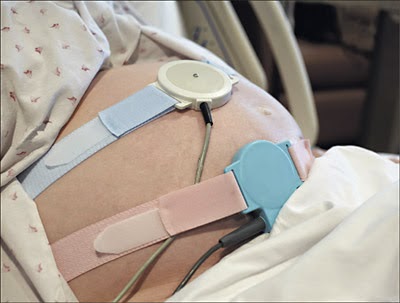
Electronic Fetal Monitoring
One practical barrier to alternative positions is that the recumbent positions make some common labor interventions easier.
Birthing women are dealing with a hospital medical culture that has a very high rate of labor interventions (like induction and augmentation) that necessitate extremely close monitoring of fetal and maternal well-being. Procedures like fetal monitoring, IV fluids, and vaginal exams are easier when the mother is reclining. In addition, labor interventions that strengthen contractions raise the need for epidurals, which then often results in the mother laboring in a reclining position.
All of these things combine to create a powerful hospital culture that encourages a reclining, passive position for labor and birth. The mother is the passive patient that is having interventions done to her, the care providers are the active ones who are directing the labor. Even the language reinforces this; the doctor "delivers" the baby, rather than the woman "gives birth" to her child. As one researcher states:
Lithotomy position is not based on evidence and it comes with multitude of poor factors. This position is illogical, making the birth needlessly complicated, expensive, turning natural process into medical event and the laboring women to become simply the body on the delivery table to be relieved of their contents.
The best option against all of this is to opt for a more natural childbirth where the mother is an active participant in birth instead of a passive patient who is being delivered. Women who go into labor spontaneously and who progress along their own bodies' timeline instead of being pushed to labor faster find it easier to assume the positions that their bodies tell them are needed, and they don't have to deal with most of the interventions that tend to force women into reclining positions.
Campaign for Normal Birth, Royal College of Midwives
However, the reality is that an intervention-free childbirth is uncommon in the hospital, sometimes interventions are truly medically necessary, and many women choose interventions like epidurals or inductions. Although more intervention-free childbirth is a worthy goal, greater variety in birthing positions does not depend on it. Alternative birth positions can still be used in women with interventions.
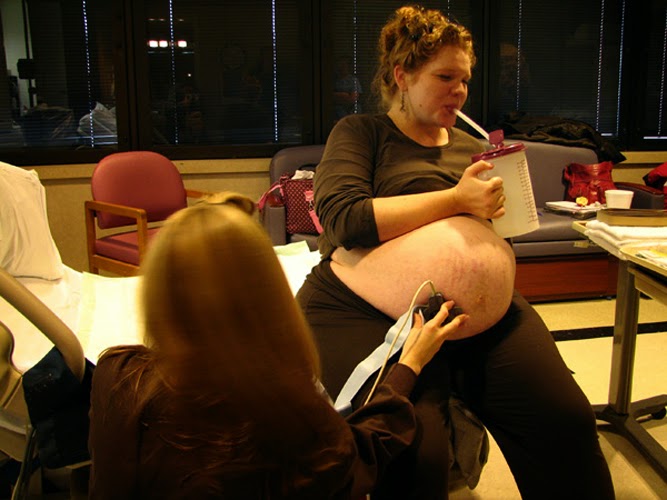
Fetal monitoring in an upright sitting position on a birth ball
For example, although outcomes are not improved with the use of EFM, most hospitals feel they still have to use it as a defense against lawsuits. But while it can be more challenging to use EFM in "alternative" positions, it can and has been done.
EFM, induction, augmentation, IV fluids, and epidurals do not have to be a barrier to alternative positioning. It just requires being a little more creative. (A doula can be very helpful in this process.)
Care Provider Comfort and Convenience
Sadly, care provider comfort and convenience is a huge factor influencing maternal positioning.
Some care providers tell women they can use any position that they like in labor ("You can even stand on your head if you want"), but that for actually pushing out the baby, they have to be on their back or semi-sitting with knees apart or pulled back. Much of this is for the comfort of the provider, so they can be sitting comfortably or stand just as the baby is born.
But while it is understandable that providers want to stay within their comfort level, why should a care provider's comfort level take priority over the well-being and comfort of mother and baby? The top priority should be the mother and the baby, not the provider's comfort.
However, of course providers absolutely need to keep themselves safe too. They may be afraid they will strain their back or knees in another position, which is understandable.
Alternative positions do not have to mean back strain for the attendant
Providers need to find a way to honor the mother's positioning needs while still finding a way to attend those positions in a manner that does not ergonomically hurt themselves.
With a little creativity, the needs of both parties can be served.
Care Provider Training
Another huge barrier to alternative positions is the lack of training for providers in attending any other position.
Remember the 2013 medical student story from the first part of this post? She went through her entire rotation and NEVER saw any position other than a semi-reclining birth ─ in 2013, in a major hospital training program! This speaks very strongly to how ingrained this is in hospital culture.
Virtually all of the illustrations of birth that doctors see in their training involve the woman in the reclined or semi-sitting position. Notice the diagram above has the woman flat on her back. This is common in medical illustrations in obstetric textbooks.
Image from Royal College of Midwives. Notice how passive the mother seems, and how hands-on the doctor is. He might not have been trained how to do these manipulations if the mother was in a different position
Sadly, most care providers (and especially doctors) rarely see any position other than semi-sitting or reclining in their training, and they are taught to be very hands-on in manipulating the head and shoulders during birth. This makes them unsure how to do manipulations or to handle issues like shoulder dystocia when the physical orientation is different. As a result, some are very inflexible about letting the mother try different positions for the actual pushing out of the baby; they are afraid they will make a mistake when it counts most.
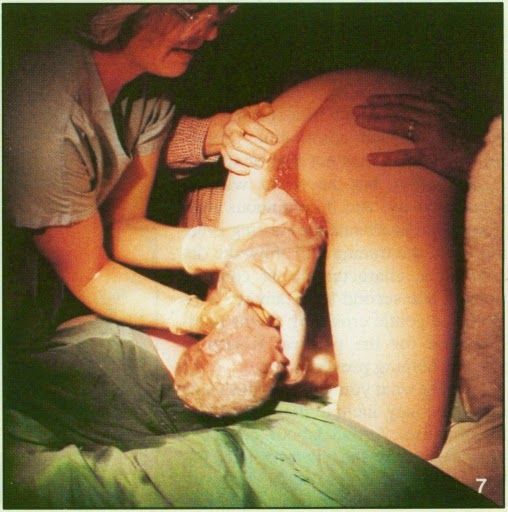
Baby being birthed in an all-fours position. Notice the opposite orientation in this position, which is confusing for some providers
It is completely understandable that providers don't want to make a mistake that might harm a baby, but really, it's not that hard to re-educate oneself towards a different spatial orientation. All it takes is a willingness to learn about how to handle a different orientation, and a hospital and medical school culture that is willing to encourage such learning.
Medical schools would probably find that more mobility and more patience in labor would mean that less manipulation during birth would be needed. But because they come from a historical tradition of drugged mothers and drugged babies, they have been taught to use lots of hands-on manipulation during birth, and to fear positions that they see as interfering with their ability to do this manipulation.
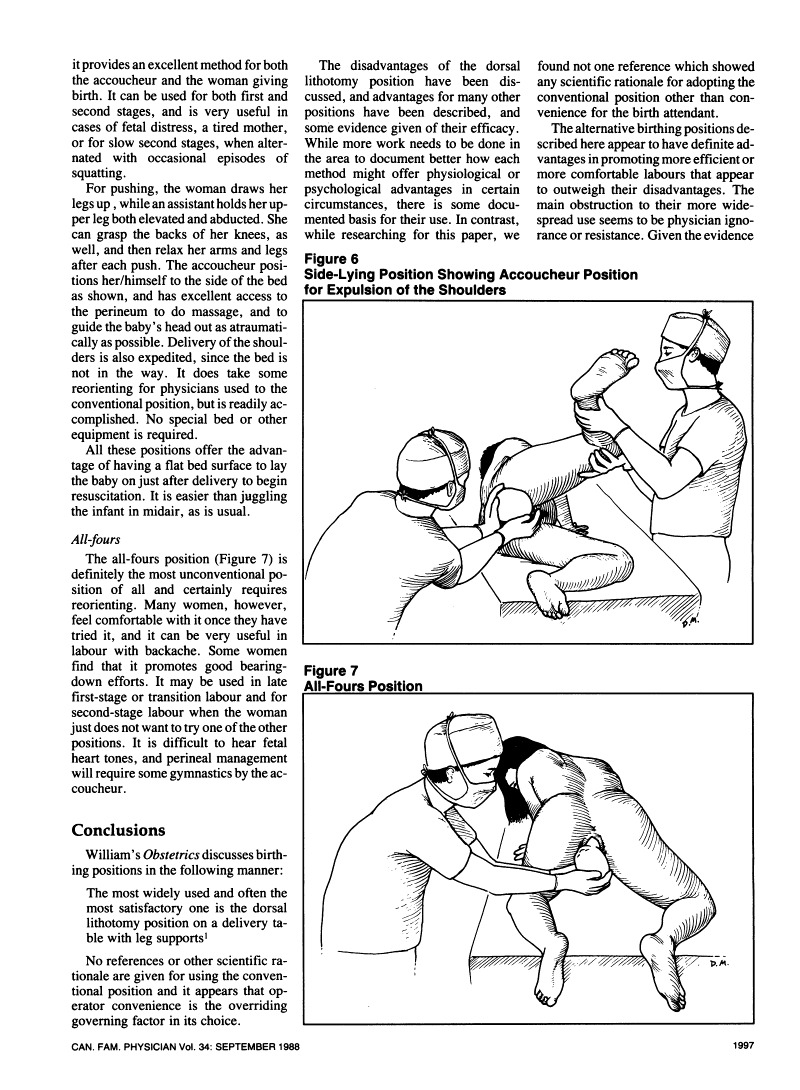
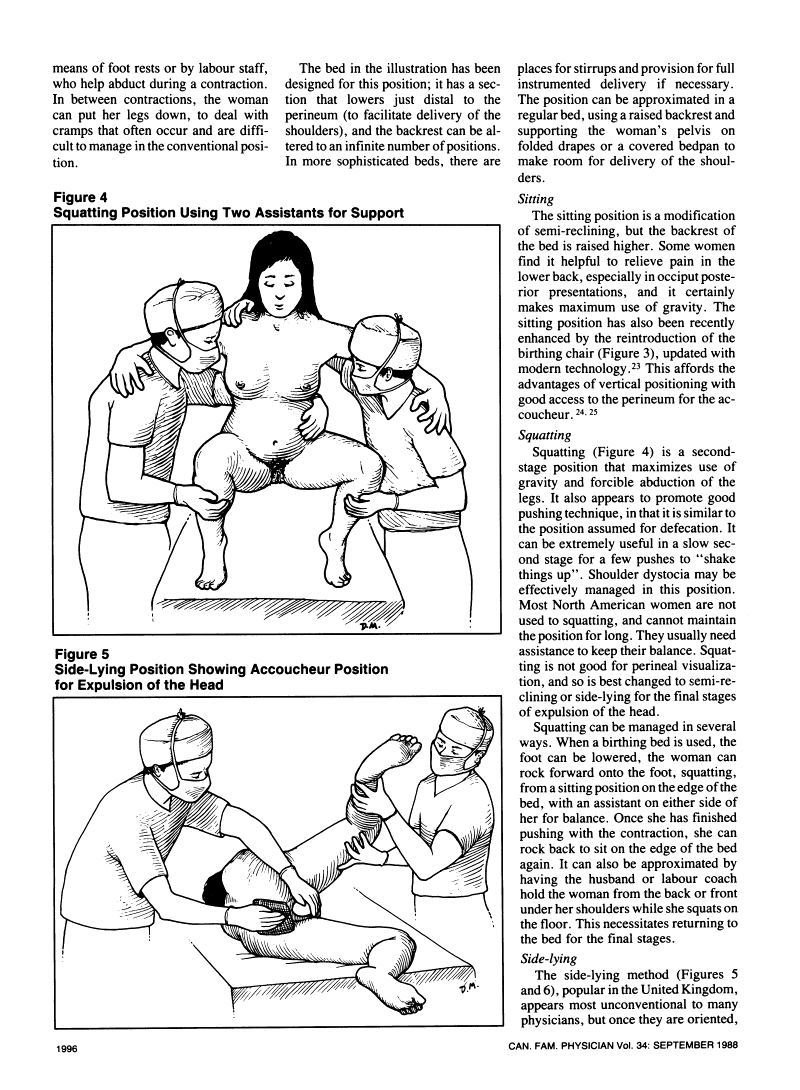
Illustrations from Canadian Family Physician article, 1988
Medical schools have much to teach their students in the few years they have them, but there is no good reason except tradition that handling alternative birth positions is not a meaningful part of the curriculum.
Compared to some of the other complex skills that doctors learn, learning about different spatial orientations for birth manipulations (when needed) would be relatively easy. Change would really take place if medical schools would just include this as part of the regular curriculum (more than just a brief mention, but actual practice with it). But when the teachers have rarely seen a birth outside of the usual positions, how are they going to teach meaningfully about it? And thus birthing position becomes a never-changing tradition in many hospitals.
Illustrations from Canadian Family Physician article, 1988
There are some articles for doctors in the literature on how to re-orient themselves to attend births in different positions (see the free Canadian Family Physician article shown above), yet the information in them seems to be widely ignored in teaching and in practice.
It is LONG past time for medical school curriculum and residency programs to address alternative birth positions in a more meaningful way.
Conclusion
The vast majority of women in U.S. hospitals give birth in reclining or semi-sitting positions. This is not because their care providers are mean or wish them harm, it is because these positions have become rigidly ingrained into medical training, hospital culture, and popular culture. But it doesn't have to stay that way.
Although reclining positions are still seen frequently in many European and Australian hospitals too, alternative positions are more encouraged and accepted in these areas. In fact, most recent research on "alternative" positions is being done in Europe or Australia.
German hospital birthing room
Look at some of the birthing room equipment available in the British labor ward video and the German birthing room picture above. Why isn't this standard in most U.S. hospitals?
[To be fair, some of it IS in some U.S. hospitals. But often it's only available on request or in a special room, not just a routine part of every birthing room. And too often, it's only for labor, not for the actual birth.]
A hospital midwife attending a woman using a birth stool
Although research on utilization of birthing positions is sparse, it suggests that the pervasive image of birth in the media and established hospital culture subtly influence women towards reclining positions. It also suggests that certain models of care (such as birth clinics and births attended by midwives) tend to utilize higher levels of alternative positions for birth.
Hospital birth in an all-fours position, attended by a family doctor. Photography from Canadian Family Physician, 1988
Of course, it's not just midwives who attend these births; there are some absolutely awesome OBs and family docs out there too who are attending births in all kinds of positions. The title of the birth attendant is less important than their philosophy.
Women are more likely to find support for using alternative positions if their care provider believes strongly in physiologic birth, is supportive of natural childbirth, and has low intervention rates in labor.
Even if you are planning on having an epidural or are being induced, having a provider comfortable with natural childbirth increases your chances of using alternative positions despite these interventions.
To find out how supportive your care provider truly is of alternative positions, ask them to estimate what percentage of the births they've attended have been in non-recumbent positions. (Not labored in, but actually pushed the baby out in. Remember, many attendants are fine with mobility in labor but require women to be sitting or reclining for the actual "delivery" of the baby. You are looking for the ones that have experience and comfort with alternative positions for the actual birth too.)
It is mostly tradition, training, and comfort levels that keep reclining positions as the standard of care in many hospitals. But with education and flexibility, caregivers in the hospital can become more open to other positions and accommodate them in a way that respects the mother's needs as well as their own needs.
Dangling and Supported Squat position in a hospital birth clinic in Peru
Hospital caregivers CAN learn to safely attend births in alternative positions, and research suggests that doing so may help improve some birth outcomes, as well as helping labor to be less painful for the mother.
It's about time these "alternative" positions became more widespread in medical schools, hospitals, and birthing clinics all around the world.
Studies Pract Midwife. 2014 Apr;17(4):24-6. Mobility and upright positioning in labour. Westbury B. PMID: 24804420
SUMMARY: A study by the Royal College of Midwives (RCM) (2010) concluded that 49 per cent of women gave birth in the supine position. The RCM advocates getting women 'off the bed' in its campaign for normal birth. There has been much speculation as to why women labour on the bed, with some suggesting it is because women feel it is expected of them. Mobility and upright positioning in labour have countless benefits, with or without epidural anaesthesia, for both woman and fetus. The National Institute of Health and Care Excellence (NICE) supports the adoption of positions that women find most comfortable. Both midwives and students should fully explain the benefits of mobility and upright positioning in labour to women, preferably antenatally, to enable them to make informed decisions as to the positions they wish to adopt when in labour.
Women Birth. 2012 Sep;25(3):100-6. doi: 10.1016/j.wombi.2011.05.001. Epub 2011 Jun 12. What are the facilitators, inhibitors, and implications of birth positioning? A review of the literature. Priddis H1, Dahlen H, Schmied V. PMID: 21664208
BACKGROUND: From the historical literature it is apparent that birthing in an upright position was once common practice while today it appears that the majority of women within Western cultures give birth in a semi-recumbent position...RESULTS: The literature reports both the physical and psychological benefits for women when they are able to adopt physiological positions in labour, and birth in an upright position of their choice. Women who utilise upright positions during labour have a shorter duration of the first and second stage of labour, experience less intervention, and report less severe pain and increased satisfaction with their childbirth experience than women in a semi recumbent or supine/lithotomy position. Increased blood loss during third stage is the only disadvantage identified but this may be due to increased perineal oedema associated with upright positions. There is a lack of research into factors and/or practices within the current health system that facilitate or inhibit women to adopt various positions during labour andbirth. Upright birth positioning appears to occur more often within certain models of care, and birth settings, compared to others. The preferences for positions, and the philosophies of health professionals, are also reported to impact upon the position that women adopt during birth. CONCLUSION: Understanding the facilitators and inhibitors of physiological birth positioning, the impact of birth settings and how midwives and women perceive physiological birth positions, and how beliefs are translated into practice needs to be researched.