Showing posts with label size-friendly care. Show all posts

Thursday, May 24, 2018

Advocating for Yourself at the Doctor

My family had to switch insurance recently. That meant doing the thing that I hate the most ─ finding a new primary care provider. I dreaded it and stressed over it for months. Then I had my first appointment this week.

I needed to get in quickly to get a particular vaccination, so I took the first available appointment with the first available doctor. He was not one I would have picked for myself, since he specialized in men's health and sports medicine. Ugh ─ my experience is that sports specialists are very biased about people of size. I uneasily anticipated a fight over weight loss, weighing regularly, and lectures about nutrition, dieting, etc. I went in primed for a fight.

I am so happy to report I was totally wrong. Not that we were in total agreement about everything, but he listened very respectfully to my point of view and conceded some arguments. He took a very long time in my appointment, much longer than I expected, in order to get a very complete history, and he was very gentle and caring overall. What a tremendous relief!

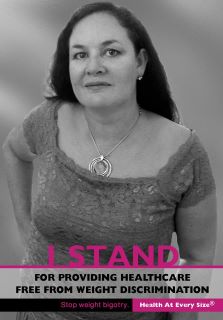
To advocate for myself, I brought  the Health At Every Size Information for Providers cards from the blog Dances With Fat. That opened the conversation on a productive note; he appreciated me sharing my concerns so he could address them. The good thing about the cards is that they give a quick summary of Health at Every Size and there are research citations with links to the research. That kind of thing resonates with care providers and shows that HAES is not just about “giving up and letting yourself go” but truly about promoting health. Care providers respond better when they realize that.

Another thing I did was take informational handouts about Lipedema from the Fat Disorders website. Some doctors know about lipedema now, but it's surprising how many do not. And of those who do know about, many have only cursory information. It's very helpful to have a handout with details and research citations about lipedema if this is an issue for you. We had some interesting discussions about lipedema as a result. I think he learned a little bit more about it from me.

I also took in a one-sheet summary of my medical history. It lists all of my care providers (with contact info), any health conditions, all of my medications (with current dosages), and any history of surgery (with the year) etc. I don't have a lot of family medical history because I'm adopted, but what information I do have is very revealing, so that is on the sheet as well. The doctor was very impressed at having such a quick Cliff Note's version of my medical history and was happy I provided it. I highly recommend having a summary like this.

One thing I didn't need to do was question his care recommendations for me. That was so refreshing! He stuck to the issues at hand and didn't automatically recommend weight loss. Nice! When a doctor recommends weight loss and you are not interested, the best question to ask is, If I were thin, what tests and treatment would you recommend and why? Challenge the doctor to see you and treat you like any other patient, without seeing and trying to treat the fatness first.

I didn't do one of the most common things recommended to patients of size ─ bring along an advocate ─ but then I know how to advocate for myself pretty well these days. However, if you have trouble standing up for yourself or just need someone in your corner, I highly recommend taking an advocate to an appointment, either to get better care or just to take notes for you. I have done so in other types of appointments and it was very helpful.

 I think it also helps to look for specialties that tend to be more holistic, like a D.O. instead of an M.D. (both are fully qualified, just from different organizations), or who have a bigger picture of health, like a family doctor instead of an internist. Many practices now have Physician's Assistants and Nurse-Practitioners, and they often are more holistic and understanding than the M.D.s in the practice. Remember that midwives can also do gynecological care; many women of size choose to get their annual pap smears and care from a good nurse-midwife practice instead of an OB.

Never assume size-friendliness from a person's initials and certifications, however. Always ask lots of questions and don't assume that a certain title means size-friendliness. There are many wonderful doctors available and sadly, there are some very fat-phobic nurses and family doctors out there. Start with the least invasive, least high-tech specialty, but do your homework and ask lots of questions before making a final decision about the best care provider for you.

The Tricky Issue of Weighing


One of my main concerns in going to a new doctor was not having to weigh every time I visit. I was fine with getting on the scale for our initial appointment because I believe it's useful for them to have a baseline weight on record. However, I informed the doctor I would refuse to be weighed on repeat visits unless there were a pressing medical need for it (like impending surgery, weight-based dosing of certain drugs, certain conditions like Congestive Heart Failure, etc.).

He agreed that I always had the right of informed refusal, and he listened to my reasons of why I find it so triggering and objectionable. He said the med techs might still ask me each visit because it is so part of their routine, but that he would put in the chart that I should not be harassed or pressured about it (which has happened in the past). After a discussion we came to my usual compromise; I would be free to decline the weighing every visit, with the understanding that if there were large changes in my weight I would report them (because that can be a symptom of a medical problem), and if there was ever a legitimate medical need for weighing I would agree to do it. Weighing itself doesn't bother me, and I don't care what the number on the scale says. For me, it's the act of being weighed in public that is just very triggering and stigmatizing. It's part of my personal empowerment to refuse such unneeded requirements.

I should note that I've written about this before and people noted in the comments that when they refused to be weighed, some med techs told them they did not have the right to refuse, that the insurance companies required it in order for the visit to be paid for. This is baloney. Weighing is like any other test or "measure of health;" you always have the right to informed refusal. If you are firm in your boundaries, most of the time they will back down. I've had some fights over this but have always won because of the right of informed refusal. If all else fails, state strongly, "I DO NOT CONSENT." This has more legal heft because it could potentially lead to being sued. Most of the time they will stop badgering you.

However, according the comments on my previous post, once in a while there is a doctor who will dismiss you from the practice and refuse to provide care if you refuse to weigh at every visit. Even in the face of legitimate protests, some won't back down. All I can do is sympathize and say is you are better off without a provider like that. You have to decide if avoiding weigh-ins is worth it to stay with that particular provider. Generally speaking, a provider that doesn't respect the basic right of informed refusal is not worth having as a care provider anyhow. I would worry what other medical procedures or interventions they might try to bully me into. I would not want to stay with a provider who used such strong-arm tactics. They are not trustworthy. It would be a giant red flag to me.

If you don't have any other choice than to see that provider, do your utmost to challenge the decision. Don't make it easy on them to disregard your rights. Write letters to the practice manager, to the insurance company, to the hospital, etc. If you really do not have a choice, make it clear you are weighing under duress and launch a social media campaign against the practice. Do what you must to get the care that you need, but don't take medical bullying lying down. Even if you don't succeed in getting this rule changed right away, you might with time. At the very least, you put pressure on the doctor and force him to defend why he is disregarding the patient's right to autonomy in their medical decisions.

Concluding Thoughts

Image from Dances with Fat blog, link here
Print this out and take it to your first visit with your provider
Finally, I just wanted to note that sometimes people of size avoid doctors because they are afraid of battles like these, of mistreatment and fat-phobic treatment. I know it's tempting to just avoid the battles altogether, but it's not wise. I would like to urge my readers NOT to avoid going to the doctor. As we age, it really is important that we go see a care provider regularly. It is very important to get regular lab work done to track the results over time, to catch any problems early, and to have a provider with a broad base of knowledge look for issues if needed.

Even though your past contacts with medical providers might be negative, it doesn't mean it will always be that way. You might luck into a truly size-friendly provider, or at least find a size-neutral provider who is willing to discuss things and compromise with you. More and more practices are trying to be open to a more size-neutral approach. There ARE good providers out there.

I learned that this week. I was all ready for a fight, and I was sooo pleasantly surprised that I didn't need one. My intent had been to use this doctor for the purpose of my vaccination, then switch to one of his colleagues, but now I think I'll stick with him. Finding a size-friendly provider can happen. It's best to be ready, just in case, but remember, you might be pleasantly surprised too. 

Friday, August 21, 2015

Lipedema, Part 5e: Treatment Options Summary

Image from lipedemaproducts.com 
We have been doing a long series about Lipedema, sometimes known as "painful fat,"  "big leg," "riding breeches," or "two body" syndrome.

In lipedema (also spelled lipoedema), the fat cells in certain parts of the body experience overgrowth and swelling. It results in an abnormal accumulation of fat, particularly in the lower half of the body; often the arms are affected too.

As we have discussed, lipedema is rarely recognized by doctors, despite being discovered 75 years ago. Often it is thought to be simple obesity, or it is confused with "lymphedema," the accumulation of lymph fluid in the interstitial areas.

In Part One of this series, we discussed the typical features of lipedema and how differentiate between lipedema and lymphedema.

In Part Two of the series, we discussed how lipedema progresses, the different stages of progression, and why it's so important to be aware of lipedema

In Part Three of the series, we discussed the different types of fat distribution patterns, looked at some pictures to illustrate type and stage of lipedema, and detailed how lipedema is diagnosed.

In Part Four of this series, we examined possible causes of lipedema, as well as medical conditions often associated with it.

Now, in Part Five, we are discussing possible treatments for lipedema in detail. Because we want to give more detail about each option, we broke the treatments into several sub-posts:
      In Part Six, we will discuss practical ways to deal with and live proactively with lipedema. Eventually, I'll tell my lipedema story too, and someday I'll discuss lipedema and pregnancy considerations.

      But today, let's summarize what we have learned of the various lipedema treatment options.

      Dealing with a New Diagnosis

      First, getting a diagnosis of lipedema and/or lipo-lymphedema can be overwhelming emotionally. It's hard to know what questions to ask, which treatments to consider, or where to go for answers.

      Sarah Bramblette, a lipedema activist and advocate who has been a great voice for education about this condition, discusses what to do when you are new to the topic or diagnosis of lipedema. Read her really helpful article here.

      Remember, even when lipedema is recognized and correctly diagnosed, patients are often not given adequate information about it or treatment for it. You will probably have to be very proactive about educating yourself about this condition and your treatment options. 

      If you need help educating your care provider about lipedema, try printing out some of these materials:
      • Lipedema Brochure from fatdisorders.org - excellent quick-glance brochure, with clear pictures illustrating the progression of lipedema through the classic four stages. Start with this
      • NHS informational page on lipedema - basic introductory informational page on lipoedema from the National Health Service in the United Kingdom
      • Lipedema Description Page from fatdisorders.org - a more in-depth look at lipedema's symptoms, treatment choices, and diagnosis differentials, with study references (download it to another file and edit it to make it easier to read)
      • Lipedema History, Stages, and Types - short informational article from liposuction specialty center on the history of lipedema's diagnosis, with a quick summary of its stages and types
      • Fife 2010 article on lipedema - educational article, written for provider, on lipedema, its stages, its progression, diagnosis differential, etc. Full text freely available, with helpful pictures showing advanced stages and differing presentations. Does have some weight bias; advocates "rigorous weight control" and seems to suggest bariatric surgery for some cases
      Because most doctors have not heard of lipedema as a condition, they can respond in varied ways to a patient who raises this concern. Although some respond very helpfully, many women experience resistance from their providers.

      Some providers use a deny-or-ignore approach. Some want to completely deny that such a condition exists, and may even accuse the patient of "making excuses for being fat." There's not much you can do with these providers except find a new one. Don't let them discourage you so much that you avoid care or don't pursue treatment.

      Some providers are sympathetic but tend to ignore the concern. They may not feel qualified to diagnose this condition themselves and aren't sure who to refer you to. Many feel stymied by the lack of ICD-9 diagnostic code (coming but not approved yet). If you have one of these providers, ask them to at least insert a note regarding lipedema under the "obesity" diagnosis in your chart. This creates a record of it and precedent for treatment if you experience complications.

      Sometimes patients are given a doom-and-gloom diagnosis that tells them that they have an incurable progressive disease, that nothing much can be done to treat it, and that they will get progressively more and more disabled with time. Don't believe these providers. There are options for treating lipedema, and there is hope that its progression can be halted or slowed. We are still in the infancy of learning about lipedema, but it is NOT hopeless.

      Some care providers diagnose lipedema readily but have an advocate-for-yourself approach. They feel too pressed for time to educate themselves about treatment options, or feel they can't refer patients for treatments because of the lack of ICD-9 code. As a result, too many people with lipedema just live with the condition instead of getting treated. That's what this series is for ─ so lipedema patients can become proactive about advocating for their treatment needs with their providers.

      If you need more information about lipedema and its various treatment choices, consider watching this video about lipedema. It's 24 minutes long and does have weight-loss rhetoric so I won't embed it here, but it also has some good basic information about lipedema. It has interviews with many of the leading doctors who treat lipedema, interviews with people who suffer with it, and information about some of the treatment options people have used for it (with an emphasis on liposuction).

      Summary of Treatment Options 

      Basically, in this series we discussed four types of treatment options for lipedema:
      • Traditional medical treatments
      • Weight and nutritional approaches
      • Liposuction
      • Alternative medicine
      What little research we have on lipedema is mostly on traditional mainstream treatments. Because lipedema was most often discovered by lymphedema doctors, many treatments come from that modality and focus primarily on dealing with edema.

      Research shows that Manual Lymph Drainage plus compression (Complex Decongestive Therapy) is very effective for lessening the worst symptoms, particularly if lipo-lymphedema has developed. This treatment is well-accepted in the medical world, and most insurance covers at least part of these treatments.

      Exercise is also very important in keeping lymph flow as normal as possible. The lymph system does not have a pump like the vascular system does, so it needs exercise to keep the lymph moving in the system. Exercise is a powerful tool, especially in the early stages to keep the lipedema minimal. Water exercise, rebounding, exercise bikes, and yoga are all good size-friendly options. Although advanced lipedema makes exercise quite difficult, it's helpful to find something that you can do to keep that lymph flowing and prevent infections.

      Weight loss is often still recommended to lipedema patients, even though lipedemic fat is quite resistant to weight loss and any loss usually returns. Anecdotally, a few women have been able to lose significant amounts of weight with lipedema long-term, but the majority end up in a long-term yo-yo pattern that tends to increase weight, not decrease it. Women with severe lipo-lymphedema are often driven to bariatric surgery because of health issues and mobility concerns, but even then, much of the weight tends to return in time and complications like nutrient deficiencies can impact quality of life.

      Although some care providers still prescribe weight loss and bariatric surgery, others simply emphasize trying to prevent further weight gain. While it is important to have healthy habits, providers need to be careful not to blame women if gain does occur. Some aspects of weight are not within our control, and lipedema flares can cause weight gain no matter how careful our habits.

      As an alternative to a weight-centric approach, some patients choose Health At Every Size® instead, emphasizing healthy habits but without engaging in restrictive eating, extreme exercise, or an emphasis on the scale. For many women who have struggled with their weight, eating behaviors, or judgmental providers, this can be a very freeing and healthy approach.

      Many lipedema websites promote special nutritional plans as a way to control lipedema symptoms. The most popular is the RAD anti-inflammatory diet, which suggests avoiding gluten, sugar, red meat, and dairy, among other things. Although promoted as the treatment of choice for lipedema, the efficacy of this diet has never actually been researched. Other nutritional plans include low-carb or paleo approaches. While some women seem to have good anecdotal results with various plans, there is a very slippery slope between these plans and eating-disordered behaviors.

      Lymph-sparing liposuction is the lipedema treatment getting the most buzz lately. Although traditional liposuction was disastrous for lipedema patients, new techniques using either tumescent liposuction or Waterjet-Assisted Liposuction (WAL) seem to show great promise. Although long-term research is limited so far, short-term research on this approach is quite promising. It shows that lymph-sparing liposuction may offer the best hope for putting lipedema into remission, lessening pain, and giving patients years of mobility back.

      Finally, some lipedema patients use alternative treatments, and many leading lipedema doctors recommend them in addition to mainstream treatments. Research is limited on alternative treatments, but some research supports the efficacy of certain herbs and supplements such as Selenium and Butcher's Broom.

      Conclusion

      Although we have no way yet to cure lipedema, the symptoms can be treated in several ways, including mainstream medical treatments, nutritional approaches, liposuction, and alternative medicine.

      And of course, you don't have to be a purist; many women mix different types of treatments. It's not unusual to hear of women using Complete Decongestive Therapy, exercise, a RAD diet, supplements, dry lymph brushing, acupuncture, and Epsom salt baths to treat their lipedema. Many hope to access lymph-sparing liposuction as it becomes more widely available.

      Whatever the approach, the point is to not take lipedema lying down. One site says:
      ...We have established an international organization to promote lipedema healing. We are in a good place. We are not waiting to die or be pushed around in wheel chairs. We are not waiting to get help from doctors who do not yet have answers. We are working with researchers internationally to begin clinical trials.
      Decide on a way to be proactive about your lipedema. Keep an open mind, educate yourself about your options, consult a knowledgeable care provider, and then be willing to experiment with the different options available.

      In time, you will find the choice that is right for you.


      References and Resources

      Resources

      *Trigger Warning: Many of these sites are not size-friendly. However, because they also contain valuable information about lipedema and its treatment, they are included here.
      Lipedema Support Groups
      Websites About Those Dealing with Specific Lipedema Treatments

      Sunday, March 3, 2013

      Bad Nutritional Advice to Pregnant Women of Size

      I get so tired of all the assumption around the nutrition of people of size.  Care providers often assume we eat nothing but junk food, fast food, and sugar, or don't believe those of us who say we eat reasonably.

      With the hysteria over restricted weight gain in pregnancy in fat women, these assumptions run particularly rampant when you are pregnant. Here are a few examples from My OB Said What?!?.
      • Well, I don’t know how you’ve gotten to the size you are if you don’t like sugar?” – Midwife to mother who wanted to avoid the glucose drink for gestational diabetes testing and offered to track her blood sugar with finger prick testing instead. Very sugary foods typically caused her to not feel well for days. (entry found here
      • Well, you are bigger than you should be… You obviously like to eat.” – Midwife to mother who was a large woman.  (entry found here
      • Great! Now, no more snacks. No eating between meals at all. You should only be eating at mealtimes.” – Midwife to mother who had suffered from morning sickness but was now feeling a bit better. The mother was a larger woman.  (entry found here)
      Many times providers will suggest that women eliminate or drastically reduce certain food groups in their diet (beyond just the usual sugar or white flour).  Here are a few examples of that:
      • If you don’t eat fruit, your baby won’t be fat.” – OB to mother worried about a large baby due to the family history of large babies, including both the mother and father weighing over 9 pounds.  (entry found here)
      • Never eat a whole piece of fruit in one sitting.” – OB to mother while discussing weight gain during pregnancy. (entry found here)
      • Lay off the carbs!” – OB to mother whose pregnancy weight gain was two pounds higher than the standard.  (entry found here)
      • You need to do Phase 1 of the South Beach Diet and cut out carbs.” - OB to mother who was extremely swollen and had a large weight gain and later was diagnosed with preeclampsia at 38 weeks.   (entry found here
      • Your weight looks great, good job! … But you should eat nothing but vegetables for the rest of the pregnancy.” – Midwife to a mother at a 20 week prenatal appointment.  (entry found here)
      Come on! The pressure over prenatal weight gain restriction in women of size has gone too far when women are being told to completely eliminate fruit from their diet or to eat nothing but vegetables for the rest of pregnancy.

      And even when women comply with these ridiculous restrictions, their care providers often don't believe them.  In the care providers' eyes, if you are "obese," then OBVIOUSLY you are overeating, mainlining ice cream and bread, and consume a TON of sugar.  And if you don't admit to it, well, then obviously you are lying.

      Or there's the old saw that more prenatal weight gain leads to soft tissue dystocia (translation: fat vagina trapping the baby inside) and cesareans:
      Whoa there! You’d better slow down on that weight gain! I totally understand though, I like to sit down and eat ice cream for dinner too, but I don’t have to push it out of my vagina afterwards.” – Midwife to mother at a prenatal visit. She had gained 2.5 lbs. in the previous two appointments, after having had SEVERE morning sickness earlier in the pregnancy, and had gained only 17 lbs. total in pregnancy. She had NOT been eating ice cream. The midwife became convinced she'd have a big baby and a cesarean, but the mother gave birth vaginally to her 7 lb. infant anyhow
      And still another one along those lines here:
      Nothing tastes as good as pushing for one hour less feels!” – Midwife to mother who started out at a higher weight than normal. Midwife was suggesting that the mother was eating too much.
      I'm sorry, but it's nonsense that prenatal weight gain goes straight to the vagina, not to mention the stupid but pervasive myth that a fat woman has so much fat around her vagina that she cannot possibly push out her baby.  What nonsense.

      And that last quote, "Nothing tastes as good as...." is a saying from the pro-anorexia movement!  How twisted is it to quote that to a pregnant mother!

      I understand care providers' concerns over potentially excessive weight gain in women of size because there are risks associated with that. I know they think they are doing women a favor by cautioning them to keep their weight gain down.

      But it's not reasonable to ask women to gain virtually NO weight in pregnancy, it's frustrating when people make wrongful assumptions about what you eat based only on your weight, it's hurtful when they assume you are lying about what you eat, and it's absolutely wrong to give advice that leans in the direction of promoting eating disorders.  

      Providers, giving reasonable nutritional advice to your clients is fine, since excellent nutrition is the backbone of a healthy pregnancy. However, forbidding entire food groups or telling women to only eat vegetables is NOT reasonable nutritional advice, and borders on promoting eating disorders.  And this whole "fat vagina" myth has got to just STOP.  Ugh!


      Thursday, February 7, 2013

      The Repercussions of Weight Bullying

      all images from istandagainstweightbullying.tumblr.com
      I'm concerned about the increasing trend towards Weight Bullying among some healthcare providers.

      As the pressure on providers to "do something" about the Obeeeesity Epidemic increases, so does the pressure for them to participate in weight bullying at appointments.

      What is "weight bullying"?  Weight bullying is the unrelenting, negative focus on a patient's weight during medical appointments to the detriment of all other issues.

      It is the constant harassment to lose weight ─ not just work on healthy habits, but actually put the primary focus on losing weight ─ by whatever means necessary, even radical ones.

      It is blaming the patient's weight for everything that is wrong with that patient, even when such a connection is dubious.

      It is overlooking other possible causes because the care provider cannot see anything besides the patient's weight ("fat distraction," also known as "size profiling").

      It is limiting access to tests and treatments, based only on a patient's weight (or willingness to pursue losing weight).  It is denying treatment until a patient acquiesces and loses weight.

      Sometimes this pressure for weight bullying comes from the insurance companies that providers have to answer to, sometimes from colleagues within the profession, sometimes from research articles that contend that care providers aren't doing enough to combat the  "obesity problem," etc.

      Many articles in the popular media and in the medical research claim that doctors are rarely engaging in "obesity screening" or "weight loss counseling."  Funny how that doesn't seem to jibe with the experiences of most "obese" people, who report that the harassment over their weight and pressure for weight loss is unrelenting at most appointments.

      Whatever the source of the pressure, care providers need to start recognizing that weight bullying is causing more harm than good for many obese people.

      The Dreaded "Weight Talk"

      There was a great article about this called "Dear Doctors, Quit It With The Weight Bullying" and it's by "Jess." It can be found here.

      The topic of the  post, as you might guess, is weight bullying.  Specifically, "the weight talk" and pressure to lose weight, often without regard to why you're really at the doctor in the first place, and usually without even asking about your habits first (because you're only going to lie about them, right?).

      Jess pointed out that when a routine health check-up becomes an exercise in shame, it tends to have a chilling effect on future doctor visits.  

      And that is one of the most ominous effects of weight bullying at the doctor's, because putting off regular appointments can result in serious conditions going overlooked or undertreated, and thereby irreparably harming a person's health.

      Here is what Jess experienced.  She was at her doctor's for a regular pap smear. Here's part of what happened:
      ...he asked what I ate, but he didn't wait for an answer. I had to exercise more, he said, having no idea how much I was exercising. I also needed to eat less than whatever it was I was eating which I hadn't gotten a chance to tell him. 
      Dear god, what cutting-edge medical research! I certainly never thought of “eat less and exercise more,” especially not when I was bulimic, which incidentally is in that file of papers you’re holding which we like to call “records.” 
      “I’m not concerned about it,” I said tightly, “and if it comes up again I’m going to have to find another doctor.”

      “Any other doctor would tell you the same,” he said, as though I hadn't been coming to him, just as fat as now, for several years. 
      “Well, I prefer a doctor who at least waits to hear what I eat before telling me to eat less." 
      He looked exasperated. “There’s no possible way you’re not eating too much.”
      Even though she fought back and fired this doctor, she found herself putting off her next yearly exam because she dreaded finding a new doctor who might put her through all that again.

      When fat people get bullied, not believed, or made to feel like crap at the doctor's office, they tend not to not return. 

      What a surprise. Imagine not being keen to keep going back for repeated harassment and derision.

      Worse yet, they often lose trust in being able to get reasonable health care from other providers, and so tend to put off a return to ANY provider, not just the fat-phobic one.

      Then doctors whine about how obese people avoid the doctor, and gees, how can we get fat people to be compliant with the recommended doctor visits?  How can we get them to improve their health?  How can we get them to regularly undergo tests and see specialists as needed?

      The answer is, STOP THE WEIGHT BULLYING.

      Weight Bullying Repercussions


      Care providers greatly underestimate the negative impact of weight bullying.  It rebounds in so many harmful ways.

      Weight bullying results in people trying over and over again to lose weight, even though research clearly shows that permanent success is very unlikely.  It results in weight cycling, which can increase the chances for gallstones, kidney cancer, further weight gain, and potentially many other issues.

      Weight bullying results in fat people resorting to ever-escalating steps to try and lose weight.  When the usual recommendation of "eat less and exercise more" doesn't do enough, most dieters try to eat even less or exercise even more.  If that doesn't work, they go even further, sometimes to dangerous levels.

      When that doesn't work, they try fasting, meal-replacement drinks, herbal supplements, or weight-loss drugs that have significant risks and which may do permanent harm to their systems.

      When the weight loss doesn't last, many resort to surgery, maiming perfectly healthy organ systems in a desperate attempt to achieve thinness and "health," only to find other, unexpected complications instead. And still, even with stomach amputations and gut bypasses, most don't lose enough weight to achieve a "normal" BMI.  Does that really sound like a purely behavioral problem?  Or could something more be going on to cause their obesity?

      With such poor results, so many negative side effects, and the extreme unlikelihood of achieving a "normal" BMI, does this sound like a goal worth pursuing?

      Weight bullying also results in people (especially women) developing low self-esteem and poor body image.  Some develop eating disorders because of the shame and disapproval they have internalized.

      Even when a full-on eating disorder does not occur, many people have developed harmful habits like overeating or binge-eating, and have internalized toxic attitudes about food and body image.

      And, as we have seen, weight bullying discourages fat people from making regular doctor visits and makes them less likely to get tests that might help prevent/diagnose various diseases early.  In the end, this has far greater negative impact on fat people's health than choosing not to go on the latest diet.

      In particular, fat people LOATHE:
      • being lectured about weight/pressured to diet when they are at the doctor's about something completely unrelated to weight
      • having every condition they experience blamed on their weight, even when it is clearly unrelated
      • being told they are liars (either to others or to themselves) when they try to share that they eat normally or are already exercising
      • being told that they just haven't tried "hard enough" or with the "right" program yet
      • having to have The Weight Discussion over and over again, every time they visit the doctor, despite previously explaining patiently why they have reservations about weight loss/dieting and why they are exercising their right to patient autonomy by declining this treatment
      • having weight loss promoted as the only treatment choice for whatever ails them, even when their condition has nothing to do with weight or there are alternative treatments to consider
      • having the risks associated with obesity exaggerated in order to scare them into losing weight ("You won't live to see 40!" "You'll never see your child grow up!"
      • not being given access to tests that people of "normal weight" would automatically receive with the same symptoms because the care provider has concluded that weight is the main issue
      • not being allowed access to needed treatment without having to lose weight first
      But, but, but.....!

      I know, I know.  Many doctors view it as part of their job to promote healthy behaviors, and that bringing up uncomfortable topics is part of good care. I understand that and I truly respect the difficult line that care providers walk when trying to treat all groups with respect and yet also promote better health.

      However, there is a difference between promoting good nutrition/exercise and browbeating someone about their weight.

      Providers need a better sense of when they cross the line between encouraging health and harassing someone about weight.  It's not that weight cannot ever be brought up, but rather that it should be a respectful and dynamic dialogue, not a one-sided lecture full of assumptions about what the fat person "must" or "must not" be doing, or pressure to lose weight no matter what extreme tactics must be used to do so.

      Too many times, fat people try to share their concerns about the health downsides of yo-yo dieting, extreme restrictions, or the eating-disordered behaviors that dieting and weigh-ins can trigger, only to have their concerns completely dismissed or cut off.

      Providers need to realize that many people who have opted out of the weight-loss paradigm have done so for very legitimate reasons, not out of laziness, gluttony, or lack of knowledge about the risks of obesity, but because it makes better sense for their body and their life and they feel healthier overall doing so.

      Providers also need to understand that patient autonomy means respecting people's right to decline a recommended treatment (weight loss) and still receive respectful, considerate care.

      Providers need to understand that repeatedly challenging a person's decision not to pursue weight loss and harassing them about their weight can result in the person avoiding  healthcare altogether until an emergency presents, and this certainly does not improve that person's health.

      Furthermore, providers need to realize that promoting healthy habits doesn't have to involve weight loss or a weight discussion at all. 

      Providers need to understand that promoting healthy habits can result in health improvements without significant weight loss, and that promoting weight loss as a goal at any cost often backfires and can result in extremely unhealthy behaviors.

      By all means, promote more exercise and movement for patients...but don't tie it to weight loss as a goal. We know that exercise is beneficial, even when it doesn't lead to weight loss.  But if exercise is seen only as a means to weight loss, it is rarely sustained.

      Exercise should be promoted as a goal in and of itself, not just as a weight loss tool.  

      And don't forget to promote healthy habits for all your patients, not just the fat ones.  Don't make it about weight control, make it about lowering the risk for health complications.  Fitness is the best predictor of health, whatever a person's BMI, and may be the most efficient way to improve health for those who have difficulty losing weight.

      Don't assume that a fat person never exercises, or that thin ones are exercising plenty.  The truth is that you can't tell how much a person exercises just by looking at them.

      ASK THEM their habits and then advise them based on what you are told.  Find out what barriers there are to improvement of habits, and then help them strategize how to overcome those barriers.

      Providers can and should encourage healthy behaviors ─ but it is more effective to do so without tying it to weight, without assumptions about what a person's habits "must" be (based only on their BMI), and without indulging in shaming and blaming.

      As Deb Burgard says, "Listen to your public health messages with the ears of your fat loved one or colleague...Tease out the hate [speech] from the health speech."

      Or as Ragen Chastain says, "People don't hate themselves healthy....We need to take weight out of the equation and make public health about public health and not public thinness."

      Summary

      I believe that most providers mean well, but they need to understand just how much weight loss pressure/weight bullying backfires in terms of a person's overall health.

      Health care avoidance is a REAL issue for many people of size, and many have darn good reasons for doing so, based on past experiences.

      One of the most important things that care providers can do for people of size is to build trust about the care they will receive ─ independent of weight ─ so that fat patients will not avoid the doctor and will utilize all the tools available to improve/monitor their health long-term.  

      Providers, please divorce weight loss from the promotion of health.  By all means, encourage healthy habits, but don't keep tying it to weight loss.

      Bringing up weight constantly, shaming patients about it, or harassing them to lose weight doesn't work. Instead, it alienates the very people it is trying to help, often discouraging them from seeking care at all.  And that certainly does not improve their health.  

      Tuesday, September 18, 2012

      Childbirth Education Experiences in Women of Size


      Readers, I need your input and stories.

      I've been asked to write an article for childbirth educators on how they can make their classes more size-friendly for plus-sized women. I have a number of ideas, but I'd like to solicit your feedback on this too.

      In articles like these, it's good to start off with some real stories from women of size.  Storytelling is useful in bringing home advocacy messages in an emotionally powerful way.  So for those of you who have been pregnant and have taken a childbirth education class (of any sort*), please tell me about your experiences as a woman of size, both positive and negative:

      • How were you made to feel welcome (or not)?
      • Did you feel you had any special needs or concerns as a women of size in the class?  If so, were they met?  
      • Was the equipment/environment friendly for a larger person? 
      • Did you feel pointed out or ostracized as a woman of size?
      • Do you feel you could have asked specific questions about your concerns as a woman of size, either privately or during class?  
      • Were you given any list of resources that might address the needs of diverse people in the class (lesbian women, single moms, women of size, etc.)?

      If you haven't been pregnant (or haven't been to a childbirth education class), think about what you would like in such a class as a woman of size:

      • What special needs might a woman of size have in a childbirth ed class?
      • How can a childbirth education teacher make the class more size-friendly?  Consider classroom design, chairs, equipment, images, films, mobility and positioning concerns, content about nutrition and exercise, breastfeeding information, etc. 
      • How can a childbirth educator help women of size feel more welcomed, respected, and listened to? 
      • What resources specific to women of size should childbirth educators know about? 

      For example, let me share a few stories from my own experiences:
      One thing that was a problem for me in my first pregnancy was the lack of information and resources available for women of size.  There were no maternity clothes or nursing bras in my size in that city then, and no one had any clue about how to help me find any. It would have been helpful if my childbirth educator or care provider had been able to give me a list of resources for pregnancy in women of size.    
      One of the most trying things for me as a fat woman who practices Health At Every Size® principles was the nutrition diary. After years of having every stinking thing I ate nit-picked and judged, I found freedom in returning to a more natural, intuitive way of eating. When extensive food diaries were expected in childbirth classes, that was very stressful for me. Would they even believe what I wrote? Did they think I was lying when junk food wasn't in my diary?  Would they have hyper-restrictive standards for me as a woman of size? I honestly found food journaling quite an ordeal. I can only imagine how triggering it must be for women with eating disorders.   
      There was also very little information about breastfeeding when well-endowed. The football hold was never mentioned in my breastfeeding class, and it was only through The Nursing Mother's Companion that I realized that this might be helpful for well-endowed women. If I hadn't learned about the football hold, breastfeeding would have failed for us, because the cradle hold did not work for me.  Childbirth educators need to remember breast diversity and address different positions and techniques.
      These are some of the experiences I remember being challenging in the childbirth education classes I took over the years.  Most teachers were welcoming to me as a woman of size, much more welcoming than some of the doctors and midwives I saw, but still, there were a few things that could have been improved.

      How about you? What were your experiences?  What things could have been improved in your classes?  What would you most look for in a class if you were to take one?  What advice would you give to childbirth education teachers about making their class size-friendly?

      I'm also interested in hearing about the childbirth ed class content that was most useful to you in general, not just as a person of size.  For example, one of the best classes I ever took was one where we did an extensive labor rehearsal with our partners, rotating through various laboring positions and coping techniques for a prolonged period of time.  This brought those techniques out of my intellectual memory and into my muscle memory, making them easier to remember and utilize in labor.

      How about you?  What was the best or most useful thing you learned in class?  What do you wish they had done more of?  What was not useful?

      [You can share your comments and ideas either via a direct email to me (kmom *AT* plus-size-pregnancy *dot* org), or in the comments section of this post. Please understand that if you comment here or send me an email, you are giving me explicit permission to quote you as needed.  If you don't want me to quote you, please say so.  If you are okay with being quoted, please use a name that is okay for attribution.  Finally, remember that I retain the right to use, not use, or edit any story as needed.]

      Thanks for your help.  Birth workers (including childbirth educators) are hearing the message that women of size deserve more respectful care.  Here is our chance to spread that message even more.

      *What kind of childbirth ed class did you take?  A hospital class?  A Lamaze class?  BirthWorks?  Hypnobirthing?  Birthing From Within? Bradley? Others? 

      Wednesday, May 23, 2012

      A 50-75% Chance of "Needing" a Cesarean?

      Another gem from My OB Said What?!?
      “You Have A 50-75% Chance Of Needing A Cesarean Section Next Time…” 
      “You have a 50-75% chance of needing a cesarean section next time, because you are short and overweight.” 
      – Perinatologist to mother during preconception meeting...after the mother had already had a successful vaginal birth
      This is how many doctors perceive us because of our size (both height and weight).  They simply conclude that there is virtually no way for us to birth a baby vaginally, never considering that their own biases around size and their common interventions with short/fat women (inducing early, having a low threshold for surgery) influences these outcomes.

      The kicker here is that this woman has already had a vaginal birth, and despite difficult conditions too.  Once you've had a vaginal birth, your chances of having another is greatly increased....yet in his eyes, this doesn't really count at all if you are fat and short.

      Older women get the same kind of grief.  And so do VBAC moms.  And it's all nonsense, frankly.

      Yes, there is some research showing higher c-section rates in fat women, older women, short women, blah blah blah.  But RARELY do they consider whether it's really that "risk factor" or instead the way they manage the labors of these women and the fear they have around these risk factors that increases the cesarean rate more than the risk factor itself.

      In obstetric research,the problem is always assumed to be with the woman.  Not the care provider's management or perceptions of risk, but somehow the fault of the woman herself (or her obesity, or her age, or her shortness, yadda yadda). I almost never see studies raise the question of provider perception or management at all.

      It's time for care providers to recognize that their management of women is an integral part of high c-section rates in certain groups...not the only factor, but a much stronger factor than is generally acknowledged.

      I have a dear online friend who is currently having a difficult time finding a provider who will support her for a VBAC.  This despite the fact that she has already had TWO VBACs.  It doesn't matter; they just see that she's fat and had a prior cesarean.

      This is really pissing me off. Especially since I'm all of the above.  I'm short, "morbidly obese", old, and a VBAC mom.  Most doctors would look at me and tell me I had NO chance of having a vaginal birth because of these four risk factors....and yet I did.  Twice.

      Risk factors are not absolute sentences. MOST women, even with risk factors, can birth just fine, if they can just get care providers to "let" them have an adequate chance at it.

      It's long past time for care providers (and researchers) to recognize that the way providers manage and perceive women with risk factors has a lot to do with the outcomes associated with them.


      Saturday, May 19, 2012

      Birth Story Video: Jennifer's Waterbirth

      Here is the birth story and wedding/birth video of a plus-sized mama I thought readers might enjoy.  It's not a short video (about 6 minutes) but it's well worth watching!

      Below is the mother's story (which includes 4 previous miscarriages) and what she wants other women of size to know about pregnancy and birth.
      My name is Jennifer. I live in southern Oregon and am a midwife apprentice. I have attended many births and have caught 4 babies under supervision. Of the many births I have attended, a good handful have been to plus-size mommas. 
      Two off the top of my head were between 300-400 lbs. Both mommas had very healthy uneventful pregnancies and wonderful easy labors, and both mommas delivered in water at home. Water is great for plus-size mommas because it allows you to move more easily into different positions.  
      I myself am a plus size momma. I am 5'6" and started my pregnancy at 232 lbs., about size 18. I finished my pregnancy at 276. I know doctors like to tell you to only gain 15 lbs. if you're "obese" but that's one of many reasons I didn't choose a doctor! I am a firm believer that as long as you gain your weight on healthy food then you gain what you need, and restricting food can cause issues in pregnancy. Nutrition is key in pregnancy, especially protein!   
      I had a wonderful very healthy pregnancy with a midwife, and gave birth to a beautiful baby at home on Christmas eve.  A baby girl,  9 lbs. 12 ounces, 20.5 inches. 
      Being plus size and pregnant is a challenge but I think it's because we set up obstacles in our minds. Will I look pregnant, how much weight will I gain, will I be able to handle the physical demands of labor, will I be bullied into tests and procedures because I'm overweight? 
      Remember that you are a strong, intelligent, beautiful woman who can birth a healthy baby, regardless of your weight. If you aren't comfortable being your own advocate, then hire a doula! Get educated, know your options, and don't forget to celebrate this beautiful rite of passage!

      Tuesday, April 3, 2012

      Another Fat Vagina Story

      Ah, the oldies-but-goodies!  Funny how the same thing keeps coming up like this.

      Here's yet another "Fat Vagina Theory" example from My OB Said What?!! (And people think I make this stuff up!)

      "...The Fat Vaginal Walls Won't Let The Baby Pass."
      "Between the Gestational Diabetes, which you obviously aren't doing the work to control, and being overweight, you'll probably get a cesarean section because the fat vaginal walls won't let the baby pass."        - OB to mother prenatally

      Here's my debunking of the Fat Vagina Meme:

      http://www.wellroundedmama.blogspot.com/2010/12/fat-vagina-theory-soft-tissue-dystocia.html

      What would you like to say to this OB?  To this mama?

      Sunday, January 29, 2012

      More Evidence That Vertical Incisions Have Increased Complications

      We have blogged about this before, but here's yet another study that vertical (up-down) cesarean incisions in "obese" women have more complications than low transverse (side-to-side) incisions.

      As we've  noted before, sometimes there can be legitimate justification for using a vertical incision. However, most of the time, its use in fat women springs from outdated and non evidence-based teachings that an incision under the belly (pannus) predisposes the wound to infection, and that a vertical incision will supposedly lower the risk for infection and improve outcomes. 

      Yet when researchers finally got around to actually studying the question, they found that vertical incisions either did not improve outcome OR significantly worsened it, as in this study, where incision type was associated both with infectious complications and with wound separation.

      Notice that in this study, ~46%% of "morbidly obese" women with vertical incisions experienced a wound complication of some sort.  Nearly half!   

      In comparison, only ~12% of morbidly obese women with low transverse incisions experienced a wound complication.

      Yet still, despite more complications with vertical incisions, about 7% of obese women in this study (11% in others) are being subjected to vertical incisions instead of low transverse incisions during cesareans.  That's around 1 out of every 10 to 14 obese women having a cesarean. That's far too high a rate, considering the poorer medical and cosmetic outcomes with vertical incisions.

      More and more data is accumulating to show that the most optimal incision is usually the low transverse incision, even in very fat women.  When will doctors heed their own research?


      J Matern Fetal Neonatal Med. 2012 Jan 10. Risk factors for wound complications in morbidly obese women undergoing primary cesarean delivery. Thornburg LL, et al.   PMID: 22233403

      Source: Department of Obstetrics & Gynecology, Maternal Fetal Medicine, University of Rochester Medical Center, Rochester, NY, USA.
      Objective: To determine factors influencing separation and infectious-type wound complications (WC) in morbidly obese women undergoing primary cesarean delivery (CD).  
      Methods: Retrospective cohort study evaluating infectious and separation WC in morbidly obese (Body mass index (BMI) greater than 35) women undergoing primary CD between 1/1994 and 12/2008. Chi-square, Fisher's exact, and Student's t-test used to assess associated factors; backwards logistic regression to determine unadjusted and adjusted odds ratios.  
      Results: Of 623 women, low transverse skin incisions were performed in 588 (94.4%), vertical in 35 (7%). Overall WC rate was 13.5%, which varied by incision type (vertical 45.7% vs. 11.6% transverse; p less than 0.01), but not BMI class. Incision type and unscheduled CD were associated with infection risk, while incision type, BMI, race, and drain use were associated with wound separation.  
      Conclusion: In morbidly obese women both infectious and separation-type WC are more common in vertical than low transverse incisions; therefore transverse should be preferred.

      Tuesday, December 13, 2011

      Misleading Wording: Vertical vs. Low Transverse Incisions

      Recently, we discussed cesarean incisions in "obese" women, and specifically the pros and cons of a low transverse (side-to-side) incision vs. a vertical (up-down) incision.

      As we noted before, for many years doctors were taught that doing an incision under an obese woman's belly fat ("pannus" in medical jargon) made it prone to infection because of the "bacteriologic cesspool" (yes, actual quote) found in the warm, moist conditions in that area.  Many were therefore taught to do a vertical incision in very fat women to lower the risk for wound complications.

      However, some studies show a greatly increased risk for wound complications/blood loss with vertical incisions in obese women.  Yet to this day, many still cling to this teaching, despite a lack of support in the medical literature for it.  

      Just after my post on the topic was published, a new study on the subject came out.  Here's what the abstract says (my emphasis):
      After controlling for confounding factors, no difference in wound complication based on type of skin incision was apparent. The type of skin incision does not appear to be associated with wound complications in the obese parturient; however, larger studies would be needed to confirm this finding.
      Sure makes it sound like a vertical incision is just as good as a low transverse one, right?  But look more closely at the full text of the study and the picture begins to change.

      What The Study Really Shows

      In the study, the number of vertical incisions was n=25, whereas the number of low transverse incisions was much higher, n=213.  The authors note that this was not enough to conclusively decide which incision was better, and that bigger trials were needed.  Very true.

      Although the abstract gives lip service to this, the phrasing in the abstract makes it sound like vertical incisions did not result in worse outcomes, but that they needed larger studies to confirm that.  

      But the thing is, the study did find worse outcomes with vertical incisions.  5 of the 25 vertical incisions (or 20%) experienced a problem with wound separation, as opposed to 22 out of 213 (or 10%) of the low transverse incisions.

      So in the study, vertical incisions had twice the rate of wound separation, but because of the small number of vertical incisions, this difference did not rise to statistical significance.  

      The authors were quite forward with this information in their conclusion:
      We found that vertical skin incisions are associated with increased odds of postoperative wound separation, although this difference did not reach statistical significance. Although many variables factor into a surgeon’s decision on what type of skin incision to perform, the results of our study do not support the use of vertical skin incisions to reduce wound complications among obese women at the time of cesarean delivery.
      That doesn't sound like what the abstract was implying, does it? Too bad the editors of the journal did not see fit to word the abstract more clearly.  They should have acknolwedged that there was no statistical significance, yes, but that there was a strong trend towards worse outcomes with vertical incisions, and that the study was underpowered to detect a statistically significant difference.

      They did acknowledge the need for larger studies, but in the context of this abstract's wording it sounded like they needed larger studies to confirm that vertical was just as safe ─ when that's not at all what the authors said in the study.

      Final Thoughts

      OBs are very busy people and they often do not have time to read the full text of every journal article they run across.  Many just go by the conclusion of the abstracts.  Unfortunately, this abstract gives the mistaken impression that vertical incisions have outcomes just as good as low transverse incisions, when what data we have does not support this.  

      A more definitive study is needed, one with a large enough sample to confirm or deny whether vertical incisions are associated with poorer outcomes.  All our research so far suggests that they are, but what we need is access to a really large database that records maternal BMI, types of incision used, and tracks post-op complications thoroughly. Perhaps the MFMU database? Researchers, are you listening?

      In the meantime, I suppose it's some comfort that apparently, most women of size who have cesareans are getting low transverse incisions.  YAY.  We need to do less cesareans in women of size, period, but at least most of the cesareans in this group are being done with low transverse incisions.  Small comfort, but I'll take it.

      But the stories I hear from women of size suggest that even so, too many obese women are STILL being subjected to the greater risks and ugliness of vertical incisions.  In fact, in this study, 11% of obese women were still being subjected to vertical incisions.  That's too many.  Sometimes, vertical incisions can be needed, but not one out of every ten sections.

      Vertical incisions don't "prevent" infection or improve outcome in any way; research suggests it actually increases blood loss, operative time, and wound complications; it increases the likelihood of a classical uterine incision underneath (which is associated with more morbidity short- and long-term); and it creates an ugly scar that negatively impacts a fat woman's sense of self. 

      Considering the number of cesareans done every year on women of size, it's time someone accessed a large database and debunked this outdated teaching once and for all.  Until that is done, however, doctors need to acknowledge the clear trend in the research and not use vertical incisions routinely in women of size


      Am J Perinatol. 2011 Nov 21. Type of Skin Incision and Wound Complications in the Obese Parturient. McLean M, et al. PMID: 22105439
      We examined the relationship between type of skin incision at time of cesarean delivery and postoperative wound complications in the obese parturient. Women with a body mass index (BMI) of greater than 29 who had undergone cesarean delivery at The University of North Carolina were identified from the Pregnancy, Infection and Nutrition study. Inpatient and outpatient medical records were reviewed for maternal demographics as well as intrapartum and intraoperative characteristics. The exposure of interest was type of incision, classified as vertical or transverse. The primary outcome was wound complication, defined as partial or complete wound separation. Logistic regression analysis was used to create a final model of risk factors for wound complications while controlling for potentially confounding variables. From 1998 to 2005, 238 women with a BMI greater than 29 who underwent cesarean delivery were identified. Of these 238 women, a vertical skin incision was performed in 25 (11%) and a transverse skin incision in 213 (89%). The overall incidence of wound complications in this group was 13%. BMI was associated with wound complications (p less than 0.01). After controlling for confounding factors, no difference in wound complication based on type of skin incision was apparent. The type of skin incision does not appear to be associated with wound complications in the obese parturient; however, larger studies would be needed to confirm this finding. Increased BMI is associated with a higher rate of wound complications.

      Friday, December 2, 2011

      Open Thread: What Do You Want To Tell Caregivers?


      I'm speaking next week to a group of midwives (and possibly some doctors) about caring for women of size.

      I'll be presenting lots of facts and figures and discussing research studies, but I'm also there to represent the voice of consumers, specifically of women of size.

      So what in particular do you think is most important for these caregivers to know about caring for women of size?  How do you want to be treated? How do you not want to be treated?

      How should caregivers responsibly discuss risk with women of size?  How can they improve outcomes in women of size? What do you most wish you could say to your own caregivers about the care you received during your pregnancies (or if you were to have one)?  About your gynecological care?  What constitutes good care in women of size?

      This is an open thread; please feel free to add your comments.  However, remember that caregivers will be reading this thread in the future and we want to promote constructive dialogue about improving care in women of size.  Please keep comments constructive and helpful, even as you make the points you feel need to be made.

      I hope this will generate some interesting dialogue and give some thought-provoking feedback to caregivers.

      *P.S. Logistical note: For those who asked.....by no means am I done with the PCOS series.  It just went on hiatus for a bit while I worked on some major deadlines on other projects.  It will be a periodic series. Stay tuned!

      Friday, October 28, 2011

      Restricting Prenatal Weight Gain in Women of Size: Adverse Side Effects

      Here's another study questioning whether rigid weight-gain restrictions in "obese" women are wise.  

      We've talked about this extensively before.  But given how often care providers tout this as a way to improve outcomes in women of size, it bears frequent repetition.

      In this study, the lower Cedergren weight gain criteria for obese women (less than 13 lbs.) resulted in slightly lower cesarean rates and definitely less macrosomia than the IOM guidelines.

      However, it also resulted in an increase in preterm births, low birth weight babies, and NICU admissions.

      Many providers mean well when they advise women of size to gain less weight in pregnancy. The question is, are we harming more than we are helping?

      When restrictions are too draconian, I think the balance definitely falls to harm.

      Discuss good nutrition and reasonable intake? Absolutely.  Have rigid weight gain goals that require significant restriction?  Not a good idea.

      How about we emphasize excellent nutrition and trust the woman's body to gain what it needs?


      Am J Perinatol. 2010 May;27(5):415-20. Obstetric outcomes in normal weight and obese women in relation to gestational weight gain: comparison between Institute of Medicine guidelines and Cedergren criteria. Potti S, Sliwinski CS, Jain NJ, Dandolu V.  PMID: 20013574 
      We compared obstetric outcomes based on gestational weight gain in normal-weight and obese women using traditional Institute of Medicine (IOM) guidelines and newly recommended Cedergren criteria. Using the New Jersey Pregnancy Risk Assessment Monitoring System (PRAMS) database and electronic birth records, perinatal outcomes were analyzed to estimate the independent effects of prepregnancy body mass index (BMI) and gestational weight gain by IOM versus Cedergren criteria. Of 9125 subjects in PRAMS database from 2002 to 2006, 53.7% had normal BMI, 12.3% were overweight, 18.2% were obese, and the rest were underweight. 
      Among normal-weight mothers, when compared with the IOM guidelines, macrosomia (6.45% versus 4.27%) and cesarean delivery rates (30.42% versus 29.83%) were lower using Cedergren criteria but the rates of preterm delivery (5.06% versus 9.44%), low birth weight (0.38% versus 2.42%), and neonatal intensive care unit (NICU) admissions (7.02% versus 10.86%) were higher with the Cedergren criteria.  
      Similarly, among obese patients, when compared with IOM guidelines, macrosomia (10.79% versus 5.47%) and cesarean delivery rates (43.95% versus 40.71%) were lower using Cedergren criteria but the rates of preterm delivery (6.83% versus 8.32%), low birth weight (0.87% versus 1.88%), and NICU admissions (8.92% versus 13.78%) were higher with the Cedergren criteria.  
      Based on our results, ideal gestational weight gain is presumably somewhere between the IOM and Cedergren's guidelines.