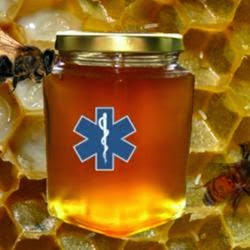
One of the most interesting bits of folk medicine to enjoy a resurgence has been the use of honey for wound healing.
Honey was often used by the ancient Egyptians and Greeks for wound healing. It was used at times in the modern era as well ─ until the mid 20th century. After antibiotics were invented, it went out of common use in Western countries, but was still used to some degree in third-world countries as a folk remedy.
In the last 20 years or so, honey has experienced a resurgence of use, and a number of studies have investigated its utility in wound care. However, at this time, research on honey for wound-care is lagging inside the United States, despite the fact that medical honey dressings were approved by the FDA a few years ago.
It's time that honey for wound care be investigated more thoroughly, both here in the United States and abroad, in various low- and high-resource settings. We need much more data on when and how it is best utilized because it looks like a promising weapon in the fight against antibiotic-resistant bacteria.
How Does Honey Help Healing?
One
review of the topic discussed why honey has come back into use:
Dressing wounds with honey, a standard practice in past times, went out of fashion when antibiotics came into use. Because antibiotic-resistant bacteria have become a widespread clinical problem, a renaissance in honey use has occurred. Laboratory studies and clinical trials have shown that honey is an effective broad-spectrum antibacterial agent that has no adverse effects on wound tissues. As well as having an antibacterial action, honey also provides rapid autolytic debridement, deodorizes wounds, and stimulates the growth of wound tissues to hasten healing and start the healing process in dormant wounds. Its anti-inflammatory activity rapidly reduces pain, edema, and exudate and minimizes hypertrophic scarring. It also provides a moist healing environment for wound tissues with no risk of maceration of surrounding skin and completely prevents adherence of dressings to the wound bed so no pain or tissue damage is associated with dressing changes. Using appropriate dressing practice overcomes potential messiness and handling problems.
Honey
works on several
fronts. First, the sugar in it draws out moisture from bacteria in the wound through osmotic action, and this plus the acidity of honey inhibits the growth of bacteria. Second, it draws more lymph fluid into the wound, which speeds healing. Third, the honey forms a barrier to protect the wound from outside infections, and provides a moist environment that helps promote tissue regrowth and minimize scarring. Fourth, it has an enzyme which produces hydrogen peroxide in a dilute form, which helps disinfect the area without damaging the skin the way the commercially-available hydrogen peroxide does. Finally, it keeps bandages from sticking to wounds as they heal, making dressing changes easier and less damaging to skin as it works to heal.
It's likely that there are other ways in which honey helps healing, but these seem to be the main modes of healing that we have figured out so far.
The biggest advantage of honey is that it does not promote antibiotic resistance, and that it's often
effective against antibiotic-resistant "superbugs" like MRSA.
Honey's most important use currently may be in treating wounds infected with antibiotic-resistant bugs. However, it may be that honey could have an important preventative role before antibiotic-resistant infections ever take hold. Only further research will tell.
Since bees make honey from varying plant sources, different kinds of honey can have different levels of antibacterial effects. In other words, some honeys may be more effective than others.
Research has mostly been done on Manuka Honey (marketed as Medihoney) from New Zealand, which supposedly has greatly increased antibacterial properties compared to many other honeys. However, this company's aggressive marketing has led some to question whether its claim of superiority is more marketing than substance.
Tualang honey from Malaysia is also being researched, as well as RS honey (Revamil honey) from The Netherlands; many other honeys from other countries are sure to follow. New Zealand, Germany, and the Netherlands are the countries currently leading the research surge on medical-grade honey.
It's important to note that honey used in research is different from ordinary honey you might get from the supermarket. It's not clear whether research honey is more effective than supermarket honey, but it seems likely. In addition, impurities within honey (and botulism spores) lead some companies to irradiate their honey before marketing it. Therefore, at this time, most authorities do not promote the use of ordinary over-the-counter honey for wound healing. Medical-grade honey is what has been studied.
A Brief Summary of the Research
Research suggests that medical-grade honey is quite effective for improving healing in burn patients. A 2009
meta-analysis of studies found that patients treated with honey had better healing. The authors concluded:
Available evidence indicates markedly greater efficacy of honey compared with alternative dressing treatments for superficial or partial thickness burns, although the limitations of the studies included in the meta-analysis restrict the clinical application of these findings. Further studies are urgently required to determine the role of honey in the management of superficial or partial thickness burns.
However, the use of honey in patients with leg ulcers has been less convincing.
Jull 2008 did a randomized clinical trial and found that treatment with honey did
not improve healing. On the other hand,
Gethin and Cowman (2009) found that honey did have some beneficial effect on desloughing ulcers and minimizing infection.
One problem is that many medical honey trials have been less than rigorous. They often come from only one or two main centers, and frequently are run or funded by companies who produce medical-grade honey. Furthermore, difficulties with study design (use of medical-grade honey vs. ordinary honey, inconsistent antibacterial properties of honey between batches of the same honey, use of honey only after very serious infections are already present) have also limited the clinical application of the findings of existing studies.
The
2008 Cochrane review of honey in wound care concludes:
Honey may improve healing times in mild to moderate superficial and partial thickness burns compared with some conventional dressings. Honey dressings as an adjuvant to compression do not significantly increase leg ulcer healing at 12 weeks. There is insufficient evidence to guide clinical practice in other areas.
In other words, although many results are encouraging, not all are, and many studies weren't well-designed. Larger, more rigorous and more independent trials are needed to determine how and when honey is most effective.
Honey in Childbearing Women
What about the use of honey for healing in childbearing women?
One 1992
study found that honey helped heal infected cesarean wounds within 2 weeks and avoided the need for re-suturing the wound under general anesthesia.
A 1999
study found that in infections after either a cesarean or a hysterectomy, women treated with honey did better than women treated with traditional topical antiseptics (both groups received systemic antibiotics). The healing time in the honey-treated patients was cut in half, women needed far less time on antibiotics, 84% of the honey-treated group experienced complete healing (vs. 50% in the topical antiseptic group), and none of the honey-treated group needed re-suturing (vs. one-fourth of the topical antiseptic group).
The problem with the research on honey for post-cesarean healing is that the studies are extremely small, not very recent, and were done only in third-world countries with more outdated wound-care practices. However, the two studies that exist are encouraging and indicate that the possibility should definitely be tested more rigorously.
Some midwives also use honey for minor perineal tears after birth. Demetria Clark, herbalist, quoting from various sources, explains why honey can be helpful:
Raw honey is a great remedy for first-degree [perineal] tears. Honey's thick consistency forms a barrier defending the wound from outside infections. The moistness allows skin cells to grow without creating a scar, even if a scab has already formed. Meanwhile, the sugars extract dirt and moisture from the wound, which helps prevent bacteria from growing, while the acidity of honey also slows or prevents the growth of many bacteria. An enzyme that bees add to honey reacts with the wound's fluids and breaks down into hydrogen peroxide, a disinfectant. Honey also acts as an anti-inflammatory and pain killer and prevents bandages from sticking to wounds. Laboratory studies have shown that honey has significant antibacterial qualities. Significant clinical observations have demonstrated the effectiveness of honey as a wound healing agent. Glucose converted into hyaluronic acid at the wound surface forms an extracellular matrix that encourages wound healing. Honey is also considered antimicrobial.
From Volume 11, Issue 1, January 7, 2009 edition of Midwifery Today enews
Excerpted from "Herbs for Postpartum Perineum Care: Part I," The Birthkit, Issue 46
http://www.midwiferytoday.com/products/bk46.htm
Obesity, Diabetes, and Medical Grade Honey
In particular, it would be helpful to know if medical-grade honey could help lessen the incidence of wound infection in women of size, who have a higher rate of infection after cesareans or other operations. Or if it could lessen infection in diabetics, who are also quite prone to surgical site infections and poorly-healing skin ulcers.
Yet I have seen some experts recommend against using honey in these groups, on the assumption that it would raise the blood sugar of the patient, and thereby inhibit healing. However, this seems to be just that, an
assumption rather than a proven fact, and needs to be tested before such groups are routinely excluded from such potentially promising treatment.
Some
authors have also speculated that the high rates of methylglyoxal (MG) in Manuka honey (MediHoney) will impair healing in diabetic ulcers. But again, this theory has not yet been tested.
At this point, I have not seen definitive studies done to test the hypothesis that honey is unsuited for use in either of these groups. Diabetics were routinely excluded from many of the venous leg ulcer studies that were done, and I don't know of any studies done specifically on "obese" people.
However, we do have small
studies and
case reports of MediHoney being used successfully on diabetics, indigent diabetics with chronic wounds, and in people of size─with promising results─but we need systematic study before we jump to conclusions.
It is unfair to exclude fat people and diabetics from the potentially healing properties of medical-grade honey based on unproven assumptions.
Instead of excluding these populations, studies specifically examining outcomes in these populations should be done, utilizing various brands of medical-grade honey and wound-care protocols. Only then will we know whether exclusions from topical honey dressings is justified or not.
Conclusion
The FDA
approved the use of honey for wound dressings in 2007, but U.S.-based research on honey dressings has been slow to catch on, and has been centered mostly on burns and leg ulcers.
Perhaps it's time that its use in other types of wounds, in childbearing women, in diabetics, and in people of size is investigated more thoroughly.
Clearly, we need more information and better studies before we can know just how helpful (or not) medical-grade honey might be.
But given its cost-effectiveness, its potential for lowering antibiotic resistance issues, and the possibility of improving outcome in those with difficult-to-heal wounds, it's a subject that deserves larger and better trials.
*Caution: Honey should not be used for very young children (especially newborns) because it can harbor botulism spores. Therefore many healthcare providers feel medical honey should not be used on anything that might come in contact with newborns either internally or externally (i.e. not for sore nipples or for cord healing after birth).
Honey dressings are well-tolerated by most people who use them, but occasionally a few people report a stinging sensation with their use at first. Those who are allergic to bee stings might also need to use extra caution with medical honey.
References
Honey for Wound Healing
Am J Clin Dermatol. 2011 Jun 1;12(3):181-90.
Honey and wound healing: an overview. Lee DS, Sinno S, Khachemoune A. PMID:
21469763
Honey has been used to treat wounds throughout the ages. This practice was rooted primarily in tradition and folklore until the late 19th century, when investigators began to characterize its biologic and clinical effects. This overview explores both historic and current insights into honey in its role in wound care. We describe the proposed antimicrobial, immunomodulatory, and physiologic mechanisms of action, and review the clinical evidence of the efficacy of honey in a variety of acute and chronic wound types. We also address additional considerations of safety, quality, and the cost effectiveness of medical-grade honeys. In summary, there is biologic evidence to support the use of honey in modern wound care, and the clinical evidence to date also suggests a benefit. However, further large, well designed, clinical trials are needed to confirm its therapeutic effects.
Cochrane Database Syst Rev. 2008 Oct 8;(4):CD005083.
Honey as a topical treatment for wounds. Jull AB, Rodgers A, Walker N. PMID:
18843679
19 trials (n=2554) were identified that met the inclusion criteria. In acute wounds, three trials evaluated the effect of honey in acute lacerations, abrasions or minor surgical wounds and nine trials evaluated the effect the honey in burns. In chronic wounds two trials evaluated the effect of honey in venous leg ulcers and one trial in pressure ulcers, infected post-operative wounds, and Fournier's gangrene respectively. Two trials recruited people with mixed groups of chronic or acute wounds. The poor quality of most of the trial reports means the results should be interpreted with caution, except in venous leg ulcers. In acute wounds, honey may reduce time to healing compared with some conventional dressings in partial thickness burns (WMD -4.68 days, 95% CI -4.28 to -5.09 days). All the included burns trials have originated from a single centre, which may have impact on replicability. In chronic wounds, honey in addition to compression bandaging does not significantly increase healing in venous leg ulcers (RR 1.15, 95% CI 0.96 to 1.38). There is insufficient evidence to determine the effect of honey compared with other treatments for burns or in other acute or chronic wound types. AUTHORS' CONCLUSIONS: Honey may improve healing times in mild to moderate superficial and partial thickness burns compared with some conventional dressings. Honey dressings as an adjuvant to compression do not significantly increase leg ulcer healing at 12 weeks. There is insufficient evidence to guide clinical practice in other areas.
Adv Skin Wound Care. 2011 Jan;24(1):40-4.
Use of honey in wound care: an update. Song JJ, Salcido R. PMID:
21150765
The therapeutic use of honey in wound care has been used since ancient times. Honey has been shown to have antibacterial properties in vitro and animal studies have demonstrated accelerated wound healing with the use of honey. In human trials, there is currently not enough strong evidence to fully support the use of honey in wound care; however, use in minor burns and prevention of radiation mucositis appear to be 2 areas where honey shows therapeutic promise.
Br J Surg. 2008 Feb;95(2):175-82.
Randomized clinical trial of honey-impregnated dressings for venous leg ulcers. Jull A, et al; Honey as Adjuvant Leg Ulcer Therapy trial collaborators. PMID:
18161896
This community-based open-label randomized trial allocated people with a venous ulcer to calcium alginate dressings impregnated with manuka honey or usual care. All participants received compression bandaging. The primary outcome was the proportion of ulcers healed after 12 weeks. Secondary outcomes were: time to healing, change in ulcer area, incidence of infection, costs per healed ulcer, adverse events and quality of life. Analysis was by intention to treat. RESULTS: Of 368 participants, 187 were randomized to honey and 181 to usual care. At 12 weeks, 104 ulcers (55.6 per cent) in the honey-treated group and 90 (49.7 per cent) in the usual care group had healed (absolute increase 5.9 (95 per cent confidence interval (c.i.) -4.3 to 15.7) per cent; P = 0.258). Treatment with honey was probably more expensive and associated with more adverse events (relative risk 1.3 (95 per cent c.i. 1.1 to 1.6); P = 0.013). There were no significant differences between the groups for other outcomes.CONCLUSION: Honey-impregnated dressings did not significantly improve venous ulcer healing at 12 weeks compared with usual care.
J Clin Nurs. 2009 Feb;18(3):466-74. Epub 2008 Aug 23.
Manuka honey vs. hydrogel--a prospective, open label, multicentre, randomised controlled trial to compare desloughing efficacy and healing outcomes in venous ulcers. Gethin G, Cowman S. PMID:
18752540
Comparison of desloughing efficacy after four weeks and healing outcomes after 12 weeks in sloughy venous leg ulcers treated with Manuka honey (Woundcare 18+) vs. standard hydrogel therapy (IntraSite Gel). BACKGROUND: Expert opinion suggests that Manuka honey is effective as a desloughing agent but clinical evidence in the form of a randomised controlled trial is not available. There is a paucity of research which uses Manuka honey in venous ulcers. DESIGN: Prospective, multicentre, open label randomised controlled trial. METHOD: Randomisation was via remote telephone. One hundred and eight patients with venous leg ulcers having greater than or =50% wound area covered in slough, not taking antibiotics or immunosuppressant therapy were recruited from vascular centres, acute and community care hospitals and leg ulcer clinics. The efficacy of WoundCare 18+ to deslough the wounds after four weeks and its impact on healing after 12 weeks when compared with IntraSite Gel control was determined. Treatment was applied weekly for four weeks and follow-up was made at week 12. RESULTS: At week 4, mean % reduction in slough was 67% WoundCare 18+ vs. 52.9% IntraSite Gel (p = 0.054). Mean wound area covered in slough reduced to 29% and 43%, respectively (p = 0.065). Median reduction in wound size was 34% vs. 13% (p = 0.001). At 12 weeks, 44% vs. 33% healed (p = 0.037). Wounds having greater than 50% reduction in slough had greater probability of healing at week 12 (95% confidence interval 1.12, 9.7; risk ratio 3.3; p = 0.029). Infection developed in 6 of the WoundCare 18+ group vs. 12 in the IntraSite Gel group. CONCLUSION: The WoundCare 18+ group had increased incidence of healing, effective desloughing and a lower incidence of infection than the control. Manuka honey has therapeutic value and further research is required to examine its use in other wound aetiologies. RELEVANCE TO CLINICAL PRACTICE: This study confirms that Manuka honey may be considered by clinicians for use in sloughy venous ulcers. Additionally, effective desloughing significantly improves healing outcomes.
Biotechnol Res Int. 2011;2011:917505. Epub 2010 Dec 29.
Antibacterial efficacy of raw and processed honey. Mohapatra DP, Thakur V, Brar SK. PMID:
21350671
In vitro antibacterial activity of methanol, ethanol, and ethyl acetate extracts of raw and processed honey was tested against Gram-positive bacteria (Staphylococcus aureus, Bacillus subtilis, Bacillus cereus, Enterococcus faecalis, and Micrococcus luteus) and Gram-negative bacteria (Escherichia coli, Pseudomonas aeruginosa, and Salmonella typhi). Both types of honey showed antibacterial activity against tested organisms with the zone of inhibition (ZOI) ranging from 6.94 to 37.94 mm, while E. coli, S. typhi, and P. aeruginosa showed that sensibility towards all the extracts with ZOI ranges between 13.09 to 37.94 mm. The methanol extract showed more potent activity than other organic extracts. Gram-negative bacteria were found to be more susceptible as compared to Gram-positive bacteria except E. faecalis. The broth microdilution assay gave minimum inhibitory concentrations (MIC) value of 625 μg/mL, while the minimum bactericidal concentration (MBC) ranges between 625 μg/mL 2500 μg/mL. The study showed that honey has antibacterial activity (bacteriostatic and bactericidal effect), similar to antibiotics, against test organisms and provides alternative therapy against certain bacteria.
N Z Med J. 2009 May 22;122(1295):47-60.
Honey in the treatment of burns: a systematic review and meta-analysis of its efficacy. Wijesinghe M, et al. PMID:
19648986
Eight studies with 624 subjects were included in the meta-analysis. The quality of the studies was poor with each study having a Jadad score of 1. Six studies were undertaken by the same investigator. In most studies unprocessed honey covered by sterile gauze was compared with silver sulphadiazine-impregnated gauze. The fixed effects odds ratio for healing at 15 days was 6.1 (95% CI 3.7 to 9.9) in favour of honey having a superior effect. The random effects pooled odds ratio was 6.7 (95% CI 2.8 to 15.8) in favour of honey treatment. The secondary outcome variables all showed significantly greater efficacy for honey treatment. CONCLUSION: Available evidence indicates markedly greater efficacy of honey compared with alternative dressing treatments for superficial or partial thickness burns, although the limitations of the studies included in the meta-analysis restrict the clinical application of these findings. Further studies are urgently required to determine the role of honey in the management of superficial or partial thickness burns.
Ostomy Wound Manage. 2002 Nov;48(11):28-40.
Re-introducing honey in the management of wounds and ulcers - theory and practice. Molan PC. PMID:
12426450
Dressing wounds with honey, a standard practice in past times, went out of fashion when antibiotics came into use. Because antibiotic-resistant bacteria have become a widespread clinical problem, a renaissance in honey use has occurred. Laboratory studies and clinical trials have shown that honey is an effective broad-spectrum antibacterial agent that has no adverse effects on wound tissues. As well as having an antibacterial action, honey also provides rapid autolytic debridement, deodorizes wounds, and stimulates the growth of wound tissues to hasten healing and start the healing process in dormant wounds. Its anti-inflammatory activity rapidly reduces pain, edema, and exudate and minimizes hypertrophic scarring. It also provides a moist healing environment for wound tissues with no risk of maceration of surrounding skin and completely prevents adherence of dressings to the wound bed so no pain or tissue damage is associated with dressing changes. Using appropriate dressing practice overcomes potential messiness and handling problems.
PLoS One. 2011 Mar 4;6(3):e17709.
Two major medicinal honeys have different mechanisms of bactericidal activity. Kwakman PH, et al. PMID: 21394213
Honey is increasingly valued for its antibacterial activity, but knowledge regarding the mechanism of action is still incomplete. We assessed the bactericidal activity and mechanism of action of Revamil® source (RS) honey and manuka honey, the sources of two major medical-grade honeys. RS honey killed Bacillus subtilis, Escherichia coli and Pseudomonas aeruginosa within 2 hours, whereas manuka honey had such rapid activity only against B. subtilis. After 24 hours of incubation, both honeys killed all tested bacteria, including methicillin-resistant Staphylococcus aureus, but manuka honey retained activity up to higher dilutions than RShoney. Bee defensin-1 and H₂O₂ were the major factors involved in rapid bactericidal activity of RS honey. These factors were absent in manuka honey, but this honey contained 44-fold higher concentrations of methylglyoxal than RS honey. Methylglyoxal was a major bactericidal factor in manuka honey, but after neutralization of this compound manuka honey retained bactericidal activity due to several unknown factors. RS and manuka honey have highly distinct compositions of bactericidal factors, resulting in large differences in bactericidal activity.
Honey and Cesarean Healing
Eur J Med Res. 1999 Mar 26;4(3):126-30.
Effects of topical honey on post-operative wound infections due to gram positive and gram negative bacteria following caesarean sections and hysterectomies. Al-Waili NS, Saloom KY. PMID:
10085281
The possible therapeutic effect of topical crude undiluted honey in the treatment of severe acute postoperative wound infections was studied. Fifty patients having postoperative wound infections following caesarean sections or total abdominal hysterectomies with gram positive or gram negative bacterial infections were allocated in two groups. Twenty-six patients (group A) were treated with 12 hourly application of crude honey and 24 patients (group B) were treated with local antiseptics: spirit (70% Ethanol) and povidone-iodine. Both groups received systemic antibiotics according to culture and sensitivity. Results showed that eradication of bacterial infections was obtained after 6 +/- 1.9 days (mean +/- SD) in group A and after 14.8 +/- 4.2 days in group B (p less than 0.05). Period for antibiotics use was 6.88 +/- 1.7 days in-group A and 15.45 +/- 4. 37 in-group B (p less than 0.05). Complete wound healing was evident after 10. 73 +/- 2.5 days in group A and after 22.04 +/- 7.33 in group B (p less than 0. 05). Size of postoperative scar was 3.62 +/- 1.4 mm after using topical honey and was 8.62 +/- 3.8 mm after local antiseptics (p less than 0. 05). The mean hospital stay was 9.36 +/- 1.8 days in group A and 19. 91 +/- 7.35 days in group B (p less than 0.05). After using honey, 22/26 patients (84.4%) showed complete wound healing without wound disruption or need for re-suturing and only 4 patients showed mild dehiscence. In group B, 12/24 patients (50%) showed complete wound healing and 12 patients showed wound dehiscence, six of them needed re-suturing under general anesthesia. We concluded that topical application of crude undiluted honey could (1) faster eradication of bacterial infections, (2) reduce period of antibiotic use and hospital stay, (3) accelerate wound healing, (4) prevent wound dehiscence and need for re-suturing and (5) result in minimal scar formation.
Aust N Z J Obstet Gynaecol. 1992 Nov;32(4):381-4.
Topical application of honey in treatment of abdominal wound disruption. Phuapradit W, Saropala N. PMID:
1290445
The usefulness of honey application as an alternative method of managing abdominal wound disruption was assessed. Fifteen patients whose wound disrupted after Caesarean section were treated with honey application and wound approximation by micropore tape instead of the traditional method of wound dressing with subsequent resuturing. We achieved excellent results in all the cases with complete healing within 2 weeks. Honey application is inexpensive, effective and avoids the need to resuture which also requires general anaesthesia.