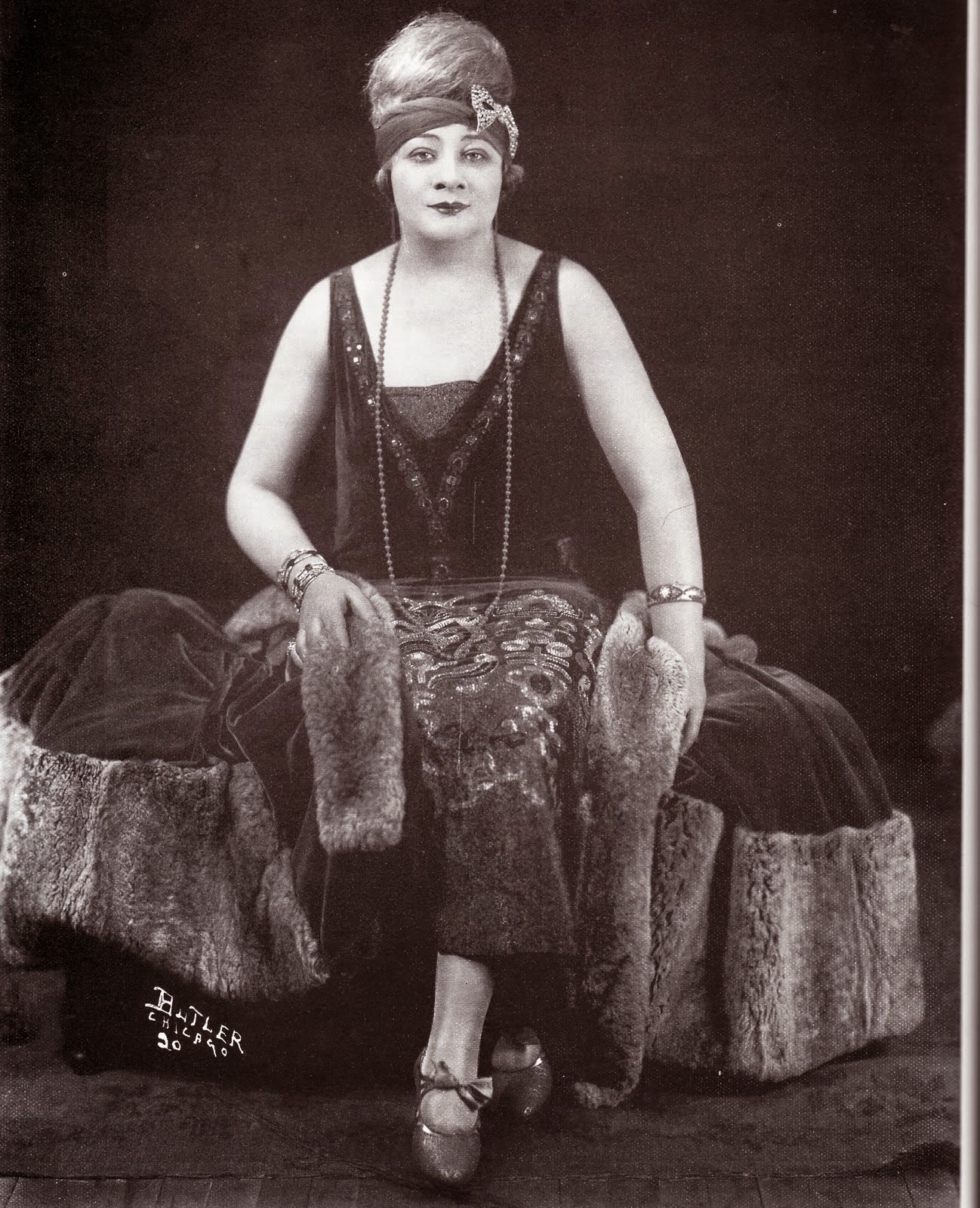
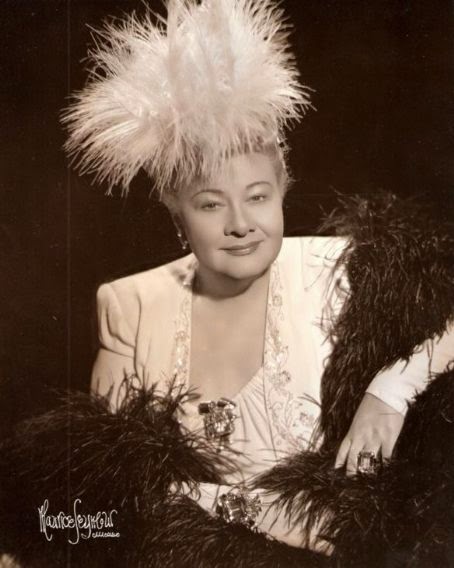
Showing posts with label famous fat people. Show all posts

Thursday, January 11, 2018

Famous Fat Celebrities -- Sharon Jones: "Too Fat, Too Black"


I just came across the biographic details of an amazing entertainer with whom I was unfamiliar. Her name was Sharon Jones. She was a soul and funk singer so full of energy and fierceness on stage that she was sometimes called "the female James Brown."

She led a fascinating and inspiring life, full of hardships overcome through sheer guts and hard work. Against all odds, she achieved fame and renown in middle age. And when she was handed a difficult diagnosis of terminal cancer at far too young an age, she persevered with her life's work and continued breaking barriers for women and people of color for as long as she could. She died a peaceful death, full of music and grace, surrounded by her family and her band. Hers was a life well-lived.

Childhood


Sharon Lafaye Jones was born May 4, 1956 in Augusta Georgia. She was born to Ella Mae Price Jones and Charlie Jones. She was the youngest of six children. After Ella Mae's sister died, she raised her sister's four children as well, so Sharon grew up as one of ten children.

Sharon's father was abusive and home life was chaotic at times. According to one source, she had a brother who went crazy after a brush with LSD, and her mother shot at her husband when he was unfaithful during her pregnancy.

In time, her mother moved the children away to New York and raised them by herself. Sharon grew up in Brooklyn. She would sometimes return to Georgia during her summers, but it was New York that she considered her home and that strongly flavors her work.

Musical Style and Influences


It was in Brooklyn that Jones began singing in church with her sister and absorbing the gospel style. This deeply-felt, soulful, and energetic music fused with the urban styles she heard all around her in New York and became the backbone of her style.

Another primary influence was James Brown. Her mother knew James Brown and Sharon grew up listening to his music, but she never tried to imitate him. You can see his highly-charged soul style in her performances, but she had her own twist on the music that made her truly unique. She was a fiery and truly commanding presence on stage. 

Other early influences included Sam Cooke, Aretha Franklin, Ella Fitzgerald, Thom Bell, Otis Redding, Ike & Tina Turner, Marva Whitney and the entire Motown stable of artists.


Jones described her style as soul and funk music. She lamented the fact that music awards put soul and funk into the R&B category because there supposedly weren't enough soul and funk performers for separate recognition. The industry believed that soul music was an outdated relic of a bygone era, but she set out to prove them wrong.

Her band's music typically had a strongly driving beat with a hook of horns and saxes. The band had a baritone sax, alto sax, and trumpet propelling its funk, underlaid by more typical instruments like electric guitar, drums, and bass guitar.

Too Fat, Too Black

Despite her talent and unique style, Jones had a hard time getting signed by a major record label. Record executives told her she was "Too fat, too black, too short, and too old" to make it in the business.

Ironically, her weight was barely mid-sized by community standards. Furthermore, there is a strong precedent for famous fat black women singers in African-American music (Bessie Smith, Ma Rainy, Big Mama Thornton, Mahalia Jackson, Aretha Franklin, Ella Fitzgerald, Jill Scott, Queen Latifah, and many others). Still, those are the exceptions. Most record executives of that time placed a strong emphasis on conventional physical beauty for new singers trying to break into the business. In that recording industry in that time, she was seen as too heavy for a non-established singer and not worth taking a chance on.

"I looked at myself and saw ugliness," she said.

But she wouldn't let that keep her music down. Although she had to resort to other jobs to support herself, she kept singing and plugging away. She reminded herself that when she was a teenager, she saw a psychic who predicted a number of things that later came true. The psychic supposedly told her that she would receive recognition only late in her life, but would travel and have music and fame.

She cites this as helping her through the lean years when she had to live with her mother and work varied jobs like wedding singer, armored-car guard, and corrections officer at Ryker's Island. She had faith that in time, her ship would come in.

Eventually, it did─but not until she was over 40 years old. This is an almost unheard-of age for finally achieving success in the youth-oriented recording business, but she did it, against all odds.

Sharon Jones and the Dap-Kings

Jones' first big break came in 1996 when she answered a call for a back-up singer for a recording. Musician and producer Gabriel Roth was so impressed by her talent that he had her record a single of her own. Through several record label ownership switches, that recording managed to survive and attract attention.

In the late 90s, she joined a small independent record label with Roth called Desco which began promoting her. Her fame began to grow.

That record label eventually folded too, but then Roth formed Daptone Records in 2001 and this one succeeded. Musicians from various bands joined with Jones and Roth and formed Sharon Jones & The Dap-Kings. They sought to play classic Soul music with their own unique twist. They became the leading act for Daptone Records.

The company got a run-down house in Brooklyn and remodeled it from the studs up. Sharon Jones helped with the remodeling, doing much of the electrical work herself. The building contained the offices and recording studios of the company. They made a conscious decision to only use analog equipment for their recordings, forgoing digital tools in order to make their music more authentic. They began gaining success with the college radio crowd and online via the internet.

Photo: Fred Tanneau, Getty Images
Sharon Jones and The Dap-Kings put out a number of albums over the years. The first one that really attracted attention was Dap Dippin' with Sharon Jones and the Dap-Kings, which received strong notices from fans, DJs and collectors in 2002.

They added three more albums, including Naturally (2005), 100 Days, 100 Nights (2007), and I Learned the Hard Way (2010). As a result, they began to be seen by many as "the spearhead of a revival of soul and funk."

To increase their visibility, they toured relentlessly and performed with such diverse performers as Phish, Lou Reed, Hall & Oates, Michael BublĂ©, and Prince. Jones  appeared in the 2007 film The Great Debaters, starring Denzel Washington and Forest Whitaker. Amy Winehouse took inspiration from Jones, and the Dap-Kings played back-up for some of Winehouse's recordings. Later, she and the band played in the Macy's Thanksgiving Parade and did the closing song for the TV series, Luke Cage.

Through the internet, she and the band were able to cross over and appeal to a multi-racial audience. She had a fiery presence onstage that left a strong impression. The New York Times said, "With her high-power vocals growling over the Dap-Kings’ caffeinated soul, Ms. Jones channels the power of James Brown in his prime."

She began receiving more fame for her work, despite loyally staying with the small, independent record label. However, it wasn't until near the end of her life, in her late 50s, that the band and Jones really gained the recognition they deserved. Unfortunately, it was then that illness struck.

"I Have Cancer; Cancer Don't Have Me"

Photo: Jesse Dittmar, New York Magazine
In 2012, Sharon Jones & The Dap-Kings began recording the album, Give the People What They Want. This is the work that would eventually earn them the recognition they so richly deserved, but it wasn't achieved without difficulty.

In 2013, Jones was diagnosed with bile duct cancer and then pancreatic cancer, stage II. Doctors removed her gallbladder, part of her pancreas, and 18 inches of her intestines. She then  underwent difficult chemotherapy treatments.

She asserted, "I have cancer; cancer don't have me." Although she did no music for about eight months during treatment, she and the band eventually went back to the studio and worked on material for the album on the days when she felt strong enough. Sometimes she was so fatigued she could hardly manage. She feared that she would not live to see the album released. Eventually, she rallied and they were able to finish it. The album was released two weeks after her final chemo treatments.

Give the People What They Want garnered a Grammy nomination for Best R&B Album in 2015, despite being from a small, independent, and relatively unknown label. Jones was disappointed that there wasn't a separate category for Soul, but was still glad to finally receive recognition for their work. She told Rolling Stone Magazine, "The only thing I wanted to accomplish was to finally get recognized by the music industry."

For a while, her cancer went into remission and she continued with her career. She and the band toured and she performed as energetically as ever despite hip pain and neuropathy in her hands and feet that made it hard to dance. The band recorded a holiday-themed album called It's a Holiday Soul Party and released it in November 2015. Jones and the band continued to influence other artists such as Adele and her fame continued to grow. Talk shows like The Tonight Show, Jimmy Fallon, and Conan O'Brien had them performing for wide audiences.


Filmmaker Barbara Kopple made a documentary about Jones' life and music called "Miss Sharon Jones!" (available on Netflix and Amazon) which did a great deal to cement recognition of her talent. It wasn't intended to be about her cancer, but in the end it gave a gripping and unsparing look at her life during cancer, chemo, and rehabilitation to get in shape to perform again. The film documented the whole journey and ended with her triumphant return to the stage and the finishing of their watershed album. Jones said:
The movie wasn’t done because I got cancer; that movie is about part of my life, and cancer is going to be with me for the rest of my life...Do I lie down? Do I give up my career in music, in singing, because of chemo? Or do I go out and live my life?...To me, life is about how well you take it.
During her remission and comeback, the band enjoyed widespread acclaim as they toured, but it wasn't to last. Sadly, at the 2015 premiere of the documentary, she had to announce that the cancer had returned and she would be returning to chemotherapy that week. She stated that it wouldn't stop her from continuing to make music, saying, "I'm going to do what I have to do. I'm going to sing."

She toured while taking chemotherapy treatments. She was still touring until a few months before her death in 2016, though she did have to cancel a concert for President Obama at the last minute when she developed pneumonia. Sadly, she never got to reschedule it. She died a month later.

The following is a music video she made while first ill called "Stranger To My Happiness." She said it was a tremendous struggle to finish the video at times, but then she just decided to double down and gut it out. A casual observer would never know she was sick from her performance. The only clue is her bald head and the chemo port visible on her chest.


It's really great that in such an incredibly looks-focused industry, she did not hide her hair loss but went proudly onstage bald and still sexy as hell. She said:
I'm not a hair person. My hair on my head is my hair and I'll connect some braids onto it. But now to go out there without it, it's a new Sharon. Plus, I want my fans to go through what I'm going through. If they see this maybe they'll understand. And maybe my story will get across to someone else with cancer. Maybe they'll say, “Keep moving!” But basically it was to inspire myself. But you know, whenever you do something for yourself, you're doing something for someone else too.
Performing energized her and gave her life meaning, even as she struggled with her health. In the documentary, she notes how performing was incredibly therapeutic for her:
"When I walk out [onstage], whatever pain is gone," Jones says. "You forget about everything. There is no cancer. There is no sickness. You're just floating, looking in their faces and hearing them scream. That's all that is to me." 

In 2017, her bandmates put out another record, posthumously, called "Soul of a Woman," full of tracks she had made towards a new album. On the band's website, they write:
Sharon used to say ‘What comes from the heart reaches the heart,’ and I think everybody had that sense of pouring their heart into this record.” 
“Every time she took the stage, it always felt like Sharon was leaving it all out there. So maybe it was more intense for the band towards the end, knowing what was coming, but that's the only way she knew how to sing her whole life—like it was her last day on earth.”
Death


Sharon suffered two strokes in November 2016 and died a few days later. Her bandmates and family gathered around her for her final days and played music for her.

At first she could sing along, but after her second stroke she could no longer sing words. However, bandmate Gabriel Roth says that she often "moaned" along in tune with the music and eventually hummed along with it, especially the old gospel standards she loved so well. Even when she could no longer speak or answer questions, she could hum along and make 3-part harmony with her back-up singers, which greatly moved those present. Roth recounted:
She would smile and she would laugh at jokes and she'd look around and she seemed really happy to have everybody around her.

She didn't seem anxious or scared or anything. She just wanted to sing, you know, and every time there was a lull in the room she would start moaning some kind of gospel song or something and we'd very quietly come in behind her and play guitar. Or Saundra and Starr were singing harmonies with her.

And it was crazy. Even in that state -- if you asked her if she was in pain, she couldn't respond. She couldn't say one word, or say somebody's name or anything.

But she could find harmony notes with Saun and Starr, and sing three-part harmony and improvise these gospel moans. It was really remarkable, and it was beautiful. I've never seen anything like it.
Rest in peace, Sharon Jones. What a wonderful musical contribution you made to the world.


References

Thursday, December 29, 2016

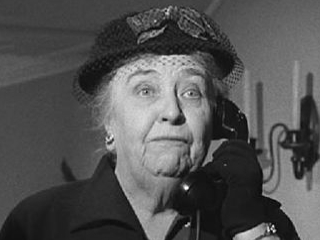
Famous Fat People: Jane Darwell, Academy-Award Winning Actress

Jane Darwell, Academy Award-winning actress
Periodically on this blog, we look at the lives of famous fat people of the past just for fun. So far we've looked at Sophie Tucker and Marie Dressler. Today we are talking about Jane Darwell.

Fat people are tremendously underrepresented in Hollywood, and even when they actually have a decent role, positive portrayals seem few and far between.

It's helpful to remember that there actually have been quite a few fat folk who have quietly had real accomplishments even if they often get overlooked.

Jane Darwell was an actress whose career spanned the stage, silent movies, and talkies, and who won an Academy Award for Best Supporting Actress.

She was born Patti Woodard to a well-off family in Missouri in 1879. Her father was president of a railroad company.

She was bit by the acting bug and flirted with the possibilities of circus rider and opera singer before deciding to become an actress.

In an era when acting was considered a disreputable occupation for women, she chose to change her name to "Darwell" so she wouldn't embarrass her family.

Jane Darwell in "The Goose Girl," 1915
She started her career in stage productions in Chicago, then appeared in her first film in 1913 in her mid-30s. After working in films for a while, she went back to the stage for 15 years.

Theatrical publicity still, 1945
In 1930, she returned to films with "Tom Sawyer," and thereafter had an active career on both film and stage. The best roles of her career were as an older actress.

Shirley Temple and Jane Darwell in "Bright Eyes"
Because she was seen as "short, stout, and plain," she always played character parts, usually the grandmother, the housekeeper, etc. She appeared in five Shirley Temple films in those types of characters.

Going over a script with Rosalind Russell
Here she is as yet another maid on the set of "Craig's Wife," looking at a script with Rosalind Russell.

With Tyrone Power in "Jesse James"
Most often, though, she played the mother of one of the main characters. She was seen as the quintessential mother figure, ironic since she never had children herself. Here she is with Tyrone Power in "Jesse James."

She appeared in many high-profile films over the years, including "Huckleberry Finn" (1931), "Jesse James" (1939), "Gone with the Wind" (1939), "The Ox-Bow Incident" (1943), and "My Darling Clementine" (1946).

As Mrs. Merriwether (center) in "Gone with the Wind"
In "Gone with the Wind," she played Mrs. Dolly Merriwether, a Southern matron and society gossip. In this role, she was noted for having a booming vocal and physical presence on screen.

"The Ox-Bow Incident" (1943)
"The Ox-Bow Incident" let her venture outside the narrow confines of the typical mother/older woman role in Hollywood. She wore pants, rode astride, and was a take-charge woman in a sexist frontier town in this old Western about the moral dilemma of capital punishment.

An atypical role in "The Ox-Bow Incident"
In this role, she was sympathetic in that she was acting outside of gender norms and pushing back against sexist standards, but she was also a complex and dark character because of her blood-thirsty, vicious nature and enthusiastic embrace of hanging a man without a trial. It was a rare departure from the typical roles she played and she dug into it uncompromisingly.

Movie poster for "The Grapes of Wrath"
However, it was her role as Ma Joad in "The Grapes of Wrath" (1940) that won Darwell the most acclaim. Her quiet strength in keeping her family together despite the trials of the Great Depression, the Dust Bowl, losing the family farm, and the tough life of migrant farm work was the heart of the film in many ways.

Ma Joad taking one last look at some beloved mementos
One of her most powerful scenes was of Ma Joad silently going through her things in her house as the family is about to leave it forever. She looks at her mementos, mentally saying farewell, burning most of them because she knows they have no place in her new life. She holds a pair of nice earrings up to her ears one last time, remembering better times but realizing she'll never wear them again. Mournfully but resolutely, she leaves them behind.

The director, John Ford, doesn't rush the scene or clutter it up with dialogue. The lighting by cinematographer Gregg Toland is absolutely stunning. She is seen from behind the shoulder, darkly, in a broken mirror, as if lit by a single candle, highlighting her grief. Her image is striking in its poignancy, heartbreaking in its sorrow, but does not hesitate to show her resolute strength in leaving the past behind and moving on. Nearly every critic cites this scene as one of the best in the movie, with her acting and the stark lighting as its central core.

Dancing with Henry Fonda near the end of "Grapes of Wrath"
Darwell played Henry Fonda's mother, and their scenes together are really special. Their bond is crucial to the story and the tragic ending when he must leave the family to protect them. All through the film, they are very reserved with each other, as befits the culture of the people they represent. But they show the special bond between this mother and her son in small ways. By the end, when he sings to her as he dances with her, you can see their rapport. When he has to leave and they embrace one last time, it breaks your heart.

Henry Fonda wanted Darwell to play Ma Joad
Reportedly, Fonda had to campaign heavily to have Darwell cast as his mother. The director initially wanted to cast someone else in the role instead, someone thinner. But in the end, Darwell's careworn face (none of the actors were allowed to wear makeup) echoed Ma Joad's look perfectly. She was Every Woman facing hard times in the Great Depression.

Some critics have suggested her appearance was too "soft," "dumpy," "porcine," or "plump" for Steinbeck's steely family matriarch ─ as if a fat woman could not still be fat through hard times, or as if fatness could not represent the physical or emotional toughness needed to keep a family together through great difficulties. These comments reflect the authors' biases; Steinbeck's original work states clearly that Ma Joad is heavyset from childbearing but strong from years of hard work.

On the road as migrant farmworkers, in "The Grapes of Wrath"
Although her work was certainly sentimental in the typical acting style of the time, most critics have praised it, calling it a "a performance of quiet strength, dignity, and optimism," and "the performance of a lifetime." Some have even called her performance "one of the greatest mother figures the screen has given us."

Darwell receiving her Oscar for "Grapes of Wrath"
Certainly her peers and colleagues seem to have agreed with the latter opinions, awarding her the 1940 "Best Supporting Actress" Oscar for her work in the film, despite stiff competition from some amazing actresses and roles that year.

Saying goodbye to her son at the end of "The Grapes of Wrath"
Through her career, Darwell played Henry Fonda's mother so often ("Jesse James," "Grapes of Wrath," "Chad Hanna," "The Ox-Bow Incident," and "My Darling Clementine") that they joked about it. She said:
I've played Henry Fonda's mother so often that, whenever we run into each other, I call him "Son" and he calls me "Ma" just to save time.
As Mrs. Rogers in "There's Always Tomorrow"
In the 1950s, she began to scale back her roles as she faced health challenges in her 70s. Even so, she appeared in numerous TV shows as well as occasional movies like "There's Always Tomorrow" (1956) and "The Last Hurrah" (1958).

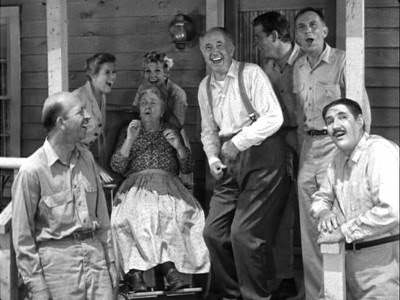
As Granny McCoy on "The Real McCoys" in 1961
In the 1960s, she was in her 80s and becoming frail. She still made occasional appearances, including on TV shows like "Wagon Train" and "The Real McCoys," working until 1964 and about age 84 or so.

Darwell's last role, in "Mary Poppins"
Her final role was as the Old Woman feeding the birds in "Mary Poppins" in 1964. According to IMDB, she refused the role at first, but Walt Disney personally visited her in order to convince her to do the role. It's a small but important part of the picture, a sweet but serious moment that is striking and memorable. 

She died a few years later at age 87 (nearly 88). She had appeared in over 170 films.

Critics would have us believe that fat people were non-existent in the olden days and that fat people could never make a career in Hollywood. They'd also have us believe that fat people never live to be old, always dying young.

Jane Darwell is another example that refutes these common misconceptions.


References


Thursday, May 15, 2014

Famous Fat Folk: Sophie Tucker, Last of the Red-Hot Mamas

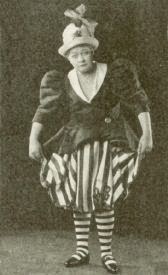
One of my favorite Vaudeville performers was Sophie Tucker (1884–1966).

She was known as the "Last of the Red-Hot Mamas."

She combined an earthy sense of humor with a big rounded body and never let others keep her down.

Life

Sophie was born to a Jewish family in Russia as they were emigrating to the United States. They settled in Connecticut when she was just a baby. 

Her original name was Sophia [or Sonia] Kalish, but the family changed its last name to Abuza when it emigrated.  Later, during a brief marriage at age 19, she took her husband's last name, "Tuck," which she later adapted to Tucker for her stage name.

She worked in her family's restaurant business as she grew up, often singing for tips. According to the website, Jewish Women's Archive, she recounted:
I would stand up in the narrow space by the door and sing with all the drama I could put into it. At the end of the last chorus, between me and the onions there wasn't a dry eye in the place.
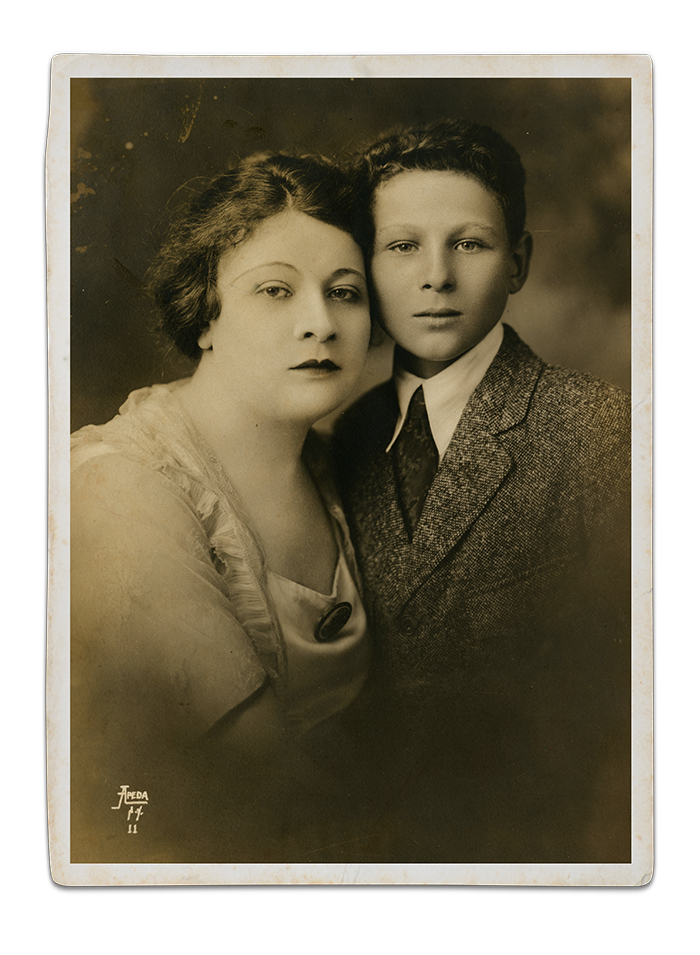
Sophie and her son, Bert
She was married 3 times in her life but none of her marriages lasted for long. She had a son, Bert (see picture to left), with her first husband.

After they divorced, she left Bert with her parents while she went to New York City to make a career and often sent home money from her earnings to help support them.

She married twice more but each experience was unhappy and left her determined to be independent and happy on her own:
Sophie Tucker married and divorced twice more before giving up on marriage, proclaiming, in song, "There isn't going to be a fourth Mr. Ex/ And I'll be damned if I'm paying any more alimony checks/ I'm living alone and I like it."
She felt that philanthropy was very important and supported many charities. She died at age 82, from lung and kidney ailments.

Career

Sophie Tucker had a long and varied career.

She started in vaudeville with a comic shtick routine, and this vaudeville material influenced her style for the rest of her life.

She was briefly in the Ziegfeld Follies, but was so popular that many of the other performers refused to go on with her because she upstaged them.

In time, she branched out to (rather forgettable) movies, then developed a nightclub act in which she revisited her vaudeville material while also developing more sentimental songs.

In her later years, she was a frequent guest on music and variety shows on TV like The Ed Sullivan Show. 

She toured incessantly and performed right up until a few weeks before her death.

Weight

Although actually not that large, Sophie was always considered a big girl in the entertainment world. Even as a young teenager, she was often called "the fat girl." Her early managers were afraid she was "too fat and ugly" to make it on stage.

Rather than let it work against her, she used it as part of her act, and was often self-deprecating about it. As one source comments:
Tucker's stage image emphasized her "fat girl" image but also a humorous suggestiveness. She sang songs like "I Don't Want to Be Thin," "Nobody Loves a Fat Girl, But Oh How a Fat Girl Can Love."
Late in her career she sang a song called, "I'm the 3-D Mama with the Big Wide Screen."

In her most famous song she sang, "You're gonna miss your big fat momma some of these days."

She took a perceived negative and turned it into a positive by playing the underdog and making her audiences root for her. The fact that the "fat and ugly girl" became most famous for her racy, sexy material was an irony not lost on her.

Bawdy Overtones


A lot of Tucker's stage personality was based on a bold, brassy, sexy persona, singing songs of humorous raciness.

This earned her the billing, "The Last of the Red Hot Mamas" but her material was just ambivalent enough that it could be interpreted innocently or not-so-innocently, which kept her away from the worst censorship of the time. 

Some of her racy songs included, "I May Be Getting Older Every Day (But Younger Every Night)," "When They Start to Ration My Passion, It's Gonna Be Tough on Me," "Making Wicky-Wacky in Waikiki," and "You've Got to Make It Legal, Mr. Siegel."

Singing "The Angle-Worm Wiggle" got her removed from the stage in 1910 but the judge threw out the case.

Performing Style

As her act progressed, Tucker hired Ted Shapiro as her accompanist. He became a long-time part of her act, exchanging witty banter with her in between numbers. He also wrote some of her songs.

She usually used a narrative, half-speaking style in her songs, especially as she aged, but could sing when needed.

Her voice was not very good, but her comic style and brassy delivery influenced later entertainers like Mae West, Ethel Merman, and Bette Midler (who has a stage character named "Soph" and who supposedly named her daughter after Tucker).

Tucker was fiercely independent after all her failed marriages, and that was often reflected in her repertoire. Some of her songs included "A Good Man Is Hard to Find," "You Can't Deep-Freeze a Red-Hot Mama," "Too Much Lovin'," "Never Let the Same Dog Bite You Twice," "I'm Living Alone and I Like It," "I Ain't Takin' Orders from No One," and "No Man is Ever Gonna Worry Me."

Her songs about independence from men made her popular with women, but men liked her for her bawdy humor. She toured vaudeville houses and music halls through the United States and Europe, taking on a more nostalgic style as the years progressed and vaudeville went out of vogue.

Although she could be quite flamboyant, dressing in furs, jewels, feather boas, and outrageous wigs and hats, she also could effectively deliver serious or highly sentimental songs, earning her the title of "The First Lady of Show Business" by the end of her career.

Controversies

As with many other performers of that era, her early career is deeply entwined with racist practices common to the time, like singing in blackface and doing covers of African-American songs.

In 1907, when Tucker got her first break in vaudeville, they insisted that she perform in blackface. However, one day when her costume trunks got lost, she had to go onstage without it and became more popular without it, thereafter dropping the practice.

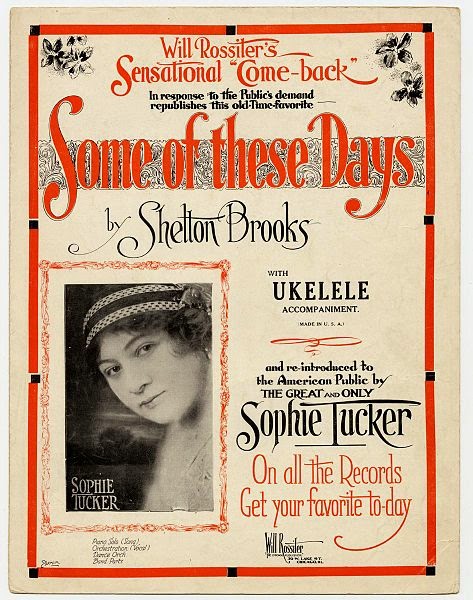
She hired African-American composers to write songs for her and sang in a style influenced by ragtime and blues. She hired vaudeville and blues greats Mamie Smith and Ethel Waters to give her singing lessons in those styles. In 1910, African-American composer Shelton Brooks wrote "Some of These Days." Tucker purchased exclusive rights to sing it and it became the signature song of her act and the title of her 1945 autobiography.

Tucker also made a name for herself by singing for Jewish audiences. She sang songs like "My Yiddishe Momme" by Jack Yellen and Lew Pollack, a highly sentimental song about a mother's sacrifice, which she began singing after the death of her own mother. She explained:
Even though I loved the song and it was a sensational hit every time I sang it, I was always careful to use it only when I knew the majority of the house would understand Yiddish. However, you didn't have to be a Jew to be moved by 'My Yiddish Momme.' 'Mother' in any language means the same thing.
In addition to performing, Tucker was active in efforts to unionize professional actors, and was elected president of the American Federation of Actors in 1938. This did not endear her to show business executives but her efforts to gain better conditions made her popular with performers and those working behind the scenes. In one story, the Teamsters were on strike when she died, but the hearse drivers put down their signs temporarily for her funeral procession to honor her memory.

Devotion to Charity

Tucker was a believer in doing good works. According to the Jewish Women's Archive:
Tucker was known for her reverence of the Hebrew principle of tzedaka, charity and acts of good will toward others. In 1945, she established the Sophie Tucker Foundation, donating time, energy, and resources to an ecumenical assortment of causes. Tucker contributed to the Jewish Theatrical Guild, of which she was a life member, the Negro Actors Guild, and the Catholic Actors Guild, as well as the Will Rogers Memorial Hospital, the Motion Picture Relief Fund, synagogues, and hospitals. She supported Israel Bonds, and her foundation endowed a Sophie Tucker chair at Brandeis University in 1955.

In 1959, on the first of several trips to Israel, Tucker dedicated the Sophie Tucker Youth Center at Beit Shemesh in the Judean Hills. Two years later, she sponsored another youth center at Kibbutz Be'eri in the northern Negev near Gaza. In 1962, she sponsored the Sophie Tucker Forest near the Beit Shemesh amphitheater and raised money for another forest. She also donated time and money to numerous hospitals and homes for the aged.

Tucker used her economic independence to empower herself and others, which created tensions in her personal life. Early in her career, Tucker had helped many of the prostitutes who lived in the same rooming houses as she, stashing money from their pimps, noting that, "Every one of them supported a family back home, or a child somewhere." While on tour, she brought her band to play in houses of prostitution for women who'd taken the night off in her honor.

Tucker felt that it was her economic independence that doomed her marriages to Tuck, accompanist Frank Westphal, and manager Al Lackey, all of which ended in divorce. As she explained it: "Once you start carrying your own suitcase, paying your own bills, running your own show, you've done something to yourself that makes you one of those women men like to call 'a pal' and 'a good sport,' the kind of woman they tell their troubles to. But you've cut yourself off from the orchids and the diamond bracelets, except those you buy yourself."
Stories and Quotes

Here are some of Sophie Tucker's most famous quotes:
  • "I've been rich and I've been poor. Believe me, honey, rich is better."  [Whether she or someone else actually said this is disputed, but it's generally attributed to her.]
  • "I couldn't make [her mother] understand that it wasn't a career that I was after. It was just that I wanted a life that didn't mean spending most of it at the cookstove and the kitchen sink."
  • "Gradually, at the concerts, I began to hear calls for 'the fat girl'.... Then I would jump up for the piano stool, forgetting about my size, 145 pounds at age 13, and work to get all the laughs I could get."
  • “I was never sylph-like. I was always big and husky.”
  • From Raymond Stanley's Show Buzz: Kenn Brodziak, who engaged her, had never met her before but, immediately she alighted from the plane and he had introduced himself, she took him aside and clutched his arm. Very gently she said: “Don’t let the TV cameras near me - it’ll hurt your box office!”
  • "From birth to age eighteen, a girl needs good parents. From eighteen to thirty-five, she needs good looks. From thirty-five to fifty-five, she needs a good personality. From fifty-five on, she needs good cash." 
  • "I would start off with a lively rag, then would come a ballad, followed by a comedy song and a novelty number, and finally, the hot song. In this way, I left the stage with the audience laughing their heads off."
  • "I've never sung a single song in my whole life on purpose to shock anyone. My 'hot numbers' are all, if you will notice, written about something that is real in the lives of millions of people."
  • "Laugh and the whole world laughs with you. Weep and you sleep alone."
  • "Success in show business depends on your ability to make and keep friends." 
Bette Midler incorporated some of Sophie Tucker's more bawdy humor into her stage show, or used it as inspiration for her own naughty comic riffs in Soph's personality. You can read more about these here. [Keep in mind, these are definitely not for the easily offended.]

Videos of Performances

Here is a recording of Sophie performing "Red Hot Mama."


  References


*Archive Recordings of Sophie Tucker:
**Material drawn from several sources, including:

Wednesday, August 12, 2009

Celebrity Plus-Size Mamas


I don't really care about pop culture shows like American Idol, etc., but sooner or later even an out-of-touch old geezer like me hears about some of the people who emerge from these shows.

One of these is Jennifer Hudson, who I admit I mostly paid attention to because she was a woman of size. (Winning an Oscar and a Grammy didn't hurt either.)

I'm happy to report that she just became the most recent celebrity plus-sized mama.

We know very little about the pregnancy or birth, just that she gave birth to a son, David Daniel Otunga Jr., on Monday, and that the baby weighed 7 pounds, 14 ounces. (So much for the idea that all fat women have huuuuge babies.)

Congratulations to Jennifer the Dream Girl on her new little "Dream Boy." Way to go, mama! You deserve a little happiness in your life now.

Jennifer Hudson photo found at Wikimedia Commons.

Wednesday, August 5, 2009

Famous Women of Size: Marie Dressler

"Fate cast me to play the role of an ugly duckling with no promise of swanning. I have played my life as a comedy rather than the tragedy many would have made of it."
---Marie Dressler

Have you heard of Marie Dressler? She was a famous actress on both stage and screen in the early part of the 20th century. At one point, she was more famous and popular than many of the Hollywood stars we hear about today.

She was the top draw at the box office for most of the early 1930s, and the highest-paid star in Hollywood for several years. She was so famous and so popular that she was the cover of Time Magazine in its August 7, 1933 issue.

She was nominated as Best Actress for two years, and won it in 1931, despite being an older woman (in her 60s) in Hollywood, which, as today, worshipped mostly the young and beautiful.

Oh yes, and she was a woman of size.

I had to know more. How come there was this famous fat movie star and I'd never heard of her?

How I Came To Know Her

Several years ago, I was doing a research project, and looking at silent movies was part of that research. I was surprised at how much I enjoyed them, really.

(To my surprise, I particularly enjoyed Buster Keaton. If you ever get a chance to watch some of his early silent movie work, you should definitely take advantage of it!)

At one point I was watching some of the old, early Charlie Chaplin movies, and there he was, dancing with a big, tall, fat lady in a comedy routine.

The movie was titled, "Tillie's Punctured Romance," and it was made in 1914. Chaplin was not a big star yet; it was his first really big film.

I was entranced. So I made it a point to research her more.

Her Life

Marie Dressler was born as Leila Marie Koerber in 1868 or 1869 (sources differ) in Ontario, Canada. Her family moved frequently, so she learned to make people laugh early. She started her stage career at 14 by running away to be in traveling acting companies, and changed her name to Marie Dressler because her family didn't approve of her stage ambitions.

She eventually made a career in light opera and on Broadway, but always felt the pull of the vaudeville stage, where she was known for her "full-figured body." Her sense of humor and natural comic timing helped create a career for her there and strongly influenced her broad acting style.

She became a film star only in middle age, appearing in her first film at the age of 42. Her first really big film was the afore-mentioned "Tillie's Punctured Romance" in 1914 at age 46 with Charlie Chaplin. It was based on a stage play she had starred in called "Tillie's Nightmare."

After "Tillie's Punctured Romance," Dressler made two more "Tillie" movies: "Tillie's Tomato Surprise" (1915) and "Tillie Wakes Up" (1917). However, bad business decisions killed her film career.

She left movies and went back to Vaudeville in 1918, but soon got into trouble:


In 1919, during the Actors' Equity strike in New York City, the Chorus Equity Association was formed and voted Dressler its first president. In 1927, Dressler was secretly blacklisted by the theater production companies due to her strong stance in a labor dispute.
Out of work and broke, she fell upon hard times for quite a while in the 20s until her career was revived near the end of the decade with the help of friends. From 1927 to 1930, she played a series of smart-alecky older-woman supporting roles, which slowly gained her notice in Hollywood.

Her Stardom

By the 1930s, she had become a major star and had moved into mature (and sometimes serious) leading lady roles, quite an accomplishment for a woman in her 60s who was known for her homely face and "robust" body.

In 1931, she won a Best Actress Oscar for "Min and Bill." In 1932 she was nominated again for her leading role in "Emma."

In 1933, she appeared in "Dinner at Eight" as "an aging but vivacious former stage actress" opposite Jean Harlow. Her scene with Harlow at the end is considered a classic.


Indeed, it is her over-the-top acting skills that really make Dressler stand out. By today's more naturalistic standards, she overacts a bit......but remember that she was working from the more stylized standards of the day.

Matthew Kennedy, author of a biography of Marie Dressler, says this about her acting:


She played to the camera as if it were the back row of a vaudeville theater, mugging and overreacting shamelessly. But because she was so good at it, and so experienced, it became who she was as an actress. It’s Marie and her character becoming one. And behind all that mugging is someone so warm, so funny, and so human, that she makes a beeline straight to your heart. Call it overacting, but it’s hard to deny her entertainment value, even today. Once you see Marie Dressler on the screen, you don’t forget her!
Her many years in Vaudeville had honed her vocal skills and her facial reactions until she was a master of comic timing and delivery, especially in the imperious grand dame roles.

However, she also proved that she could be memorable in humble working-woman, down-on-her-luck serious roles. It was for these roles that she was nominated for Best Actress.

This picture is from "Min and Bill," the movie for which she won Best Actress. Hardly a glamorous Hollywood role, but Dressler made it her own.

She showed that she had a wider range of acting range than most people expected her to have, and was able to use her looks to her advantage against all expectations.


Death

Alas, at the height of her career, Dressler was diagnosed with terminal cancer. Even though she was in great pain at times, she insisted on continuing to work and made both "Tugboat Annie" and "Dinner at Eight" while seriously ill. She died shortly afterwards:


Her newly-regenerated career came to an abrupt end when she was diagnosed with terminal cancer in 1934. MGM head Louis B. Mayer learned of Dressler's illness from her doctor and asked that she not be told. To keep her home, he ordered her not to travel on her vacation because he wanted to put her in a new film. Dressler was furious but complied.

[She died] on Saturday 28 July 1934 in Santa Barbara, California and is interred in a crypt in the Great Mausoleum in the Forest Lawn Memorial Park Cemetery in Glendale, California. For her contribution to the motion picture industry, Marie Dressler has a star on the Hollywood Walk of Fame at 1731 Vine Street.
Dressler died at the height of her career, and was one of the most beloved and popular movie stars of the early Depression.

Kindness to Others

One thing Dressler was known for was her kindness to fellow actors. Two of these actors later paid her back by giving her the jobs that launched and/or revived her career.

For example, during her stage career, she helped get fellow Canadian Mack Sennett (of Keystone Cops fame) a job in the theater. When he became a director, he asked her to be in the "Tillie" movies, thereby igniting her film career. They later had a falling out, but his support in the early years was crucial in establishing a wider audience for her.

Another influential friend was Frances Marion, one of the most influential and famous women screenwriters in Hollywood. Marion helped revive Dressler's career after Dressler was blacklisted because of her pro-labor activities. According to Wikipedia:


Dressler had shown great kindness to Marion during the filming of Tillie Wakes Up in 1917, and in return, Marion used her influence with Thalberg to get Dressler a number of supporting roles, including the queen in Breakfast at Sunrise and a snappy maid in Chasing Rainbows. She was then established as a funny supporting woman.

Marion persuaded Thalberg to give Dressler the role of Marthy, the old harridan who welcomes Greta Garbo home after the search for her father, in the 1930 film Anna Christie. Both Garbo and the critics were impressed by Dressler's acting ability, and so was MGM, who quickly signed Dressler to a $500-per-week contract.
Marion also was a writer on many of Dressler's biggest films, including "Min and Bill," "Emma," and "Dinner at Eight." They remained close for years.

Even after she became a big star, Dressler continued to be generous to other actors. She helped cement the career of Richard Cromwell by insisting that he be cast in the lead opposite her (on loan from another studio) in 1932's film, "Emma," for which she was nominated as Best Actress.

MGM Studio boss Louis B. Mayer called Dressler "the most adored person ever to set foot in the Metro-Goldwyn-Mayer studio."

Musings On Dressler's Popularity

Some authors contend that it was the Depression that helped make a woman of Dressler's "looks" so popular.

According to that theory, her ordinary appearance, plain face, humility and grace.....combined with her sense of humor and self-effacing nature.....made her seem like just another one of the folks, like all the other people struggling to make a living in that time.

Her face and body looked well-lived in, like she had seen a lot of troubles in life, yet had triumphed over them with grace and humor and sheer grit. It made her audience readily able to relate to and identify with her and want to see her succeed.

In his biography, Matthew Kennedy discusses her appeal:


An overweight, jowly, elder actress came to represent the optimism necessary to endure the Depression. One man I interviewed who remembered her said that people flocked to see her movies because she gave them hope. One look at her and you could believe that she was a symbol of love, courage, and survival, which was exactly what the times needed. Her stardom is one of the great anomalies in Hollywood history, a kind of adoration that isn’t supposed to happen to an older, homely woman.
She was a woman of size who carried herself with dignity and pride, but who wasn't afraid to make fun of herself either. She was a woman of considerable talent who refused to let others' biases about her looks keep her down, and in the end, turned her greatest liability into her greatest asset.

She died at age 65, a pretty good lifespan for people in that era, but sadly too early. Imagine the work she could have done in Hollywood with a little more time. What a loss to us all!

Marie Dressler Quotes and Pictures

There are quite a few Marie Dressler pictures out there. These two are among my favorites because they show her sense of humor and silliness.


There are several movie clips of her on YouTube, including this one called "For I'm the Queen," which highlights her Vaudeville comic skills. It has a fat joke in it at the end so I won't reproduce it here, but it's still worth watching for her sheer presence and varied facial expressions.

She also seemed to be a thoughtful person, full of wisdom from a life of some very hard knocks. As I pass into perimenopause, I enjoy her musings on being middle-aged, a time when women are particularly devalued in our society:


“By the time we hit fifty, we have learned our hardest lessons. We have found out that only a few things are really important. We have learned to take life seriously, but never ourselves.
And of course, she had a lot of wisdom to offer for those of us born with less-than-traditional good looks, whatever those challenges may be.
“I contend that every woman has the right to feel beautiful, no matter...how indifferent her features.”
Amen to that.

And of course, my favorite quote of hers, which I used at the top of the post but which bears repeating:

"Fate cast me to play the role of an ugly duckling with no promise of swanning. I have played my life as a comedy rather than the tragedy many would have made of it."


Other Marie Dressler links:

http://www.mariedressler.ca/

http://www.altfg.com/blog/actors/marie-dressler-matthew-kennedy/

http://www.findagrave.com/cgi-bin/fg.cgi?page=gr&GRid=300

http://www.amazon.com/Marie-Dressler-Performances-Filmography-Discography/dp/0786428449/ref=pd_cp_b_1