About a month ago, I published a post called Belly Thoughts that was quite controversial to some people.
I've been writing a follow-up for a while, but I've been working on a big project at work and have had sick/injured kids, so I have had a hard time finishing it. I have also been struggling to clarify my dismay and surprise over people's response to that post. Honestly, the response upset me and I thought it best to wait a bit before replying so I could make a more measured response.
But I think it's time now to continue the discussion. Forgive me if it's a bit rambly. It's just time to get it out there, imperfect as it is, so we can discuss it and then move on.
Trigger Warning: Frank discussion of body image issues and body ambivalence will follow.
First, thank you to those who commented, even if I didn't agree with you or like what you said. Dialogue is important and it's not always a bad thing to hear dissenting voices. It generates discussion and can clarify issues or further the conversation. Obviously, this topic provokes some strong feelings, and I think that's an important point to explore.
One complaint that was made was that the post needed a Trigger Warning. With some reflection, I can see that point. I thought about putting one in the original post, but I thought it was not needed because I felt I was pretty clear in the intro paragraphs what was going to be in the post. However, I can appreciate that some people in their journey need a really clear and obvious warning about these things. So that point is noted and I have already gone back and added a trigger warning to the original post and to this one as well. My apologies to anyone who I inadvertently triggered.
Some folks objected to the Shamu word. That may have been a bad choice, but I was actually being ironic, and I think folks missed that. I see people on the feed mockingly use words commonly used to deride us (like "deathfat" etc.), so that's where I was going with Shamu, but the ironic intent may not have been clear enough. I was trying to point out the tremendous irony of worrying about what I'd look like at 9 months pregnant and then not looking pregnant at all. By using the term Shamu, I thought it made for a better, more pointed bit of irony. But alas, I think the term is so emotionally loaded for some that they didn't see an ironic use of it. I'm sorry it caused bad feelings for some.
One thing I think it's important to clarify is that what I was talking about was body ambivalence, not body loathing. No, I don't always have perfectly happy loving feelings towards every part of my body 24/7 (who does?), but sharing that does not mean that I hate my body or am engaged in fat-based self-loathing. It only means that I have mixed feelings towards parts of my body sometimes. It doesn't mean that I don't have good feelings towards my fat body at times, or that I've been hiding secret loathing behind a facade of fat acceptance. It's just body ambivalence, not body hatred.
Perhaps I wasn't clear enough in the post that most of the time, I'm pretty at peace with my body ─ a lot more than a lot of the thinner women I see around me, in fact. But not 24/7/365, and some parts are more challenging to love than others, you know? I was just trying to be up front about that, because I think we NEED more of this kind of honesty, especially among mothers, and especially among mothers of size. But it wasn't about hating myself, just my struggle to love the changes that pregnancy has wrought.
Before pregnancy, my most difficult part to love was my chest, because I'm very well-endowed and that has all kinds of physical and emotional burdens attached. After pregnancy, once breastfeeding worked out, that actually was the part that experienced the most positive self-image improvement. The part of me that had previously only been a burden before suddenly was responsible for nourishing and protecting my babies for months ─ years ─ on end, and my babies certainly loved that part of me, so why couldn't I? I just had a totally different take on my breasts after that, even as I still sometimes struggle with loving them fully.
My belly was a different matter, much to my surprise. Before pregnancy, I was pretty much fine with my belly. But I was really surprised how much challenge I had with it during and after my pregnancies ─ especially after multiple pregnancies. It does take a toll on your body shape and your body image, and I was just trying to articulate how that challenged me in my fat-acceptance and body-acceptance process.
So folks, if you were worried about me loathing my body or that I was suddenly revealing secret reservoirs of self-hate, please be reassured that most of the time, I'm pretty self-accepting. But I don't think it's a problem to share that I'm not always that way, or that certain things really challenge my body image more than others. I think a combination of pregnancy and recent aging-related changes of perimenopause gave rise to more reflection than usual on that, that's all.
One thing I was very much troubled by was the fact that some folks questioned whether my posts belonged on the Fatosphere. That in particular really shocked me, considering all the work I've done in Fat-Acceptance over the years. Heck, I've been in the Fat-Acceptance movement for longer than some of my readers have been alive. I'm not just talking the talk, but have been actually walking the walk for many years, and have been writing, researching, publishing, and presenting at conferences on the topic of fatness and pregnancy for more than a decade. I've been a quite vocal and active FA-advocate, and have been a member of NAAFA for years. To be questioned in my own backyard about my "FA-ness" was quite distressing.
Let me be clear. I don't see my post as contrary to the purpose of the feed at all, or to Fat Acceptance in general. The Fatosphere is SUPPOSED to be a place where we can work through a lot of our feelings, good and bad, about our bodies. In my view, it's not a "you can only express positive things about your body no matter what" place.
Certainly, I surely see a lot of body ambivalence on other blogs. Why would my blog be exempt from being able to talk about that? The fatosphere is supposed to be the one place where we CAN talk about these things without being judged. And yet, there I was, being judged for some pretty normal feelings, ones extremely common to mothers after pregnancy, and I wanted to talk about how that interacted with my self-acceptance beliefs. I see that as very much in concordance with what the Fatosphere is supposed to be about.
I'm also very frustrated with the idea that I can't express ambivalence about the droopy baby belly, the "flap" if you will. Nearly all mothers have some ambivalence about this ─ it's very normal in women of all sizes, and I think it's intensified for many women of size. Why is this okay for women of average size to talk about ─ but not for us as women of size? We all have to process it; it's a very normal feeling. Some people experience the belly flap more than others, but we all have to process body changes to some degree.
It's not like because we are fat-accepting, we have a magic shield against negative feelings from body changes. We have these issues too, and it may be intensified in those with previous body image issues. Even those of us who are pretty far along on the fat-acceptance spectrum can still feel challenged by these things ─ and that's okay. And it doesn't mean that we are now body-haters and full of self-loathing and about to sign up for surgery. It means we're processing normal feelings.
My whole point is that the changes in my body (and specifically my belly) resulting from several pregnancies, lipedema, and age are challenging my fat- and self-acceptance in a way it's not been challenged in a long time, and I continue to struggle with that. I think being honest about these kinds of struggles is absolutely VITAL to the fat-acceptance discussion. What are we here for if we can't discuss that kind of thing?
I'm not telling others how THEY should feel about their bellies. If you came through pregnancy perfectly positive about your belly, more power to you. I'm simply trying to express that even in me, a VERY self-accepting and fat-accepting person, dealing with this pregnancy after-effect has been quite challenging, even years after my last pregnancy, and how surprising this has been to me as an activist.
I certainly think that postpartum feelings about your body (and the unique challenges that might bring to fat women) is an appropriate topic for my blog, don't you? I KNOW a lot of other women of size have struggled with the same feelings because they've written me about it. I was articulating my own struggles as a way to not only help me with my own ambivalence, but to help others explore their own.
It was such a shock to me, how pregnancy challenged my fat-acceptance in so many ways. For example, as I've written about before, I went from a take-no-guff-from-doctors FA person to a meek little sheeple who got railroaded and frightened into a whole bunch of unneeded and fat-phobic interventions in my first pregnancy. It took me quite a while to get past that, but working through that and empowering myself enough to question the doctors led me to create my website and my blog. The journey was worth it ─ but it didn't happen overnight, and it took a lot of emotional processing to get there. Sharing that is helpful to other fat women struggling to figure out what interventions are needed in their pregnancies and which ones are questionable, what choices they really have in birth, and cutting through the anti-fat rhetoric that surrounds so much of the information out there on pregnancy and fatness.
I think a similar journey is worth it on the whole belly ambivalence question too. Pregnancy (and especially post-partum) totally challenged my FA-ness, and I still work through it. I don't think talking about that is in opposition to the fatosphere at all. I think it will help other women on their journey, which is why I talked about it in the first place. People are at all different points on their journey to fat acceptance, and I think it's extremely helpful to see someone else struggle with that journey too. To have my FA credentials questioned because of that is extremely frustrating to me.
Another thing that frustrated me was that while I discussed my belly ambivalence very frankly, I also made a real point of bringing the question back to positiveness at the end of my post. I made a point of honoring our bellies anyhow, even in the face of ambivalence, and acknowledging the incredible work they did. I thought I made that point pretty strongly, using my words and my belly-painting pictures, because it's very much how I feel. So it's upsetting to me to have that conclusion ignored or negated. Yes, I talked frankly about belly ambivalence and the challenges I've experienced, but then I brought the discussion back to a positive conclusion. That's an important point that got ignored by some.
Furthermore, it makes me frustrated to feel censored in what I'm "allowed" to talk about as a "good" fattie. Ambivalent feelings are part and parcel of the journey to FA, even for people well along on that journey. Other people can talk about this on the feed (and do), but for some reason it created a lot of reaction when I did it. Perhaps it's harder to hear it in relationship to pregnancy (society really tends to discourage expressing negative or ambivalent feelings about pregnancy). Or perhaps it's hard to hear someone who doesn't usually express much body-ambivalence actually express some.
But the whole point was that this is a NORMAL and VERY COMMON response to pregnancy and post-partum body image in women of all sizes, and that it's often intensified for women of size and we should be discussing that.
Expressing that doesn't make someone anti-FA. It just acknowledges a common feeling among many women of size, something many of the women in the comments commiserated with, you'll note.
The fall-out from all this is that right now, I don't feel safe choosing topics for the blog, and that alarms me. I was planning a big series addressing the risks of pregnancy in women of size, because the fat-phobic doctors contend that a pollyanna approach ("everything will be fine") to fatness and pregnancy is misleading and intellectually dishonest. Research is clear that there are more risks for certain complications in women of size in pregnancy ─ the problem is that doctors DISTORT that information and use it as a scare tactic or a way to pressure women into questionable interventions. I want my series to look at the research dispassionately, acknowledge what risks there are, make sure people understand these potential risks, discuss how we can be proactive to lessen those risks, and make sure people understand that, though there, these risks are still generally small ─ that most fat women will have healthy babies just fine.
But now I'm questioning whether I should even attempt such a series, whether this will be seen as too negative or not "FA enough" for some. Yet I think not doing that series would be a tremendous disservice to women of size. The whole purpose of my website and my blog is honest and accurate information, not just rah-rah cheerleading and a polyanna approach.
Women of size NEED intellectually honest discussions about the research, good and bad, along with primers for understanding it and using it to help improve our outcomes and experiences. We don't need more "everything will be just fine" or "oh my God you're going to die" extremism. We need a more nuanced approach.
I just am frustrated with the idea that we should only be fat cheerleaders and never be allowed to go beyond that. Fat Acceptance is a journey, and I think it's important that we be allowed to fully process our feelings, even the ambivalent ones, along the way, without people jumping to conclusions about our FA-ness.
Okay, so now I've vented a bit and expressed my concerns too. Feel free to discuss in the comments section. Just please be respectful and polite, even if you disagree and need to argue a point, okay? I'm feeling particularly tender and touchy on this subject right now and would appreciate some delicacy, even as I know that dialogue is important.
But I don't think the discussion ends here. This is of necessity a rather negative post, and I'm okay with that up to a point. I think the frustrations needed to be aired and perhaps some good will come of the dialogue.
However, I prefer to bring the discussion back to the positive whenever possible. So I decided to put the negative things in this post and do a whole different post next time that focuses things a little differently, a little more positively without being false, that puts things back on a more constructive footing.
I'd like to propose a Belly Blog Carnival next time ─ more on that soon!!
Monday, February 28, 2011

Thursday, February 17, 2011
“You Are Short Of Breath Because You Are Overweight”
Another "gem" from My OB Said WHAT?!?"
“You are short of breath because you are overweight.” – Doctor to a mother a few days after birth. One week later she was treated for pulmonary embolisms.
This is a particularly frustrating example of weight bias in medicine. This was a woman who had recently had a cesarean, and had a documented family history of blood clots, and the doctor still dismissed her shortness of breath ─ a classic symptom of a blood clot that has traveled to the lungs (pulmonary embolism) ─ as being due to her weight alone.
Because, you know, nothing else could possibly be wrong with a fat person except fatness.
So obviously, the main lesson here is that doctors need to stop blaming fatness for everything and be alert to the possibility of other complications when a symptom presents.
But another cautionary side note to this tale is how important it is to lower the cesarean rate in women of size.
One reason that the high cesarean rate in women of size is so dangerous is the risk of blood clots like these. Blood clots are a rare but extremely serious complication of any kind of surgery; do enough surgery, and the rate of life-threatening blood clots like these will rise significantly.
Remember, pregnancy increases the risks of blood clots in women of all sizes already, and "obesity" increases your risks for blood clots a bit more on top of that. Then add into that major surgery ─ and cesarean rates of nearly 50% (or more) in some hospitals for "obese" women ─ and blood clots afterwards will be seen more and more often.
Mind, it's still a fairly rare occurrence, but it can ─ and does ─ kill. Yet it's one risk doctors can proactively prevent much of the time by making sure that only truly needed cesareans are done in women of size, and when a cesarean is truly indicated, by considering the pros and cons of a blood thinner in that situation.
[Side note: If you are a person of size and have surgery planned, you should discuss the pros and cons of blood thinners with your surgeon ahead of time, especially if you have a clotting disorder or any family history of blood clots, strokes, or heart attacks. It's not always a clear-cut decision; there are benefits and risks to the use of blood thinners. However, you might want to discuss ahead of time the pros and cons of them for your particular situation.]
Furthermore, doctors should have a high index of suspicion for possible pulmonary embolism in an "obese" woman who has just had a cesarean, let alone one with a family history of blood clots.
This mother told her doctor about her symptoms a few days after the birth, and despite her recent cesarean, her size, and her family history of blood clots, the doctor dismissed her symptoms and told her the problem was because she was overweight. She was sent home.
She lived with that blood clot for more than a week and is lucky she didn't die. She was fortunate that she was seen by 2 visiting nurses postpartum, who recognized a strong possibility of a blood clot to the lungs and sent her to a hospital. The emergency room took it seriously, did the testing needed to diagnose a pulmonary embolism, and got her to intensive care right away.
From her acccount, things were a bit touch-and-go for a while, but she did survive. However, she was separated from her newborn baby for two weeks (any mother who has been separated from her newborn for any amount of time knows just how heartbreaking that is!) and had to stop breastfeeding. This doctor's dismissal of her symptoms cost her a lot, emotionally and physically.
(Fortunately, she was able to re-establish breastfeeding eventually, but many times breastfeeding doesn't survive a separation like that.)
This is yet another example of the common problem of doctors missing serious health problems in fat people because they are so busy blaming every health complaint on fatness. As if nothing else could ever be wrong!
Tuesday, February 8, 2011
More Proof of Failure to Wait
We've talked before about recent research that indicates that many cesareans are performed for "failure to wait" ─ that is, doctors jump to a cesarean too soon, when waiting a bit longer might well have avoided the cesarean alttogether.
We know that far too many inductions are happening, and that inductions on a first-time mom or a mom with an unripe cervix raises the risk of cesarean substantially. Here's yet more proof that, when done, far too many inductions are given up on too soon, and that a tincture of patience can often make a world of difference.
But of course, better yet to avoid inductions entirely that are not truly medically indicated.
Obstet Gynecol. 2011 Feb;117(2, Part 1):267-272. Failed Labor Induction: Toward an Objective Diagnosis.
Rouse DJ, Weiner SJ, Bloom SL, Varner MW, Spong CY, Ramin SM, Caritis SN, Grobman WA, Sorokin Y, Sciscione A, Carpenter MW, Mercer BM, Thorp JM Jr, Malone FD, Harper M, Iams JD, Anderson GD; for the Eunice Kennedy Shriver National Institute of Child Health and Human Development (NICHD) Maternal-Fetal Medicine Units Network (MFMU).
Abstract
OBJECTIVE: To evaluate maternal and perinatal outcomes in women undergoing labor induction with an unfavorable cervix according to duration of oxytocin administration in the latent phase of labor after ruptured membranes.
METHODS: This was a secondary analysis of a randomized multicenter trial in which all cervical examinations from admission were recorded. Inclusion criteria: nulliparas at or beyond 36 weeks of gestation undergoing induction with a cervix of 2 cm or less dilated and less than completely effaced. The latent phase of labor was defined as ending at a cervical dilation of 4 cm and effacement of at least 90%, or at a cervical dilation of 5 cm regardless of effacement.
RESULTS: A total of 1,347 women were analyzed. The overall vaginal delivery rate was 63.2%. Most women had exited the latent phase after 6 hours of oxytocin and membrane rupture (n=939; 69.7%); only 5% remained in the latent phase after 12 hours. The longer the latent phase, the lower the vaginal delivery rate. Even so, 39.4% of the 71 women who remained in the latent phase after 12 hours of oxytocin and membrane rupture were delivered vaginally. Chorioamnionitis, endometritis, or both, and uterine atony were the only maternal adverse outcomes related to latent-phase duration: adjusted odds ratios (95% confidence intervals) of 1.12 (1.07, 1.17) and 1.13 (1.06, 1.19), respectively, for each additional hour. Neonatal outcomes were not related to latent-phase duration.
CONCLUSION: Almost 40% of the women who remained in the latent phase after 12 hours of oxytocin and membrane rupture were delivered vaginally. Therefore, it is reasonable to avoid deeming labor induction a failure in the latent phase until oxytocin has been administered for at least 12 hours after membrane rupture.
PMID: 21252738
Wednesday, January 19, 2011
Belly Thoughts

I was reflecting the other day on my relationship to my belly, especially in regards to my pregnancies and births ─ how I've celebrated it in some ways, and how I've struggled with it in other ways.
I thought about things that I expected to happen and how the reality did or didn't meet those expectations, things that surprised me, things that pleased me, and things that made me unhappy or which challenged my peace with my body.
Thought I'd share some of those thoughts here. Hope you will share your own experiences too.
Trigger Warning: Frank talk about body ambivalence and negativity. Some folks may find this post challenging or triggering and may want to opt out.
Worrying About Shamu
My first pregnancy was a surprise. I went from being told I would not be able to get pregnant without "help" to being pregnant a few months later without trying. So I was totally not prepared to think about pregnancy bellies!
I hate to say it now because it sounds so vain, but I was really worried about what I'd look like pregnant. I was already a large person; I figured when I was pregnant I'd look like Shamu.
Now, I don't mean that in a negative way; I was pretty at peace with my body pre-pregnancy, and I didn't really "fear" being huge in pregnancy. But I was having a hard time picturing the giant basketball belly you see on skinny women added to my already sizable frame, you know? And I wondered what I'd be wearing on that basketball belly (or if I could find anything to wear at all, considering that it wasn't easy to find clothes even when not pregnant).
I know a lot of other women of size wonder these things too, because the top post viewed on this blog (by a HUGE margin) is the one on plus-sized pregnancy photos. There are so few pictures of women of size out in the media, let alone pregnant women of size. (And fat pregnant women of color? Nearly impossible to find. Gah!)
The most common search words people use when they find my blog has to do with this search for images of fat pregnant women. Except the phrases are usually "overweight and pregnant photos" or "obese pregnant belly" or "obese pregnancy pictures" or "plus-size pregnancy belly pics" and things like that. There is a tremendous desire for pictures of pregnant women of size because I think so many fat women have that "Oh-My-God-What-Am-I-Going-To-LOOK-Like" anxiety.
The Shamu obsession, I call it.
The Not-Looking-Pregnant-Surprise
The ironic gotcha to all that worry is that once I was well into pregnancy, I was disappointed to realize that I didn't look pregnant at all.
People kept looking at me and wondering where the pregnancy belly was, I could see it in their eyes. Well, it was there ─ it just wasn't visible to the casual onlooker. I have a big ole rack-o-doom and that tends to hide any belly popping out pretty well, plus my baby was facing my belly (occiput posterior) for much of the pregnancy, which means you "show" a lot less (cause the baby's behind is facing the other way!).
I was so NOT showing in pregnancy that most people couldn't even tell I was pregnant until the baby was nearly born. My classic story of this was when I had to move during my 8th month of pregnancy. I showed up to my new doctor's office, told them I was transferring care there from another state ─ and they eyed me and asked me if I needed a pregnancy test! I said, uh no, I'm 8 months pregnant already and if you need confirmation, you can come over here and feel her kicking! They still looked dubious but took my word for it. I was so upset that they couldn't tell I was pregnant even at that point.
The only time anyone knew I was pregnant was just before I gave birth at 40 weeks. I was in an elevator, going up to my last OB appointment, and a doctor on the elevator remarked on my pregnancy (he didn't know me; he was just being kind and making small talk). I could have kissed him!! Finally, FINALLY, someone saw I was pregnant.
So in the beginning, I was most worried about just how large I might get in pregnancy, only to have the ironic problem of no one even knowing I was pregnant most of the time. Some fat women do look obviously pregnant, but some don't. A lot depends on factors like the position of the baby, your shape ("pears" show more than "apples" or "hourglasses"), and your overall frame.
If you are bothered by folks not knowing you are pregnant, the secret is to wear obvious maternity clothing, stand with your hand massaging your belly a lot, and talk a lot about your pregnancy. That will make it clear to all but the most oblivious by-stander that it's not just fat but actual baby in there too. (Sad we have to be so OBVIOUS about it, but hey, if it brings you peace of mind, go for it.)
The Hard-Belly-Surprise
The biggest thing that surprised me about my actual pregnant belly was that it was hard.
I was used to my belly being a bit more on the soft and squishy side ─ not flabby but not rock-hard either. But in pregnancy, my "bump" was quite hard and that really surprised me.
The not-so-lovely part of this was that the squishy parts then drooped down to the underside of the baby bump and I developed an "overhang" that I'd never had before. Eywww.
Now, I'm generally a lot more self-accepting than most but even I had trouble being loving and accepting of the big belly droop that sent all my fat south for the winter. Permanently.
That was a not-so-pleasant surprise.
And it only got worse with each kid.
Four of 'em.
The Postpartum-Belly Reality
I have to be frank about this ─ this belly droop thing has been hard to deal with. Honestly, it's not a part of my body that I'm so at peace with anymore.
Hard as it may be for some people to believe, I really was okay with my belly before babies. It wasn't flat, it did have a bit of a roll, but nothing all that remarkable. I carried more of my weight in my boobs, hips, and legs. I was okay with my belly. I wasn't photographing it and sending it off to magazines, but I really didn't hate it and I really did enjoy the fact that my waist was so much smaller than my hips, giving me that va-va-va-voom hourglass vibe.
But post-children ─ oy. The va-va-va-voom factor? It va-va-va-vrooomed off to another universe. The belly droops down now in a way it never did before. If I move in just the "right" way, I can hear the "slap-slap-slap" sound of my flesh hitting against itself. It never did that before children! Oh my gosh, I cannot tell you how much I absolutely loathe that.
And that hourglass figure? Well, it's not a straight line but it's closer. I gained a lot of abdominal fat in my pregnancies, and I dislike that for a number of reasons, both aesthetic and more importantly, because abdominal visceral fat is much more of a health risk. I used to be very much a pear, or at least an hour-glassy pear with boobs. Now I gained an apple to add to the pear with boobs, leaving me just fat all over. That didn't make me very happy. I don't mind being fat, but I really liked actually having a shape. Now, I feel more like a blob.
The extra abdominal fat certainly wasn't from gaining "too much" weight. I gained a total of 5 lbs. net (lost 10 or so and then regained 15) on average with each child. I bounced around a bit between each but ended up at about the same weight I started my first pregnancy. However, you'd never know it from looking at me. I look quite a bit heavier now than I did before my pregnancies. And that sucks, I have to say.
It sucks not because I'm fat but because I look a lot fatter than I really am. I basically am the same weight as 16+ years ago....but I sure look a lot heavier. I'm not thrilled with that ─ but the real reason it sucks is because I know from the research that abdominal fat really is more risky. Even though I didn't gain "too much" and even though my eating habits actually improved from pre-pregnancy....I look more at risk, and probably am more at risk. Damn.
The Lipedema Effect
As a side note of interest, I should point out that the bellyfat gain is probably due to lipedema (warning: not a fat-acceptance link).
People with lipedema (not the same as lymphedema) have a tendency to gain abnormal fat deposits in the lower body, especially the legs, but sometimes also in the abdomen or upper arms. They often gain a lot of these fat reserves during times of major hormonal changes, like puberty, pregnancy, menopause, etc.
My legs look just like the picture here, my legs got bigger symmetrically, I have the classic "cankles" with the ring overlap at the bottom yet my feet are not affected, and it is extremely painful to have any pressure on my legs, especially my lower legs.
While the lipedema fat gain did happen a bit, it was not too bad with the first few pregnancies. However, in the fourth pregnancy (in my 40s), the combination of pregnancy plus perimenopause plus postpartum thyroiditis did seem to add an awful lot of fat, both around my ankles and in the abdominal area.
So while I'm technically at the same weight I started my pregnancies out with, my fat levels have definitely increased, and that's been difficult to be at peace with.
Now, the belly droop thing is pretty common among women of size after pregnancy. Fat women often experience this, regardless of how much weight they gained, how they gave birth, etc. (Some get it without pregnancy too, especially if they've had a lot of drastic weight loss/regain in their lives.)
But mine may be worse because of my 2 cesareans, because many women (fat or skinny) who have had cesareans find they have a post-cesarean "shelf" or "flap." I'm sure some would be there anyhow without cesareans, but most cesarean moms really do see a marked increase on the belly flap-o-meter, and I'm sure being fat and having lipedema and having had cesareans only magnified that lovely effect. [Another *#ing gift from my cesareans!]
So all in all, I've had some real challenges to my body acceptance after four children.
Belly Ambivalence
I take some comfort in knowing I'm not alone in my belly ambivalence, though. A lot of women have droopy bellies postpartum, a ton of stretch marks, and a different overall shape than before.
A change that drastic ─ well, it's just not that easy to come to terms with, no matter how much you love your body in general, or how much you adore your babies and wouldn't trade them for the world. So having a hard time coming to peace with your body afterwards is very normal, as you can see here:
http://www.theshapeofamother.com/
Beware, though, this is not a body-acceptance or fat-acceptance site at all. These women have all the self-hate of their bodies (and especially their fat bodies) that is so typical of women in our society. Add in the wrinkly, saggy belly that is universal immediately postpartum, and the body hate talk there can be really strong at times. So while the pictures at Shape of a Mother are great to see, you should know that the self-hate talk may be triggering for some.
Personally, I still find the site useful, even though I find the self-loathing and pro-dieting talk frustrating. I try to remember that it does reflect the ambivalent feelings many women have about their bodies post-partum ─ magnifying whatever body image issues they already had pre-pregnancy ten-fold. Plus I just don't know any other sites out there that have such honest pictures of postpartum bodies. So I value the absolute honestly of the pictures themselves enough to try and overlook the self-hate talk.
Here is the link to the category of pictures of pregnancy and post-pregnancy bellies in women of size:
http://theshapeofamother.com/category/plus-sized/
[Again, be warned that there's lots of diet talk and WLS (weight loss surgery) discussion there.]
Belly Honor
No, it's not easy to stay at peace with your body (and especially your belly) during pregnancy and post-partum. There are many challenges to body image, and the natural changes that come with pregnancy can exacerbate the body image issues of even the most self-accepting woman.
Still, it's important to honor the vital work that our bodies did, to love every bump and curve for the job it did bringing a new soul to the earth, growing a healthy being and helping it into this world, and nurturing that new life afterwards.
I guess my main message on this is that it's normal and okay to be a bit ambivalent about your body shape and condition after birth (even long after birth). Don't hate on it, recognize the important work it did ─ but realize that it's totally normal to have some ambivalence about it too.
Acknowledge that, and then take some time to honor your belly anyway.
To honor my belly despite my ambivalence, here are some shots of me several years ago in my last pregnancy. I was "overdue" and impatient to have the baby, but I'd been down the Seduction to Induction Road before, knew how often it leads to a cesarean, and refused to get lured into that trap again. So I was waiting....and waiting....and waiting...and waiting. Baby didn't come until nearly 43 weeks by LMP (nearly 42 by adjusted dates). Augh!
So to distract myself and to have some fun in those last few days, I put on my oldest, ugliest painting clothes, gave my kids a bunch of washable tempera paint, went out into the back yard, stuck out my belly, and gave them a new and unique painting canvas.


I remember that belly-painting session with tremendous fondness. I hope they do too.

So I honor my belly, stretched out and saggy and droopy as it was (and still is), for all the work it did bringing my wonderful babies to me, like this one, below. [Yes, she is the one in-utero above.]
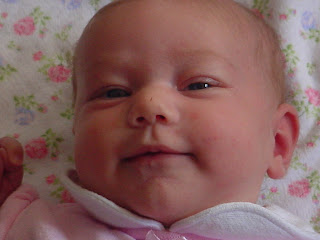
It was totally worth it, every bit of it.

It was totally worth it, every bit of it.
Enjoy. And find a way to honor your bellies, too.
*Art Docent Hints: If you enjoy a good mystery and want to try and deciper the painting, look for the picture of the baby they drew. Look for the green head with a brownish arm sticking out to the side underneath (the rest of the body is a bit amorphous, I'm afraid). Also look for the word "baby" on the side. There was an arrow below it, pointing to the baby, but it got obliterated by an overenthusiastic toddler. Then they filled in the blank spaces with random colors and swirls. The final result was a bit Picasso-ish, but hey.
*Art Docent Hints: If you enjoy a good mystery and want to try and deciper the painting, look for the picture of the baby they drew. Look for the green head with a brownish arm sticking out to the side underneath (the rest of the body is a bit amorphous, I'm afraid). Also look for the word "baby" on the side. There was an arrow below it, pointing to the baby, but it got obliterated by an overenthusiastic toddler. Then they filled in the blank spaces with random colors and swirls. The final result was a bit Picasso-ish, but hey.
**Fetal Position Postscript: For the curious, yes, in this picture my baby bump is really quite visible, but then my baby in this pregnancy was in the most optimal position for birth, which is anterior. That means the little butt was sticking out in front, making a nice big bump to paint on. In my first pregnancy, when I didn't look pregnant at all, baby was posterior and in that position the baby butt doesn't stick out and make much of a discernible bump. The difference? I saw a pregnancy-trained chiropractor and got some adjustments. That made my last pregnancy SO much more comfortable, and it helped baby to be anterior after 3 prior pregnancies with a posterior baby! Trust me, that's a MUCH easier labor!
Thursday, January 13, 2011
About Time: Asking Fat Women About Their Experiences
This is one of those no-duh studies, but I thought it was interesting enough to pass along. Here's the study abstract. [emphasis mine]
Nyman VM et al. Obese women's experiences of encounters with midwives and physicians during pregnancy and childbirth. Midwifery. 2008 Dec 17. www.pubmed.gov/19100667
OBJECTIVE: To describe obese women's experiences of encounters with midwives and physicians during pregnancy and childbirth.
DESIGN: A qualitative study using a phenomenological approach. Data were collected by means of interviews that were tape-recorded.
SETTING: The women's homes or at a hospital in western Sweden.
PARTICIPANTS: 10 women with body mass index greater than 30, three primiparous and seven multiparous, who had given birth at a hospital in western Sweden in the period between October 2006 and September 2007 were interviewed four to six weeks after childbirth.
FINDINGS: The meaning of being both obese and pregnant is living with a constant awareness of the body, and its constant exposure to the close observation and scrutiny of others. It involves negative emotions and experiences of discomfort. Feelings of discomfort increase as a result of humiliating treatment, whilst affirmative encounters alleviate discomfort and provide a sense of well-being.
CONCLUSION AND IMPLICATIONS FOR PRACTICE: Obese pregnant women are a vulnerable group because obesity is highly visible. Caregivers tend to focus on providing care to obese patients somatically, but are additionally in need of knowledge about care from the woman's point of view.
Many obese women have negative experiences of health care that they have to overcome.
It is necessary to individualise care for obese pregnant women, which involves taking time to give the women an opportunity to tell their own story.
Caregivers have to promote health but it has to be done honestly and respectfully.
In order to avoid judgmental attitudes and causing increased suffering for obese pregnant women, midwives and physicians need to be conscious of, reflect upon and verbalise their own attitudes and power.
My Comments
I wish more doctors and midwives would reflect thoughtfully upon their attitudes, assumptions, and biases around "obesity," and realize just how much negative impact insensitive and fat-phobic care during pregnancy and birth can have.
AND if they'd only realize that "promoting health" doesn't necessarily have to mean promoting weight loss ─ that health can be promoted without dieting/weight loss being the keystone.
How much could outcomes be improved if they promoted Health At Every Size instead of weight loss as the goal?Sigh.
*Your comments?
Thursday, January 6, 2011
Score!! Winter Stuff in Extended Sizes
I've written before about the difficulties I've encountered finding good rain gear and winter coats in extended plus sizes. It's a problem that frustrates me no end. I'm a chronically cold person (even when my hypothyroidism is well-controlled), and I get cold far more easily than anyone around me. I need good warm clothing, sweaters, raincoats, and winter coats.
We discussed before that my best sources so far were Junonia (women's sizes to 4x, sometimes 5-6x), and sometimes Land's End (women's sizes to 3x, men's sizes to some 4-5x) and L.L. Bean (some women's sizes to 3x, men's sizes mostly to 2x but a few 3x). I can sometimes get outstanding stuff in these companies, but not always.
The quality at Junonia really varies; some stuff is great, and some stuff isn't, either in fit or in quality. I got a ski jacket from them that was a huge disappointment, and a fleece jacket that was only so-so. And while they have some of the QuickWik-type materials and some ski wear, the stuff I've gotten from them in these have not been of the quality my kids get at REI or other major sports labels. There's really a noticeable difference in terms of high-tech gear that helps wick away moisture or helps hold in the heat etc. And as I see my kids with the really good stuff, I think ─ why can't I have that stuff too?
Land's End and L.L. Bean usually have some good stuff, and I got a couple of really great moderate-cold coats from them last year. I also got a great wool sweater (not scratchy at all) from L.L. Bean that I use for keeping warm inside. But the problem is that LL Bean stuff typically only goes up to a 2x in men's. Both LL Bean and Land's End only go to 3x in women's (not quite big enough in the boobs for me). So, not always the best match for me.
Well, now I have a new source: Columbia Sportswear. I knew about this company before, but last time I checked they didn't have women's coats anywhere close to my size. My husband bought me a men's extended size coat from them 12 years ago, but it wasn't that great. So I never really considered shopping for myself there.
But recently, a friend of mine gave me a "friends and family" pass (major discounts!) to Columbia's online store. My oldest son needed a bigger ski jacket, so I was hoping to use the pass to get a really good ski jacket for him at a halfway decent price.
When I went online to shop, though, I discovered that Columbia now carries extended sizes. Score!!!
As is so typical these days, they only carry women's sizes to a 3x, which is almost but not quite enough for me....BUT they had men's sizes to 4x and 5x at times. Whoohooo!
While it ticks me off majorly that more accommodation is made for men of size than for women of size (i.e., men are "allowed" to be fatter than women, and "allowed" to have more functional and quality clothing in extended sizes), I had to take a deep breath and move on. At least they had some stuff in 4x, and I hoped the men's 4x might fit me. (Men's plus sizes are shaped differently ─ bigger in the belly and smaller in the chest and hips than I am ─ so it wasn't a sure thing).
Because I had this one-time pass for a major discount, I took a risk and ordered a whole BUNCH of things from Columbia.com in 4x, crossing my fingers that they would work.
Well, I got my package this week and IT WORKED!!! I am so stoked. I got a moisture-wicking shirt for workouts, a couple of full-zip or half-zip light jackets/fleeces, a high-tech wicking half-zip for layering warmth, a rain jacket (with special lining for more warmth), a soft-shell jacket (fleece on the inside, waterproof on the outside), and a full-on ski parka.
I tried them all on and they all worked. And the quality was way better than the stuff I ordered via Junonia, Land's End, or L.L. Bean. Whoohooo!
I almost bought a pair of hiking pants too, but I decided not to risk buying pants at this point. Men and women's shapes are too different and I've not had good luck buying men's pants in the past, so I didn't want to waste money on something I couldn't try on in person.
But to get such ultra-warm, high-quality coats in my size? Freakin' awesome when you consider I've been looking for years for quality stuff like this.
Oh, and my son? Got an AMAZING ski jacket ($260 retail!) for $90, plus some fitness shirts, hiking shirts, rain pants, and ski pants. All very high-quality materials and workmanship, and they will keep him well-equipped for skiing, snow caving, wilderness survival, fencing, and Boy Scout hikes.
I'm way poor now but it was worth it! All in all, an excellent find! http://www.columbia.com/. They don't go to 4-5x in everything, alas, and they are quite pricey without the discount pass ─ but they had quite a few choices in coats, at far better quality than most other sources. Worth the price if you are needing a really good winter coat.
Tuesday, January 4, 2011
Can Fat Prejudice Be Changed?
Weight bias among healthcare professionals is a significant problem ─ but how do you combat it?
Here are a couple of recent studies that discuss that. The first is a review of other studies, and the results are not very encouraging. The second is a bit more encouraging.
How do you think we can best combat the issue of weight bias/stigma among healthcare professionals?
Daníelsdóttir S, O'Brien KS, Ciao A. Anti-fat prejudice reduction: a review of published studies. Obes Facts. 2010 Feb;3(1):47-58. PMID: 20215795
Division of Psychiatry, Landspítali-University Hospital, Reykjavík, Iceland.
Abstract
Prejudice against those who are perceived as 'fat' or obese (anti-fat prejudice) is rife, increasing, and associated with negative outcomes for those targeted for such treatment.
The present review sought to identify and describe published research on interventions to reduce anti-fat prejudice. A systematic search of relevant databases (e.g. PsychInfo, PubMed, Scopus) found 16 published studies that had sought to reduce anti-fat prejudice.
Most notable was the lack of research on interventions for reducing anti-fat prejudice. Methodological problems that limit the interpretability of results were identified in the majority of studies found. Interventions employing more rigorous experimental designs provided at best mixed evidence for effectiveness.
Although several studies reported changes in beliefs and knowledge about the causes of obesity, reductions in anti-fat prejudice did not typically accompany these changes. Anti-fat prejudice interventions adopting social norm- and social consensus-based approaches appear encouraging but are scarce.
The lack of prejudice reduction following most interventions suggests that psychological mechanisms other than, or additional to, those being manipulated may underpin anti-fat prejudice. New directions for researching anti-fat prejudice are suggested.
Given the strength of antipathy displayed toward those who are perceived as 'fat' or obese, research in this area is urgently required.
O'Brien KS, Puhl RM, Latner JD, Mir AS, Hunter JA. Reducing Anti-Fat Prejudice in Preservice Health Students: A Randomized Trial. Obesity (Silver Spring). 2010 Nov;18(11):2138-44. PMID: 20395952
School of Psychological Sciences, University of Manchester, Manchester, UK.
Abstract
Anti-fat sentiment is increasing, is prevalent in health professionals, and has health and social consequences. There is no evidence for effective obesity prejudice reduction techniques in health professionals. The present experiment sought to reduce implicit and explicit anti-fat prejudice in preservice health students.
Health promotion/public health bachelor degree program students (n = 159) were randomized to one of three tutorial conditions. One condition presented an obesity curriculum on the controllable reasons for obesity (i.e., diet/exercise). A prejudice reduction condition presented evidence on the uncontrollable reasons for obesity (i.e., genes/environment); whereas a neutral (control) curriculum focused on alcohol use in young people.
Measures of implicit and explicit anti-fat prejudice, beliefs about obese people, and dieting, were taken at baseline and postintervention. Repeated measures analyses showed decreases in two forms of implicit anti-fat prejudice (decreases of 27 and 12%) in the genes/environment condition relative to other conditions. The diet/exercise condition showed a 27% increase in one measure of implicit anti-fat prejudice. Reductions in explicit anti-fat prejudice were also seen in the genes/environment condition (P = 0.006).
No significant changes in beliefs about obese people or dieting control beliefs were found across conditions.
The present results show that anti-fat prejudice can be reduced or exacerbated depending on the causal information provided about obesity. The present results have implications for the training of health professionals, especially given their widespread negativity toward overweight and obesity.
Friday, December 31, 2010
The Best of 2010 on WRM

So here are some of my favorite or what I think were the most important posts of 2010 from my Well-Rounded Mama blog, just in case you missed some along the way.
Enjoy, and I look forward to seeing what comes out in 2011!
January
Second Annual Turkey Awards: Scare-mongering and Shaming Tactics - A condemnation of an opinion piece blasting women of size for the crime of Being Pregnant While Fat, and an examination of the scare tactics and shaming being used in the media to distort the risks around "obesity" and pregnancy.
Healthy Birth Practices: Avoid Unnecessary Interventions - 4th in a series on the Lamaze Healthy Birth Practices. This one discusses the risks of common routine interventions in labor, why women of size experience these interventions at higher rates, and suggestions for avoiding them.
February
Not much this month because I was in Hawaii for my 25th wedding anniversary!
Eat, Drink, and Be Merry, For Tomorrow We Diet - Research abstract summarizing what we in the fat-acceptance community have known for years ─ that restrained eating (a.k.a. dieting) tends to lead to or exacerbate overeating behaviors.
March
Choosing a Birth Care Provider: Which Type? - Between 80-90% of women in the U.S. choose an OB to attend their births, yet outcomes are just as good (and often better) with family docs and midwives. This article by guest authors outlines the different type of birth providers available and the pros and cons of each.
You Have The Right To Decline To Be Weighed - Rehash of the debate over whether it's necessary to weigh people at every doctor appointment, when it might be important and useful, and when it's not.
Why VBAC Bans Are A Violation Of Human Rights - Discussion of the epic fail of ethics in doctors and hospitals that "ban" VBAC, either officially or de facto.
April
Variability of Uterine Efficiency - One of my favorites of the year, this post for Cesarean Awareness Month challenges the common perception that virtually all cesareans are "necessary" and shouldn't be questioned. It shows the variation of cesarean rates from state to state, year to year, hospital to hospital, even doctor to doctor, and points out that oftentimes, factors unrelated to the characteristics of the mother herself are the strongest drivers of cesarean rates.
Healthy Birth Practices: Get Upright and Follow Urges to Push - 5th in a series on the Lamaze Healthy Birth Practice, this entry discusses the reasons not to use the "stranded beetle" pushing position so many hospitals use, gives illustrations and examples of alternative birth positions, and discusses the benefits of these positions (especially for women of size).
May
You're Killing Your Baby - Another in a sadly long series of posts documenting the abusive treatment of women of size in pregnancy. This was the case of a woman, just over 200 lbs., whose doctor told her that she was "killing her baby" because she "couldn't control" her appetite. (Her baby was fine and is now almost grown.)
June
Ultrasounds in Women of Size, Part 1 - Doing an ultrasound during pregnancy in a woman of size can be more difficult, but there are techniques to help improve imaging and accuracy, and techniques (like pressing too hard) that can actually result in data distortion. (Part 2 of this series is in the "to-do" queue and will get done eventually!)
Distoring the Risks Again - Once more addressing the way that the risks of "obesity" and pregnancy are distorted in mainstream media (like this particular article in the New York Times) by using risk ratios instead of real-life numbers, promoting simplistic views of fat people and their habits, ignoring the fact that correlation does not equal causation and that extreme intervention also introduces risks, and by citing worst-case scenario stories of specific fat women.
Healthy Birth Practices: Keep Baby With You - Examines the influence of post-delivery practices in hospitals on breastfeeding and bonding, and discusses how common interventions particularly impact women of size and their breastfeeding rates.
July
Will I Feel My Baby Move If I'm Fat? - One of the most-viewed blog posts on this site ever, this discusses the common myth that fat women won't feel their babies move "because of all that fat in the way." Poppycock!
About Damn Time: Good News For Vaginal Birth After Multiple Cesarean - A review of ACOG's change of guidelines about VBACs, and in particular "allowing" VBAC after 2 cesareans again. A celebration of the changes but also a condemnation of the (non evidence-based) decision to disallow VBA2C in 2004 and the chilling effect that has had on women and birth worldwide.
Limiting Fertility Treatment Access For Fat Women - Excellent article abstract and brief discussion of the current British policy denying access to fertility treatment for "morbidly obese" women across the pond.
You Will Probably Just Die Anyway - Another in the series of posts, documenting mistreatment of women of size in pregnancy. This woman was told that she would no doubt get GD, high BP, and probably just die during pregnancy. The story sparked a number of people to share their stories of mistreatment and scare tactics too.
August
Breastfeeding in Women of Size: Sensationalism Vs. Meaningful Research - Another common theme in articles on "obesity" and pregnancy is that breastfeeding rates are lower in "obese" women. This article examines the research, notes its shortcomings (particularly the lack of consideration of the impact of PCOS on milk supply), and discusses other possible influences (hypothyroidism, anemia, interventions in labor and postpartum) and how these might also impact women of size disproportionately. A call to arms for better and more meaningful research on breastfeeding in women of size.
Is Weighing Necessary During Pregnancy? - Part 2 of the series on whether "obese" people need to be weighed at doctor appointments, this installment examines the arguments (and research) for and against weighing during pregnancy.
Please Document Your Stories of Mistreatment - Notes the importance of documenting examples of size/weight bias, tells some of women's stories, and gives resources for documenting these stories.
Antibiotic Underdosing in "Obesity" - One of the most important entries this year (in my opinion) even though it has nothing to do with pregnancy. This entry discussed the fact that many "obese" people are underdosed with antibiotics, i.e., are given ineffective, subtherapeutic levels, and this may cause a lot of our poorer outcomes after surgery etc. A lot depends on the type of antibiotics (some need weight-based dosing, some do not, depending on the mechanism of action) but research clearly shows that more study is needed into the best dosages for "obese" people ─ yet little of this research is being done.
September
Delaying Routine GYN Care - Research review of 23 studies documenting the fact that "severely obese" women often delay or avoid routine gynecological tests like Pap Smears and Mammograms because of issues like weight stigma, lack of appropriately-sized equipment, and communication issues with providers.
Nice Is Not Enough: Questions for Interviewing a Maternity Care Provider - Sparked by a blog entry from a midwifery blog, discussion of important questions to ask when choosing a birth attendant for your birth. Some discussion of special issues for women of size too.
Prenatal Weight Gain: When the Conclusion is Made Ahead of the Results - First in a series of posts about prenatal weight gain politics and how they are impacting women of size. Discusses a new Kaiser study which promotes ZERO weight gain for "obese" women in pregnancy.
October
Prenatal Weight Gain: Ignoring Possible Harms - Second in the series on prenatal weight gain politics for women of size. Discusses the possible risks associated with very low weight gains (and even weight loss) in "obese" women and the possible implications for the baby's future health.
Prenatal Weight Gain: The Importance of Study Design - Third in the series on weight gain in women of size. Discusses how the studies on restricted weight gain in "obese" women often are poorly designed, with critical concerns about sample size, controlling for iatrogenic factors, lack of long-term follow-up, and confusion of correlation vs. causation.
Gaining Weight In Pregnancy Means a Cesarean? - Documents a concrete example of one of the ramifications of restricted weight gain for women of size, which is penalizing women who "gain too much" by requiring them to have an "elective" cesarean.
Too Out Of Shape for Birth? - Documents another example of size bias, the perception that fat women are "too out of shape" to push out a baby.
November
Breastfeeding Lowers the Risk for Diabetes and Other Maternal Disease Later in Life - Review of new and old research that shows that extended breastfeeding significantly lowers the risk for diabetes, heart disease, and other issues later in life.
Failure to Wait Cesareans - Discussion of a new study which shows that many cesareans for "failure to progress" are actually cesareans for "failure to wait." This particularly impacts first-time moms, women who are being induced, and women of size.
Third Annual Turkey Awards: Jumping To Conclusions - Documents incidences of science-challenged doctors who ramp up the risk perception around "obesity" and pregnancy to conclude that if a fat woman is somewhat at risk for complication, then she WILL get it, and she or her baby will probably DIE as a result. (See also, "You Will Probably Just Die Anyway" above.)
December
Contemporary Cesarean Patterns in the USA - Discusses recent study on cesarean patterns in 19 hospitals across the country and its implications. Nearly half of the women were induced, many had "failure to wait" cesareans, primary cesareans were up sharply (which bodes ill for the future), and VBAC access is limited. Calls for changes, but is anyone listening?
VBAC After 2 Cesareans - Distorted Risk Perception - Distorted risk perception is especially egregious in "obesity" and pregnancy, but many doctors also have distorted risk perceptions with breeches, VBAC, and especially about VBAC after more than 1 cesarean. Documents a study in which French OBs underestimate the risks associated with multiple repeat cesareans and overestimated the risk for rupture in VBA2C as 7-15x what it really was.
The Fat Vagina Theory: "Soft Tissue Dystocia" - Documents the commonly-taught but completely unproven theory of "soft tissue dystocia" ─ that extra adipose tissue in the pelvis and vaginas of "obese" women obstruct the baby's path out and is a big part of the high cesarean rate in women of size. Documents the lack of research supporting this theory and discusses the research and anecdotal evidence which seem to contradict it.
Year-End Summary
All in all, a productive year, I think! Which of my 2010 entries were your favorites, dear readers?
Yeah, there were a lot of research-heavy entries, but then I'm a bit of a numbers geek. Plus I just think it's important to document the research that challenges common perceptions about "obesity" and highlight further research that's needed. There's plenty of research on "obesity" out there; the problem is that much of it is CRAP or is not very insightful. The bottom line is that we need better and more meaningful research.
Next year, we start a periodic series addressing the risks of pregnancy in women of size, discussed in realistic terms but without scare tactics or hyperbole, and ways in which women of size can be proactive about lessening these risks. Stay tuned!
Happy New Year to all my readers. Have a wonderful 2011!
*If you have specific requests for topics for the next year, feel free to leave them in the comments. I may not get to them immediately, but I do like idea suggestions.
Wednesday, December 29, 2010
Contemporary Cesarean Patterns in the USA
This is an interesting new study out on cesarean patterns in the United States.
Examining this study will be particularly compelling given that the cesarean rate has risen again (for the 13th straight year) to a new all-time high of 32.9%. (Notice how this information was conveniently released just before Christmas, thereby not making the news cycle in most publications?)
The data in this new study was taken from 19 hospitals all over the USA, so it's a reasonably robust representation of common practice in the States.
What struck me in the study immediately was the extremely high induction rate....44%! Nearly half? That is just outrageous. But at least it's a more accurate reporting of induction rates than some previous studies. And I bet that at some hospitals, the induction rate is even higher than that. No wonder the cesarean rate is so high!
They also noted in a companion study that many of the inductions were converted to cesareans before active labor had even really begun, what we call a "failure to wait" cesarean. They recommended that care providers wait until active labor has been well-established before jumping to a cesarean, especially in first-time moms and in women who are being induced.
Another thing that struck me was that the cesarean rate for first-time mothers (primary cesareans) was so high. Nearly 1 in 3 first-time moms had a cesarean. Usually, first-time moms should have a LOWER cesarean rate than the overall c-section rate.....but not in this study. I think that's a reflection of how many were induced...and such a high primary cesarean rate is an ominous sign.
It was great that the authors seem to call for reducing primary cesareans, and I was especially pleased that they seem to be calling for more widespread access to VBAC.
Such a call for change was quite refreshing. And it's wonderful that such a call for change was published in the American Journal of Obstetrics and Gynecology, one of the main OB-GYN research journals.
The $64,000 question is ─ will the publication of this study make any difference? Will hospitals change their policies and induce less women? Will doctors wait longer before resorting to cesareans? Will doctors and hospital administrators reverse their formal and informal VBAC bans? Will everyone involved make a concerted effort to reduce the cesarean rate ─ or will it just continue to be business as usual?
It's positive that the questions are being asked and dialogue is being opened ─ but I am not holding my breath. Perhaps this is the beginning of a reversal of the pendulum, but the momentum is so strong towards inductions and cesareans right now that it's going to take a mighty counterforce indeed to really reverse things.
It's up to us to be part of that counterforce for change.
Abstract
Zhang J, et al.; Consortium on Safe Labor. Contemporary cesarean delivery practice in the United States. Am J Obstet Gynecol. 2010 Oct;203(4):326.e1-326.e10. Epub 2010 Aug 12. PMID: 20708166
Eunice Kennedy Shriver National Institute of Child Health and Human Development, National Institutes of Health, Bethesda, MD, USA.
OBJECTIVE: To describe contemporary cesarean delivery practice in the United States.
STUDY DESIGN: Consortium on Safe Labor collected detailed labor and delivery information from 228,668 electronic medical records from 19 hospitals across the United States, 2002-2008.
RESULTS: The overall cesarean delivery rate was 30.5%. The 31.2% of nulliparous women were delivered by cesarean section. Prelabor repeat cesarean delivery due to a previous uterine scar contributed 30.9% of all cesarean sections. The 28.8% of women with a uterine scar had a trial of labor and the success rate was 57.1%. The 43.8% women attempting vaginal delivery had induction. Half of cesarean for dystocia in induced labor were performed before 6 cm of cervical dilation.
CONCLUSION: To decrease cesarean delivery rate in the United States, reducing primary cesarean delivery is the key. Increasing vaginal birth after previous cesarean rate is urgently needed.
Cesarean section for dystocia should be avoided before the active phase is established, particularly in nulliparous women and in induced labor.
Friday, December 24, 2010
Happy Holidays

May you have a wonderful holiday season. May you enjoy family time, whether that's with family of origin or family of choice. And may you have a wonderful new year.
Peace and blessings to us all!
*Painting by Renoir; image from Wikimedia.

Wednesday, December 22, 2010
Waterbirth Video of Plus-Sized Mom
A (plus-sized) reader of my blog sent me the link to the video of her recent waterbirth. This seems like the perfect complement to last week's post about a new waterbirth study, plus it's a lovely, cheery story for Christmas week.
Not only is this awesome because it's waterbirth─ the coolest thing ever! ─ but it's waterbirth in a woman of size, something some care providers and some facilities do not "permit." (Actually, women of size are the perfect candidates for waterbirth, since it can help us be more mobile in labor and pushing.)
But this mom didn't let rules against waterbirth in women of size stop her ─ she found a place and a provider that was amenable to waterbirth for her, regardless of size.
This was her fifth child. She had had vaginal births with all her prior children in the hospital, but with some significant interventions (forceps, big episiotomy, a near c-section with the fourth one because she wasn't progressing fast enough for them...even after 3 prior vaginal births!). She was determined to change things for the next baby.
She had a boy, 9 lbs. 12 ozs., 22.5 inches long, a size many doctors would freak out over (and some would mandate a c-section for) ─ but she had him naturally and easily with the mobility that the water offered.
Here are her words about her story (slightly edited):
*Reposted with permission from http://rubyslippersx3.blogspot.com/
Not only is this awesome because it's waterbirth─ the coolest thing ever! ─ but it's waterbirth in a woman of size, something some care providers and some facilities do not "permit." (Actually, women of size are the perfect candidates for waterbirth, since it can help us be more mobile in labor and pushing.)
But this mom didn't let rules against waterbirth in women of size stop her ─ she found a place and a provider that was amenable to waterbirth for her, regardless of size.
This was her fifth child. She had had vaginal births with all her prior children in the hospital, but with some significant interventions (forceps, big episiotomy, a near c-section with the fourth one because she wasn't progressing fast enough for them...even after 3 prior vaginal births!). She was determined to change things for the next baby.
She had a boy, 9 lbs. 12 ozs., 22.5 inches long, a size many doctors would freak out over (and some would mandate a c-section for) ─ but she had him naturally and easily with the mobility that the water offered.
Here are her words about her story (slightly edited):
I avoided seeking out a midwife for my previous births because of size issues, but I went for it and called tons of midwives, wearing my heart on my sleeve as I brought up the issue of weight. I found a wonderful midwife, had a healthy pregnancy and had my baby at home in the water.
I am still on cloud nine. It was one of the most amazing accomplishments of my life.
I want to help as many moms as possible develop the courage for the birth they want. Waterbirth, long sigh, was so wonderful. Compared to straps around my tummy that didn't fit, cutting into my skin (literally) at the hospital on a bed I could barely move in....
I want to help any mom of any size to achieve the birth she wants - I didn't have that courage for my other births and its a big regret. This was my fifth birth and first home/waterbirth.
My first son was a hospital birth with a very 'old school' obstetrician. I was induced. He only saw me in labor to break my water and he barely darkened the doorway when I started pushing. He mostly waited in the hallway. The nurse finally called him over because she felt my pushes were inadequate - he almost immediately said we needed forceps. My son was born via forceps with a very intense episiotomy.
The next three births followed, with some changes - new doctors, new hospitals, more interventions that I felt weren't needed. My fourth birth they 'threatened' a c-section because I was not progressing to their liking. I didn't get said c-section but I was left very frightened by the threats. I told my husband before I was even home that if we were blessed with another baby I was not going to any hospital.
I had to face my fears of finding a midwife who would accept me even though I am a plus size mom. I called many midwives before I even knew if I wanted to get pregnant again. I felt so strongly about a homebirth that if it was not an option, it would have affected my choice to even get pregnant again. I found a wonderful Midwife...and I achieved the birth I knew I wanted. My homebirth healed many disappointments from the past. And I was so much more comfortable than I was with any pain-relieving techniques offered at the hospital.
Even though my body may not be [what] want many women would want, I LOVE my body. It brings me so much joy. With my body I shared love with my husband, grew a healthy baby and birthed him naturally in the safety of my home. That is indescribable joy.Here is the video of her birth:
*Reposted with permission from http://rubyslippersx3.blogspot.com/
Tuesday, December 14, 2010
Italian Waterbirth Study

I can't tell you how much I loved it, how much it helped with labor pain, and how it made it easier to be really mobile during labor.
It's a terrible shame that it is not offered as an option more widely in the United States. Certainly, more hospitals in Europe seem to be incorporating it before we do.
One of the objections you hear voiced on occasion by the doctors who resist waterbirth is the idea that it's not sterile enough and babies would be put at risk for infection.
This study contradicts that idea. Yes, there were microorganisms in the water, but the babies seemed largely unaffected by them, and in fact had a lower rate of infection/antibiotic use than babies born after "land delivery."
Alas, the study is in Italian so the only information I have is in the abstract, but note that the episiotomy rate in the water was less than 1%, a rate rarely seen in most hospitals. There's a tremendous benefit right there.
Also note that only 13% of women needed drugs for the pain. This is the "aquadural" effect; many women find that pain is greatly lessened (or at least more manageable) when in the water.
It's not that it totally relieves pain ─ I can attest that it doesn't. I still felt labor pains intensely during my waterbirth. However, they were manageable. The warm water felt WONDERFUL, it helped lessen the pain enough to get by, and I was able to be quite mobile in the birth tub in a way that helped me respond proactively to the pain.
So we shouldn't over-exaggerate the pain-relieving effects of water in labor. For some people it really does take the pain away. But for many of us it merely takes a significant edge off and helps you cope more proactively with it. (And if it helps shorten labor, I'm okay with that!)
But the point is, waterbirth is helpful and not harmful. Infection is not really an issue.
Time for more U.S. hospitals to get a clue and start incorporating more waterbirths.
Thöni A, Mussner K, Ploner F. [Water birthing: retrospective review of 2625 water births. Contamination of birth pool water and risk of microbial cross-infection]. Minerva Ginecol. 2010 Jun;62(3):203-11. [Article in Italian]
Reparto di Ginecologia e Ostetricia, Ospedale di Vipiteno, Bolzano, Italy.
Abstract
The aim of this study was to document the practice of 2625 water births at Vipiteno over the period 1997-2009 and compare outcome and safety with normal vaginal delivery. The microbial load of the birth pool water was analyzed, and neonatal infection rates after water birth and after land delivery were compared.
METHODS: The variables analyzed in the 1152 primiparae were: length of labor; incidence of episiotomies and tears; arterial cord blood pH and base excess values; percentage of pH<7.10 and base excess values >/=12 mmol/L. In all 2625 water births, the variables were: analgesic requirements; shoulder dystocia/ neonatal complications; and deliveries after a previous caesarean section. Bacterial cultures of water samples obtained from the bath after filling (sample A) and after delivery (sample B) were analyzed in 300 cases. The pediatricians recorded signs of suspected neonatal infection after water birth and after conventional vaginal delivery.
RESULTS: There was a marked reduction in labor duration in the primiparae who birthed in water; the episiotomy rate was 0.46%. Owing to the pain relieving effect of the warm birth pool water, pain relievers (opiates) were required in only 12.9% of water births.
Arterial cord blood pH and base excess values were comparable in both groups. Shoulder dystocia/neonatal complications were managed in 4 water births; 105 women with a previous caesarean section had a water birth.
In sample A, the isolated micro-organisms were Legionella spp. and Pseudomonas aeruginosa; in sample B, there was elevated colonization of birth pool water by total coliform bacilli and Escherichia coli. Despite microbial contamination of birth pool water during delivery, antibiotic prophylaxis, as indicated by clinical and laboratory suspicion of infection, was administered to only 0.98% of babies after water birth versus 1.64% of those after land delivery.
CONCLUSIONS: Results suggest clear medical advantages of water birthing: significantly shorter labor duration among the primiparae; a net reduction in episiotomy rates; and a marked drop in requests for pain relievers.
During expulsion of the fetus at delivery, fecal matter is released into the birth pool water, contaminating it with micro-organisms. Despite this, water birthing was found to be safe for the neonate and did not carry a higher risk of neonatal infection when compared with conventional vaginal delivery.
PMID: 20595945
Friday, December 10, 2010
VBAC After 2 Cesareans - Distorted Risk Perception
I recently wrote about ACOG's change in guidelines (August 2010), now "allowing" a trial of labor (TOL) again in women with 2 prior cesareans, whether or not they have had a prior vaginal birth. This was a welcome change of policy and a breath of fresh air after many years of campaigning to get VBA2C back.
However, in the same post, I discussed the chilling effect that the earlier 2004 guidelines (which disallowed TOLs after 2 prior cesareans unless the woman had already had a prior vaginal birth) had had on the choices of women, and decried the reality that many women were forced into unnecessary repeat cesareans by these old guidelines.
The fact of the matter is that when ACOG makes these sweeping policy decisions (like all breeches should be born by cesarean, or VBAMC is not appopriate), it has MAJOR effects on the birthing climate in the world, effects that are not easily changed even if ACOG later recognizes its decisions were based on questionable research and changes its mind.
The net effect of disallowing VBAMC has been that only a few doctors in the world now "allow" women to choose a trial of labor after 2 prior cesareans, even though the risks associated with this have been shown to be reasonable.
And although ACOG now "allows" a trial of labor after 2 cesareans, few OBs are rushing to change their policies. The barn door is open, that horse is gone, and it's not coming back anytime soon. I have hopes for change still, but I'm not holding my breath while waiting. The simple truth is that women are still being harmed by those old rules, even now. ACOG has much to answer for.
This is similar to what has happened with breech births in the United States. A flawed study came out that suggested that all breech babies were safer being born by cesarean, and BOOM, vaginal breech birth all but disappeared from the country, almost overnight. Medical schools even quit teaching how to attend vaginal breech births, so many doctors now have no idea how to safely attend a surprise breech that shows up at the hospital.
Research since the flawed breech study has questioned its conclusions and other recent studies have shown that vaginal breech birth is a reasonable option for most breech babies (and safer for the mother) ─ but it's close to too late to bring back the option because the art has been lost among so many providers. Canada has been leading the way to try and get vaginal breeches re-established, but there's a long way to go.
As with breech, many doctors have developed an extremely distorted picture about risk with VBAC after two cesareans.
And as with breech, all it took was one flawed study (Caughey 1999) that showed an abnormally high rate of rupture in VBA2C mothers, and ACOG rushed to virtually ban access to VBA2C.
The problem is, that study had only 134 women in it, a sample size far too small to reliably determine risk (much less base sweeping policy decisions on); coincidence could easily have distorted the results. No study before or since has shown such rates ─ but that didn't matter to ACOG. It changed the rules, VBAMC was basically disallowed, and despite later research that showed the risk was not nearly as high as the Caughey study, VBAMC is still viewed by many as "far too risky" to even consider. All on the basis of one very small, very flawed study.
Of course, some doctors have been overestimating the risk for uterine rupture in any VBAC for years, but the degree of risk overestimation is especially egregious with VBA2C.
Look at the following study, which surveyed doctors in France about their perceptions of the risks for uterine rupture with VBA1C and VBA2C. The doctors overestimated the risk for rupture with both, but the overestimation was HUGE in the VBA2C group.
In addition, they underestimated the risks associated with multiple repeat cesareans and counseled the women insufficiently about these.
As a result, less than a quarter of doctors surveyed would even consider "letting" a woman try a VBA2C trial of labor.
The amazing thing is that this survey was published five years after major research showing far lower rupture rates in VBA2C mothers than these doctors estimated.
So what is the risk for rupture in VBA2C? Studies vary, but the largest and most statistically powerful studies have shown rupture rates generally between 0.9% - 2.0% (Leung 1993, Miller 1994, Asakura 1995, Lin and Raynor 2004, Macones 2005, Landon 2006).
Tahseen and Griffiths (2010) did a meta-analysis of studies on VBA2C. They found the average rupture rate was 1.36% and that the maternal morbidity between VBA2C and repeat cesarean was similar.
Note that all these studies include VBA2Cs with lots of induction and augmentation. (Indeed, in Macones 2005, 16 of 19 ruptures in the VBA2C group were associated with induction or augmentation.) With spontaneous labors only, the rupture risk for VBA2C would likely be even less. (Never zero, alas, but less.)
What did the French doctors estimate the rupture risk to be with VBA2C? 14%!!! Seven to fifteen times than the real risk.
Distorted risk perception among doctors is one of the biggest things we battle on so many topics, from VBAC after multiple cesareans, to breech births, to pregnancy among women of size.
AUGH.
Abstract
Vaginal birth after two previous c-sections: obstetricians-gynaecologists opinions and practice patterns. Doret M, Touzet S, Bourdy S, Gaucherand P. J Matern Fetal Neonatal Med. 2010 Mar 17.
Hospices Civils de Lyon, Hôpital Femme-Mère-Enfant, Service d'obstétrique, F-69677 Bron, Lyon, France.
Objectives. To evaluate obstetricians' practice patterns, opinions and factors influencing decision-making about mode of delivery in women with two previous c-sections.
Methods. A questionnaire was mailed to the 160 obstetricians from the Rhone-Alpes perinatal network. Questionnaires included demographic, organisational information and questions about physicians' opinion, practice patterns and patient counseling concerning vaginal birth after c-section (VBAC) after one and two caesarean sections.
Results. Response rate was 65.6%; 100% and 23.8% would offer VBAC to women with respectively one and two previous c-sections.
Uterine rupture rate was largely overestimated in both women with one (2.8%) and two prior c-sections (14.2%).
Factors positively influencing obstetricians were cerebral palsy estimated rate less than 20%, a minimal decision to birth delay less than 20 min when emergency c-section would be required. Neonatal severe outcomes consecutive to trial of labour as well as placenta praevia or accreta risk and morbidity associated with multiple c-sections would be insufficiently discussed.
Conclusion. Obstetricians largely prefer a third planned c-section in women with two previous c-sections.
This decision is partly based on a large overestimation of immediate maternal and neonatal serious outcomes consecutive to trial of labour as well documented serious long term outcomes of multiple c-sections are insufficiently considered. [sic]
PMID: 20233132
Subscribe to:
Posts (Atom)