Wednesday, April 15, 2015

Induction's Relationship to Cesareans in High BMI Women

Many providers are so affected by the over-hyping of risk around pregnancy in women of size that they routinely induce labor in "obese" women for basically no other real reason than the woman's BMI.

But a recently-published Canadian study shows there is yet another reason to be cautious about routinely inducing labor in obese women─ an increased risk of cesarean.

Yet the authors completely missed the obvious take-home message from their study ─ reduce the number of inductions done in obese women ─ and instead call for more weight-loss intervention efforts in order to prevent cesareans. Doh!

As part of Cesarean Awareness Month, let's take yet another look at the relationship between induction of labor and high cesarean rates in obese women.

Caregivers interested in lowering cesarean rates in higher-weight women would likely get the most effective results by changing management of this group rather than focusing on weight loss efforts.

When will caregivers finally clue in to the fact that they need other tools in the cesarean prevention toolbox besides weight loss? Changing their own management behaviors is the key to lowering cesarean rates in obese women, not getting women all to "normalize" their pre-pregnancy weight.

Let's be clear. It's reasonable to encourage healthy eating and regular exercise in women before they conceive, but that doesn't usually result in significant weight loss. Research shows that only a small percentage of people lose a substantial amount of weight and keep it off. It's unrealistic to insist that women all reach a certain BMI before pregnancy. And it's incredibly foolish to hang all your hopes for lowering cesarean rates on that goal.

There are other, more powerful tools in the toolbox for that. First and foremost among them is changing behaviors around induction of labor in this group.

Background

Induction is a very common intervention used in women of size, as I have pointed out many times before. And there is quite a bit of research suggesting that induction is tied to a higher cesarean rate, especially in first-time mothers or in women with an unripe cervix.

Of course, it's only fair to point out that sometimes induction really is needed in women of size. High-BMI women have a higher rate of pre-eclampsia (blood pressure issues), for example, as this study also found. This often necessitates early induction of labor because pre-eclampsia is very serious and can harm both mother and baby.

But high-BMI women are often induced at far higher rates than their complications justify.

Often these inductions are done for "soft" reasons that are highly questionable medically.

For example, many providers induce labor in obese women because they are afraid of big babies, even though research shows that inducing labor does not improve outcomes at all and often worsens them. The combination of obese first-time mother, a suspected big baby, and induction of labor is particularly potent, doubling the risk for cesarean even in a usually low-intervention midwifery practice.

Often providers induce labor because they believe that pregnancy in a fat woman is a disaster waiting to happen, and that labor should be brought on as soon as possible before an emergency occurs. Sadly, all too often, such perceptions often become self-fulfilling prophecies because of the huge amount of interventions employed, which also carry significant risk.

Some providers induce labor because they mistakenly believe that fat women are unlikely to go into labor on their own. Research shows that higher-weight women do have many inductions for "post-dates" pregnancies and that these inductions are more likely to result in cesareans, but rarely do care providers adjust a high-BMI mother's due date to reflect the fact that many have longer menstrual cycles.

Some induce labor in the belief that fat women are too out of shape to endure a natural labor and birth. Others induce labor because they mistakenly believe inducing labor is the only way that higher weight women will have any chance at having a vaginal birth because of ""fat pads" in the pelvis" or a "fat" vagina. These assumptions are all wrong, mind, but subtle bias like this influences how higher-weight women are managed.

For these and many other reasons, providers tend to over-use inductions in women of size. Although most in the medical field never question the high utilization of inductions in obese women, there are finally now a few researchers who have begun to question this practice.

New Study Findings

A new Canadian study highlights just how many obese women have their labor induced.

Less than a third of average-weight women in the study had their labor induced, but almost HALF of higher weight women had their labor induced. No doubt some of those inductions in the high-BMI group were medically justified, but chances are that many more were not.

Most notably, this study shows that induction in obese women often leads to cesareans.

I've been saying for years that over-use of induction in obese women is one of the main reasons for a high cesarean rate in this group, yet few researchers have bothered to look at this connection or to call for fewer inductions in this group. Many ignore their own findings that inductions are tightly tied to cesarean rates in this group. Finally, now, some researchers are beginning to pay attention.

Of particular note, this Canadian study found that when covariates were controlled for, Body Mass Index (BMI) was not a significant risk factor for cesareans in women with spontaneous labor. 

This is in contrast to the false belief among many providers that obesity often prevents vaginal birth due to "soft tissue dystocia." But in this study, higher weight alone did NOT raise the risk for cesarean ─ when labor was spontaneous.

However, obesity DOUBLED the risk for cesareans during inductions. According to the study:
Obese women were twice more likely (aOR 2.2, CI 1.2-4.1) to deliver by emergency C-section if their labour was induced...The twofold increase in the risk of C-section rates in obese women after induction was independent of pregnancy complications, parity, prior caesarean deliveries, chronic maternal health conditions, treatments for infertility, or maternal age.
That's a really important distinction. A higher weight itself did not increase the risk for cesareans when labor was spontaneous, but when labor was induced, it did. And this was independent of pregnancy complications and other factors that might also increase the risk for cesarean.

This suggests that induction itself (and decision-making during induction) was more of a real factor than the obesity itself.

For example, previous studies have found a lower threshold for surgical intervention in high-BMI patients. Many obese women would probably benefit from their caregivers simply waiting longer before opting for a cesarean. Others would probably benefit more from caregivers waiting for the mother's cervix to be fully ripe before labor was induced.

But most likely, obese women would probably benefit MOST from a lower induction rate. 

Sometimes, induction truly is necessary, and women of size do have higher rates of some complications that make induction a consideration. But many women of size are being induced for dubious reasons, mostly reflecting subtle provider bias and fear rather than true medical indications. These "soft" inductions need to STOP. If inductions are used, they should ideally wait until the cervix is ripe and caregivers should employ more patience in labor before resorting to a cesarean.

Lowering the number of inductions done and changing the management of inductions when they are done should help lower the outrageously high cesarean rates in obese women.

Focus on Realistic Change

To summarize, several recent studies have observed that caregivers often use a high rate of interventions during labor with their obese patients and have questioned whether this is truly beneficial. The authors of this recent Canadian study also noted that:
Even among women with term, singleton pregnancies obtaining prenatal care in community-based settings, obese women who undergo labour induction are at increased risk of obstetrical interventions at delivery...Although obesity in pregnancy is not an independent justification for labour induction, obese women are more likely to be induced and if induced are more likely to undergo delivery by C-section.
Astoundingly, the authors of the Canadian study then completely missed the mark in evaluating their findings. Like many in the obstetrical field, their response was NOT to call for fewer inductions, but rather to call for increased weight loss interventions prior to pregnancy.

What?!?!? Once again, the researchers missed a tremendous opportunity for improving outcomes in higher-weight women because they can't see beyond their own relentless focus on weight loss.

Rather than focusing their efforts on the unlikely success of weight-loss interventions, caregivers should be focusing on lowering the induction rate in this group and changing their threshold for surgical intervention. 

THOSE are the interventions most likely to bring about fewer cesareans.

Several studies have found that inductions are tightly tied to elevated cesarean rates in high-BMI women, and when induction is controlled for, the differences in cesarean rates are much smaller or disappear entirely. Induction is the root of the problem, independent from obesity itself.

Additionally, several studies over the years have found that when induction is frequently used with obese women, it often is the starting point for other poor outcomes.

If you want to improve outcomes in obese women, start by addressing the high induction rate, especially in first-time mothers. 

A few researchers are beginning to get it. A recent American study found that first-time obese mothers induced at term had a much higher cesarean rate (40% vs. 25%) and a higher rate of neonatal admissions to the NICU than those obese women who were managed expectantly. They concluded:
Elective labor induction at term in obese nulliparous parturients carries an increased risk of cesarean delivery and higher neonatal intensive care unit admission rate as compared with expectant management.
A major Irish study recently recommended that inductions only be undertaken for strict indications in obese women:
Due to the short-term and long-term implications of an unsuccessful induction in an obese primigravida, we recommend that induction of labor should only be undertaken for strict obstetric indications after careful consideration by an experienced clinician.
One recent French review concluded:
It may be possible to reduce primary and thus repeat cesarean delivery rates among obese women by preventive actions targeting labor induction in primiparous women and prelabor cesarean deliveries in multiparous women.
Bottom line, care providers need to be much more cautious about the amount of interventions they employ in the pregnancies of higher weight women.

In particular, induction of labor should be avoided when not truly medically indicated, especially in first-time mothers. If it occurs, it should usually wait until a woman's Bishop Score indicates a ripe cervix, and more patience during labor should be employed before moving to a cesarean section. 

These changes, rather than browbeating women about weight loss interventions, will be the ones that bring about the biggest improvements in outcome for women of size.


References

BMC Pregnancy Childbirth. 2014 Dec 20;14(1):422. [Epub ahead of print] Pre-pregnancy Body Mass Index (BMI) and delivery outcomes in a Canadian population. Vinturache A, Moledina N, McDonald S, Slater D, Tough S. PMID: 25528667
...This study is a secondary analysis of the All Our Babies Cohort, a prospective, community-based pregnancy cohort in Calgary, Alberta...(n=1996)...Women with increased pre-pregnancy BMI were more likely to develop pregnancy complications such as preeclampsia (OR 3.5, CI 2.0-4.6 for overweight; OR 5.3, CI 3.3-8.5 for obese) and gestational diabetes (OR 3.0, CI 1.8-5.0 for overweight; OR 6.5, CI 3.7-11.2, for obese) than normal weight women. Spontaneous onset of labour was recorded in 71.2% of women with normal pre-pregnancy BMI, whereas 39.3% of overweight and 49% of obese women had their labour induced. For women with spontaneous labour, pre-pregnancy BMI was not a significant risk factor for mode of delivery, controlling for covariates. Among women with induced labor, obesity was a significant risk factor for delivery by C-section (adjusted OR 2.2; CI 1.2-4.1). CONCLUSIONS: Even among women with term, singleton pregnancies obtaining prenatal care in community-based settings, obese women who undergo labour induction are at increased risk of obstetrical interventions at delivery....
Am J Obstet Gynecol. 2014 Jul;211(1):53.e1-5. doi: 10.1016/j.ajog.2014.01.034. Epub 2014 Jan 31. Risk of cesarean in obese nulliparous women with unfavorable cervix: elective induction vs expectant management at term. Wolfe H1, Timofeev J2, Tefera E3, Desale S3, Driggers RW2. PMID: 24486226
OBJECTIVE: The objective of the study was to examine maternal and neonatal outcomes in obese nulliparous women with an unfavorable cervix undergoing elective induction of labor compared with expectant management after 39.0 weeks. STUDY DESIGN: This was a retrospective analysis of a cohort of nulliparous women with a vertex singleton gestation who delivered at MedStar Washington Hospital Center from 2007 to 2012. Patients with unfavorable cervix between 38.0 and 38.9 weeks (modified Bishop <5) and a body mass index of 30.0 kg/m(2) or greater at the time of delivery were included. Women undergoing elective induction between 39.0 and 40.9 weeks' gestation were compared with those who were expectantly managed beyond 39.0 weeks...RESULTS: Sixty patients meeting inclusion criteria underwent elective induction of labor and were compared with 410 patients expectantly managed beyond 39.0 weeks. The rate of cesarean delivery was significantly higher in the electively induced group (40.0% vs 25.9%, respectively, P = .022)...The neonatal intensive care unit admission rate was higher in the electively induced group (18.3% vs 6.3%, P = .001)...CONCLUSION: Elective labor induction at term in obese nulliparous parturients carries an increased risk of cesarean delivery and higher neonatal intensive care unit admission rate as compared with expectant management.
Am J Obstet Gynecol. 2015 Feb;212(2):241.e1-9. doi: 10.1016/j.ajog.2014.08.002. Epub 2014 Aug 6. The risk of prelabor and intrapartum cesarean delivery among overweight and obese women: possible preventive actions. Hermann M1, Le Ray C2, Blondel B3, Goffinet F2, Zeitlin J3. PMID: 25108139
...We modeled relative risks (RRs) and risk differences of prelabor and intrapartum cesarean delivery by prepregnancy body mass index (obese, ≥30 kg/m(2); overweight, 25-29.9 kg/m(2); normal weight, 18.5-24.9 kg/m(2)) in a nationally representative sample of 12,297 French women. Models were stratified by parity and previous cesarean status. Covariates included maternal sociodemographic characteristics, medical conditions, pregnancy complications, and induction of labor. RESULTS:...Increased intrapartum cesarean delivery risks for primiparous women were related to more frequent labor induction (42.6% vs 23.8% for normal-weight women). CONCLUSION: It may be possible to reduce primary and thus repeat cesarean delivery rates among obese women by preventive actions targeting labor induction in primiparous women and prelabor cesarean deliveries in multiparous women. Further research is needed on the impact of limiting inductions on cesarean delivery risks for obese primiparous women.
Acta Obstet Gynecol Scand. 2013 Dec;92(12):1414-8. doi: 10.1111/aogs.12263. Maternal obesity and induction of labor. O'Dwyer V1, O'Kelly S, Monaghan B, Rowan A, Farah N, Turner MJ. PMID: 24116732
...Compared with women with a normal BMI, obese primigravidas but not obese multigravidas were more likely to have labor induced. In primigravidas who had labor induced, the cesarean section rate was 20.6% (91/442) compared with 8.3% (17/206) in multigravidas who had labor induced (p < 0.001). In obese primigravidas, induction of labor was also more likely to be associated with other interventions such as epidural analgesia, fetal blood sampling and emergency cesarean section. In contrast, induction of labor in obese multigravidas was not only less common but also not associated with an increase in other interventions compared with multigravidas with a normal BMI. CONCLUSIONS: Due to the short-term and long-term implications of an unsuccessful induction in an obese primigravida, we recommend that induction of labor should only be undertaken for strict obstetric indications after careful consideration by an experienced clinician.
J Midwifery Womens Health. 2014 Jan-Feb;59(1):43-53. doi: 10.1111/jmwh.12073. Epub 2014 Jan 8. Intrapartum management associated with obesity in nulliparous women. Carlson NS, Lowe NK. PMID: 24400789
...Intrapartum interventions used significantly more often for healthy, obese nulliparous women when compared with normal-weight women were induction of labor, augmentation of labor, and cesarean birth. It is unclear if assisted vaginal birth occurs more frequently among obese women. Epidural anesthesia, artificial rupture of membranes prior to 6 cm of cervical dilation, and early hospital admission were shown in separate studies to be used more often in obese women. Intrapartum interventions were used more frequently in obese women in a dose-dependent manner by body mass index...Implications for clinical practice from this systematic review are that healthy, nulliparous obese women are exposed to common intrapartum interventions more often than normal-weight women. In the absence of evidence on the use of appropriate use of intrapartum interventions in this population, health care providers should carefully monitor management choices when working with healthy, nulliparous obese women.
BJOG. 2005 Jun;112(6):768-72. Outcome of pregnancy in a woman with an increased body mass index. Usha Kiran TS1, Hemmadi S, Bethel J, Evans J. PMID: 15924535
...The study sample was drawn from the Cardiff Births Survey, a population-based database comprising of a total of 60,167 deliveries in the South Glamorgan area between 1990 and 1999...RESULTS: We report an increased risk [quoted as odds ratio (OR) and confidence intervals CI)] of postdates, 1.4 (1.2-1.7); induction of labour, 1.6 (1.3-1.9); caesarean section, 1.6 (1.4-2); macrosomia, 2.1 (1.6-2.6); shoulder dystocia, 2.9 (1.4-5.8); failed instrumental delivery, 1.75 (1.1-2.9); increased maternal complications such as blood loss of more than 500 mL, 1.5 (1.2-1.8); urinary tract infections, 1.9 (1.1-3.4); and increased neonatal admissions with complications such as neonatal trauma, feeding difficulties and incubator requirement. CONCLUSION: Obese women appear to be at risk of intrapartum and postpartum complications. Induction of labour appears to be the starting point in the cascade of events....
J Obstet Gynaecol Can. 2011 May;33(5):443-8. Higher caesarean section rates in women with higher body mass index: are we managing labour differently? Abenhaim HA, Benjamin A. PMID: 21639963
BACKGROUND: Higher body mass index has been associated with an increased risk of Caesarean section. The effect of differences in labour management on this association has not yet been evaluated. METHODS: We conducted a cohort study using data from the McGill Obstetrics and Neonatal Database for deliveries taking place during a 10-year period...RESULTS: Data were available for 11 922 women, of whom 2289 women had normal weight, 5663 were overweight, 3730 were obese, and 240 were morbidly obese. After adjustment for known confounding variables, increased BMI category was associated with an overall increase in the use of oxytocin and in the use of epidural analgesia, and with a decrease in use of forceps and vacuum extraction among second stage deliveries. Higher BMI was also found to be associated with earlier decisions to perform a Caesarean section in the second stage of labour. When adjusted for these differences in the management of labour, the increasing rate of Caesarean section observed with increasing BMI category was markedly attenuated (P less than 0.001). CONCLUSION: Women with an increased BMI are managed differently in labour than women of normal weight. This difference in management in part explains the increased rate of Caesarean section observed with higher BMI.
Aust N Z J Obstet Gynaecol. 2011 Apr;51(2):172-4. Impact of morbid obesity on the mode of delivery and obstetric outcome in nulliparous singleton pregnancy and the implications for rural maternity services. Green C, Shaker D. PMID: 21466521
...We conclude that morbid obesity is associated with a significantly higher risk of pre-existing medical conditions, developing antenatal complications, induction of labour, caesarean section and greater birth weight. However, there was no significant difference in caesarean section rates when adjusted for induction of labour....

Monday, April 6, 2015

Prior Cesarean and Ectopic Pregnancy

Ectopic pregnancy, image from Wikimedia Commons.
Blue arrows point to the uterus, while the red arrows
point to a tubal ectopic pregnancy with bleeding
Each year, as part of Cesarean Awareness Month, I highlight how a high cesarean rate often has unforseen implications on public health. Today let's talk about ectopic pregnancy.

Ectopic pregnancy is a pregnancy where the fertilized egg implants outside of the inner uterine lining. Although most are caught early and resolved safely today, it is a potentially life-threatening complication and needs to be taken seriously.

Brand-new research suggests that multiple prior cesarean sections are yet another risk factor for ectopic pregnancy.

Ectopic Pregnancy Primer

Ectopic pregnancies are usually "tubal pregnancies" where the fertilized egg implants in the Fallopian tubes on the way from the ovary to the uterus. However, ectopic pregnancies aren't always tubal. They can also implant in the ovary, cervix, or abdominal cavity.

Because these locations cannot usually accommodate a growing pregnancy for long, the big risk from ectopic pregnancy is rupture and bleeding. If this occurs, it is a true, life-threatening emergency. The American Academy of Family Physicians (AAFP) states that ruptured ectopic pregnancies still accounts for 10-15% of all maternal deaths in pregnancy.

In the developed world, most ectopic pregnancies are caught and treated early, resulting in improved outcomes. However, in the developing world, diagnosis of ruptured ectopic pregnancies is often delayed, and as a result, mortality is much higher. Wikipedia notes that in Africa, "ectopic pregnancies are a major cause of death among childbearing women."

About 1 in 50 pregnancies are ectopic. One source notes:
The major health risk of ectopic pregnancy is rupture leading to internal bleeding. Before the 19th century, the mortality rate (death rate) from ectopic pregnancies exceeded 50%. By the end of the 19th century, the mortality rate dropped to five percent because of surgical intervention. Statistics suggest with current advances in early detection, the mortality rate has improved to less than five in 10,000. The survival rate from ectopic pregnancies is improving even though the incidence of ectopic pregnancies is also increasing. The major reason for a poor outcome is failure to seek early medical attention. Ectopic pregnancy remains the leading cause of pregnancy-related death in the first trimester of pregnancy.
Risk factors for ectopic pregnancy may include:
  • Previous ectopic pregnancy
  • Pelvic Inflammatory Disease (often caused by Sexually Transmitted Diseases such as chlamydia or gonorrhea)
  • Infertility and/or Fertility treatments such as IVF
  • Previous tubal or pelvic surgeries
  • Abnormal Fallopian Tubes (due to congenital abnormalities or exposure to DES)
  • Cigarette smoking
  • Possibly endometriosis
A prior ectopic pregnancy is the greatest risk factor for a current one. However, anything that creates an infection or scarring can interfere with the usual action of the "cilia" (the little hair-like projections along the Fallopian tubes that help push along a fertilized egg to the uterus), causing the fertilized egg to implant too early.

Now it looks like cesareans are also a modest risk factor for ectopic pregnancies. It is unknown why there may be a connection, but the most likely scenario is probably infection.

Another possibility is the development of adhesions (scar tissue), sometimes known as Asherman's Syndrome, which might also predispose the fertilized egg to implant in the Fallopian tubes or cervix. Since Asherman's Syndrome can occur after a D&C, damage to the uterine lining from manual removal of the placenta during a cesarean is also plausible.

It's also important to note that there is another sub-type of ectopic pregnancy where the fertilized egg implants in the cesarean scar itself, called a "cesarean scar pregnancy," which we have written about before. In this situation, if the fertilized egg implants near damage to the uterine lining from the cesarean scar, the placenta may implant too deeply into the uterine wall or the fetus may even extrude into the abdominal cavity. The rate of cesarean scar pregnancy has risen significantly in recent years in conjunction with the rising cesarean rate.

One in a great while, there is also a "heterotopic pregnancy," where one fertilized egg implants normally inside the uterus, while another implants outside of the uterus or in a cesarean scar, threatening the intrauterine pregnancy. Fertility treatments are a significant risk factor.

Cesareans and Ectopic Pregnancy

Now, recent research shows that more than one prior cesarean substantially increases the risk for ectopic pregnancy.

The strength of this study was that its data was drawn from multiple hospitals over several years, so the large data group is more likely to show a real risk relationship. Population-wide studies are needed to confirm this relationship, however.

Some previous studies have shown a modest correlation between prior cesarean and ectopic pregnancy. Other studies have found no correlation. However, these studies were small or of variable quality, and may not have differentiated by number of prior cesareans. This study found a significant risk only after 2 or more prior cesareans.

As always, it's important to keep the numerical risks in perspective. The actual risk isn't huge. Even with multiple prior cesareans, most women will not experience an ectopic pregnancy.

However, the more risk factors you have (number of cesareans, number of D&Cs, whether you experienced an infection after a cesarean, whether you have a history of Pelvic Inflammatory Disease, prior history of ectopic pregnancy, whether you have had fertility treatment like IVF, whether you smoke, etc.) will also impact your risk.

Personally speaking, I had 2 prior cesareans and never experienced an ectopic pregnancy. Of course, I did not have any other risk factors besides the cesareans, so that might have helped. Either way, I'm glad I had VBACs (Vaginal Birth After Cesarean) with babies #3 and #4 so I did not accrue the risks of additional cesareans. Of course, I might have been fine even if I'd had additional cesareans, but I'm glad to have reduced the likelihood anyhow.

VBAC access may be particularly important for women with multiple risk factors for ectopic pregnancy.

Summary

Ectopic pregnancies are a serious health risk. Although some resolve spontaneously without surgical intervention, those that rupture can have serious consequences, including hemorrhage, infection, and death.

If multiple cesareans are indeed another risk factor for ectopic pregnancy, then the high rate of cesareans and current ban on VBACs in many hospitals has important downstream public health implications.

Ectopic pregnancies are yet another reason why lowering the cesarean rate and improving access to VBACs is such an important goal in improving women's health.


Reference

Am J Perinatol. 2015 Jan 21. [Epub ahead of print] Cesarean Delivery and Risk for Subsequent Ectopic Pregnancy. Bowman ZS1, Smith KR2, Silver RM1. PMID: 25607224
OBJECTIVE: This study aims to examine the risk for subsequent ectopic pregnancy in women with prior cesarean delivery. STUDY DESIGN: Women with a history of at least one cesarean delivery in the state of Utah during 1996 to 2011 were identified and compared with women with vaginal delivery only. The primary outcome was subsequent ectopic pregnancy. Data were analyzed by multivariate logistic regression and stratified by first, second, or third live births. Model covariates included maternal age, ethnicity, marital status, education level, gravidity, and prior ectopic pregnancy. RESULTS: Overall, 260,249 women with at least one live birth were identified. After exclusions, 255,082, 154,930, and 70,228 women had at least one, two, and three prior live births that lead to 531, 199, and 62 subsequent ectopic pregnancies, respectively. Women who had one prior cesarean delivery were not at increased risk for subsequent ectopic pregnancy in relation to women with no prior cesarean delivery. However, women with two of two, two of three, or three of three prior cesareans had increased risk for subsequent ectopic pregnancy with odds ratios (95% confidence interval) of 1.54 (1.06-2.22), 3.50 (1.49-8.24), and 1.99 (1.00-3.98), respectively. CONCLUSION: History of two or three cesarean deliveries is associated with increased risk for subsequent ectopic pregnancy.

Thursday, April 2, 2015

Give Blood for Those Who Give Life

Accreta Awareness Blood Drive - this month
April is Cesarean Awareness Month.

One of the results of a high cesarean rate is an increase in the risk for Placenta Accreta, where the placenta attaches too deeply into the uterus. This means the placenta has difficulty separating after the birth, greatly increasing the risk for life-threatening hemorrhage, hysterectomy, prematurity, and even death. 

Most people recognize the immediate risks of cesarean, which basically are the risks of any surgery: infection, bleeding, scar tissue, anesthesia problems. However, what many are not aware of are late complications from cesareans, those that occur in future pregnancies after a cesarean. In particular, the risk for abnormal placentation rises with each successive cesarean. These include:
  • placental abruption (the placenta shearing off before the baby is ready to be born) 
  • placenta previa (a low-lying placenta that covers or nearly covers the cervix)
  • placenta accreta (an abnormally attached placenta that has difficulty detaching after birth)
All of these can be life-threatening to both mother and baby, but placenta accreta is particularly serious. I've written about Placenta Accreta before in a 4-part series:
  • Part One - What Is Placenta Accreta?
  • Part Two - Life-Threatening Complication of Prior Cesarean 
  • Part Three - Risks to Mother and Baby
  • Part Four - Diagnosis, Treatment, and a Cautionary Story
Placenta Accreta is a real problem and one that is increasing all the time because the underlying cesarean rate is so high in some areas.

Keep in mind that the absolute numerical risk is low; most women who have had cesareans will not experience an accreta. However, the more cesareans you have had, the more at-risk for accreta you are. That's why it's so important that women not be forced into an automatic repeat c-section after a first cesarean, as women in many areas are due to VBAC bans in hospitals.

Some data indicates that the accreta rate has risen from about 1 in 4000 in the 1970s to about 1 in 533 these days. The main culprit in this is the increase in the number of cesareans, both primary but especially in repeat cesareans.

It's one thing when a cesarean truly saves a life; no one begrudges a truly necessary cesarean. It's a miracle that such technology and skill exists and it's a blessed intervention when applied appropriately. It's the cesarean done without medical indication that is the real problem, and VBAC bans in particular are putting more and more mothers and babies at risk.

Accreta Awareness Blood Drive

Brandy and her miracle baby
after a life-threatening accreta
I followed up my accreta series last year with Brandy's Story, where I told the story of an online friend who developed Placenta Accreta and hemorrhaged badly.

Normal blood loss in a vaginal birth is 500 ml; 1000 ml in a cesarean. Brandy lost 7,500 ml. That's seven THOUSAND five hundred; in other words, she had more than seven times the normal blood loss for a cesarean. Because the main artery of her placenta had burrowed deep into her cervix, she ended up losing her uterus. Thank goodness Brandy's baby survived, but Brandy lost her uterus, her future fertility, and nearly her life because previous doctors had pressured her into some cesareans she didn't truly need. 

Placenta Accreta is real and affects real women and babies. Do enough cesareans, and increasing numbers of women will face this devastating and life-threatening complication. 

As I've noted before, I've known several women now who have been affected by accreta; all suffered severe hemorrhages and several lost their fertility and uteri forever.

A different acquaintance of mine lost her baby and very nearly her life too. If she hadn't been transferred to a major regional hospital with a protocol and resources for extreme blood loss, she almost surely would have died (she came very close to death even with that protocol and multiple blood transfusions).

Although most women with accreta do survive, many suffer significant health consequences. And of course, occasionally women do die, usually of blood loss. Nationwide, we have seen a number of women who have lost their lives (or had near misses) from accreta.

Brandy almost lost her life too; she survived only because of massive blood transfusions. As a thank-you to the care providers who heroically helped save her life during her accreta surgery and as a thank-you to those who saved her life by giving blood previously, she started an Accreta Awareness Blood Drive.

So in April, in honor of Cesarean Awareness Month and all the mothers who have experienced accreta, please consider donating blood to the American Red Cross. Do it for the mothers who may experience severe bleeding during pregnancy due to accreta or other complications. Do it for the fathers, so they don't lose their wives. Do it for the families, so the children don't grow up without their mothers.

[Below is the publicity release from ICAN and places where you can donate to this specific campaign. Of course, if you don't have a Hope for Accreta Awareness campaign event near you or cannot donate this month, you can always call the Red Cross and just donate blood at one of their regular events.] 
The International Cesarean Awareness Network is pleased to be participating in this year's Accreta Awareness Blood Drive occurring nationwide on April 3rd in support of the Hope for Accreta Foundation.  
The purpose of this blood drive is to raise awareness of placenta accreta, a condition in which the placenta attaches itself too deeply into the uterus. Placenta accreta is also a risk of repeat cesarean whose treatment often requires emergency blood transfusion after birth.

In July of 2012, the American College of Obstetricians and Gynecologists issued a committee opinion on placenta accreta. It stated that "the incidence of placenta accreta has increased and seems to parallel the increasing cesarean delivery rate." Additionally, they also stated that "women at greatest risk of placenta accreta are those who have myometrial damage caused by a previous cesarean delivery with either anterior or posterior placenta previa overlying the uterine scar. The authors of one study found that in the presence of a placenta previa, the risk of placenta accreta was 3%, 11%, 40%, 61%, and 67% for the first, second, third, fourth, and fifth or greater repeat cesarean deliveries, respectively." (1)

In light of this, it is now more important than ever that women be made fully aware of placenta accreta. Find a blood drive near you! Click here for a list of blood drives available. 
Support Groups for Women with Accreta:
*post edited 4/3/15 to include some additional links

Friday, March 27, 2015

Barriers to Alternative Birth Positions

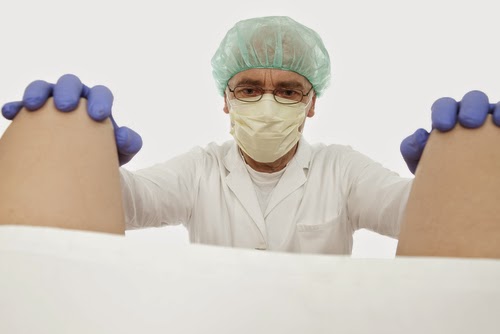
The view most women have during birth in most hospitals
We have been talking about birthing positions, both for labor (first stage) and for pushing out the baby (second stage).

Specifically, we are most interested in "alternative" birth positions, ones that are under-utilized in the hospital.

Part One of this series discussed Historical and Traditional Birth Positions because in ancient times and in traditional cultures, birth positions were typically more varied. Upright positions were common, although all positions can be found in ancient artwork.

In contrast, in hospitals today, most women give birth in very limited positions, usually one of three ─ either completely lying back ("lithotomy," "supine," or "dorsal recumbent"), partially reclined ("Semi-Fowlers" or "semi-recumbent"), or semi-sitting with knees widely abducted and pulled back and the chest and head rounded forward ("C" position).

Uniformity of Positions in the Hospital

Most women in the hospital give birth like this
Sadly, while care providers pay lip service to mobility in labor, their actions speak differently. Most women in labor are encouraged to lay back in labor in either a slightly reclined or semi-sitting position. Laying on the side is well-accepted in most hospitals but is often under-utilized.

Although progress has been made and some providers now "allow" women to labor or push in any position, their tune often changes when it's time for the baby to actually come out. At that point, most women are required (or so strongly pressured that it's basically a requirement) to lie back or to use a semi-sitting, knees-back position.

As we mentioned in Part One of the series, one survey of U.S. birthing women as recently as 2005 reported that 92% of the women gave birth in either semi-reclining/reclining or semi-sitting positions.

If all those women find these positions comfortable and truly want to give birth in them, that's no problem. However, many women report wanting to use other positions and being actively discouraged or even forbidden from using them. [I know I was actively discouraged from other positions in one of my hospital births.]

This practice is so widespread that many medical students never see a birth in any position other than lying back or semi-sitting. One medical student reported in 2013 (my emphasis):
I finished my Obstetrics and Gynecology clerkship 5 weeks ago. I did my clerkship at a large, and rather posh, private hospital that is affiliated with my medical school. There are some great doctors there, but I was sometimes aghast at the rather aggressive approach to delivery that many took. The cesarean section rate for the last year was 47%, well above the national average of 33%, and most labors were artificially augmented. I did not witness a single VBAC (Vaginal Birth After Cesarean), and was told that only one of the house attendings would perform them.

On the first day of my clerkship, I asked the clerkship director if women delivered in a variety of positions or if they were restricted to delivering in lithotomy (what many today think of as the “traditional” birthing position with the mother on her back with her feet in stirrups). The director seems to be a rather progressive woman...and she gave me a rather knowing look and said “I know what you’re getting at, but unfortunately everyone here delivers lying down”.

Indeed, as I went through my rotation, all the vaginal deliveries I saw were done in the semi-reclined position that is common in western hospitals.
Although there are hospital care providers out there that are comfortable attending births in alternate positions, the vast majority of hospital births, even today, are in the un-physiological laying back or semi-sitting positions.

These positions are less than ideal because they:

  • make the mother work against gravity
  • decrease the pelvic outlet by restricting free movement of the sacrum and tailbone during birth
  • compress the main artery that brings blood to the uterus, causing a tendency towards low oxygen to the baby, fetal distress, and maternal "supine hypotension"

These are not ideal circumstances for a safer and easier birth. Despite this, it has been very difficult to get alternative positions accepted into regular practice in many hospitals.


Barriers to Alternative Positions

There are many cultural and technological factors that influence birth position. But if "alternative" positions used to be the norm, why has cultural practice changed so markedly? Frankly, there are a number of factors at work here, including:

  • Recent Historical Precedent
  • Pervasive Cultural Image of Birth
  • Ease of Interventions
  • Care Provider Comfort and Convenience
  • Care Provider Training

Let's take a closer look at each one of these.

Historical Precedent

Historical medical factors are central to why women no longer birth in upright positions most of the time.

These factors are no longer relevant, yet the tradition of reclining birth became so strongly ingrained that this position is considered the norm for childbirth even now.

Hospital birth in the old days
When birth came into the hospital, women usually gave birth lying down because they were heavily drugged. Many were even tied down during contractions. As a result, women were usually flat on their backs with their legs strapped into stirrups because they could not hold their legs up themselves. Doctors often had to use forceps to help the baby negotiate its way out, and they needed the women in a position that gave them maximum access to the perineum. 

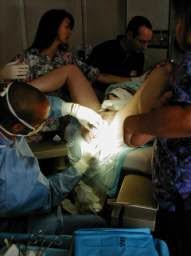
Modern hospital birth, still ready for the episiotomy
Furthermore, because of the forceps and the heavy-duty drugs given to laboring women, an episiotomy to speed up the birth was considered mandatory in many hospitals, and this was easier in a prone or lying-back position. Sadly, ease of episiotomy is still one of the reasons doctors like the lithotomy or semi-sitting position today, as the modern picture above shows.

Most women these days are not so drugged that they need to be prone in bed, forceps have mostly fallen out of use, and research has shown over and over how harmful routine episiotomies are. There is little need for women to be prone in bed for birth anymore, yet the tradition persists. 

Although historically it is understandable that this tradition of lying/sitting for birth developed in the highly-technological and interventive hospital births of the mid-20th century, there really is no good reason to insist on these positions for all births anymore.

Pervasive Cultural Image of Birth 
 
Sadly, this historical precedent for reclining birth became programmed into our media images of birth until it has become our pervasive cultural image of birth. This is one of the strongest influences on maternal positioning today


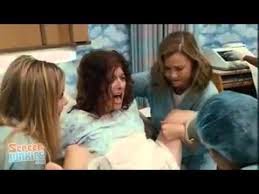
In movies and on TV, women almost always give birth in the prone or semi-sitting position, probably because it's all the writers and viewers know from their own lives and the lives of their friends and relatives.


Years ago, I worked on a play which had a birth scene in it from the pioneer days. The director had the woman on her back, knees flexed and back, like the usual media images of a hospital birth. I pointed out that most women in that era didn't birth like that and provided documentation. The director incorporated my input into rehearsal, but decided that nobody in the audience would understand because she “didn't look like she was giving birth.” We found a compromise (the actress "labored" in a semi-recumbent position but rose to a supported squat for the actual "birth") but it was frustrating that the recumbent position is so ingrained into our cultural expectations that anything else was seen as confusing to the audience. That is difficult to overcome.

As the pioneering film, Laboring Under An Illusion: Mass Media Childbirth vs. The Real Thing by anthropologist Vicki Elson points out, this pervasive culture image makes it difficult for women (and care providers) to envision any other position for birth, and often unwilling to even try it, even when equipment for other positions is provided and they are encouraged to be mobile.

Thus this position has become a self-perpetuating custom. But it doesn't have to stay that way!

Ease of Interventions

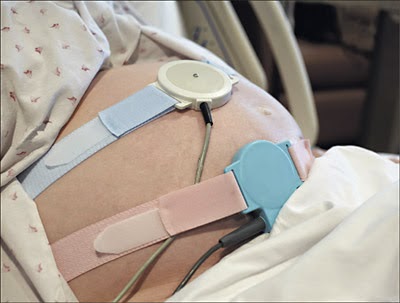
Electronic Fetal Monitoring
One practical barrier to alternative positions is that the recumbent positions make some common labor interventions easier. 

Birthing women are dealing with a hospital medical culture that has a very high rate of labor interventions (like induction and augmentation) that necessitate extremely close monitoring of fetal and maternal well-being. Procedures like fetal monitoring, IV fluids, and vaginal exams are easier when the mother is reclining. In addition, labor interventions that strengthen contractions raise the need for epidurals, which then often results in the mother laboring in a reclining position.

All of these things combine to create a powerful hospital culture that encourages a reclining, passive position for labor and birth. The mother is the passive patient that is having interventions done to her, the care providers are the active ones who are directing the labor. Even the language reinforces this; the doctor "delivers" the baby, rather than the woman "gives birth" to her child. As one researcher states:
Lithotomy position is not based on evidence and it comes with multitude of poor factors. This position is illogical, making the birth needlessly complicated, expensive, turning natural process into medical event and the laboring women to become simply the body on the delivery table to be relieved of their contents.
The best option against all of this is to opt for a more natural childbirth where the mother is an active participant in birth instead of a passive patient who is being delivered. Women who go into labor spontaneously and who progress along their own bodies' timeline instead of being pushed to labor faster find it easier to assume the positions that their bodies tell them are needed, and they don't have to deal with most of the interventions that tend to force women into reclining positions.

Campaign for Normal Birth, Royal College of Midwives

However, the reality is that an intervention-free childbirth is uncommon in the hospital, sometimes interventions are truly medically necessary, and many women choose interventions like epidurals or inductions. Although more intervention-free childbirth is a worthy goal, greater variety in birthing positions does not depend on it. Alternative birth positions can still be used in women with interventions.

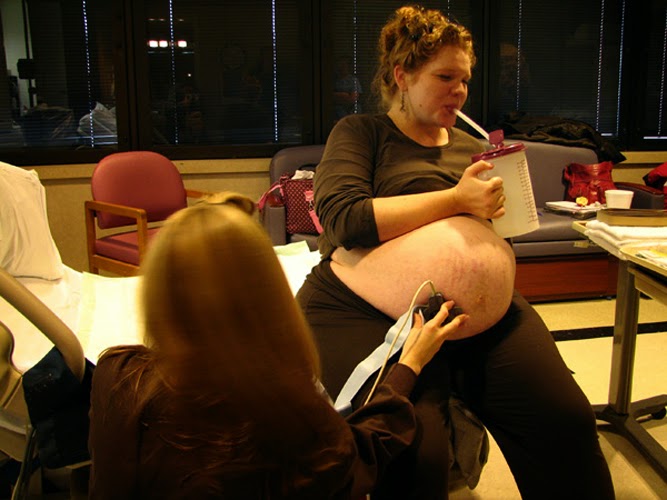
Fetal monitoring in an upright sitting position on a birth ball
For example, although outcomes are not improved with the use of EFM, most hospitals feel they still have to use it as a defense against lawsuits. But while it can be more challenging to use EFM in "alternative" positions, it can and has been done.

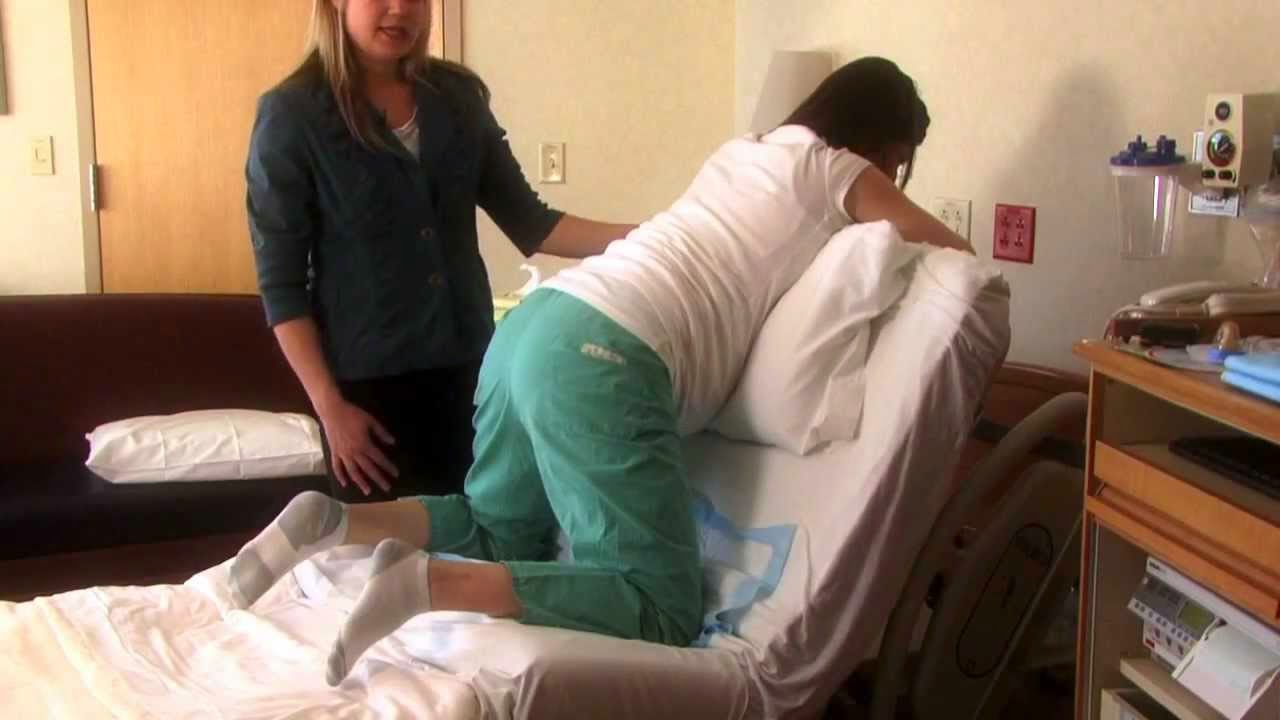
EFM, induction, augmentation, IV fluids, and epidurals do not have to be a barrier to alternative positioning. It just requires being a little more creative. (A doula can be very helpful in this process.)

Care Provider Comfort and Convenience


Sadly, care provider comfort and convenience is a huge factor influencing maternal positioning.

Some care providers tell women they can use any position that they like in labor ("You can even stand on your head if you want"), but that for actually pushing out the baby, they have to be on their back or semi-sitting with knees apart or pulled back. Much of this is for the comfort of the provider, so they can be sitting comfortably or stand just as the baby is born.


But while it is understandable that providers want to stay within their comfort level, why should a care provider's comfort level take priority over the well-being and comfort of mother and baby? The top priority should be the mother and the baby, not the provider's comfort.

However, of course providers absolutely need to keep themselves safe too. They may be afraid they will strain their back or knees in another position, which is understandable.

Alternative positions do not have to mean back strain for the attendant
Providers need to find a way to honor the mother's positioning needs while still finding a way to attend those positions in a manner that does not ergonomically hurt themselves.

With a little creativity, the needs of both parties can be served.

Care Provider Training

Another huge barrier to alternative positions is the lack of training for providers in attending any other position. 

Remember the 2013 medical student story from the first part of this post? She went through her entire rotation and NEVER saw any position other than a semi-reclining birth ─ in 2013, in a major hospital training program! This speaks very strongly to how ingrained this is in hospital culture.


Virtually all of the illustrations of birth that doctors see in their training involve the woman in the reclined or semi-sitting position. Notice the diagram above has the woman flat on her back. This is common in medical illustrations in obstetric textbooks.

Image from Royal College of Midwives.
Notice how passive the mother seems, and how hands-on
the doctor is. He might not have been trained how to do these 
manipulations if the mother was in a different position
Sadly, most care providers (and especially doctors) rarely see any position other than semi-sitting or reclining in their training, and they are taught to be very hands-on in manipulating the head and shoulders during birth. This makes them unsure how to do manipulations or to handle issues like shoulder dystocia when the physical orientation is different. As a result, some are very inflexible about letting the mother try different positions for the actual pushing out of the baby; they are afraid they will make a mistake when it counts most.

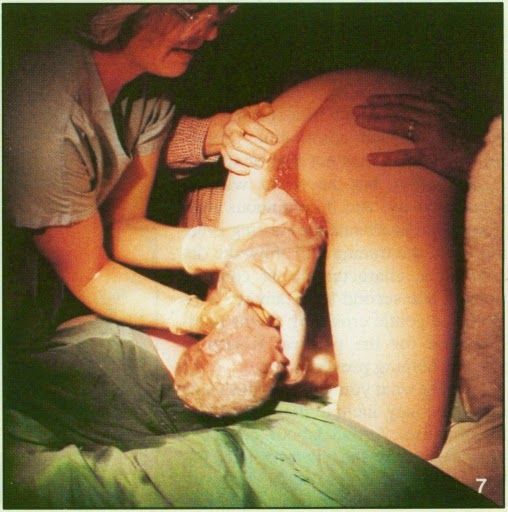
Baby being birthed in an all-fours position. Notice the opposite
orientation in this position, which is confusing for some providers
It is completely understandable that providers don't want to make a mistake that might harm a baby, but really, it's not that hard to re-educate oneself towards a different spatial orientation. All it takes is a willingness to learn about how to handle a different orientation, and a hospital and medical school culture that is willing to encourage such learning.

Medical schools would probably find that more mobility and more patience in labor would mean that less manipulation during birth would be needed. But because they come from a historical tradition of drugged mothers and drugged babies, they have been taught to use lots of hands-on manipulation during birth, and to fear positions that they see as interfering with their ability to do this manipulation.

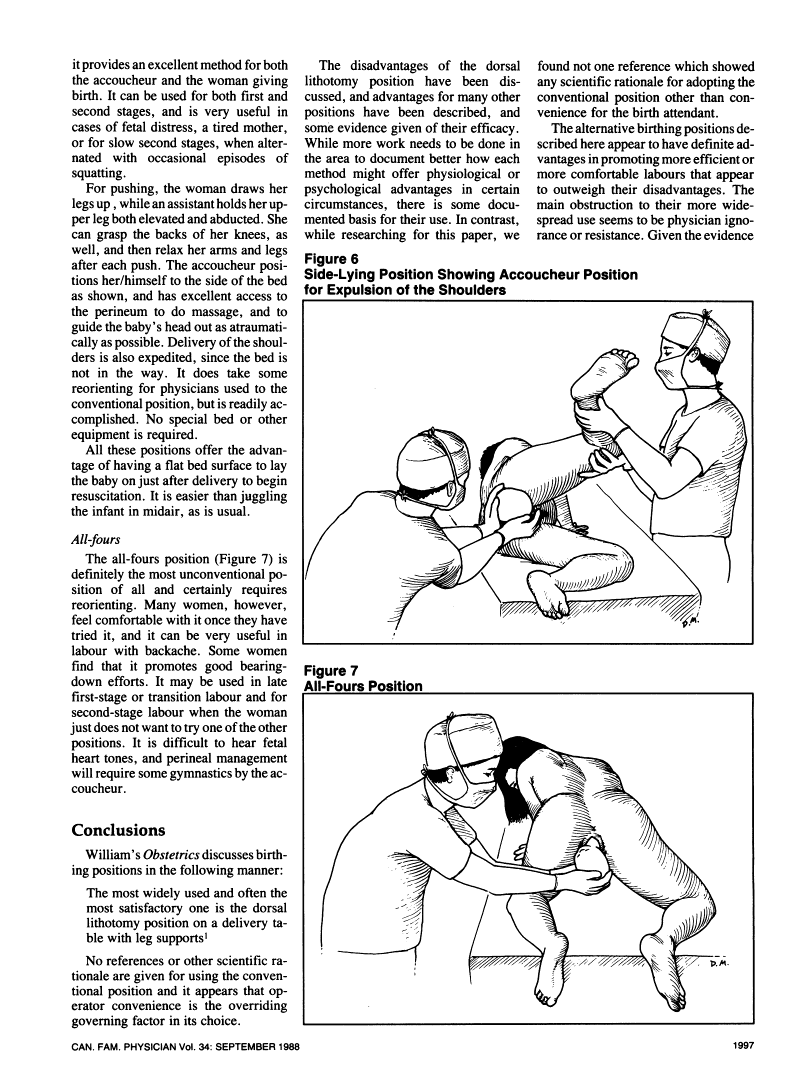
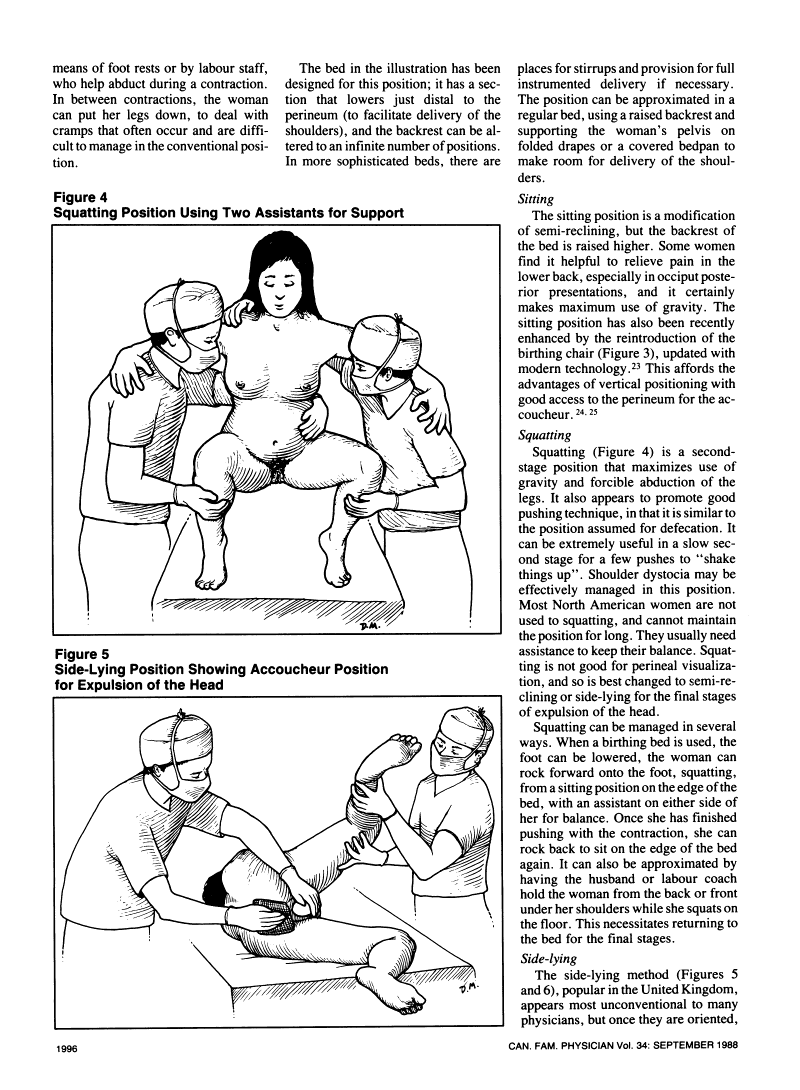
Illustrations from Canadian Family Physician article, 1988
Medical schools have much to teach their students in the few years they have them, but there is no good reason except tradition that handling alternative birth positions is not a meaningful part of the curriculum. 

Compared to some of the other complex skills that doctors learn, learning about different spatial orientations for birth manipulations (when needed) would be relatively easy. Change would really take place if medical schools would just include this as part of the regular curriculum (more than just a brief mention, but actual practice with it). But when the teachers have rarely seen a birth outside of the usual positions, how are they going to teach meaningfully about it? And thus birthing position becomes a never-changing tradition in many hospitals.
Illustrations from Canadian Family Physician article, 1988
There are some articles for doctors in the literature on how to re-orient themselves to attend births in different positions (see the free Canadian Family Physician article shown above), yet the information in them seems to be widely ignored in teaching and in practice.

It is LONG past time for medical school curriculum and residency programs to address alternative birth positions in a more meaningful way.

Conclusion

The vast majority of women in U.S. hospitals give birth in reclining or semi-sitting positions. This is not because their care providers are mean or wish them harm, it is because these positions have become rigidly ingrained into medical training, hospital culture, and popular culture. But it doesn't have to stay that way. 


Although reclining positions are still seen frequently in many European and Australian hospitals too, alternative positions are more encouraged and accepted in these areas. In fact, most recent research on "alternative" positions is being done in Europe or Australia.

German hospital birthing room
Look at some of the birthing room equipment available in the British labor ward video and the German birthing room picture above. Why isn't this standard in most U.S. hospitals?

[To be fair, some of it IS in some U.S. hospitals. But often it's only available on request or in a special room, not just a routine part of every birthing room. And too often, it's only for labor, not for the actual birth.]

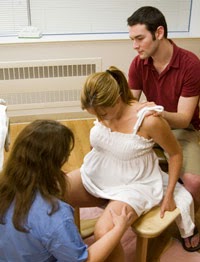
A hospital midwife attending a woman using a birth stool 
Although research on utilization of birthing positions is sparse, it suggests that the pervasive image of birth in the media and established hospital culture subtly influence women towards reclining positions. It also suggests that certain models of care (such as birth clinics and births attended by midwives) tend to utilize higher levels of alternative positions for birth.

Hospital birth in an all-fours position, attended by a family doctor.
Photography from Canadian Family Physician, 1988
Of course, it's not just midwives who attend these births; there are some absolutely awesome OBs and family docs out there too who are attending births in all kinds of positions. The title of the birth attendant is less important than their philosophy.

Women are more likely to find support for using alternative positions if their care provider believes strongly in physiologic birth, is supportive of natural childbirth, and has low intervention rates in labor.

Even if you are planning on having an epidural or are being induced, having a provider comfortable with natural childbirth increases your chances of using alternative positions despite these interventions.

To find out how supportive your care provider truly is of alternative positions, ask them to estimate what percentage of the births they've attended have been in non-recumbent positions. (Not labored in, but actually pushed the baby out in. Remember, many attendants are fine with mobility in labor but require women to be sitting or reclining for the actual "delivery" of the baby. You are looking for the ones that have experience and comfort with alternative positions for the actual birth too.)

It is mostly tradition, training, and comfort levels that keep reclining positions as the standard of care in many hospitals. But with education and flexibility, caregivers in the hospital can become more open to other positions and accommodate them in a way that respects the mother's needs as well as their own needs.

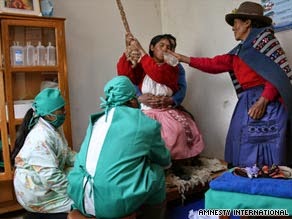
Dangling and Supported Squat position in a hospital birth clinic in Peru
Hospital caregivers CAN learn to safely attend births in alternative positions, and research suggests that doing so may help improve some birth outcomes, as well as helping labor to be less painful for the mother.

It's about time these "alternative" positions became more widespread in medical schools, hospitals, and birthing clinics all around the world. 


References

Position Ideas and Pictures
Evidence Summaries on Birth Positions
    Studies

    Pract Midwife. 2014 Apr;17(4):24-6. Mobility and upright positioning in labour. Westbury B. PMID: 24804420
    SUMMARY: A study by the Royal College of Midwives (RCM) (2010) concluded that 49 per cent of women gave birth in the supine position. The RCM advocates getting women 'off the bed' in its campaign for normal birth. There has been much speculation as to why women labour on the bed, with some suggesting it is because women feel it is expected of them. Mobility and upright positioning in labour have countless benefits, with or without epidural anaesthesia, for both woman and fetus. The National Institute of Health and Care Excellence (NICE) supports the adoption of positions that women find most comfortable. Both midwives and students should fully explain the benefits of mobility and upright positioning in labour to women, preferably antenatally, to enable them to make informed decisions as to the positions they wish to adopt when in labour.
    Women Birth. 2012 Sep;25(3):100-6. doi: 10.1016/j.wombi.2011.05.001. Epub 2011 Jun 12.
    What are the facilitators, inhibitors, and implications of birth positioning? A review of the literature. Priddis H1, Dahlen H, Schmied V. PMID: 21664208
    BACKGROUND: From the historical literature it is apparent that birthing in an upright position was once common practice while today it appears that the majority of women within Western cultures give birth in a semi-recumbent position...RESULTS: The literature reports both the physical and psychological benefits for women when they are able to adopt physiological positions in labour, and birth in an upright position of their choice. Women who utilise upright positions during labour have a shorter duration of the first and second stage of labour, experience less intervention, and report less severe pain and increased satisfaction with their childbirth experience than women in a semi recumbent or supine/lithotomy position. Increased blood loss during third stage is the only disadvantage identified but this may be due to increased perineal oedema associated with upright positions. There is a lack of research into factors and/or practices within the current health system that facilitate or inhibit women to adopt various positions during labour andbirth. Upright birth positioning appears to occur more often within certain models of care, and birth settings, compared to others. The preferences for positions, and the philosophies of health professionals, are also reported to impact upon the position that women adopt during birth. CONCLUSION: Understanding the facilitators and inhibitors of physiological birth positioning, the impact of birth settings and how midwives and women perceive physiological birth positions, and how beliefs are translated into practice needs to be researched.