Monday, February 24, 2014

Musical Mondays: Say Something by Pentatonix

Musical Mondays.......here's a filler post while work keeps me hoppin'.

I absolutely adore a capella/doo wop music, and the group Pentatonix (one of the winners of The Sing Off) is one of the most interesting and innovative a capella groups in many ways.

Here is their beautiful new cover of a real tear-jerker. The arrangement is amazing. Love the cello and how it combines with the vocals. Technically not totally a capella, but wonderful in its intensity and originality.

Enjoy.


Tuesday, February 18, 2014

Singing the Praises of Dehydrating Frozen Veggies

Last year, I got a food dehydrator as an experiment to see if it was useful in preserving our garden harvest.

Although I'm still pretty new at this dehydrating thing, I'm really liking it so far.

I wanted to see if using dried veggies and fruits are as tasty and useful as people say. Are they really a good addition to your food storage efforts and everyday cooking, or are they redundant to frozen foods?

Because we weren't sure about how much we'd actually use a dehydrator, we didn't buy the expensive Excalibur brand that many folks recommend, just the cheaper round type you can get nearly anywhere.

We've been slowly putting our new dehydrator to the test. And I have to say I'm a fan! We've dehydrated sliced apples (HUGE hit with the kids) and a number of different kinds of vegetables. We'll try to do more of other types of fruits and veggies next year.

But what I'm really excited about is how easy dehydrating frozen veggies is.

Using Frozen Cuts Down on Prep Work

As I have developed my gardening skills, I find that we have more food than we will typically eat right away. So last year I worked at cutting, blanching and freezing my extra veggies so that when I needed some, I could just open the freezer and get them. And it was handy to have them already prepped in the freezer, I have to say.

However, I have to be honest...I am extremely lazy. I can't stand doing lots of prep work if I don't have to. So while I enjoyed having a bunch of chopped carrots from my garden in the freezer, I wasn't too enthralled with the long process of washing, peeling, chopping, blanching, and then freezing them individually on cookie sheets, then getting the whole mess into a storage container. Why not just buy frozen? Not organic but waaaay less work.

Dehydrating would involve a similar process; wash, peel, chop, blanch, and then put them in the dehydrator. This kind of prep isn't hard, just time-consuming and repetitive. With four kids, teaching, and writing, I prefer to do other things with what free time I have instead of standing around in a kitchen doing prep work.

So while I LOVE having fresh veggies from our garden all through the year, I had to be honest with myself that I wasn't likely to spend a ton of time doing all this prep because I find it so boring and repetitive. Some people enjoy that kind of cooking and fussing; I really REALLY don't. Yet I didn't want to give up on adding more vegetables to our diet. So I looked around to see if there were any shortcuts we could take.

What I found was that it's way easier to dehydrate frozen veggies from the store.

Get some bags of frozen veggies on sale, toss them on the dehydrator trays, and plug in the dehydrator. Simple as that. About 8-12 hours later, you have dehydrated veggies!

What's the advantage of dehydrating frozen vegetables? Frozen veggies in bags have already been made into uniform sizes, blanched, and individually frozen.

All that prep work, already done for me?  SOLD!

Yeah, it's not my home-grown veggies, which are tastier, and yeah, it's not organic (which I strongly prefer), but the convenience factor can't be beat. So I'll probably continue some of both....freezing, canning, and drying my garden surplus, plus dehydrating frozen bags of veggies.

My next goal is to make homemade fruit leather by drying my homemade Spicy Ginger Applesauce in the dehydrator. I might even try dehydrating some of my special Oven-Roasted Spaghetti Sauce to make a quick and easy addition for things like soups or chili.

Why Dehydrate?

I'm sure some people are wondering, though...why go to the trouble of dehydrating? Why not just keep bags of frozen veggies and use them? You can certainly do that if you want, but the advantages of dehydrated foods include:
  1. You always have food on hand, even when you are too busy to get to the grocery store or when circumstances like illness prevent getting fresh food from the market or garden
  2. Dehydrated veggies are lighter and smaller to store. You can store much more food in the same amount of space, which is far more efficient storage
  3. You don't need electricity to store dehydrated food. If power goes out, you won't lose as much food storage if some of it is dehydrated. You'll lose refrigerator and freezer stuff eventually, but the dehydrated stuff will still be good as long as you store it properly
  4. You can save money by buying big amounts of food when it's on sale and then dehydrating it
  5. Dehydrated veggies will save a bunch of prep time during cooking on busy days. Just put dehydrated veggies into hot water in a pot or a slow-cooker and start a good soup or stew
  6. In an emergency, you will have easy-to-fix food that is either ready-to-eat (dehydrated fruit, fruit leathers, beef jerky) or quick-to-fix (dehydrated veggies in soups)
  7. Dehydrated foods are handy and lightweight for backpacking or other forays into nature
Remember, you don't have to make a choice between types of food preservation; combine them so that you have several different types of food storage available. You can still use the freezer for the stuff that really needs to be frozen, and you can still do canning of foods that you prefer canned. Dehydration just gives you more choices in your storage. The more diverse your storage is, the more resilient it is.

In winter, when we are so busy with school activities and rushing about, having dehydrated food already prepped and ready to just throw in a soup stock to rehydrate will save a bunch of time when cooking. I really like that. Convenience food without the junk food health penalty....definitely a bonus.

For example, when I cook chili, I usually add shredded or diced carrots, corn, onions, etc., and sometimes zucchini or other veggies. Before, I had to take the time to chop up the veggies while I was cooking the meat. Not that hard, but sometimes we were too pressed for time and so I didn't add as many as I would have liked. Having already-chopped dehydrated veggies takes away a lot of that prep time and makes my life easier.

Same thing for cooking in the crock pot. It can be a hassle to chop and prep everything in the morning before leaving for work, and it's not easy to fit it all in as you get the kids ready for school. Having dehydrated veggies you can just throw in along with the fresh ingredients would shorten the process considerably, making me more likely to do crock pot cooking more often.

So it seems to me like dehydrating frozen veggies is even more of a WIN-WIN situation. Gives us more emergency food storage, frees up freezer space, keeps me from having to do all the blanching and chopping myself, saves on prep time during cooking, and encourages more use of veggies. What's not to like?

If money is an issue, it's perfectly fine to get one of the cheap round dehydrators (which can be found even more cheaply on eBay and at garage sales). Start small, see if you like it, and then if you really get into it and want to do a ton of dehydrating, consider upgrading to the Cadillac version, the Excalibur. For most of us, the small round dehydrators are perfectly adequate and store more easily.

To find out more about dehydrating, click here, here, or here, or google it for even more links. There's plenty of information, videos, and helpful hints out there on the internet if you are interested.

Do you dehydrate?  What foods do you dehydrate?  Any hints for dehydrating newbies?


Monday, February 10, 2014

Have an Emergency Food and Water Reserve

The view out my back window earlier this week;
that's nearly a foot of snow
People amaze me sometimes. Usually that's in positive ways, but not this time.

Much of the country has had significant wintery weather recently, and more is coming in some areas. We ourselves had nearly a foot of snow this week, which is unusual for our area. Then we had ice on top of that, which made for very treacherous travel indeed.

Now, rarely do these things come without warning; there is usually some kind of notice that a big storm is a possibility.

Yet still, I saw all kinds of news reports of people who had to leave their house in the middle of the snowstorm in order to get food. What?!?

First of all, it's not like they didn't have notice that there was going to be a storm. No one knows how long these things will last, so for heaven's sake, go to the store and stock up ahead of time! Err on the side of getting extra food and water, just in case. Duh.

Second of all, EVERYONE really should have a good reserve of emergency food. You never know when an emergency is going to hit, so it's important that every household have at least some emergency stores of food and drinking water.

Those people in the news stories who ran out of food in the space of a few days obviously did not have enough food reserves.

To make a food reserve, you need some non-perishable food stocks that don't need electricity or refrigeration, and a non-electricity way to heat them if at all possible. Think cans of food, insta-soups, dried fruits, nuts, rice, beans, beef jerky, even mac-n-cheese. For healthier choices, get a food dehydrator and start drying frozen or fresh vegetables and fruits, then vacuum seal or freeze them for longer-term storage.

Don't have enough money for buying a bunch of food reserves? Just buy a couple of extra things each month and put them away; in time you'll build a decent food reserve. For building up water reserves, read here.

In our recent storm, I was appalled at the number of Facebook posts I saw from friends talking about starting to run out of food, or worse yet, having to leave the house in icy, unsafe conditions in order to have enough food to eat. What?!? Really?

One was from the daughter of some Scout friends. Whatever happened to "Be Prepared"? Sure, she wasn't a Scout herself but her parents are Scout leaders, she went on many family camp-outs, and she was on staff at several Scout camps. Her parents are generally well-prepared but she wasn't, despite all her training about the importance of preparedness.

I understand that she's in college and has limited funds (been there done that myself!), but that's what Dollar Tree and such are for. You can do an amazing amount of cheap prepping at Dollar Stores. Not the healthiest food but at least you'd have a reserve for an emergency.

I realize, of course, that everyone is always on a learning journey and not everyone is perfectly prepared for every happenstance. It's okay not to be perfect, but it is important to be working towards sensible precautions, and a decent food reserve is one of those really important precautions.

Am I perfectly prepared myself? No, of course not. In my college years, I had almost no reserves because I was simply not conscious of the need to have reserves. Had a severe storm hit, I would have been in bad shape. In my initial post-college years, I was incredibly poor and so did not have a lot of reserves, but I at least had some and could have survived a week-long storm. I would have been in bad straits if a longer emergency had occurred, though.

Nowadays, our family's food and water reserves are still a work in progress, but at least we're making progress and are conscious of the need to have reserves. My concern is that I don't see many people even trying to build a reserve, or even conscious of the need to do so. Others are openly dismissive of having a reserve or of making reasonable preparations.

Really?!? How do they think they are going to survive if an unexpected disaster hits? Do they really think they're going to live their whole life without any disaster, ever? History shows that every area is vulnerable to some sort of natural or man-made disaster sooner or later, and of course, modern society is very vulnerable because of our over-dependence on the electrical grid and interstate transportation systems. NO ONE is completely safe from a potential long-term disaster and its interruptions to the food and water supply.

My area is subject to earthquakes; we are overdue for a really major quake. I've read the emergency planning predictions; if a truly major quake hits, we'll be without new food supplies for a number of weeks and possibly several months. How do these people think they will feed their families in that situation, when they can't even feed them for a few days during a winter storm that they had advance notice of!?!

Many people expect to be okay because the government will help. Sure, FEMA will help out as best it can, but people overestimate the government's ability to help in emergencies. Logistics mean that help is sporadic at best, often does not arrive in a timely manner, and is extremely basic when it does arrive. Government and charities can help, but they can't possibly take care of all the needs that will arise in a real emergency.

People need to help themselves, first and foremost, and not expect to be rescued or taken care of. And that means having non-perishable food reserves on hand, a way to heat them, and having enough drinking water for immediate needs (plus a way to filter and purify additional water for longer-term needs). A good first-aid kit (and knowledge of how to use it) would also be a smart addition.

Disasters like earthquakes, floods, tornadoes, and hurricanes take enough lives. Sadly, there are many more lives lost afterwards because of poor water sanitation, unsafe food, and poor planning.

Don't let your family members be some of those unnecessary victims. Plan ahead. Start building your food and water reserves NOW.

It's not paranoia; it's simple common sense.

Tuesday, February 4, 2014

Supraumbilical Incisions Associated with Greater Risk in Obese Women

Here is yet another study showing that vertical incisions (supraumbilical, in this case) results in suboptimal outcomes, even in "morbidly obese" women.

To review, doctors have assumed for many years that vertical (up-down) incisions would lessen the risk of infection and wound complications in very fat women by avoiding an incision in the moist area underneath the belly. This was based more on assumptions than on real evidence, but it was taught as a medical truth for many years.

However, a number of recent studies have shown poorer outcomes with vertical incisions, showing the need to re-evaluate this medical teaching. Yet some doctors still believe and promote that a vertical incision is necessary in high-BMI women.

New Study

This study reaffirms (yet again) that vertical incisions do NOT improve outcome. 

It found that women who had a supraumbilical vertical incision experienced more blood loss, longer operating times, and nearly 25 times the risk of a classical cesarean, which is a far riskier uterine incision with long-lasting implications for future pregnancies.

In addition, the study showed that doing a vertical incision did NOT reduce the risk for infection or other wound complication. In fact, although the difference did not rise to statistical significance (probably because of the small sample size), there was a clear trend towards more wound complications in the group with the vertical incision (19% vs. 8% in the horizontal incision group, a 2.7x risk after adjusting for confounders).

Discussion of Cesarean Incision Research

Many providers are catching on that vertical incisions generally result in poorer outcomes, even in the most obese women. I'm happy to report that there seem to be fewer women of size being pushed into classical cesareans purely because of weight, and that more educational institutions are teaching that low transverse (side-to-side) incisions are preferable in most cases, regardless of the woman's BMI.

Sadly, though, there are still some stubborn hold outs who insist that very obese women "need" a vertical incision, and some educational institutions and materials are still promoting this approach.

And it's important to note that even though fewer providers are using vertical incisions in obese women now, about 1 in 10 to 1 in 15 obese women having a cesarean are still being subjected to a vertical incision.

This flies in the face of the fact that the vast majority of research clearly indicates that vertical incisions carry more complications and often result in the risky classical uterine incision that has tremendous short- and long-term health implications for the mother. 

Furthermore, research on vertical versus horizontal incisions in non-maternity abdominal incisions confirms the general superiority of horizontal incisions.

Some recent researchers are resisting the move towards low transverse incisions in women of size. They have claimed that the evidence is not yet conclusive on whether vertical or low-transverse incisions are better. They point out that most study samples are not randomized and do not rise to the "gold standard" research that is most desirable, and that some studies have not found a statistical difference in wound complications between incision types.

While the call for gold standard research is a legitimate concern, there have been enough studies that have found worse outcomes with vertical incisions that they should be curtailed while we wait for the results of a randomized controlled study. (There is a randomized study currently being conducted but it won't be finished for several years yet; if we wait until this study is finished and published before changing policy, many more high-BMI women will likely suffer major wound complications and associated morbidity by being subjected to vertical incisions in the interim.)

It's true that a few studies (like the one discussed today) have not found a statistical difference in wound complications between vertical and low-transverse incisions. However, if you read the full studies more closely, all found a strong trend towards worse outcomes in the vertical group. These differences simply did not rise to statistical significance because of the small sample sizes involved, not because results were truly equivalent.

It's also important to point out that not a single study has found improved outcomes with vertical incisions. If vertical incisions really resulted in superior outcomes, that trend would be clear, and it most definitely has not been. Instead, the trend is markedly in the other direction and only fails to be clear because of the small sample sizes in some studies.

Clearly, more research needs to be done. But in the meantime, considering the strong trend in the existing research, vertical incisions should be reserved only for times when it is truly medically indicated (certain placental presentations, certain fetal positions, extremely emergent situations, etc.).

Bottom line, vertical incisions should NOT be done routinely simply because a woman has a high BMI.

It's time for all the educational institutions and clinicians to acknowledge this and adjust their teaching and practices accordingly.


Reference

J Pregnancy. 2013;2013:890296. doi: 10.1155/2013/890296. Epub 2013 Nov 20. The effect of cesarean delivery skin incision approach in morbidly obese women on the rate of classical hysterotomy. Brocato BE1, Thorpe EM Jr1, Gomez LM1, Wan JY2, Mari G1. PMID: 24349784 (Free full text can be found here.)
OBJECTIVE: To assess the risk of classical hysterotomy and surgical morbidity among women with a body mass index (BMI) greater than 40 kg/m(2) who underwent a supraumbilical incision at the time of cesarean delivery. METHODS: We conducted a retrospective cohort study in women having a BMI greater than 40 kg/m(2) who underwent a cesarean delivery of a live, singleton pregnancy from 2007 to 2011 at a single tertiary care institution. Intraoperative and postoperative outcomes were compared between patients undergoing supraumbilical vertical (cohort, n = 45) or Pfannenstiel (controls, n = 90) skin incisions. RESULTS: Women undergoing supraumbilical incisions had a higher risk of classical hysterotomy (OR, 24.6; 95% CI, 9.0-66.8), surgical drain placement (OR, 6.5; 95% CI, 2.6-16.2), estimated blood loss greater than 1 liter (OR, 3.4; 95% CI, 1.4-8.4), and longer operative time (97 ± 38 minutes versus 68 ± 30 minutes; P < .001) when compared to subjects with Pfannenstiel incisions (controls). There was no difference in the risk of wound complication between women undergoing supraumbilical or Pfannenstiel incisions (OR, 2.7; 95% CI, 0.9-8.0). CONCLUSION: In women with a BMI above 40 kg/m(2), supraumbilical incision at the time of cesarean delivery is associated with a greater risk of classical hysterotomy and operative morbidity.

Sunday, February 2, 2014

Trench Composting

Do you compost your food and garden waste?

For years we didn't. I wanted to, but my husband was convinced it would be too messy and would attract wild animals. Eventually we invested in a composting bin that was completely enclosed to address his concerns.

We did have some fly issues and it was a bit yucky at times, but in time we realized this was because we needed more "browns" (dried leaves, straw, etc.) in proportion to the "greens" (fruit and vegetable peelings etc.) we were putting in. Once we worked that out, our little enclosed compost bin worked fine for our small suburban lot. And it was great to be able to harvest the finished compost and put it around my plants in the yard. Much better than feeding the plants a bunch of artificial chemicals.

Once we moved to a larger place out in the country, we wanted to increase our composting efforts. The little compost bin was just not going to cut it out here. We've tried several different things instead, including a couple of different rotating compost bins and a traditional compost pile. However, since we put the kids in charge of taking care of the compost, we've had more problems, as they rarely added "browns" to the "greens" of our food waste. We tried to do that ourselves, but just didn't get out there often enough to really do it well, frankly. And rarely did anyone get around to turning the compost to aerate it properly. So the compost has been a bit rank at times.

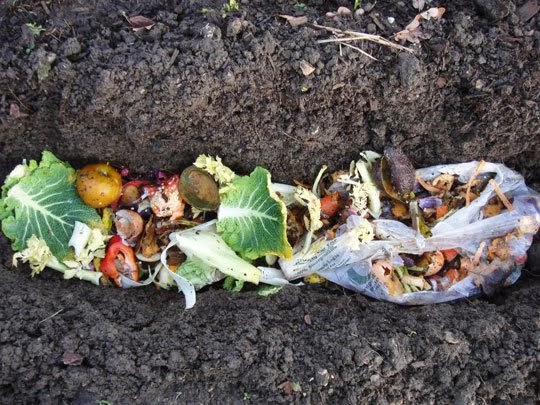
This year I decided to try trench composting instead. There was a whole bunch of rather slimy compost from the bins that needed some major resuscitation, and it didn't seem to be responding very quickly to adding more browns. So this fall, after we finished harvesting our raised bed gardens, we dug a sizable trench in most of the raised beds. (This is not very difficult in the nice loose soil of raised beds.)

Then I had the boys dig out all the slimy half-compost from our compost bins and spread it in the trenches. That was the worst part, but only because we'd let the bins get so rank via procrastination and laziness. If we were adding fresh food scarps, it wouldn't be nearly so onerous, I think.

We then added straw and dried leaves and mixed it in a bit. In some areas I added a little bone meal too, as well as some alpaca manure we got from local alpaca ranches. I also added some remineralization dust from a gardening store to restore the calcium and other minerals that tend to get depleted from the soil by heavy feeding plants. Then we covered it all over with dirt and left it. Really, we didn't do that much, and it wasn't hard at all. If we hadn't had to dig half-finished compost out of the slimy bins, it wouldn't have been a difficult or yucky chore at all.

Frankly, I was pretty pessimistic about trench composting, considering how cold the weather was. I just didn't think the compost would get warm enough to effectively "process" all the materials very quickly. I figured I might be planting my garden in the spring into a bunch of slimy, half-rotted food. But I had all this nasty half-compost from the rotating bin that had to be taken care of, and burying it seemed a lot less offensive than trying to process it above ground in the rain and snow this winter. So we buried it and crossed our fingers.

We had some nice weather recently so I decided to go out and check on it and see how it was doing. I was pretty tentative at first because I was expecting it to still be rather rank.

But to my surprise, it was doing really well! Some of the trenches had already almost completely turned to full compost! I couldn't believe it went so much quicker than what it had been doing in the bins. And animals hadn't bothered it at all.

Now, not all of it has completely broken down yet in every location. You can see some "bits" left in places. One bed, whose contents weren't very buried at all because of a lazy child, still has a ways to go, so we tried to bury that area more and give it some more carbony browns (plus some alpaca poo). Fortunately, we won't be planting much for another month or two anyhow in that bed, so hopefully it will be fine by the time we are ready to plant there. If not, we'll just plant around any leftover bits.

On the whole, I was surprised at just how quickly things had broken down in just a couple of months (and rather cold winter months at that).  Sure, the compost was half-done already from the compost bins, but really, it'd been going extremely slow in the bins. This was much faster and a lot less nasty. I'm looking forward to seeing how my tomatoes do this summer with all this wonderful compost in the soil, refreshing it!

As the kids take out the food scraps now, I ask them to dig a hole somewhere in one of the raised beds and bury it. If it's too dark or the ground is too frozen, they still use either the traditional compost pile (which is still going) or the rotating bin. So we don't do trench composting exclusively; we have multiple types going. But based on our results so far, I think we'll be doing far more trench composting as our garden allows.

I know trench composting isn't totally practical in some areas or living arrangements, but if it works for your situation, it really is a nice way to take care of your kitchen food waste and benefit your garden at the same time. Long-term gardening is all about replenishing the soil and building it up, so trench composting is a great way to accomplish two goals (taking care of food waste and replenishing your soil to increase garden yields) at the same time. It helps you towards both sustainability and self-reliance. Definitely a win-win proposition!

Thursday, January 23, 2014

Spicy Plum Chutney

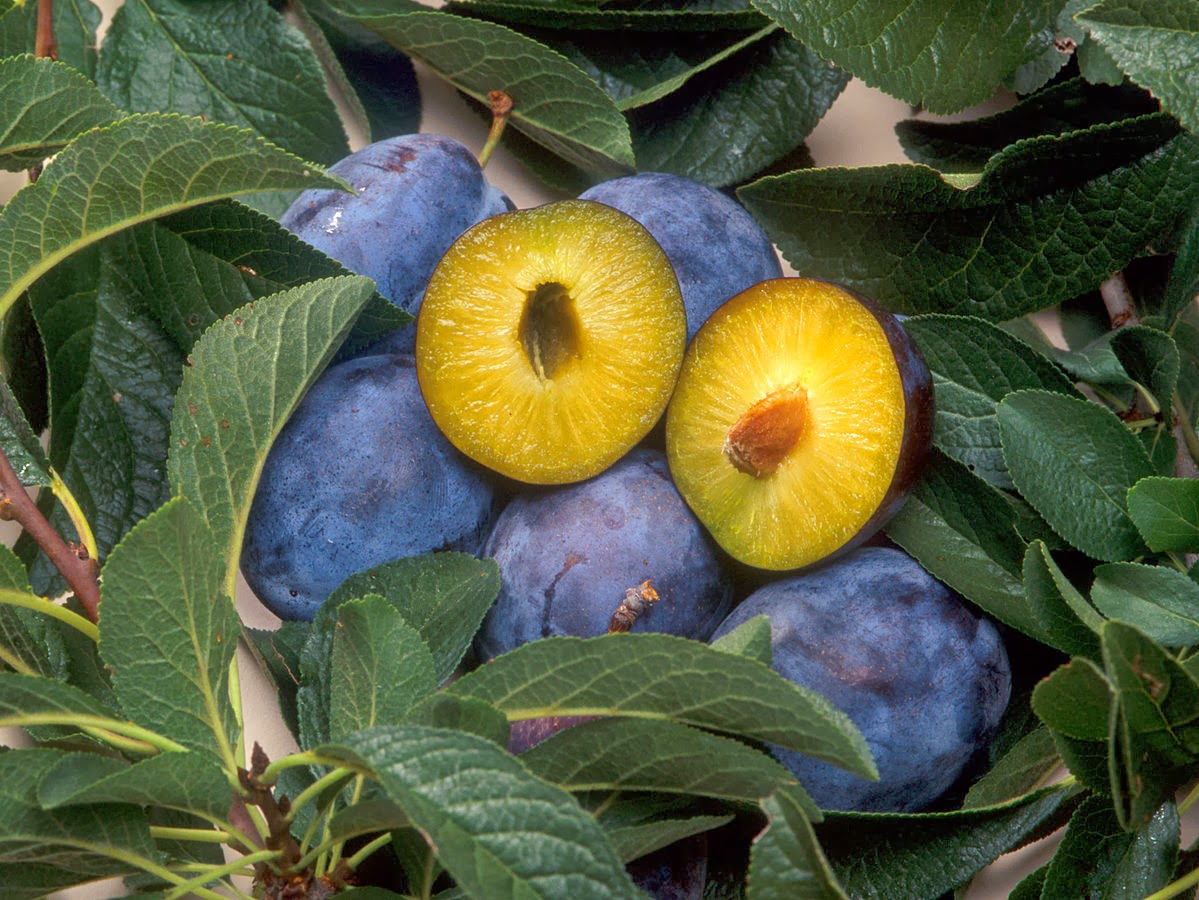
Image from Wikimedia Commons
When I first started developing an interest in canning, I was looking for a way to preserve some of the fruit off the trees in my yard, especially my rather prolific plum trees.

While eating plums fresh are okay, they are not my favorite fresh fruit, so I was looking for ways to use them in other recipes.

Hands down, my favorite thing to do with the plums in my yard is to make plum chutney. So so so SOOO good! And by canning it, I get to enjoy it all year round.

What is chutney, you ask?

Well, chutney means different things to different people, but basically it's a condiment of spices and fruits (and/or vegetables) that is usually both savory and sweet at the same time. It's a fruit or vegetable relish that is served with a main dish to complement its flavors.

Most chutneys you get in Western countries have Indian roots but have been Europeanized, so they're not truly "authentic." Still, these chutneys have plenty of charms. They usually involve cooking fruit, vinegar, onion, garlic, and spices together, then concentrating the flavors by cooking things down in a reduction.

Now, that may not sound that great if you are new to it (fruit, onions and vinegar cooked together?), but it really is quite good. A little sweet, a little sour, a little savory, a little spicy ─ all in one. Goes great with meats and cheeses.

The best-known fruit chutney is probably Major Grey's Chutney, which uses mangoes, onions, vinegar, raisins, lime juice, and spices. (If you've never tried it, you definitely should!)

Image from sirenabernal.com 
There are many other types of fruit chutneys out there, but my personal favorite is plum chutney.

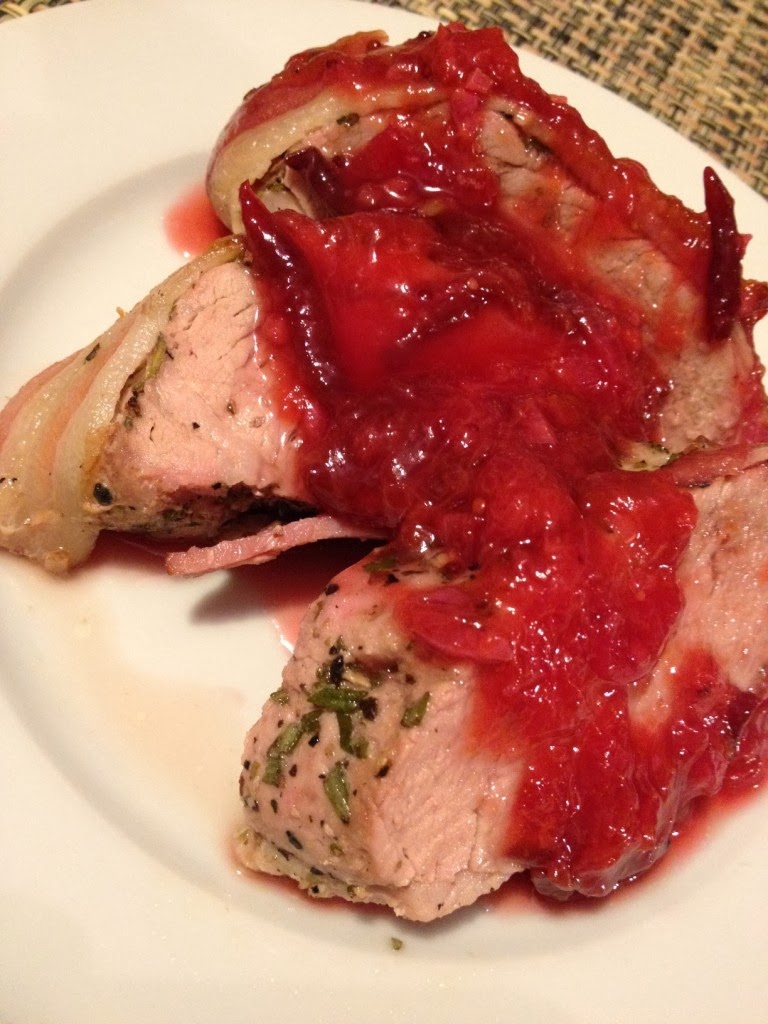
The best way to eat plum chutney, in my opinion, is on pork tenderloin, which is a good lean cut of pork. There's a good recipe here.

Basically, roast the tenderloin, let it "rest" for a few minutes after taking it out of the oven, then slice it up and serve with the plum chutney on top.

You can put some chutneys on meat before roasting it, but my family agrees that this chutney is much tastier when it is added after the meat is cooked.

The recipe above has you make the chutney fresh, at the same time you are roasting the meat. However, it's also useful to make the chutney ahead of time and then can it. Then it is available whenever you want it, whether or not plums are in season. It shortens your prep work to have it already made and shelf-stable, and the flavors intensify if they are on the shelf for a while.

This is the recipe I use, which is taken from Put 'Em Up by Sherri Brooks Vinton. It's a little on the runny side and it's not as pretty-looking as I might like, but the flavor really can't be beat.

Plum Chutney

2 c. cider vinegar
2 c. sugar
4 pounds plums, pitted and diced
2 large sweet onions, diced
1/2 c. diced prunes
2 T. freshly grated ginger
2 T. mustard seed
2 t. salt
zest of one lemon, cut into thin strips
2 garlic cloves, minced
1/2 t. ground cloves

Bring the vinegar and sugar to a boil in a large non-reactive pot. Add the plums, onions, prunes, ginger, mustard seed, salt, lemon zest, garlic and cloves and return to a boil. Simmer until thickened, about 30 minutes.

Can with the boiling-water method for 20 minutes (adjusting for altitude if needed). (Canning directions for beginners can be found here.)

Enjoy!


Wednesday, January 15, 2014

Spicy Ginger Applesauce

I'm busy catching up on a few projects, so another fluffy post today.

Haven't posted much on gardening or canning this year, so thought I'd share one of my favorite canning recipes - Spicy Ginger Applesauce. Mmmmmm, this is GOOD stuff.

I make many quarts of this every fall when our apple trees bear fruit. Our neighbors also give us the apples from their trees, and we invest in apples from local orchards as well. As our apple trees become more mature, we won't need the local orchards as much, but we'll probably always get some so we have a wider variety of apples for the sauce.

We give homemade gifts to our friends and the kids' teachers. Some years it's plum chutney, this year it was Raspberry Jelly or Spicy Whiskey Pumpkin Butter, but every year is a Spicy Applesauce year. Yep, it's so good that people request it for gifts!

I both can and freeze the applesauce since I like to have both types of storage on hand. I often also dehydrate some apples and make apple chips as well. Sadly, these don't last long if my sons find them (note to self ─ make more next year)! I haven't made fruit leather from the applesauce yet but I hope to next year. Should be goooooood!

The recipe is extremely easy. You can make it on the stovetop in the traditional way, or in a crockpot if you are in and out all day or want to do it overnight. It's very flexible and adaptable. The hardest part is getting the apples ready, and that's not very hard. I do it while watching T.V. or doing laundry so I can multi-task.

You adjust the sweetness and spiciness of the sauce to your family's taste. Some people like their applesauce very plain and apple-y; our family prefers it with lots of cinnamon and spices. A recent experimental addition in our house has been ginger, which really gives the applesauce some zing. Our Spicy Ginger Applesauce has gotten rave reviews from all who have received it so far.

The key to not needing very much sugar is to cook the apples in apple cider (or apple juice, but cider gives a richer flavor) instead of water, and to add a bit of salt to the sauce while cooking it down. The salt really potentiates the natural sweetness so you don't need as much sugar. In addition, a touch of vanilla enhances the flavors and makes the sauce seem sweeter than it is.

Some people prefer their applesauce with no added sugar. I like the flavor better with at least a little bit of sugar, but you need less than you might think, especially if you add it at the end of the process instead of early on. Personally, I think white sugar gives the best results without distracting from the apple flavor, but many people make it with brown sugar, agave syrup, or honey instead. Whatever floats your boat.


Mixing several different apple varieties together in the sauce is another key to improving the flavor and sweetness. I like a mix of Braeburns, Galas, Fujis, Gravensteins, or Winesaps, but I usually limit myself to 2-3 apple varieties per batch. That way they enhance each other without the flavors fighting each other for dominance.

Different people have different techniques for prepping their apples. Some just cut them up, boil 'em down, then use a strainer to mash them and take out the cores and peels. Others cut out the cores etc. ahead of time so they don't have that extra step of straining later on. Some bake them in the oven for even less prep, and then sauce them.

Lots of people use an apple peeler, like the one on the left, especially for homegrown organic apples with imperfect skin. The bonus of the apple peeler and slicer is that you can prepare extra apples for the dehydrator at the same time you are getting ready to make sauce. Using a slicer/peeler is a little messy but if you have fairly uniform-sized apples it works pretty well.

If I'm going for a really pretty sauce for gifts or special baking projects, I take off the skins and am very thorough about coring them so we don't find bits in the finished product. But in most of my sauces, I leave the skins on for extra nutrition (they disintegrate with the stick blender) and I don't care if I find an occasional bit of apple core or skin in the sauce.

Here's how I make my Spicy Ginger Applesauce. Feel free to alter it as you'd like when you make yours. I don't give any amounts; this is truly a recipe you adapt as needed for your own preferences. Just wing it; you'll be fine as long as you don't let anything scorch. And in time, you'll find your own preferred way to make the sauce.

  1. Prepare your apples - Wash them well and cut out any bad spots. Peel them if you prefer. Cut up the apples and put them in a little bit of salt water or lemon water to keep them from browning before the cooking begins. Drain them before starting to cook them.
  2. Cook your apples - Cover the bottom of a large pan with apple cider or apple juice. Add some lemon juice for acidity if you are going to be canning the applesauce. Add the apples. Cook the apples on medium heat (with the lid on to capture the steam) until the apples start to fall apart, about 30-45 minutes or so. If you like a very "appley" taste, start saucing here. Otherwise, it's spicing time!
  3. Cook the apples down - To intensify the flavor and get a richer, thicker applesauce, add a little salt, then reduce the heat to low and keep cooking the apples down till the liquid has reduced considerably. I let my apples cook down for at least an hour on the stovetop, or for several hours in a crockpot. This is the key for a really flavorful applesauce.
  4. Sauce the apples - Use a potato masher to smush the apples if you like a chunky applesauce; use an immersion stick blender if you prefer a very smooth, creamy applesauce. Watch out; the apples will be hot! Wear long sleeves and an apron to protect yourself from any splatter.
  5. Add the spices - Add a bit more salt and some vanilla extract (the good stuff), and stir it all in. Then add cinnamon, cloves, nutmeg and allspice to taste. If you like ginger, add either finely grated fresh ginger or a small amount of powdered ginger. (Ginger and cloves get more powerful with time, so go easy ─ a little goes a looooong way!) Stir the spices into the sauce and let it cook down even more. Keep a lid on to minimize any splatter.
  6. Sweeten the sauce - Add sugar or sweetener only at the very end of the process, and taste the sauce before adding to estimate how much you will need. Some recipes call for several cups of sugar, but I only add about 1/2 c. or so of white sugar to a pretty big pot of sauce. Some people add just a touch of honey, but I find the honey can overwhelm the apple taste. Brown sugar adds a bit of caramel taste, which can be tasty. Cook the sauce a bit longer, then taste and adjust as needed.
  7. Pour the sauce into heated jars - Using a measuring cup, ladle or funnel, pour the hot sauce into pre-heated, sterilized jars, leaving a bit of extra room on top. If canning, follow standard canning directions and immediately do a waterbath can for about 20 minutes (adjusting for altitude and jar size as needed). Let sit in the hot water for 5-10 minutes more to minimize air pockets and oxidation, then remove and cool on a towel. If freezing the sauce, let the jars cool on a towel for a few hours, then refrigerate overnight. Put into your freezer the next day. Label your jars with the date the applesauce was made.
image from oldworldfarms.com 
Our Spicy Applesauce is the best I've ever had, bar none, and I really do love the ginger version too. It's so wonderful to have on hand all through the year. It makes my mouth water just thinking about it!

This is definitely a very rich, flavorful applesauce, so if you like your sauce watery and appley like store apple sauces, you might not care for it. But if you are open to an applesauce that it has a little deeper, smokier, and spicier flavor, this is your baby.

And the nice thing is, it doesn't use much sugar. That's not for dieting considerations, but just to minimize sugar intake to stay healthy. To get such a rich flavor experience with so little added sugar is definitely a win-win situation!

The key is using several different apple varieties, cooking the apples in cider, adding salt and vanilla, and cooking the apples down thoroughly. This potentiates the natural sweetness of the apples and brings out their richer, deeper flavors.

Enjoy! 

Wednesday, January 8, 2014

Personal Pet Peeves in Plus-Size Clothing


A fluffy filler post today about plus-sized clothing shopping. It began life as a comment on another website, but I decided it deserved some airspace here too.

I'm normally not one to spend a lot of time blogging about clothing. I have more important topics to discuss, and while I enjoy good clothing, I generally place my emphasis on comfort and function over fashion.

But I'm making an exception today to complain about some pet peeves when shopping for plus-sized clothing. These things REALLY make me frustrated when I'm simply trying to find decent clothes in my size.

My personal plus-size clothing complaints:
1. Stock more high-end sizes - While I commend some plus-size stores for stocking larger sizes (26/28 and sometimes larger), PLEASE STOCK MORE THAN A COUPLE OF THE HIGH-END SIZES. I can't tell you how many times I've gone to a plus-sized store, found something cute, and then realized that they had a zillion of that item in a size 16/18, but NONE LEFT in the larger sizes because they only stocked a few high. Know your customer base! Many women who wear in-between sizes (like size 16) shop at regular stores. A plus-sized store clientele is going to have more women in the mid and upper range of sizes, not the lower range. I understand that statistically there are more people in the 16-20 range, but the clientele who is going to come to your store is going to be more in the 22 and above range. Stop ordering mostly the lower size range and just a few in the upper sizes. It alienates the upper-size customers when you cater mostly to the smaller plus-sizes.
2. Make the same range of sizes available in women's sizes as you do in men's sizes - Many online and big-box stores have a wide range of plus sizes available for men (often going to 4x or 5x), but only limited plus-sizes for women (often stopping at XL or 2x). This doesn't reflect demographics; there are plenty of higher-sized women out there. It just reflects the sexist attitude that it's more socially acceptable for men to be big. BOTH genders have folks who run large, and both need clothes that work for them. If you have 4x or 5x in men's clothes, have 4x or 5x in women's clothes too.
3. Design for actual plus-sized people - Don't just take a design made for a smaller-sized person and randomly add 5 inches to every measurement and think that will work for a plus-sized person. It makes the neckline way too wide (meaning that bra straps are constantly showing) and the arm holes are often too large (sometimes halfway to the waist). I can't tell you how many cute things I have wanted to purchase but didn't because my bra straps were going to show, or because the giant arm holes left nothing to the imagination underneath. Gah!
4. Make more non-underwire bra choices available, especially in larger cup sizes -While underwires should be available for those who want them, many large-busted women find underwires to be an exercise in pure torture. They aren't comfortable, and it doesn't take long for those stupid underwires to poke through and stab us. Yet even in specialty stores, non-underwire choices are quite limited. We need more varieties available, and dang it, we want the non-underwire bras to be pretty too.
5. Improve the quality of specialty goods available in plus sizes - I have posted before about the difficulty in finding GOOD plus-sized winter coats, cold-weather gear, and exercise clothing. I'm glad that you now can find specialty stuff in plus sizes (see junonia.com), but honestly, the quality is not always there. When I look at the gear I buy for my kids or my in-laws from REI and similar companies, I'm amazed at the sheer quality of the goods and how well they work. When I buy a similar product from Junonia, I don't always find a similar quality. (Some of their stuff is good, but some stuff is mediocre.) The material is not as good, the cut is bulky, or the quality of finish is poor. And for cold-weather or sports gear, cheaper materials could harm our health or even result in injury. Retailers, I'm not going to continue to buy from your company if the product is of inferior quality. Use the same high-performance fabrics and standards that are used for smaller sizes!
The thing that probably bugs me the most is that I've been complaining about some of these things to clerks and managers for THIRTY YEARS and never have I seen any changes. I know I'm not the only one complaining, either.

To me, that shows just how incredibly unresponsive and uncaring the management of plus-sized clothing businesses are towards their clientele. Honestly, I think most of them actively disdain plus-sized women and that's why they have such short-sighted and discriminatory business practices towards their own clientele.

Why should I buy from companies who obviously don't value my business and who apparently don't think I deserve quality clothing because I come in a larger size? The answer is....I won't.

What are your top pet peeves when shopping for plus-sized clothing?


Tuesday, December 31, 2013

Blessings on Your New Year

Happy New Year to all my readers!

Thank you for reading, linking, and referring to this blog over the years. We are now approaching close to 2 million page views, which is simply stunning. Thank you so much; you humble me.

As a New Year's gift back to you, I'd like to share some special music. I love music, especially classical music, and this is one of my favorites.

In Japan, there is a lovely New Year's tradition of participating in a performance of Beethoven's Ninth Symphony (the choral symphony with the famous "Ode to Joy" tune, which was adapted into the church hymn, "Joyful Joyful We Adore Thee"). Supposedly this tradition began back in World War I when German prisoners-of-war played it at a concert for people in Japan. Over time (for many reasons), it developed into an annual tradition there, played all throughout December and culminating in massive New Year's Eve performances.

But while huge concerts are inspiring and impressive, there is something to be said for a slightly more intimate version too. This is an utterly charming video of a flash mob of musicians in Spain performing the best and most familiar bits of the famous last movement of Beethoven's Ninth.

It's not the most polished performance, but who cares? That's not the point. It's all about the exuberance of the music, the pleasure of making communal music together, and the sheer joy of the children and others watching as they are moved by this wonderful piece of music written long ago by a man who couldn't even hear the music out loud anymore but who continued to write for the sake of the beauty he could still hear inside his head.

Enjoy the beautiful music, count your blessings and your joys, and have a wonderful year. Many blessings upon you and yours.


*Want more? If you've got the time, check out the justly-famous 1989 Fall of the Berlin Wall Ode to Freedom concert of Beethoven's Ninth, conducted with transparent and overwhelming emotion by Leonard Bernstein. Part one of the 4th movement is here, and the second half of the movement is here. (If you don't have time for it all, my favorite part is the first four minutes or so of part one!)

Tuesday, December 24, 2013

Treasure This Time Together

Merry Christmas, everyone. Hope you are having a wonderful, happy holiday with your families!

Travel safely, and don't let the stress of travel or preparations impede the enjoyment of your time together. Focus on the important things in the season, not the passing unimportant ones.

Treasure every moment with your loved ones. Life changes quickly; savor your time with your family and friends now because you never know who won't be with you next year. Overlook their quirks where you can, humor or avoid the more challenging folks, forgive where you can, and appreciate people's good qualities as much as possible. Count your blessings and give thanks for the people you love.

Reach out to family and friends you don't know that well so you can build those relationships if possible. Family can be trying sometimes, but they do matter. When they are gone, you never get them back. Make the extra effort to reach out and make connections. Take a chance; you never know what kind of special relationship or memories you might be missing.

Shower love and appreciation on those who matter most. Remember that this time in the children's development will never come again, so take lots of pictures of everyone (including yourself) and spend as much time as you can just being with them and having fun together. It's not about what you are doing, it's about doing it together and making those memories.

Treasure your time together, and cherish your loved ones. Honor the sacredness of the season. Find the joy and hold it close to your heart.

Have a wonderful holiday; the blog will resume after some holiday family time. Merry Christmas and Happy New Year!

Friday, December 20, 2013

Public Perceptions of Obesity Health Messages

Fat shaming is extremely common these days. Just look at some of these "discussions" online and read some of the comments on them (if your sanity can take it). Or watch many weight-loss reality shows (if your blood pressure can take it).

This kind of fat shaming and scolding is the end result of many stigmatizing anti-obesity public health campaigns.

Research shows that public health campaigns that shame and scold fat people have negative effects on the health of fat people. Furthermore, they make fat people less likely to improve health habits or see their care providers regularly.

Perhaps the best approach to improving public health may well be the type that Health At Every Size® suggests ─ placing the emphasis on encouraging healthy habits instead of on losing weight as the main goal.


References

Int J Obes (Lond). 2013 Jun;37(6):774-82. doi: 10.1038/ijo.2012.156. Epub 2012 Sep 11.
Fighting obesity or obese persons? Public perceptions of obesity-related health messages.
Puhl R, Peterson JL, Luedicke J.  PMID: 22964792
OBJECTIVE: This study examined public perceptions of obesity-related public health media campaigns with specific emphasis on the extent to which campaign messages are perceived to be motivating or stigmatizing. METHOD: In summer 2011, data were collected online from a nationally representative sample of 1014 adults. Participants viewed a random selection of 10 (from a total of 30) messages from major obesity public health campaigns from the United States, the United Kingdom and Australia, and rated each campaign message according to positive and negative descriptors, including whether it was stigmatizing or motivating. Participants also reported their familiarity with each message and their intentions to comply with the message content. RESULTS: Participants responded most favorably to messages involving themes of increased fruit and vegetable consumption, and general messages involving multiple health behaviors. Messages that have been publicly criticized for their stigmatizing content received the most negative ratings and the lowest intentions to comply with message content. Furthermore, messages that were perceived to be most positive and motivating made no mention of the word 'obesity' at all, and instead focused on making healthy behavioral changes without reference to body weight. CONCLUSION: These findings have important implications for framing messages in public health campaigns to address obesity, and suggest that certain types of messages may lead to increased motivation for behavior change among the public, whereas others may be perceived as stigmatizing and instill less motivation to improve health.
J Bioeth Inq. 2013 Mar;10(1):49-57. doi: 10.1007/s11673-012-9412-9. Epub 2013 Jan 4. Primum non nocere: obesity stigma and public health. Vartanian LR, Smyth JM. PMID: 23288439
Several recent anti-obesity campaigns appear to embrace stigmatization of obese individuals as a public health strategy. These approaches seem to be based on the fundamental assumptions that (1) obesity is largely under an individual's control and (2) stigmatizing obese individuals will motivate them to change their behavior and will also result in successful behavior change. The empirical evidence does not support these assumptions: Although body weight is, to some degree, under individuals' personal control, there are a range of biopsychosocial barriers that make weight regulation difficult. Furthermore, there is accumulating evidence that stigmatizing obese individuals decreases their motivation to diet, exercise, and lose weight. Public health campaigns should focus on facilitating behavioral change, rather than stigmatizing obese people, and should be grounded in the available empirical evidence. Fundamentally, these campaigns should, first, do no harm.
Am J Prev Med. 2013 Jul;45(1):36-48. doi: 10.1016/j.amepre.2013.02.010. Public reactions to obesity-related health campaigns: a randomized controlled trial. Puhl R, Luedicke J, Lee Peterson J. PMID: 23790987
BACKGROUND: Despite numerous obesity-related health campaigns throughout the U.S., public perceptions of these campaigns have not been formally assessed. In addition, several recent publicized campaigns have come under criticism in the popular media for reinforcing stigmatization of obese people. Thus, research in this area is warranted...The data were collected online in summer 2012 from a nationally representative sample of American adults (N=1085). INTERVENTION: Participants were randomly assigned to view 10 obesity-related health campaigns that were pretested and publicly criticized as being stigmatizing of obese people, or 10 campaigns that contained more-neutral content...RESULTS: Stigmatizing campaigns were no more likely to instill motivation for improving lifestyle behaviors among participants than campaigns that were more neutral (OR=1.095, 95% CI=0.736, 1.630). Stigmatizing campaigns were also rated as inducing less self-efficacy (adjusted mean difference = -0.171 SD, 95% CI= -0.266, -0.076) and having less-appropriate visual content compared to less stigmatizing campaigns (adjusted difference in probability = -0.092, 95% CI= -0.124, -0.059). These findings remained consistent regardless of participants' body weight, and were generally consistent across sociodemographic predictors. CONCLUSIONS: This study highlights the need for careful selection of language and visual content used in obesity-related health campaigns, and provides support for efforts to portray obese people in a nonstigmatizing manner.
Obesity (Silver Spring). 2007 Jan;15(1):19-23. Internalization of weight bias: Implications for binge eating and emotional well-being. Puhl RM, Moss-Racusin CA, Schwartz MB. PMID: 17228027
OBJECTIVE: This study examined the relationship between internalization of negative weight-based stereotypes and indices of eating behaviors and emotional well-being in a sample of overweight and obese women. Research Method and Procedures: The sample was comprised of 1013 women who belonged to a national, non-profit weight loss organization. Participants completed an on-line battery of self-report questionnaires measuring frequency of weight stigmatization and coping responses to deal with bias and symptoms of depression and self-esteem, attitudes about weight and obesity, and binge eating behaviors. In addition, participants were asked to list the most common weight-based stereotypes and whether they believed them to be true or false. RESULTS: Participants who believed that weight-based stereotypes were true reported more frequent binge eating and refusal to diet in response to stigma experiences compared with those who reported stereotypes to be false. The degree to which participants believed stereotypes to be true or false was not related to types or amount of stigma experiences reported, self-esteem, depression, or attitudes toward obese persons. In addition, engaging in weight loss strategies as a response to bias was not predicted by stereotype beliefs or by actual stigma experiences, regardless of the amount or types of stigma reported. DISCUSSION: These findings suggest that obese individuals who internalize negative weight-based stereotypes may be particularly vulnerable to the negative impact of stigma on eating behaviors and also challenge the notion that stigma may motivate obese individuals to engage in efforts to lose weight. This study highlights a new area of research that warrants attention to better understand weight stigma and its potential consequences for health.
J Health Psychol. 2008 Jan;13(1):131-8. Effects of weight stigma on exercise motivation and behavior: a preliminary investigation among college-aged females. Vartanian LR, Shaprow JG. PMID: 18086724
This study examined the relation between weight stigma, exercise motivation and exercise behavior. One hundred female undergraduates (BMIs [kg/m(2)] 17-38) completed measures of experiences with weight stigma, body dissatisfaction, self-esteem and exercise motivation, and reported on their exercise behavior. Stigma experiences were positively correlated with BMI and body dissatisfaction. Importantly, stigma experiences were related to increased desire to avoid exercise, even when controlling for BMI and body dissatisfaction. Exercise avoidance was in turn related to less frequent strenuous and moderate exercise. These findings suggest that weight stigma (through its impact on avoidance motivation) could potentially decrease physical activity levels.

Wednesday, December 11, 2013

Feedback on the PCOS Series: What Do You Want?

Before we get to the next post in the PCOS series, I'd like to get some feedback on it.

First, are you liking the PCOS series? Is it useful to you? If so, what's been most helpful? The comments have been pretty quiet on this series and I want to know if it's been useful to people. The series is a considerable amount of work and I want to make sure it's worth my time and research effort to put this out there for you. Do you want me to continue the series, or would you rather I focused on something else instead?

Second, if I continue the PCOS series, what would you most like to see in the near future? I have many posts in development (PCOS and hirsutism/acne, PCOS and fertility, PCOS and pregnancy, PCOS and breastfeeding, PCOS and menopause, PCOS and alopecia, PCOS and depression, PCOS and Lifestyle Tweaks, PCOS and alternative medicine, etc.), but it's a matter of prioritizing which ones to work on first. Some are more ready than others, of course, so not all will be ready anytime soon, but it would be nice to know what people are most wanting to explore.

Third, I'd love to have more personal stories of how you deal with PCOS (if you have it). Personal stories really anchor a series like this, especially when there are so many dry facts and stats in the posts. We need the personal stories for balance and perspective. But I can't put them in if I don't have them.

I'm especially looking for stories on how you deal with the challenges of hirsutism, acne, alopecia, and/or depression. Not every person experiences every PCOS symptom, so I think it's really important to share the experiences and wisdom of those who have struggled with those particularly tough symptoms and what has helped them. Women with those symptoms often feel especially isolated, so I really want personal stories on those particular posts.

I'm happy to share your stories without using names so you can speak very frankly about your experiences. In fact, the more honest, the better. Just be sure to give me formal permission to use your story and how you'd like to see it attributed.

I do have a couple of stories of how people use Health At Every Size® techniques to deal with PCOS, but I'd love more stories with that point of view too. I'd love stories on how women with PCOS try to get traditional providers to deal with PCOS in a more size-friendly (or at least weight-neutral) way. In my experience, women are really looking for strategies on that because the traditional approach to PCOS is so incredibly weight-centric.

So please give me your feedback on the PCOS series so far and what you'd like to see for the future. And if you have a story to share about your own experience with PCOS and how you deal with it, I'd love to have more personal voices in the series as well.

You can use the comments section below, or you can email me privately, using the email address in the column to the left.

As always, thanks for reading!

Friday, December 6, 2013

PCOS Treatment of Irregular Cycles: Progesterone Supplements

Poster by Amanda Kohn,www.implementingdesignism.org 
We've been talking about PCOS (Polycystic Ovarian Syndrome).

First we discussed its definition and symptoms, how it presents, its testing and diagnosis, and its possible causes.

Now we are discussing common treatment protocols for PCOS, and the pros and cons of each.

We've already discussed insulin-sensitizing medications like metformin, the TZDs, and inositol.

Then we discussed glucose-lowering medications for those who have developed overt diabetes.

Today, we start discussing treatments for regulating the menstrual cycle.

This mainly includes progesterone treatments and oral contraceptives for bringing on a period.

Today, we discuss progesterone treatments.
Disclaimer: I am not a medical health-care professional. While the following information is based on my best understanding of the research, always do your own research. This information is not a complete explanation of all the risks and benefits of a particular medication, nor is it medical advice about a health condition or treatment. Consult your healthcare provider before making any decisions about your care plan.
Trigger Warning: Passing mention of the possible weight effects of several medications, and passing mention of weight loss as the usual recommended treatment for menstrual irregularity.
Why It's Important to Treat for Menstrual Irregularity

Many women with PCOS experience irregular periods. It is probably the most common symptom of PCOS, and the one that brings the most attention to the syndrome in medical journals (along with infertility).

In a normal menstrual cycle, the lining of the uterus (endometrium) is exposed to various hormones produced by the body, especially estrogen. These hormones cause the lining to thicken and proliferate in anticipation of a possible pregnancy.

Once ovulation occurs, progesterone levels increase strongly in order to help sustain any pregnancy until the developing placenta can take over progesterone production. If pregnancy does not occur, a precipitous drop in progesterone levels will bring on the woman's period to flush out the unneeded extra lining.

Many women with PCOS have abnormally low levels of progesterone. They don't produce enough progesterone to bring on a period and flush out the uterine lining. This, plus egg follicles that don't develop properly, is why many women with PCOS have irregular periods. Some only skip a month now and again, while others may have only a few periods in a year. Still others may go years without a period.

Women with PCOS also tend to be estrogen-dominant, and as a result, the un-flushed uterine lining can be exposed to excessive levels of estrogen for prolonged periods. This can lead to abnormal overgrowth of the uterine lining (endometrial hyperplasia) and eventually, endometrial cancer.

Therefore, one of the most important treatment goals in PCOS is to regulate the menstrual cycle. There are two reasons that this is important:
  • to improve ovulation for the purposes of fertility if children are desired
  • to reduce the overgrowth of the endometrium and thereby reduce the chance for endometrial cancer later in life
The most common medication for regulating the menstrual cycle is the birth control pill, or The Pill. This ensures your body has a period every month. Most doctors see this as the treatment of choice for cycle regulation in PCOS.

However, if you've gone a long time without a period, many doctors will choose to use a progesterone medication first to "flush out" the uterine lining before trying other medications to regulate the cycle.

Although the focus of this series of posts is progesterone treatments and oral contraceptives, there are alternative treatments out there for regulating menstrual cycles. 

These will be covered in more detail in other posts, but can include lifestyle approaches (moderating carb intake, enhancing nutrition, and increasing exercise), acupuncture, herbs like vitex/chasteberry, the previously-discussed insulin-sensitizing medications like metformin or inositol, and perhaps vitamin D supplementation.

Care providers often also strongly promote weight loss for regulating menstrual cycles. This can be effective for some women but studies are often short-term and do not show what happens if weight loss is regained with time (as so often happens), nor do they acknowledge that weight loss can have risks as well as benefits (see the Weight References section of the blog). And while care providers make it sound like a sure thing, weight loss is not effective for regulating the periods in everyone; a number of women with PCOS still experience missed periods even after considerable weight loss. It is another tool that can be considered if you wish, but it's far from the magic bullet that doctors like to pretend it is.

Remember, there is no one "right" treatment protocol. Each woman must find the right combination of treatments that work best for her circumstances.

For some, this may include progesterone treatment to bring on a long-overdue period.

Progesterone Treatment for Menstrual Regularity 
Prometrium, image from Wikimedia
Progesterone supplements are usually used with a woman who hasn't had a menstrual cycle for quite a while. 

How long is too long? Some sources say at least 6 weeks between periods; others say at least six months between periods. The threshold at which progesterone supplements are prescribed will vary from provider to provider, but women should definitely not be going many months or even years between periods.

There are two main types of progesterone treatments for bringing on a period (withdrawal bleeding):
  • Provera is the name of a synthetic type of progesterone (progestin) treatment; the generic name is medroxyprogesterone. This is the progesterone medication most often prescribed by care providers in the past. It is close to but not exactly like the progesterone produced in your own body
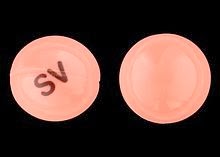
  • Prometrium is the name of another progesterone supplement. It is synthesized from plants but is chemically identical to the progesterone made in your body. Some providers are moving to Prometrium more often these days, especially if pregnancy is desired, since Prometrium is safer to use in pregnancy than Provera
These medications have two main purposes for PCOS. They can be used for inducing a period in women who have not cycled on their own for a while and for managing ongoing abnormal uterine bleeding. In addition, they can be used to manage severe menopausal symptoms in older women.

In the interests of space, here we will only discuss their use for bringing on a period in women who have not cycled in a while.

Provera

Provera is a synthetic progestin which is similar but not quite identical to your body's own progesterone. Typically, Provera for inducing a period is prescribed as follows:
For the treatment of stopped menstrual periods (amenorrhea) and abnormal bleeding from the uterus, take this drug usually once daily for 5-10 days during the second half of the planned menstrual cycle or as directed by your doctor. Withdrawal bleeding usually occurs within 3-7 days after you stop taking the medication.
Provera comes in 2.5, 5.0, and 10 mg capsules. It's common to take a 5 mg or 10 mg capsule once a day for 5, 7, or 10 days (depending on your doctor's orders) in order to bring on the period. Other sources say to take Provera for 10 to 14 days every one to three months.

Provera works by simulating the high progesterone levels that occur near the end of your menstrual cycle, just before your period begins. It tricks your body into thinking that ovulation has occurred. Stopping the progesterone supplement simulates the drop in progesterone that occurs in a normal cycle when fertilization has not occurred, and should bring on your period within 2 weeks of stopping the medication. However, sometimes women do start their periods while still taking the Provera.

Some care providers only prescribe progesterone supplements periodically in women with PCOS. Others prefer to prescribe it regularly, about every few months, in order to promote a regular period and reduce the risk of endometrial hyperplasia. Discuss your situation with your care provider and decide what the best treatment routine is for you

If you are planning to try to become pregnant soon, you might want to reconsider whether or not to take Provera to bring on a period shortly before fertility treatment. Two recent studies found that taking Provera shortly before trying to conceive made the uterine lining more thin and women less likely to conceive. However, more research is needed to confirm this finding.

Side Effects and Risks of Provera

Side effects of Provera can be considerable, although short-term use for inducing a period is less risky than long-term use for menopause symptoms. The most common short-term symptoms include:
  • dizziness
  • headache 
  • abdominal pain and cramping
  • breast tenderness
Longer-term symptoms can include:
  • breasts that are tender or produce a liquid
  • changes in menstrual flow
  • irregular vaginal bleeding or spotting
  • acne
  • growth of hair on face
  • loss of hair on scalp
  • difficulty falling asleep or staying asleep
  • drowsiness
  • upset stomach
  • weight gain or loss
More uncommon (but serious) symptoms include:
  • pain, swelling, warmth, redness, or tenderness in one leg only
  • slow or difficult speech
  • dizziness or faintness
  • weakness or numbness of an arm or leg
  • shortness of breath
  • coughing up blood
  • sudden sharp or crushing chest pain
  • fast or pounding heartbeat
  • sudden vision changes or loss of vision
  • double vision
  • blurred vision
  • bulging eyes
  • missed periods
  • depression
  • yellowing of the skin or eyes
  • fever
  • hives
  • skin rash
  • itching
  • difficulty breathing or swallowing
  • swelling of the hands, feet, ankles, or lower legs
  • increased blood pressure
Although not always listed as a possible side effect, many women report that they have experienced extreme irritability and mood swings while on progestin medications. This is one of the most distressing side effects for many women.

Some lab animals which were given medroxyprogesterone developed breast tumors, but it is not clear whether this translates to development of breast cancer in humans. Medroxyprogesterone may also increase the chance of blood clots that move to the lungs (pulmonary embolism) or brain (stroke). Again, these risks are more related to long-term use than short-term use, but it's still important to be aware of the possibility.

Contraindications to Provera include prior history of breast, ovarian, or uterine cancer; blood clots; stroke; seizures; migraines; depression; unexplained vaginal bleeding; incomplete miscarriage; asthma; high blood pressure; diabetes; or heart, kidney, or liver disease.

Provera may create negative drug interactions with St. John's Wort, Rifampin, 
aminoglutethimide (Cytadren), certain anti-seizure medications, and other meds. If you are on any drugs (or any herbs), be sure to discuss that with your care provider before taking Provera.

Prometrium

Some care providers promote the use of bio-identical progesterones like Prometrium instead of synthetic progestins. They believe it will more closely mimic the body's natural process and result in better outcomes.

In some research, about 80% of women who took Prometrium (oral micronized progesterone) were able to re-start their periods.

Anecdotally, some women with PCOS report that they have had better results with Prometrium. Many report less moodiness, less dizziness, and fewer PMS-like symptoms. However, while many people have fewer side effects with Prometrium, others have had more. You have to test out which version is better for your body.

Prometrium is taken for the same reasons as Provera. It tricks the body into thinking it has ovulated; withdrawing the Prometrium will cause a drop in progesterone, hopefully triggering the woman's period within about 2 weeks. However, Prometrium is not as potent as Provera, so it needs a much higher dosage.

For bringing on a period, some sources recommend 100-300 mg of Prometrium for the last 10-12 days of what should be a 28-day cycle. Other sources suggest 400-600 mg per day.

For women who experience very strong estrogen dominance and wild fluctuations of symptoms when going on and off progesterone, some care providers recommend a low continuous dose of Prometrium, rather than constantly going on and off the progesterone.

Prometrium is available as an oral capsule, and can also be used as a vaginal suppository. There is a similar form available as an injectable intramuscular progesterone, or as a vaginal gel (Crinone). There may be fewer side effects with the vaginal versions but it can be a bit messy. The oral form might be best taken at bedtime because it can cause significant drowsiness in many women.

One major disadvantage of Prometrium is that it is much more expensive. Provera is available in a generic form so it can be much more affordable.

Provera should not be used if a woman might conceive a pregnancy. It has mild androgenic effects and can negatively affect a developing male fetus. In contrast, Prometrium is often prescribed by care providers to help lessen the risk for miscarriage in early pregnancy (more on that below).

Side Effects and Risks of Prometrium

Prometrium has many of the same side effects as Provera; re-read the above list to review these side effects. It is especially important to watch for possible signs of blood clots or allergic reaction.

The progesterone in Prometrium is micronized and suspended in a peanut oil solution to make it more bioavailable; the injectable form of intramuscular progesterone is suspended in sesame oil. People with peanut allergies need to avoid Prometrium and people with sesame allergies need to avoid intramuscular progesterone.

Although most women have fewer side effects with Prometrium, some women report more, especially dizziness, drowsiness, headache, acne or bloating/fluid retention. Weight gain is not uncommon with prolonged use of any progesterone supplement, but most non-menopausal women with PCOS will not take it long enough to experience this.

Some sources report that ketoconazole, an anti-fungal medication sometimes used for hair loss with PCOS, inhibits the absorption of Prometrium in the liver and therefore may potentiate its effects. However, oral ketoconazole is rarely prescribed these days as the FDA has recently warned of its potential for liver toxicity and adrenal damage. Furthermore, this warning does not extend to ketoconazole shampoo, which is the form used most often with hair loss concerns. It is unclear at this time whether the mere use of the shampoo would potentiate the effects of Prometrium. Discuss this possibility with your provider.

Controversy Over Use in Pregnancy

One big controversy these days is whether or not Prometrium should be given to women in early pregnancy to try and prevent miscarriage. Many providers are quite comfortable with doing this, while others contend it is not beneficial and may carry risks.

Why would Prometrium be given in pregnancy? Progesterone is important is sustaining a pregnancy, and women with PCOS tend to have low progesterone levels and higher miscarriage rates. The hope is that by supplementing progesterone, the risk for miscarriage will be lessened in this group.

In a woman without PCOS, the corpus luteum (the remains of the egg follicle on the ovary) produces progesterone for the pregnancy until the placenta is developed enough to take over progesterone production. Because follicular development tends to be weaker in women with PCOS, they may not produce enough progesterone to sustain a pregnancy. Supplementing progesterone is thought to help lessen the chance for miscarriage. Prometrium is the only viable choice for this because Provera is contraindicated in pregnancy.

However, using progesterone supplements in pregnancy is somewhat controversial. Many care providers do not believe that progesterone supplements are necessary or helpful for preventing miscarriage and will not prescribe them at all. Others regularly prescribe Prometrium for women with PCOS, especially if there is a history of miscarriage. Many providers also prescribe it for women who have gone through In Vitro Fertilization treatments, or for those experiencing threatened miscarriage.

Anecdotally, many women with PCOS who experienced repeated miscarriages report that progesterone supplements helped them to finally carry a pregnancy to term. Therefore there is fierce support for this practice on some PCOS boards.

However, progesterone supplements during pregnancy have occasionally been associated with hypospadias, an abnormal placement of the hole at the end of the penis in male babies. Rare complications have included cases of cleft lip, cleft palate, and cardiac issues. Whether this is true for all progesterone supplements, however, is not clear. Although some Prometrium-related websites caution against its use in pregnancy, it may actually only be the synthetic progesterones like Provera that carry this added risk. Some doctors' websites state outright that natural progesterone does not carry any additional risk, while others state that there may be a small increased risk. If in doubt, discuss this with your provider.

Prometrium is considered a Category B medication in pregnancy. The safest rating is a Category A. Category B means that animal studies have shown no increased risks to the fetus, but that there haven't been enough tests in humans to confirm this lack of harm. Given the natural reluctance of researchers to experiment on pregnant women, this rating is unlikely to change soon, but most providers seem to consider Prometrium a relatively safe drug for early pregnancy.

A 2013 Cochrane Collaboration review of the use of progesterones for preventing miscarriage found no evidence for its routine use in preventing miscarriages. However, in the subgroup of women with a history of repeated miscarriage, progesterones strongly lowered the risk for miscarriage and did not increase the risk for adverse outcomes like birth defects.

Another Cochrane review noted that progesterone supplements strongly lowered the rate of miscarriage in women experiencing threatened miscarriages. Both reviews noted that the research trials were of relatively poor quality and that more research is needed to guide clinicians on this topic.

So the bottom line so far appears to be that progesterone supplements should not be used routinely in all women in order to prevent miscarriage, but that there is probably a role for it under certain conditions, such as a threatened miscarriage or in women with a strong history of recurrent miscarriages.

Whether or not it should be used routinely in women with PCOS and no other risk factors has not been studied adequately. It may behoove women with PCOS to ask their providers to track their progesterone levels early in pregnancy and consider prescribing a natural progesterone if their levels appear low.

One other potential benefit of vaginal progesterone in pregnancy is that some research suggests that it may lower the rate of spontaneous pre-term birth in women with a shortened cervix in the second trimester.

Since the pregnancies of women with PCOS tend to be at increased risk for cervical insufficiency and pre-term birth, it is interesting to speculate whether low progesterone levels may be part of this risk, and whether or not early supplementation with Prometrium or vaginal progesterone may help prevent some cases of preterm birth in this group. However, at this time, this possibility remains speculative.

Summary

It is very important that women have regular periods so that the uterine lining does not build up and become cancerous over time.

There are many approaches that can help regulate the menstrual cycle in women with PCOS. For many, just taking metformin is enough to make periods more regular. For some, a lifestyle approach can make periods more regular. Alternative approaches that some find helpful include acupuncture or herbs like vitex (vitex often helps bring the body's hormones into balance and improves progesterone levels). There are also natural progesterone creams that contain much lower levels of progesterone than the medications discussed here and which may be useful for women with only mild progesterone deficiencies.

But some women with PCOS do not cycle even with these approaches. For these women, an oral contraceptive may be needed to have regular periods and prevent endometrial overgrowth. More on that in our next post.

However, if it has been more than a few months since you've had a period, care providers usually want to flush out the endometrium before beginning other treatments. The most common way to do this is to prescribe progesterone to bring on a period. Provera (a synthetic progestin) is the most commonly prescribed form, but Prometrium (a bio-identical progesterone) is gaining favor among many providers because side effects are often less severe.

Bringing on a long-overdue period with progesterone is not an easy process, and many women report significant bloating, cramps, and mood swings, as well as an extremely heavy period afterwards. This can be truly miserable for some women.

Because it can be such a difficult process, some women with PCOS avoid treatment with progesterones, preferring simply to avoid the bother of a period altogether. However, this will increase their long-term risk for endometrial cancer. As tough as it is to endure a long-overdue period, it is important to do so for your long-term health.

Once the endometrial lining has been flushed out, then other approaches to regulating the menstrual cycle can be tried. Lifestyle approaches, herbs, acupuncture and insulin-sensitizing medications can all help address the underlying hormonal imbalances that cause periods to be irregular. If all else fails, an oral contraceptive (The Pill) can be used, although many women with PCOS prefer to avoid this if possible.

Bottom line, women with PCOS need to prevent endometrial hyperplasia by some means or other. What method is best will depend on your individual circumstances and responsiveness, but progesterone can sometimes be part of that treatment strategy.

In addition, bio-identical progesterone may also hold promise for preventing some cases of miscarriage, and perhaps also for preventing some cases of preterm birth, although more study is needed.

Although they certainly carry risks and should not be over-utilized, progesterone supplements definitely have a role to play in treating some aspects of PCOS. 


References

Books About PCOS
PCOS Information 
General Information about Progesterone for Regulating Cycles
Studies on Provera and PCOS

Obstet Gynecol. 2012 May;119(5):902-8. doi: 10.1097/AOG.0b013e31824da35c. Endometrial shedding effect on conception and live birth in women with polycystic ovary syndrome. Diamond MP, Kruger M, Santoro N, Zhang H, Casson P, Schlaff W, Coutifaris C, Brzyski R, Christman G, Carr BR, McGovern PG, Cataldo NA, Steinkampf MP,Gosman GG, Nestler JE, Carson S, Myers EE, Eisenberg E, Legro RS; Eunice Kennedy Shriver National Institute of Child Health and Human Development Cooperative Reproductive Medicine Network. PMID: 22525900
OBJECTIVE: To estimate whether progestin-induced endometrial shedding, before ovulation induction with clomiphene citrate, metformin, or a combination of both, affects ovulation, conception, and live birth rates in women with polycystic ovary syndrome (PCOS). METHODS: A secondary analysis of the data from 626 women with PCOS from the Eunice Kennedy Shriver National Institute of Child Health and Human Development Cooperative Reproductive Medicine Network trial was performed. Women had been randomized to up to six cycles of clomiphene citrate alone, metformin alone, or clomiphene citrate plus metformin. Women were assessed for occurrence of ovulation, conception, and live birth in relation to prior bleeding episodes (after either ovulation or exogenous progestin-induced withdrawal bleed). RESULTS: Although ovulation rates were higher in cycles preceded by spontaneous endometrial shedding than after anovulatory cycles (with or without prior progestin withdrawal), both conception and live birth rates were significantly higher after anovulatory cycles without progestin-induced withdrawal bleeding (live births per cycle: spontaneous menses 2.2%; anovulatory with progestin withdrawal 1.6%; anovulatory without progestin withdrawal 5.3%; P<.001). The difference was more marked when rate was calculated per ovulation (live births per ovulation: spontaneous menses 3.0%; anovulatory withprogestin withdrawal 5.4%; anovulatory without progestin withdrawal 19.7%; P<.001). CONCLUSION: Conception and live birth rates are lower in women with PCOS after a spontaneous menses or progestin-induced withdrawal bleeding as compared with anovulatory cycles without progestin withdrawal. The common clinical practice of inducing endometrial shedding with progestin before ovarian stimulation may have an adverse effect on rates of conception and live birth in anovulatory women with PCOS.
Int J Clin Exp Pathol. 2013 May 15;6(6):1157-63. Print 2013. Does progesterone-induced endometrial withdrawal bleed before ovulation induction have negative effects on IUI outcomes in patients with polycystic ovary syndrome? Dong X, Zheng Y, Liao X, Xiong T, Zhang H. PMID: 23696936
...The present study was performed to investigate whether progesterone-induced endometrial bleed before ovulation induction affects pregnancy in patients with PCOS who underwent intrauterine insemination (IUI) treatment. A total of 241 IUI cycles were retrospectively analyzed. Patients enrolled in this study underwent ovulation induction with IUI treatment from Jan. 2011 to Dec. 2012. The study group consisted of 184 cycles with progesterone-withdrawal bleed before ovulation induction. The control group included 57 cycles with spontaneous menses. The clinical characteristics, ovulation induction parameters and IUI outcomes, such as pregnancy rate and live birth/ongoing pregnancy rate, were compared between the two groups...In conclusion, our study showed that progesterone exerted a negative effect on endometrial development, which seemed to be associated with reduced pregnancy results in ovulation induction with IUI cycles.
 Prometrium Studies

Fertil Steril. 1991 Dec;56(6):1040-7. Factors associated with withdrawal bleeding after administration of oral micronized progesterone in women with secondary amenorrhea. Shangold MM, Tomai TP, Cook JD, Jacobs SL, Zinaman MJ, Chin SY, Simon JA. PMID: 1743319
OBJECTIVE: To compare two dosages of oral micronized progesterone (P) and placebo for withdrawal bleeding and side effects. DESIGN: Prospective, randomized, double-blind... INTERVENTIONS: A 10-day course of (1) oral micronized P 300 mg, (2) oral micronized P 200 mg, or (3) placebo...RESULTS: Withdrawal bleeding occurred in 90% of women taking 300 mg, 58% of women taking 200 mg, and 29% of women taking placebo (P less than 0.0002 for 300 mg versus placebo). Side effects occurred similarly among the groups (P = not significant). Lipid concentrations were unchanged. Endogenous E2 and treatment P concentrations were of limited predictive value for withdrawal bleeding. CONCLUSIONS: Progesterone 300 mg induced significantly more withdrawal bleeding than placebo, with similar side effects...