Wednesday, July 29, 2009

The Skin Yeast Manifesto

Since the summer hot and humid season is upon us, let's talk about something many of us probably struggle with from time to time.......skin yeast infections.

The official names include "Intertrigo" or "Cutaneous Candidiasis" or "Dermatophytosis." Personally, I just call them the yeastie-beasties.....because they really can be a beast to deal with.

If you are young, maybe you haven't encountered these yet. I didn't have it very much in my younger years, but as I've aged, it's become more common, probably as my insulin resistance has increased with age and hormonal changes. Chances are that as you get older, you'll have a lovely encounter with it too, sooner or later. Supposedly a significant portion of the adult population has issues with skin yeast/fungal infections at any given time.

Who Gets Skin Yeast/Fungal Infections?

Of course, some people are simply more prone to skin yeast/fungal infections than others. This includes people who have been treated recently with antibiotics, those on corticosteroids like Prednisone, those on birth-control pills, fat folk, those who are immuno-compromised, and those with diabetes or significant insulin-resistance issues.

Interestingly, women who have had cesareans often find that their c-section scar suddenly becomes a magnet for skin yeast infections. Because of the way the surgeons fix things up after a cesarean, there is often an overhanging "flap" of skin and fat with a cesarean scar. Even skinny women often have this lovely "flap" or "shelf" after a cesarean, and as with fat women, this moist fold tends to promote yeast/fungal growth.

Anecdotally, there seems to be some extra vulnerability to yeast in the cesarean scar afterwards, for whatever reason. Women of varying sizes who never had issues with yeast before often experience skin yeast there afterwards, sometimes chronically. It can be one of the more frustrating small annoyances of having had a cesarean....and yet another reason to avoid an unnecessary cesarean.

And of course, after the birth (vaginal or cesarean), yeast can become a chronic problem for any mother and baby, especially if antibiotics were used during the birth. Oral thrush (in the baby's mouth) or yeast infections in the mother's nipples can be a painful and frustrating "welcome" to parenthood.

A Fat Person's Issue Only?

Yes, it does appear that "obese" people have more issues with skin yeast/fungal infections. This may simply be because many fat people have PCOS and/or strong insulin-resistance issues, but it may also be because skin folds tend to be warm, moist areas that promote fungal overgrowth. Likely, it's a combination of both.

On the other hand, it's a mistake to think that skin yeast only affects fat folk. Many people of average size struggle with it too, as I discovered through the birth community. It's just more talked about in the fat community.

Identifying a Skin Yeast Infection

So how do you know if you have a skin yeast/fungal infection?

If you get a nasty, intensely itchy (or burning) red rash, especially in the skin folds, this may be a skin yeast infection.

Although yeast infections are sort of a sub-type of fungal infections, for the purposes of this article we will consider the two together under the imperfect term of "skin yeast." When someone gets a red, itchy rash on the skin, it may have candida (yeast) involvement or other fungal involvement, or both.

Technically, the correct term for this is "Intertrigo," which simply means any skin rash of the body folds. This can involve yeast, it can be bacterial, it can be fungal, it can be viral.....it's any rash of the skin around the body folds.

But the general public is not usually familiar with the term "intertrigo" and it's not what would someone would search on when looking for this information. Therefore, it's probably best for us to use some other term.

Most people usually think of skin infections as "jock itch" or "athlete's foot," and usually think it's caused by yeast, even when it may actually be some other fungal (or something else entirely). Because it's popularly called skin yeast, that's what we'll call it here, even though it's not always yeast, or not always only yeast.

Still, it's important to note that some intertrigo is caused by candida (yeast), some is due to other fungi, some is both, and sometimes there are other causes as well. This may be why some of the popular remedies work better for some people than others; various remedies will no doubt work differently on different types of fungal infections or degree of yeast involvement.

What Are Skin Yeast/Fungal Infections Like?

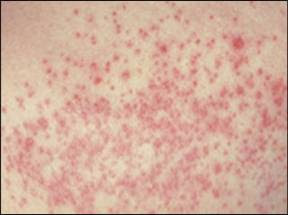
At the top of this blog entry is a picture of a skin yeast infection, and other pictures of skin yeast infections can be found here and here. [These are not for the faint of heart, so be forewarned!]

Typical skin yeast infection locations include groin folds, under the breasts, in the armpits, in the belly button, under the belly, in the folds of the elbows and knees, between the toes, etc. "Athlete's Foot" and "Jock Itch" are usually skin yeast/fungal infections, as are dandruff and ringworm.

Wikipedia describes jock itch (tinea cruris) in the following oh-so-attractive way:

Affected areas may appear red, tan, or brown, with flaking, rippling, peeling, or cracking skin.

The acute infection begins with an area in the groin fold about a half-inch across, usually on both sides. The area may enlarge, and other sores may develop in no particular pattern. The rash appears as raised red plaques (platelike areas) and scaly patches with sharply defined borders that may blister and ooze.

If the rash advances, it usually advances down the inner thigh. The advancing edge is redder and more raised than areas that have been infected longer. The advancing edge is usually scaly, and very easily distinguished or well demarcated.

The skin within the border turns a reddish-brown and loses much of its scale. The border may exhibit tiny pimples or even pustules, with central areas that are reddish and dry with small scales.

If infected with candidal organisms, the rash tends to be redder and wetter.

[Now, mind, there can be other reasons for itchy or burning rashes on the skin, so it's always good to have a rash checked out if you aren't sure. A few years ago I had a bad rash that I didn't get checked out becase I thought it was the world's worst case of yeast.....turns out it was shingles!!...yeowch!!! If I hadn't automatically attributed that burning/itching rash to skin yeast, I might have gotten into the doctor in time to be able to get an anti-viral that would have lessened my suffering. So don't hesitate to get it checked if you are unsure or if it seems worse than normal!]

Treatments for Skin Yeast Infections

If you have developed a skin yeast infection, you usually want immediate relief. Sometimes the infection is mild and just annoying, but usually it makes a person pretty uncomfortable. Some of the really bad ones can make you downright miserable, or even cause secondary bacterial infections which can become very serious. So what are your options for treatment?

There are many choices for skin yeast treatment, from the traditional medical approach to many folk remedies and "alternative" medicine options. What works for any one person varies a lot, so I have included a full range of choices so that you can experiment to see what works best for your body.

I put these together by listing all the treatments I personally had tried over the years (both successfully and unsuccessfully), as well as treatments others have said were effective for them (but I had never tried). Then I did a search about treatments that were recommended in various online sources and included many of those as well.

When people discuss what works for them for treating skin yeast, there is often a strong difference of opinion about the "best" treatments. I think this boils down to "Your Mileage May Vary"......that is, that various treatments vary in their efficacy for different people. This may simply be because different people have differing types of fungi affecting them, it may be because of subtle differences in body chemistry, or both.

I would also note that yeast/fungal strains can develop resistance to treatment over time. As a result, you may find that over time, the effectiveness of one type of treatment declines for you. Therefore, it's good to have multiple options in your arsenal and to switch them off occasionally. Keep experimenting, and keep mental notes on what works best for you.

Finally, a number of sources make the valuable point that it's important to continue treatment for skin yeast/fungus for quite a while after the symptoms disappear in order to fully extinguish the fungus. Discontinuing the treatment too soon may cause a cycle of recurrence.

Medical Disclaimers

Of course, any time you discuss stuff like this online, you have to include the obligatory medical disclaimer.

I'm not a doctor nor a healthcare professional. I have not personally tested out all of these, so I CANNOT attest to their safety or efficacy. Therefore I'm adding lots of caveats. Do further research about the safety of these possibilities, get medical advice as necessary, and go cautiously if you decide to try any.

This list is provided for informational purposes only and not intended as medical advice; I assume no responsibility for any actions taken on your part. Consult your healthcare provider as needed, yadda yadda yadda.

Traditional Medical Treatments for Skin Yeast Infections

Traditional medical treatments include anti-yeast creams, like those used with a vaginal yeast infection. Other options include anti-fungal creams, powders and sprays used for athlete's foot and jock itch.

Some of the most commonly used anti-yeast meds include the "-azole" family of drugs (including miconazole/Micatin/Monistat Derm and clotrimazole/Lotrimin AF). Sometimes these are mixed with mild anti-steroidal creams for symptomatic relief of the itching while the anti-yeast drug works on the yeast. (Some people feel this addition is harmless, while others feel it can act as a "fertilizer" to the yeast.)

But how do these medications work? From http://firstaid.webmd.com/yeast-infection-skin-rash-treatment:

Azole medications are a family of antifungal drugs that end in the suffix "-azole." They block the manufacture of ergosterol, a crucial material of the yeast cell wall. Without ergosterol, the yeast cell wall becomes leaky and the yeast die. Fortunately, ergosterol is not a component of human membranes, and azoles do not harm human cells.

Nystatin is another common anti-fungal cream that is used. It is part of a group of drugs called "polyene antifungals." Again from http://firstaid.webmd.com/yeast-infection-skin-rash-treatment:

Polyene antifungal medications include nystatin and amphotericin B. Nystatin is used for thrush and superficial candidal infections. Doctors reserve amphotericin B for more serious systemic fungal infections. The antifungals work by attaching to the yeast cell wall building material, ergosterol. These medications then form artificial holes in the yeast wall that cause the yeast to leak and die.

An over-the-counter "antifungal cream" often used for athlete's foot or other skin yeasts is "Tolnaftate" cream, usually in the 1% strength. This same drug is often found in aerosol sprays for athlete's foot under brand names such as "Tinactin" or "Desenex."

Other drugs include Allylamines, which inhibit the enzyme required for ergosterol synthesis. Some of the more common ones include "terbinafine hydrochloride" under the brand name of Lamisil, naftifine (Naftin), and "butenafine hydrochloride" under the brand name of "Lotrimin Ultra."

Because all of these common anti-fungal products are made with different drugs and have slightly different mechanisms of action, it may be useful to occasionally switch off brand names and try a new product if the old one is not working as well as it used to. Also remember the importance of continuing to treat for a while after symptoms have subsided to prevent frequent recurrence.

If a healthcare provider suspects that a yeast infection has gone systemic, oral antifungals may be prescribed. Examples of oral antifungals include terbinafine (Lamisil), itraconazole (Sporanox), and fluconazole (Diflucan). However, oral anti-fungals can have severe side effects and anyone using them must be monitored carefully.

"Folk Remedies" for Treating Skin Yeast

Most people try the traditional yeast/fungal treatments first. For some, they work like a charm. For others, they are really not very effective.

Some people actually find better (and faster) relief with some of the so-called "folk remedies" or alternative treatments. Still others find the best results when combining traditional and folk/alternative treatments.

Here's a list of some of the most common and widely used "folk remedies" for skin yeast/fungal infections:
  • Vinegar (usually white vinegar)
  • Garlic paste (fresh-crushed garlic)
  • Listerine (original formula, the yellow kind)
  • Grapefruit Seed Extract (dilute before use!)
  • Gentian Violet (will stain so use carefully)
  • Tea Tree Oil (may sting if not diluted a bit)
  • Probiotics (orally and also topically via the powder inside the capsules)
Some less commonly seen "folk remedies" for skin yeast/fungal infections include:

  • Oil of Oregano (diluted)
  • Oregon Grape Root extract
  • Coconut Oil
  • Baking Soda (may help lower the pH in the area)
  • Plain yogurt with probiotics
  • Lemon Grass
  • Urine (soldiers with foot infections in the field were often told to pee on their feet)
  • Aspirin dissolved in rubbing alcohol (used as a soak in the area)
  • Vicks Vapo Rub
  • Colloidal Silver
  • Goldenseal
  • Citronella Oil
  • Orange Oil
  • Onion extract
  • Patchouli
  • Lemon Myrtle
  • Selenium and/or Zinc supplements
  • Calendula with aloe vera gel
  • Whitfield's Ointment (3% salicylic acid and 6% benzoic acid; can create a burning sensation)
  • Hydrogen Peroxide
  • Rubbing Alcohol
  • Epsom Salts
  • Cod Liver Oil (applied topically)
Alternative Treatments for Skin Yeast

Among alternative healthcare treatments for skin yeast/fungal infections, a surprising entry is acupuncture, which I personally have found very useful (to my great shock).

Naturopaths like to treat skin yeast/fungal infections by considering whether there is a candida (yeast) overgrowth problem internally as well as externally.

Although there are oral anti-fungal prescription meds, these can have toxic side effects and must be monitored carefully. Therefore, many naturopaths prefer to use herbs to treat suspected systemic yeast.

Some of the commonly used over-the-counter herbal formulas for systemic yeast issues include Candidastat and Candicyn. Any health food store will probably carry these products or other, similar brands.

An Ounce of Prevention

Better than trying to cure skin yeast, of course, is trying to prevent it in the first place, or at least trying to prevent it from becoming a chronic, recurring problem. This is particularly critical for those with diabetes or immunocompromised systems.

Hygiene Issues

Hygiene is an important part of preventing skin yeast from recurring. If you have a skin yeast infection, you need to change/wash everything that comes into direct contact with it, EVERY SINGLE DAY.

In other words, you need to change your bath towel/washcloth DAILY, change your bra/socks/underwear daily (duh), change your sleeping clothes, etc. Wash these items in vinegar and HOT water; with bleach if chronic yeast is a problem. Otherwise, you may be chronically re-infecting yourself each day.

Washing your body occasionally with an anti-dandruff shampoo may be useful for preventing recurrence in some people. Nizoral shampoo has ketoconazole (an -azole drug) in it, Selsun Blue has selenium in it, and Head and Shoulders and Pantene Pro V have zinc products in them.

Treating your sex partner for yeast/fungal infections may also be necessary. Many women chronically re-infect themselves with vaginal yeast infections because their partners unknowingly have been affected too but do not receive concurrent treatment.

Wearing fabrics that "breathe" better around areas that are prone to skin yeast may lower the rate of recurrence. Many women find they have less issues with vaginal and skin yeast when they wear cotton underwear, and people who suffer from chronic athlete's foot often find better results with cotton socks and leather shoes.

Swimming pools and public shower common areas are common sources for getting a fungal infection. Wear sandals or flip-flops when walking in these areas. Also, if you or another family member has experienced skin yeast/athlete's foot, be sure to disinfect your shower floor daily for a while.

Keeping the area dry is important in preventing recurrence. Some people find that using a blowdryer set to "cool" after every shower on areas that tend to get skin yeast is effective in lowering the rate of recurrence.

Nutrition

Every yeast resource out there will tell you to cut carbs if you are truly facing a problem with yeast overgrowth. Cutting down on simple carbs like sugar, white flours, fruit juices, etc. in particular may help some people, especially those with diabetes or strong insulin resistance, because the yeast needs sugars in order to grow. Cut out the food source and theoretically the yeast should die.

On the other hand, sometimes cutting carbs makes no difference whatsoever. It's something that should be considered and tried in order to rule it out, but the slavish overattention to carb consumption demonstrates how strongly some in the medical field (and especially in alternative medicine) believe that yeast is always a function of overeating, of overindulging in sugars and refined foods, of what they assume are weight-related behaviors. Their implication is that if you just wouldn't eat those foods, you'll never have a problem with yeast. Yeah, right.

For some people, cutting out/down carbs helps, so it's worth trying.....but it's by no means a sure cure or totally necessary in all cases, especially since "skin yeast" is caused by a number of different fungal organisms, not all of which are sensitive to carb intake.

Another nutritional recommendation often seen is to cut out foods that contain yeasts or fungi. This is another unproven but commonly seen recommendation. Like carbs, it can't hurt to try and see if it helps, but it is based more on assumptions and tradition than on proven fact at this point.

Preventive Powders and Creams

Some people swear by daily dusting with powders to prevent/reduce the incidence of skin yeast. This may work because it helps keep the area dryer.

Some strongly prefer baby powder (with its high degree of corn starch, which makes the skin feel less "sticky"); others contend that corn-starch powders actually ultimately feed yeast and make the problem more chronic.

Another option is medicated powders like Gold Bond Powder; these don't have corn starch but do have menthol and other active ingredients in them may discourage yeast/fungus. Zeasorb AF is another powder sometimes mentioned that is highly absorptive but doesn't contain corn starch.

Some people find that daily use of creams like Balmex or Desitin (zinc oxide paste) tends to discourage fungal infections. Others prefer daily application of vinegar, tea tree oil, or other anti-microbial/anti-fungal substances.

Other people swear by applying antiperspirant to areas prone to skin yeast. You don't want to do this while you are having a skin yeast outbreak so you don't infect your deodorant stick, but between outbreaks, reducing the amount of perspiration there may help lower the risk for recurrence. Or so the theory goes, anyhow.

Probiotics

Many people have an imbalance in their gut flora, especially after illness and antibiotic use. In some people this can become chronic.

The theory is that if you use antibiotics and kill off both the "good" and the "bad" bacteria, yeast organisms may take the opportunity to overgrow instead, causing a constant problem with yeast overgrowth.

Probiotics are "good" bacteria that help colonize your gut and re-establish a better balance between yeast, "good" bacteria, and "bad" bacteria. This may then help improve digestion, absorption of nutrients from food, and reduce external yeast/fungal infections as well.

What's Worked Best for Me

Years ago, I rarely suffered from skin yeast issues. However, as my insulin resistance has intensified over time with PCOS, it's become more of an issue. Also, as I've gone through childbirth and breastfeeding (and now perimenopause), the hormonal changes associated with these things seem to trigger more skin yeast/fungal infections. Many other women report similar struggles during times of significant hormonal changes.

So, as a result, I've tried a number of these cures. Now, I can't tell you what will work for you....I'm sure it depends on the type of intertrigo you have. Your fungal infection or degree/non-degree of yeast involvement may be different from mine.

Still, I can share what things have worked the best for me, with the caveat of course that Your Mileage May Vary and See Your Healthcare Provider and all that.

For daily prevention, I find Gold Bond medicated powder works much more effectively for me than baby powder. It doesn't prevent every outbreak, but it sure cuts down on them and makes me more comfortable too.

I find careful attention to hygiene is very important, especially clean towels and nightshirts every day during an outbreak. I also find that occasional prophylactic bouts of probiotics are very beneficial as well.

Although some people swear by vinegar for skin yeast issues, I've never found it useful. Nor have I found Tea Tree Oil helpful, nor garlic. However, enough people have found these useful that they probably would be worth trying.

I have a nurse-practitioner friend who swears by Grapefruit Seed Extract for oral thrush in babies and mamas. I never had thrush or yeast problems while breastfeeding so I've never had to test out this theory, but I've heard very good reports from other breastfeeding moms who have had issues with thrush.

For everyday skin yeast issues, I didn't find Grapefruit Seed Extract that useful, but I may not have used it correctly. I tried it topically (highly diluted) and didn't find it that effective. So I tried it again, less diluted.....no help. Then I tried it full-strength, directly on the skin. BIG MISTAKE!! (It didn't hurt at first but after a while, wow, did it hurt. So always dilute grapefruit seed extract!!!)

From what I read online, I think Grapefruit Seed Extract may be very helpful to some, especially breastfeeding moms with thrush issues, or women with lots of candida involvement in their intertrigo. But for me personally, so far it hasn't helped that much.

When I develop an actual outbreak, the first thing I try is Tinactin, the over-the-counter athlete's foot "powder" spray. I don't just use it for feet; I use it externally wherever I need it. That usually is enough to knock the intertrigo out.

If it's not enough, I will alternate it with [yellow] Listerine applied topically to the problem areas. This was surprisingly effective.

I have tried some of the other anti-fungal over-the-counter remedies.....Lotrimin and Lamisil, I believe. I didn't find them nearly as effective as Tinactin, at least for me personally. YMMV.

Tolnaftate cream (over-the-counter antifungal cream) has also been useful at times. I have never found the vaginal yeast creams (Monistat etc.) helpful at all for skin yeast, but the Tolnaftate anti-fungal skin cream has been.

When things are at their MOST itchy and miserable, I often find that probiotic powder (from the capsules) applied directly to the worst spots helps reduce the itch. It doesn't seem to "cure" anything, but it really does seem to help lessen the symptoms.

Surprisingly, acupuncture has been very effective for yeast issues for me. I don't use it as my only or main treatment for skin yeast/fungus, but if I have a very bad flare-up, acupuncture is one of the fastest and most effective ways of getting rid of the worst of the problem.

I don't find that it prevents recurrences very well, but it does seem to take all the "oomph" out of an outbreak pretty quickly. I still have to follow up with other treatments, but it can dramatically improve things for me pretty darn quickly. Lest you attribute this to a "placebo effect," I hasten to add that I was a total disbeliever that this would help.....but it's helped enough times now that I seek it out if I have a case that's not responding quickly to the usual treatments.

These are the things that seem to work best for me, personally. What works for others seems to be highly variable, so don't limit yourself only to these. Explore all your options, both traditional and "folk/alternative." See what works best for you. And don't be afraid to try new things, because sometimes you get a different fungal strain or your strain becomes resistant to treatment. Keep exploring your options, and keep notes on what seems to work.

Summary

If you are at higher risk for skin yeast issues (insulin resistance, recent antibiotics, steroid use, diabetes, etc.), then it probably behooves you to be especially vigilant about preventing skin yeast issues, or being very proactive about treating them sooner than later if they do occur.

However, don't feel bad if you get skin yeast issues. Most people, fat or not, have a bout with it sooner or later in their lives. It can cause a lot of misery, so don't be shy about getting out there and getting some treatment.

What works best for prevention and treatment varies in each individual. Some folks do great with traditional medical treatments; some do better with "alternative" treatments. It's helpful to explore a variety of choices to see what works best for YOU.

For some people, treatment X works like a charm, while in others it doesn't help at all. Sometimes treatment X works well for a while and then suddenly doesn't work as well, so it's good to have an arsenal of choices available to you.

If you have a favorite skin yeast treatment that's not listed above, please feel free to share it in the comments section. Or you can share which treatment has been most effective for you.

Skin yeast is an annoyance for many many people of size, and often for people of average size too. It's good to know the variety of treatments and preventive methods available to you.

Monday, July 27, 2009

Cesarean Central: Miami Florida


I recently found this blog entry from Our Bodies Our Blog on the mind-bogglingly excessive cesarean rates in many hospitals in the Miami area in Florida.

Now, I knew the cesarean rates in Florida were bad, but wow, just wow.

The blog entry links to this article from the Miami Herald, which discloses that the cesarean rate in the Miami area now hovers around 50%, or HALF of all women who give birth in Miami.

That means that more women are giving birth surgically than are giving birth vaginally.....and that it's considered business as usual, no big deal.

But that's just the average; some hospitals are lower, while many are higher. In one hospital, the Kendall Regional Medical Center, the cesarean rate is an astounding and shameful 70.3%.

This absolutely boggles the mind. SEVENTY PERCENT??? Almost 3/4 of women there are subjected to the risks of surgery in order to have a baby?

Here's a quote from the article:

Last year, for the first time, more babies in Miami-Dade County were born by cesarean section than were born vaginally, according to state records, and Broward's not far behind, with a rate of 43.7 percent -- both far above the national average.

At Kendall Regional Medical Center in Southwest Miami-Dade, seven out of 10 babies were delivered by C-section, a rate that University of Miami obstetrician Gene Burkett called "just astounding.''
Want to know some of the reasons the doctors in Miami blame for the high cesarean rates there? Wait for it.....wait for it......yes, one of the top reasons cited in the Miami article is obesity. Sigh.

I keep saying it, again and again. If obesity were truly an intractable CAUSE of not being able to birth vaginally, there would have been a consistently high rate of cesareans in "obese" women over time. Yet the cesarean rate for "obese" women used to be MUCH lower than it is now.

Yes, "obesity" is a risk factor for some complications, and that can lead to more cesareans. But obesity was a risk factor for those complications then as well as now......yet somehow they kept the cesarean rate far lower then than now.

What's really changed is the perception of the risks of obesity and the highly interventive protocols around management of obese women. That has greatly increased the cesarean rate in women of size, not obesity itself.

But enough about that, back to the cesarean rate debate.

A Blast From The Past

Contrast the 50%+ cesarean rates from Miami....and the lack of concern about them from many of the local Miami OBs.....with the cesarean rates cited in this 1989 L.A. Times article about how the cesarean rates need to be reduced, and how perhaps half of all cesareans done are "unnecessary."

About half the Cesarean section surgeries in the United States in 1987 should not have been performed, according to a new report designed to focus attention on what it terms "an onslaught of unnecessary and dangerous surgery."

The report by the consumer advocate group includes Cesarean rates for about 2,400 hospitals in 30 states, including 1986 statistics for California hospitals, and statewide figures for an additional 11 states....

Cesarean section rates show "extraordinary variations between states and between hospitals within states," according to Dr. Sidney M. Wolfe, director of the Health Research Group and one of the authors of study. "The national rate is twice as high as it should be."

The Cesarean rate nationally--the percentage of all deliveries performed by Cesarean section--has increased steadily over the last two decades--from 5.5% in 1970 to 24.4% in 1987. Cesareans are now the most common major operation in the United States.

The study said the 475,000 "unnecessary" Cesareans performed in 1987 resulted in 25,000 serious infections, 1.1 million extra hospital days and a cost of more than $1 billion. These conclusions were based on an analysis of data obtained from 41 states, a review of studies published in medical journals and other publicly available data.
A Change in Attitudes

Didja see my keen and subtle sense of irony in contrasting these two articles?

The "too high" national cesarean rate cited in the 1989 article was 24.4%, and everyone was up in arms over its rapid rise and excessiveness.

Yet the national cesarean rate now is almost 32%, and of course now there are hospitals in the country with 50%, 60%, even 70% cesarean rates.

Where is the outrage now? The Miami story was largely ignored by the national press.

If you've read my earlier blog entry, A History of Cesareans and VBACs in the USA, you will know that the cesarean rate rose rapidly from 5% to ~25% in the 70s and 80s. Such a rapid increase set off alarms in many public health groups, and a strong campaign to reduce cesarean rates was instituted. Here's a quote from my article, slightly rearranged:

Remember when public health officials got all up in arms in the late 80s because the cesarean rate had spiked to around 25%? Well, they did reduce it for a while (it dropped down to 20.8% by 1995), but now it has spiked again, even higher than it was then. Now the cesarean rate has soared up to over 30% nationally...and is still going up.

Only this time, almost no one cares.
Having areas of the country---like Miami----where more babies are born by surgery than vaginally is a disgrace, and it's leading to poorer outcomes in babies, an increase in maternal mortality, and higher healthcare costs. (If you want to read more about the risks of cesareans, read this recent Medscape article about it. It's not just some benign minor surgical procedure.)

The epidemic of cesareans has become, in essence, a giant medical experiment.....with most of the subjects not given any choice about whether or not to participate. If you circumvent nature's highly evolved way of doing things, there are inevitably unexpected outcomes, and often more harms than are initially anticipated.

As Dr. Sarah Buckley, a family doctor and author from Australia writes (emphasis mine):

Caesarean delivery is not safer, and our high rates (especially among first-time mothers) may be setting a reproductive time bomb. A US study published in September 2006 found that low-risk babies born by caesarean to healthy mothers were almost three times more likely to die in the first year of life, compared to babies born vaginally. A French study, published at the same time, confirmed the risks to healthy caesarean mothers, who were three times more likely to die after a caesarean, compared with women giving birth vaginally.

As Dr. Lucky Jain, a pediatrics professor at Emory University School of Medicine in Atlanta who has studied respiratory problems in C-section babies says, "We have created a monster here without knowing what the long-term impact is."
Where is the outrage?

Yet despite increasing evidence of the harm of an overly high cesarean rate, it's very difficult to get anyone to care about this now, unlike in 1989. Where is the outrage? Where are the voices from within for reform?

Where is the outrage from healthcare proponents who bemoan excessive healthcare costs? Cesarean births cost more up-front than vaginal births, and when you factor in the costs of rehospitalization afterwards for wound complications and the costs of placental complications in future births, vaginal birth is more cost-effective by far.Yet why is over-intervention in maternity care being left out of the healthcare reform discussion?

Where is the outrage from feminists about women essentially being forced into unnecessary surgery, often against their will? These days if you have a breech baby, twins, or a previous cesarean, it's almost always an automatic cesarean, with the mother basically having no say in the matter, whether she wants the surgery or not. And that doesn't even count the women who are pushed into cesareans via excessive intervention during labor over which they have little say. Why are women supposed to be arbiters of their own bodies and choices in everything else except giving birth?

And most importantly, where has the outrage from doctors gone? In the late 80s, many doctors were alarmed by the quintupling of the cesarean rate from 1970 to 1988 because they recognized the harm that this was causing. They got behind a national campaign to lower the cesarean rate, and they succeeded in at least lowering the cesarean rate to 20% before they suddenly just abandoned the campaign in 1995 and started cutting women left and right.

From a "low" of 20.8% in 1995, the cesarean rate has now rebounded to almost 32% nationally, with pockets of the country (see table 14, page 19) like Florida, New Jersey, parts of the deep South, and Southern California having widespread cesarean rates of 35-40%. And Puerto Rico has a cesarean rate of nearly 50% already.

Even worse, there are individual hospitals in New Jersey and Florida (and probably elsewhere) where the cesarean rates are 50%, 60%, and as we see above, even 70%.

Where is the pressure from fellow doctors to reform such outrageous rates, to insert the voice of reason, to speak up and advocate for the women who are being cut unnecessarily every day? Consumer advocates can only do so much; until doctors get on board and push for reform, consumer-initiated change will only go so far.

To their credit, there are a few doctors and other healthcare workers who are speaking out against the high cesarean rate and trying to reform a runaway system. Bravo to them. It takes a strong person to speak out against injustice, and especially to face down pressure to be silent from your peers and colleagues. May more doctors and healthcare workers gain the strength and bravery to join the ranks of those speaking out.

But right now, most doctors are hiding behind excuses. They blame the high cesarean rate on mothers, saying that it is women who are driving the cesarean rates by being older, fatter, or being too selfish to go through labor. They bring out that tired old excuse, fear of liability, as a fig leaf to cover up and excuse every excess.

Well, bullshit. Doctors are not innocent bystanders in the rising cesarean rate, forced against their wills into higher rates simply by changing demographics, supposedly riskier mother profiles, liability concerns, and maternal demands.

The truth is that the cesarean rate is being driven primarily by doctor-initiated protocols that promote excessive intervention, excessive attention to physician convenience factors, and excessive hospital financial gain.

Providers need to acknowledge that the way they manage births has been a very significant factor in the tremendous rise in the cesarean rate. They need to take responsibility for their own contributions to the cesarean rate, and they need to get off their asses and start advocating for the benefit of the patient again.

And a 70% cesarean rate is definitely not for the benefit of the mothers or babies.

Monday, July 20, 2009

We plan, God laughs

So, I haven't posted in a while. Time to fix that!

At the end of the school year, things were just sooo busy.....yet I still managed to post at least sometimes. I thought, well, when school is out and I'm not responsible for this and that and not constantly driving here and there, I'll get sooo many of my projects done and get so many new posts done.....!!

Yah. We plan, God laughs. Especially when children are involved.

Why do I always forget just how distracting it is to have FOUR children in the house with me instead of just one? I sit down at the computer, and someone is ALWAYS interrupting me. I do what I can to avoid distractions and prevent interruptions.....and still they find ways. Oy.

Now mind, I have gotten some things done. My veggie garden is in and thriving, we've been camping/on vacation, we've had fun with relatives visiting from out of town, we've had swimming lessons galore, we've seen several plays, we've had quality time with the family, I've gotten the kids to various camps and cool activities, we've gotten some projects done around the house, I've got some research in progress.......but writing has really gotten the short end of the stick. Bleah.

So be patient with me. I have several posts in the works. Hopefully they won't have to wait until school starts to get done.....!! I've carved out a little child-free time this week....nothing major, but a few hours.....so hopefully I'll get some of my backlog moving again.

Hang in there, I'm still here. Keep checking back!!

[And if there's something you are just dying for me to write about, feel free to mention it in the comments. Can't promise when I'll get to it, but I always listen to feedback and appreciate knowing what's on people's minds.]

Wednesday, June 17, 2009

Cesarean Prevention Webinar

Want to lower your chances for a cesarean?

The International Cesarean Awareness Network (ICAN) is pleased to announce a new online webinar! The ICAN Birth Class: Cesarean Prevention is scheduled for Tuesday, June 23rd at 10 p.m. EDT (7 p.m. PDT).

This webinar is perfect for the mom expecting her first baby, or for the mom who is planning a VBAC.

The $20 fee for the class goes directly to support ICAN's mission of promoting maternal-child health, providing emotional and physical support for women who have had cesareans, preventing unnecessary cesareans, and promoting Vaginal Birth After Cesarean (VBAC). ICAN has 110 chapters in North America and Europe, which hold educational and support meetings for people interested in cesarean prevention and recovery. It is also active in advocacy for childbirth issues nationally and internationally.

Remember, women in the USA have about a 1 in 3 chance in having their childbirth end surgically; for "obese" women, in many places, the chances are more like 1 in 2.....or higher.

Taking a webinar can't guarantee you won't have a cesarean, but it can certainly help raise your awareness of the factors that commonly lead to unnecessary cesareans.

That way, hopefully we can keep cesareans reserved for the cases in which they are truly necessary, and avoid exposing women and babies to the risks of surgery when it's not really needed.

[Potential risks to babies from cesareans include: low birth weight, prematurity, respiratory problems, and lacerations. Potential risks to women include: hemorrhage, infection, hysterectomy, surgical mistakes, re-hospitalization, dangerous placental abnormalities in future pregnancies, unexplained stillbirth in future pregnancies and increased percentage of maternal death.]

You can find out more about the ICAN Birth Class: Cesarean Prevention here:

http://ican-online.org/none/ican-birth-class-cesarean-prevention

Attendees may register here:

https://www2.gotomeeting.com/register/999201490

*Don't worry, I'm still working on my post about prenatal weight gain and women of size! Almost there! Just wanted to get the word out on this cesarean prevention class so interested folk have plenty of time to register.

Friday, May 29, 2009

Yes, I've seen the new Institute of Medicine guidelines on how much weight "obese" women are supposed to gain (or more accurately, not gain) during pregnancy. (See Yahoo "health" news.) Wanted to reassure you all that I will be commenting on it soon.

But first I have to put top priority on some mom stuff, some end-of-the-school-year activities and big events that need my more immediate attention, and then I'll get to this. Sometimes blogging has to take a back seat to real life, but wanted to reassure you that I'm aware of this story and have plans to discuss it.

In the meantime, feel free to talk among yourselves about the new guidelines. What do you think of them, how do they make you feel, what are your concerns, are they realistic, what do you think the practical application of the guidelines will be in clinical practice?

I'll publish comments frequently until I have time to blog more fully about this, but in the meantime, let's start some dialogue on the topic.

What do you think about the new IOM guidelines?

Monday, May 25, 2009

Holiday Fluff: No. 1 Ladies' Detective Agency

Although I'm busy like crazy right now, trying to get through end-of-the-school-year activities, I did find time recently while I was doing laundry to watch a new TV series. Now I'm a big fan and I have to spread the word!

The series is called "The No. 1 Ladies' Detective Agency" and it's on HBO. They just finished the first run of the series but it will get repeated soon so if you haven't seen it yet, put it on your "record" list ASAP.

The series stars Jill Scott, an American singer and actress. She is a woman of size. Huzzah!

The thing that's most refreshing about the series is that this well-rounded woman is portrayed as a completely well-rounded human being too. How often is a woman of size allowed to be more than a one-note caricature on TV? Yet this character is. She's smart, she's sassy, she's vulnerable, she's assertive, she makes mistakes, she falls in love, she solves cases, and oh yeah, she's funny too.

I haven't yet seen the first couple of episodes in the series because I only heard about it partway through its run. I set my DVR to record the rest of the series, but I was so busy I didn't get to watch it for quite some time. In fact, I almost deleted it, thinking I'd never get around to it anyhow......but thank goodness I took a chance and peeked at it while folding some laundry one night! I quickly got hooked.

It's not a laugh-out-loud, smile-a-minute series. It's quirky and atmospheric, and the humor is more chuckle-y and character-driven. It also has some sad moments and a little romance thrown in for good measure too. It's just charming overall, and was definitely quite enjoyable. Even my husband got hooked after a while, despite initially thinking he wouldn't care for it.

Jill Scott, the star, was pregnant for the filming, so there's even a well-rounded mama connection!! How cool is that!

I was watching her in the series before I knew she was pregnant and just had a little inkling of something, that little intuition I get sometimes when people are pregnant. It was just the way her body was shaped and the way she moved, I think....kinda rang a memory bell for me. I shrugged it off at the time but now that I know she was pregnant during the filming, I get a little chuckle out of it. My "babydar" is still going strong!

The good news is that she had her baby last month. What a lovely gift for her after experiencing years of infertility, and what a note of hope to other women who have been through the infertility rollercoaster too. Congratulations to her on her new son!

I should note that the series is not perfectly fat-friendly. There are a few remarks here and there about "overeating" or vague insults about her shape from others, and they did pad her some for the role.........but the director and author were adamant about having a woman of size (what they call a "traditional build") in the role, and for the most part, she is treated with real respect and portrayed as a woman of beauty.

And she really is beautiful in the role, too. Look at her picture there. What a gorgeous woman.

There are also occasional people of size in other characters as well. Usually, on the rare occasion there is a fat person in a movie or series, he/she is the token fat person, rather than having a cast full of people of varying sizes to represent the diverse spectrum in most societies. So that diversity of size among multiple characters in this series was refreshing too.

The show is based on a book series by Alexander McCall Smith, and the action takes place in Botswana. Others have said that it stays very true to the culture of Botswana and is very respectful of its people. It is a fascinating and gentle introduction to this very inviting culture and definitely makes you want to learn more about it.

The series has quite a pedigree of famous people. The two-hour series pilot was directed by the late Anthony Minghella (Oscar winner for "The English Patient"); it was co-produced by the late Sydney Pollack ("Out of Africa") and co-written by Richard Curtis ("Four Weddings and A Funeral"). Famous guest stars in the show include CCH Pounder ("ER" and "The Shield") and Idris Elba ("The Wire" and "The Office").

The lead in the show is Jill Scott, a Grammy Award-winning singer, poet, and actress. She plays Precious Ramotswe, a woman who ends an abusive marriage, then takes an inheritance from her father and turns it into a detective agency, supposedly the first in Botswana. Although she is a detective and the show features some mysteries, they are refreshingly less graphic than the usual "CSI" style fare and feature some unique African twists to the stories.

The secondary lead in the show is Anika Noni Rose, from "Dreamgirls." She is a Tony-award winning actress who is set to become Disney's first black animated princess character later this year. She plays Grace Makutsi, the secretary and aspiring detective at the agency. Her character is more stiff; the actress seems to be playing it for laughs and it doesn't work at first glance. But as the series progresses on, the character begins to "click" and her mannerisms become more quirky and humorous and gives some genuine chuckles later on.

I've read reviews that say that the pilot drags a bit and that the series doesn't really hit its stride until about halfway through. Since that's about when I really started watching, I can't say. All I know is that the last several episodes were really charming and if you start from the beginning of the series, it may behoove you to stick with it for a few episodes if it doesn't "spark" for you at first.

I look forward to catching the rest of the episodes soon and I really hope that HBO will make more in the future. It's certainly a series worth continuing.

*According to the HBO website, it looks like the series is scheduled to repeat next weekend, starting on May 30th and 31st. Be sure to set it to record if you get HBO. Definitely worth catching.

Sunday, May 17, 2009

Going in the Wrong Direction

The Los Angeles Times actually had a pretty decent article recently about the strong rise in childbirth-related healthcare costs, and declining U.S. childbirth outcomes. You can read it here.

Even if you are not pregnant or will not ever have children, this is an important article to read because the topic affects your bottom line....your pocketbook.

The article makes the important point that our increasing use of interventions like induction and cesarean sections are driving up our healthcare costs enormously while not improving outcomes. Indeed, some outcomes are actually going downhill.

Childbirth often is held up in healthcare reform debates as an example of how the intensive and expensive U.S. brand of medicine has failed to deliver better results and may, in fact, be doing more harm than good.

"We're going in the wrong direction," said Dr. Roger A. Rosenblatt, a University of Washington professor of family medicine who has written about what he calls the "perinatal paradox," in which more intervention, such as cesareans, is linked with declining outcomes, such as neonatal intensive care admissions. Maternity care, he said, "is a microcosm of the entire medical enterprise."

Too Many Cesareans

The article discusses how the rising cesarean rate in particular is driving up healthcare costs and resulting in poorer outcomes.

Once reserved for cases in which the life of the baby or mother was in danger, the cesarean is now routine. The most common operation in the U.S., it is performed in 31% of births, up from 4.5% in 1965.

With that surge has come an explosion in medical bills, an increase in complications -- and a reconsideration of the cesarean as a sometimes unnecessary risk.

One of the more interesting points the article made was how much depends on your choice of birthplace. You really shouldn't just choose the hospital closest to you. Your chances of interventions like a cesarean varies dramatically, depending on which hospital you go to.

Among California hospitals, cesareans range from 16% to 62% of births. Such variation means a lot of women are getting unnecessary cesareans, Main said. "There's no justification for that kind of variation." [emphasis mine]
Of course, you can decrease your risk for cesareans even more by choosing an out-of-hospital birth, which more and more women are recognizing as a reasonable alternative (and which has been endorsed by the Royal College of Obstetricians and Gynaecologists in the U.K. as a reasonable choice for women with uncomplicated pregnancies).

Or you can select a hospital care provider who follows the midwifery model of care, which emphasizes proactive prevention of problems, de-emphasizes use of interventions such as inductions, individualizes care based on each woman's needs, and sees labor and birth as a normal physiological process instead of a disaster waiting to happen.

Some doctors follow tenets of the midwifery model of care, and not all midwives follow the midwifery model. You can't always tell a provider's philosophy by their title or degree, so it's not simply a matter of choosing always choosing a midwife, and of course, some women have complications or special needs that necessitate seeing a doctor.

But if you ask careful questions and choose a provider that practices from the midwifery model, whatever their title, chances are much higher of you avoiding unneeded interventions and having a spontaneous vaginal birth.

Too Little Support For VBAC

The article also discusses how doctors frequently limit women's access to Vaginal Birth After Cesarean, or VBAC.

The International Cesarean Awareness Network (ICAN) did a telephone survey this year of virtually all the hospitals in the United States and found that nearly half did not permit VBACs, either by outright policy ban or because no doctors at the hospital would take a VBAC.

In fact, even in the hospitals that in theory "permitted" VBACs, few actually had many VBACs occur, which means that their "support" for VBACs was mostly theoretical and in reality, most mothers were talked out of a VBAC.

Based on the comments ICAN received in the survey, they estimated that only about 10% of hospitals contacted were truly VBAC-supportive, where women would actually have a reasonably good chance of having a VBAC. That's the apalling state of VBAC in this country today.

Consider the healthcare implications of this. If the rate of cesareans in first-time mothers is strongly increasing, and if most doctors do not support VBAC anymore, that means that nearly all those mothers will be having repeat cesareans for any subsequent children. It doesn't take long for that to really add up.....and for the related costs to add up too.

The lack of access to VBAC for most women means that a lot of unnecessary repeat cesareans are being performed all over the U.S., and that's another reason why our healthcare costs are spiraling completely out of control.

Even when there are no complications, the hospital stay for a cesarean is twice as long, and the costs for all the services needed are higher. Add in complications such as wound infections, blood clots, hemorrhage, and breathing issues for the baby (all of which are higher with a cesarean), and all these cesareans are really costing a lot. As the article notes:

Because spending on the average uncomplicated cesarean for all patients runs about $4,500, nearly twice as much as a comparable vaginal birth, cesareans account for a disproportionate amount (45%) of delivery costs. (Among privately insured patients, uncomplicated cesareans run about $13,000.)
So not only does the rising primary cesarean rate cost our healthcare system dearly, the fact that few hospitals currently support VBACs will continue to cause a rebound effect, driving the cesarean rate (and our healthcare costs) even higher in years to come.

Too Many Early Deliveries

Another important point the article made is the trend to deliver babies earlier and earlier.

The average pregnancy lasts between 38-42 weeks, with 40 weeks being considered the official "due date." But the length of the average pregnancy has declined, according to the article, and is now just 39 weeks.

Yet early delivery often creates problems with babies that just aren't quite ready to be out in the world yet. Babies born even just a little too early can have trouble with their breathing, with maintaining a stable blood sugar, with nursing effectively, and with neonatal jaundice. This means they often go to the Neonatal Intensive Care Unit (NICU), and that drives up healthcare costs. From the article:

In an analysis of its claims, United[Healthcare Services Inc.] found that 48% of newborns admitted to neonatal intensive care units were from scheduled deliveries, many of them before 39 weeks.
One of the best ways to start reducing maternity costs is to decrease the rate of early inductions and cesareans. This should start from the top-down, from institutional policies, but until those institutions really start reforming their practices, it can start with mothers refusing early interventions that are not truly medically necessary. Even better, it can start with women refusing to choose a provider likely to order such early interventions.

The Burden of Rising Maternity Costs

Rising maternity costs are taking up an increasing proportion of the already over-bloated healthcare budget in the U.S., and will only continue to rise as the rates of interventions like cesareans go up. In an increasingly stressed economy, this makes no sense.

Pregnancy is the most expensive condition for both private insurers and Medicaid, according to a 2008 report by the Childbirth Connection, a New York think tank.

"The financial toll of maternity care on private [insurers]/employers and Medicaid/taxpayers is especially large," the report said. "Maternity care thus plays a considerable role in escalating healthcare costs, which increasingly threaten the financial stability of families, employers, and federal and state budgets."
It is time for some healthcare reform, and one of the first places to start is in the maternity care system and the skyrocketing rates of inductions and cesareans.

Even if you never plan to have children, pressing for childbirth reform is in your own best interest because of the ultimate impact of an out-of-control cesarean rate on healthcare costs that you will have to help shoulder.

It's time to press for institutional change, for policies that strongly discourage early delivery, for policies that discourage induction for convenience or for "soft" indications, for policies that strongly discourage unnecessary cesareans, and to demand that hospitals honor women's right to access VBACs.

And for those who plan to have children, we as consumers can drive this maternity care reform by voting with our feet.

We can demand that hospitals and doctors be required to report their cesarean rates to the public, we can boycott hospitals and doctors with high cesarean rates (and let them know why we are not choosing them), we can refuse to allow early and unnecessary interventions, and we can choose a provider that follows the midwifery model of care to lessen our risks of costly procedures like inductions and cesareans.

Childbirth care and outcomes are indeed going in the wrong direction in many ways, and it's up to all of us to help change that trend.

Wednesday, May 13, 2009

Care Providers vs. "Scare" Providers

Far too many doctors and other healthcare professionals have decided to become "Scare Providers" instead of "Care Providers." This seems to be particularly true for fat women in the realm of pregnancy and childbirth.

I am hearing more and more stories lately about doctors telling fat women that they will never have a healthy pregnancy, that if they dare to become pregnant at their size they will probably die, that their baby will die, or that they will never have a healthy baby.

This kind of bullying is not the experience of all fat women, mind, but I am hearing this kind of story much more often than I used to. The risks around pregnancy in women of size has become SO hyped now that some doctors are totally distorting the actual risks way out of proportion, trying to scare fat women away from having babies at all.

The Newest Story for the "Scare Providers Hall of Shame"

A mother from a support group for women of size recently wrote about her experience going to a Reproductive Endocrinologist (RE). She gave me permission to share it here.

She is 29 years old, "overweight," and has been trying to get pregnant for 2 years without success. She saw an OB, who determined that she has a blocked tube and doesn't ovulate regularly. They did lab work and counseling to discuss her risk factors and to work out a healthy, sane proactive plan for having a healthy pregnancy. Then her OB sent her to her local RE for help in getting pregnant.

The RE took one look at her size and started interrogating her. In the end, he refused to help her, telling her it would be "unethical" to assist them with pregnancy because of her size.

He also told them that if they were to get pregnant somehow, "The baby would only have a 5% chance of survival." FIVE PERCENT.

Then he told them that he would be writing a letter to her doctors so they would quit wasting his time with cases such as hers anymore.

Now, I have no idea where that doctor got that "5% chance of survival" bullshit. I've read a LOT of medical studies on "obesity" and pregnancy, and I have NEVER seen any number like that in ANY study.

It was purely and totally a scare tactic number, pulled out of his behind and not based on any real research. Bottom line, it was designed to bully and frighten this woman out of having a baby.

Fortunately, she didn't buy into this bullshit at all, but how many fat women have been told crap like this (or read scary online "information" articles and media releases) and are intimidated out of having children?

Other Stories in the Hall of Shame

This is just the latest story of fat bias mistreatment. You'd think I'd get used to reading these by now, but my blood starts boiling every time I read these things.

I've documented other stories like this on my blog before, but it was early in the history of the blog and few people had found me then, so pardon me for a little repetition. Let me hit some of the "highlights" for you.

First, there's the story of the woman who emailed me last year about "Suicide By Pregnancy." An OB at a prestigious university medical school told her that if she chose to continue her pregnancy, she would almost surely die. Here's a quote:
He told me that I wasn't going to make it alive through my pregnancy and that they would "have to take drastic measures to try save me before they would even attempt to save my baby" etc.

He kept saying I shouldn't have gotten pregnant, that I had in a sense, committed suicide! He told me that my heart was going to give out, or that I was going to stroke out while attempting to push my LARGE baby out, therefore I was going to have a c-section. He told me that I was going to have massive blood clots in my legs and severe pre-eclampsia.

I left his office completely panicked and in tears. I was shaking so bad I could hardly walk and all he did was look at me and said in a cold voice with no emotion at all, "It's really scary, isn't it."
Or there's Gina Marie's story, where she was induced early because of a suspected big baby, which resulted in a cesarean, as inducing early for a big baby often does. (Of course, they blamed the c-section on her obesity instead of on inducing for macrosomia, naturally.)

Just before the cesarean, the OB pressured her to agree to tie her tubes so she wouldn't have any more pregnancies. When she would not agree, they implied she would not survive the surgery, asked if she was an organ donor, and wanted to know what funeral home to use.

Then they used a classical incision in the cesarean (a huge up-down incision, which is usually used only when a baby needs to come out as FAST as possible, which was not true here), and told her that if she dared have another pregnancy, her uterus would "explode."

In other words, they found a way to punish her and scare her out of another pregnancy, despite her not agreeing to let them tie her tubes.

After the surgery, they took turns coming into her room and yelling at her about losing weight:
Not only did I need to diet, but if I did not do so, I would be dead before ten years, because women my size don't live past 40. My child would never love me because he would be so ashamed to have a fat mama. Fat women are bad mothers who can't keep up with their children, and their children suffer for it. By obstinately continuing to be fat, I would show myself to be an unfit mother.
Then of course, there are the fat women who are pressured to terminate their pregnancies, simply because they are fat. The implication is that the baby of a fat woman could never be healthy, that pregnancy at larger sizes is so dangerous that the pregnancy must be aborted in order for the woman to survive, or that the baby would die in a fat pregnancy anyhow so you might as well abort sooner than later.

As one woman recounted:
I also was told I could not have kids. Then when I got pregnant I was told by various doctors for various reasons that I should abort.
This is the latest tactic in the obesity hysteridemic------extreme medical bullying.

A New Form of Medical Bullying

Medical bullying has been around for "obese" people for a long, long time, but it only seems to be getting worse now with all the hype about obesity.

Fat women have been having babies for years too, but the risks of obesity and pregnancy are so hyped nowadays in the media and the medical literature that doctors have a hugely exaggerated sense of risk with it.

Because of this, they feel justified in a nearly 50% cesarean rate for "morbidly obese" women (or more; that study was only on first-time mothers); in preventing fat women from having access to reproductive technology (as is happening in the UK); in pressuring women of size to not get pregnant unless they get to a "normal" BMI first (which, given the long-term failure rate of dieting, basically means that very few will ever have babies); or in scaring fat women out of trying to conceive at all or into terminating their pregnancies.

Basically, they are trying to emotionally manipulate fat women out of pregnancy (or further pregnancies) by any means they can.

I've said it before but it bears repeating.....this kind of over-the-top BULLYING is a total exaggeration of the risks, and basically amounts to trying to scare women of size out of having babies rather than giving them reasonable counseling about possible risks and ways to mitigate those risks.

It is a unique and insidious form of eugenics and IT MUST STOP.

*If you have a story of fat-biased treatment that you encountered during pregnancy or birth, please feel free to email it to me at kmom at plus-size-pregnancy dot org. It's very important that we document these kinds of incidents.

Friday, May 8, 2009

Friday Fluff: Attn Firefly/Serenity Fans!

Okay, I really didn't want to interrupt my fetal malposition series for something non-sequiturish and fluffy, but what the heck. It's Friday and I'm going to see the new Star Trek movie tonight. Geekdom SO trumps continuity.

If you are a Firefly/Serenity browncoat (or Nathan Fillion) fan at all, you have got to check out these comics. Too funny!!!

Be sure to read the whole series. Here's the link to the first in the series.

http://xkcd.com/577/

Here's part 2.


Wednesday, May 6, 2009

How Fetal Position Can Affect Labor

We've been talking about how fetal position can affect a woman's belly shape. Today, we start discussing how it can affect labor.

As a reminder of what we discussed last time, remember that an Anterior baby (Occiput Anterior, or OA) means the baby is head-down; the back of the baby's head is towards mom's belly and the baby is facing towards mom's back.


Anterior
Baby


A Posterior baby (Occiput Posterior, or OP) means that the baby is also head down BUT the back of the its head is towards mom's back and baby is facing towards mom's front. Other names for the OP position include "stargazer" or "sunny side up" because the baby seems to be looking "up" at the sky when mom is lying down.


Posterior
Baby


Why Fetal Position is Relevant

Question: Why be concerned about the position of the baby before birth?

Answer: Because the anterior position (facing mom's back) is generally an easier position for birth. A posterior baby (facing mom's belly) is generally a harder position for birth and the cause behind many cesareans these days.

But why is that? Well, there are a number of factors that are at work here.

Speed and Ease of Labor

Generally speaking, anterior babies are born more quickly and easily than posterior babies.

Labor with an anterior baby is usually less painful and progresses smoothly (as long as the baby is lined up well and does not get a hand or arm in the way!).

Labor with persistently posterior babies tends to be slower and more painful, and more prone to stall partway through labor. (More on that below.)

"Fit" Problems

With an anterior baby, the diameter of the baby's head that presents through the pelvis is smaller because the angle is different. The chin is usually tucked down so the smallest possible diameter of the crown of the head presents at the cervix. This then applies nice even pressure on the cervix so it usually dilates reasonably fast and easily.

The angle of presentation of the baby's head is different with a posterior baby, so the diameter of the head that must fit through first is larger. Furthermore, an OP baby often does not tuck his chin to his chest as much (sometimes called a "military" position), and its de-flexed head makes an even bigger diameter to fit through.

Some sources state that the average OA baby's head diameter is about 9.5 cm, compared to 11.5 cm for the same baby if he is OP and de-flexed. Two centimeters doesn't sound like a lot, but it's around 20% of the total diameter of the baby's head, which is significant. And that 20% can make a lot of difference in how quickly and easily the baby fits through the pelvis. (See the pictures below.)

In addition, the "fit" of the baby's head in mom's pelvis is trickier with an OP baby and there's not as much room for error. If the baby is a little out of alignment in an anterior position, he can usually still fit through. If he is a little out of alignment in a posterior position, the same baby may not "fit" as well.

Molding Issues

Because the OP baby's head enters in a larger diameter and is often deflexed, it has to mold more.

"Molding" is where the bones of the baby's head slide over each other, like the metal plates of a vegetable steamer that fold in. This helps to make the head smaller and helps it fit through more easily. It's one of nature's ways to ensure that babies of diverse sizes can fit through pelvi of diverse shapes and sizes.

Molding is natural and no big deal, but there's quite a bit more molding needed with a posterior baby and that takes a lot of time. Alas, hospitals are notoriously impatient with "slow" labors.

Slower Dilation and Labor Dystocia

Because the pressure on the cervix with an posterior baby tends to be more uneven, dilation also tends to be slower and more uneven.

Furthermore, because the presenting diameter of the head is larger and needs more time to mold, a posterior labor often stalls out or slooooows down for a while in the middle of labor. This slowing/stalling is called "labor dystocia" and usually happens at about 4-7 cm.

Even though she is still only about partway through labor, during labor dystocia the mother may be showing classic signs of "transition" (the last part of labor) like shaking, intense pain, a premature urge to push, exhaustion, or wanting to give up.

If the baby needs to do extensive molding, this labor dystocia stage may go on for quite some time and can be very discouraging and tiring. As a result, a lot of women request epidurals (or even cesareans) at this point---often out of sheer exhaustion.

More Interventions

Because the posterior labor tends to be slower and may stall for a while, medical interventions are often used to compensate. Hospitals often try to speed things up by artificially strengthening contractions with drugs (pitocin augmentation) or by breaking the mother's water.

It should be noted that sometimes this does work just fine and may be better than doing nothing.......but sometimes it permanently jams the baby into a bad position that he can't get out of. His head gets stuck in that position, the pitocin augmentation keeps ramming him into the pelvis at a bad angle, and the pitocin may start reducing the amount of oxygen getting to him. As a result, he may go into fetal distress.

Also, once the mother's waters are broken, the cushion of fluid is lost. Labor usually becomes much more painful for the mother, the lack of cushioning fluid makes it more difficult for baby to rotate OA, and the baby has less protection, making him more vulnerable to fetal distress and infection. Many cesareans are done at this point because the baby is not tolerating labor well.

Furthermore, because of the uneven pressure on the cervix, there is often a cervical "lip" left near the end of dilation. Care providers often manually push this out of the way, over the baby's head----another quite painful intervention common to posterior labors.

It's no wonder that many moms with posterior babies are ready to call it quits before the baby is even born.

Back Labor

Labor with an OP baby tends to be more painful and difficult. The back of the baby's head tends to hit against the mother's sacrum, making labor more painful and concentrated in the back and pelvis (and sometimes the hips, if the baby tries to rotate to anterior). Back labor and OP positioning are not always connected, but they are frequent companions.

Requests for pain relief are more common with posterior babies because of the combination of back labor, labor augmentation drugs, breaking the mother's bag of waters, and the sheer exhaustion of a long hard labor. Many, many moms with persistently posterior babies end up with epidurals, even those who strongly desired natural childbirth beforehand.

Sometimes the epidural will help ease the pain from an OP labor enough to relax the muscles and help the baby turn anterior. However, because an epidural partially paralyzes the muscles of the uterus that help maneuver the baby through the pelvis, sometimes the epidural makes it even more difficult for the baby to turn anterior. So while sometimes an epidural can help in an OP labor, sometimes it's just another step along the way to a cesarean.

Ironically, the pain relief from epidurals tends to be less effective with an OP baby. There is often a need for frequent re-dosing of the epidural, and pain relief can be spotty, with "windows" of sensation. No one is quite sure why this happens, but it probably results from a lack of uniform distribution of epidural meds because of the pressure from the baby's head against the mother's spinal column.

Inadequate pain relief during a long, hard labor is another reason why mothers and hospital staff may be more quick to move to a cesarean. No one likes to suffer (or to watch others suffer), and a cesarean may seem like the most compassionate thing to do at that point....the best way "out" of a tough situation.

However, the spotty pain relief associated with epidurals in OP labors may make them less than 100% effective for the surgery itself....so there are no easy answers here.

Long Pushing Stages

Eventually, given enough time (or enough pitocin augmentation), many mothers of OP babies will dilate fully and begin pushing------only to have pushing go nowhere.

A long, painful pushing stage that goes on for hours is a classic sign of a posterior baby. The baby simply doesn't "fit" well in that position, or hasn't molded enough yet to get through.

However, with enough time and molding (or some creative pushing positions), some OP babies will finally "fit" through, hit the resistance of the mother's pelvic floor, and rotate to anterior. They are usually born very quickly after turning to OA.

Some babies remain persistently OP and are born face-up, but often to an exhausted mother and caregiver. They may have avoided a cesarean, but often at a price, because mothers of vaginally-born persistent OP babies tend to have more instrumental deliveries (low forceps or vacuum extractor), more episiotomies, and more (and more severe) perineal tears.

The good news is that they don't have the surgical recovery of a cesarean, nor a scar on their uterus that puts future pregnancies at risk----but it's still not usually an easy birth.

A better choice would be to find a way to prevent the OP position or to turn the baby to OA while in labor so that it could be born more easily, without the collateral damage from either a surgical birth or a rough vaginal one.

Illustrations of the Difference in "Fit"

Below are pictures of anatomical models of a fetal head and a woman's pelvis. In one picture, the baby is anterior (facing mom's back); in the next picture, the baby is posterior (facing mom's front).

Please note, it's the same fetal head model and the same pelvis model, but look how much more room there is around the baby's head when the baby is anterior.


Anterior fetal head
in woman's pelvis


Posterior fetal head
in woman's pelvis


Look one more time for good measure. Notice how much more room there is for the baby's head in the anterior position? Same baby, same head, same mother's pelvis.....but a different "fit" because of the baby's position and the flexion (tucking) of its head.

[Note for the curious: The lines drawn on baby model's head are "suture lines," where the plates of the baby's head bones come together. The diamond shape is the fontanelle or "soft spot" near the front of baby's head. Feeling for the shape of these suture lines is one way midwives and doctors figure out the baby's position during labor.]

Not All Posterior Labors Are Equal

It has to be noted that not all posterior births are difficult. Some women have easy OP births. They tell the story of how their posterior baby "flew out" and wonder why other posterior moms can't birth their babies so easily.

Well, it's because not all posterior labors are created equal.

Some posterior babies are relatively small and have their chins tucked nicely down; these labors take a little while longer than anterior labors on average but tend to be born vaginally. It's the big baby whose head is de-flexed and who is persistently posterior through all of labor that tends to have the most difficult labor and birth.

Many posterior babies flip to anterior partway through labor, once their heads have molded enough to get into the pelvis. These babies may have a slow start to labor, but labor usually progresses quickly once the baby rotates to OA.

Whether you've had a baby before can make a difference. Mothers who have given birth before (multips) tend to have more spontaneous OP vaginal births (no cesareans, forceps or vacuum extractors) than first-time mothers (primips). One Irish study showed that only 29% of primips had a spontaneous vaginal birth with an OP baby, while 55% of the multips had one. (Mind, that still means that even the multips had a 45% rate of major interventions with OP babies, which is still quite high.) Other research has found similar results.

Some posterior births happen when the baby begins labor anterior but then flips posterior partway through labor. Some research shows this can be associated with epidurals; the partial paralysis of the muscles in the area may make it more difficult for the baby to turn properly during its journey through the pelvis. However, a flip at this late stage (when it's already partway into the pelvis) usually means that even an OP baby comes out fairly efficiently and a vaginal birth is common.

It's the persistently posterior baby----one who is posterior from the beginning of labor and remains so consistently throughout, and especially one who is big and whose head is de-flexed----these are the posterior labors that tend to be long, hard, and painful.

That's not to say that a persistent posterior cannot be born vaginally. Of course not! A persistently posterior position is not an impossible position for birth.....but it often needs more time and patience and support from caregivers.

Unfortunately, because of economics and "standard of care" procedures, time and patience for longer posterior labors can be in short supply in hospitals. Therefore, the cesarean rate associated with persistently posterior babies can be quite high.

Research on Persistent Posterior Positioning


Here is a 2003 study that compared the effect of persistent posterior (OP) and anterior (OA) positioning on labor outcomes. There are several other studies like this available as well.

You can see that on average, OP babies had longer labors, longer pushing phases, and more than five times the cesarean rate.

Labor longer than 12 hours
OA: 26.2%
OP: 49.7%

Length of pushing greater than 2 hours
OA: 18.1%
OP: 53.3%

Cesarean delivery
OA: 6.6%
OP: 37.7%

(Ponkey et al. Persistent fetal occiput posterior position: obstetric outcomes. Obstet Gynecol 2003.)

In addition, some studies find that persistent posterior positions are harder on the babies, with more NICU stays or longer hospital stays, more signs of stress, and sometimes lower Apgar scores at birth.

Summary

So you can see, persistent posterior positioning DOES affect labor and birth. It tends to create longer, harder and more painful labors, long pushing phases, and results in a much higher rate of cesareans. It also can be more stressful on the baby.

Posterior positions that occur partway into labor, posterior babies that rotate to OA during labor, posterior babies in multips, or posterior babies that tend to be small and/or with well-tucked heads.......these OP babies don't usually cause as many problems and have a good chance at a normal vaginal birth.

But babies that stay persistently posterior from before labor and throughout labor....these are associated with a lot more difficulties in labor and birth, especially when the baby is big and/or its head is de-flexed. They have a much higher risk for birth via cesarean, forceps, or vacuum extractor.

So now the question arises......What, if anything, should we do to try and prevent persistent OP babies? Is there any effective way to prevent or turn persistent OP babies?

Or is persistent OP positioning simply another variation of normal in labor, and all that is needed is a little more time and patience?

(Ahhh, the $64,000 question!!)

Tune in next time.......that's another post in the series!!