Friday, September 25, 2009

The Six Lamaze Healthy Birth Practices

Lamaze International has put out a series of videos and research summaries called The Six Lamaze Healthy Birth Practices.

These are "evidence-based statements about the care practices that ease and facilitate labor, prevent complications, and protect breastfeeding and early mother-infant attachment."

Amy Romano, CNM, discusses the Healthy Birth Practices on the excellent birth blog, Science and Sensibility. She makes the following very vital point (emphasis mine):

Each of the Healthy Birth Practices is supported by decades of high quality research. I like to think of the practices as “the basic needs of childbearing women.”

Some women will need high tech monitoring and intervention to birth safely, but the standard should be care that supports and facilitates the normal physiologic processes, intervening with the safest, most effective, and least disruptive approach only when a medical need arises and with fully informed consent.

Routinely depriving women of The Healthy Birth Practices makes birth unnecesarily difficult, and complications more likely.
Amen to that. Let me say it again:

The standard of care should be that which supports the normal physiologic process and the best outcomes for mothers and babies.

Unfortunately, this can be difficult to come by in many hospitals today....and especially so for women of size.

The Six Healthy Birth Practices

The Six Lamaze Healthy Birth Practices include:
  1. Let labor begin on its own
  2. Walk, move, and change position
  3. Have continuous support
  4. Avoid unnecessary interventions
  5. Get upright and follow urges to push
  6. Keep baby with you
Now, all of these sound very common-sense, don't they? And yet very few women giving birth these days in the hospital actually get to experience these.

Think of the typical hospital birth you see on TV or in the movies. Although vastly over-dramatized for plot purposes and dramatic tension, they do represent the way most women experience birth in this country these days.

Most of these women are flat on their back (or nearly so) in labor, with tubes and wires all over the place and often an oxygen mask on their face. Most are given contraction-strengthening drugs during labor, have pain medication of some type, and have their water broken artificially at some point in labor. Most push on their backs or semi-sitting with their knees pulled way back to the side, holding their breath or screaming as nurses and partners count to 10 and urge them to "push harder!"

This is the reality of birth for most women in this country today, but it does not reflect the safest and most effective ways of giving birth.

Even more frustrating, the Six Healthy Birth practices is DEFINITELY not the reality of birth for most fat women in this country today, and as a result, women of size and their babies are being put at risk unnecessarily.

Go See These Videos

I can't recommend these videos and handouts highly enough. They are presented in clear and simple language, yet effectively communicate why these care practices are so important.

Even better, the videos have accompanying handouts for those who wish more details on the research behind them. For research geeks like me who like to see proof of claims of efficacy and safety, this kind of information is vital.

If you or a loved one are pregnant now (or even just considering the possibility of a baby in the future), I strongly urge you to watch these videos.

The complete set of videos can be found here:
http://www.injoyvideos.com/mothersadvocate/videos.labor.html

I like this set of videos so much I will be reproducing* them, one by one, on my website over the next few weeks. They each contain such important points about birth that each one deserves its own moment in the sun for discussion and as much exposure as possible.

However, I particularly want to highlight how each Healthy Birth Practice is used even less often with women of size, and how this negatively impacts fat women's ability to birth safely and normally.

So in this new series of posts, I will be highlighting the Six Healthy Birth Practices (one at a time), talking about the importance of each one, and embedding the Injoy video associated with that Practice. Then we will discuss how that particular healthy birth practice is even less utilized with "obese" women than across the general obstetric population, when in fact these practices may be even more important for women of size to have optimal outcomes.

I hope these will be as enlightening and useful to you as they have been to me.

*Special thanks and kudos to Lamaze and Injoy Videos for making these freely available on the internet. What a tremendous public service!

Monday, September 21, 2009

Nearly 5x the risk for infection after cesareans

A new study shows that post-partum infection is yet another reason for concern with the growing cesarean rate.

Post-partum infections are costly and time-consuming to treat, increase hospital re-admission and healthcare costs, and often lead to a difficult and frustrating start to motherhood.

Imagine trying to take care of a new baby and a house and cooking and laundry etc. with a gaping wound like the one shown (from here). Some of these infections and opened wounds literally last for months.

In addition, breastfeeding initiation rates are lower after cesareans, and the stress associated with a difficult delivery, post-operative pain, post-partum infection, and hospital re-admission may impair breastfeeding establishment even further. Breastfeeding is nature's way of protecting the infant immunologically, and reduced or abandoned breastfeeding puts the baby significantly more at risk for illness. Thus, because of its secondary effect of reduced breastfeeding, post-partum infections can have consequences beyond the actual infection itself.

Nearly Five Times The Risk

In this new study the infection rate after cesareans was 7.6%, vs. 1.6% after vaginal births, or about 4.7x the risk.

This means that about 1 out of every 13 women who had a cesarean developed a post-partum infection of some sort. Hardly the "perfectly safe, oh-so-easy" surgical birth some doctors promote.

And that doesn't even address some of the other possible complications of cesareans, like hemorrhage, blood clots, anesthesia problems, etc. Nor does it address the downstream complications of cesareans, like painful scar adhesions, problems with placental placement in future pregnancies, possible increased risk of pre-term birth, etc.

Actual wound infection rates in the study were 5.0% for cesarean moms, vs. 0.08% for vaginal birth moms. That means that about 1 in 20 cesarean moms will have issues with wound infection, versus 1 in 1,200 women who had vaginal births.

Read that again: One in twenty infection rate versus one in more than a thousand. That's a pretty big difference in morbidity.

This is particularly a concern for women of size because the rate of c-section wound infections tends to be even higher in fat women, yet doctors are doing more and more cesareans in "morbidly obese" women in particular.

This means that the risk is likely much higher than one in twenty for fat women, and it also means that the risk difference between vaginal birth and cesarean for fat women is going to be even more stark. All the more reason to be promoting vaginal birth in women of size whenever possible.....yet this is not happening today. Instead the trend is going in the opposite direction.

Here is the abstract of the study; note that three-fourths of the infections were diagnosed only after the mother went home, which is part of what makes it so disruptive in a new family's life.

Recovering from major surgery (and an infection) is hardly the most ideal way to start out motherhood, and the extra care involved is a major financial burden to the healthcare system.


Critics will note that the risk of infection after "emergency" cesarean (which in medical parlance simply means one that was not planned ahead of time, not necessarily one that involves a true emergency) was greater than after a planned "elective" cesarean. Their argument is that it's better therefore to just plan more cesareans without labor in women at higher risk for infections. This is one argument often used to justify a high rate of planned cesareans in "morbidly obese" women.

But this argument is backwards. We know from many studies that even when the cesarean is planned, the risk of infection is still greater than for vaginal births. Why put a whole group of women deliberately at risk for infections when outcomes are so much better with a vaginal birth, and when many can give birth vaginally if given the proper chance?

The answer is not to do planned surgery pre-emptively on every fat woman; the answer is to find the best way to promote vaginal birth in women of size whenever possible, and to research ways to minimize the risk of infection.

Here is the abstract of this new study; note the large size of the study sample, which helps show the robustness of their findings.

Reference

Acta Obstet Gynecol Scand. 2009 Jul 29:1-8. Risk of selected postpartum infections after cesarean section compared with vaginal birth: A five-year cohort study of 32,468 women. Leth RA, Møller JK, Thomsen RW, Uldbjerg N, Nørgaard M.Department of Clinical Microbiology, Aarhus University Hospital, Aarhus N, Denmark.  http://www.ncbi.nlm.nih.gov/pubmed/19642043
Objectives. To compare the risk of postpartum infections within 30 days after vaginal birth, emergency, or elective cesarean section (CS). Design. Register-based cohort study in Denmark. Participants. A total of 32,468 women giving birth in hospitals in the County of Aarhus, Denmark, during the period 2001-2005. Methods. Data from various hospital registries were combined and infections were identified by positive cultures, prescriptions for antibiotics and, re-operative procedures. Risk of postpartum infection was estimated and adjustment for potentially confounders was performed. Results. Within 30 days postpartum, 7.6% of women who had underwent CS and 1.6% of women having a vaginal birth acquired an infection, yielding an adjusted odds ratio (OR) of 4.71, 95% confidence interval (CI): 4.08-5.43. The prevalence of postpartum urinary tract infection (UTI) was 2.8% after CS and 1.5% after vaginal birth corresponding to an adjusted OR = 1.68, 95% CI: 1.38-2.03. The risk of UTI did not differ between emergency and elective CS. The prevalence of WI [wound infection] was 5.0% after CS and 0.08% after vaginal birth. Moreover, we found a nearly 50% higher risk of postpartum WI after emergency CS compared to elective CS (OR = 1.49, 95% CI: 1.13-1.97). More than 75% (697/907) of postpartum infections appeared after hospital discharge. Conclusions. The risk of postpartum infection seems to be nearly five-fold increased after CS compared with vaginal birth. This may be of concern since the prevalence of CS is increasing.

Wednesday, September 16, 2009

Pregnancy and a HAES Crisis of Confidence

Many fat-accepting women face a crisis of faith in their own self-acceptance and in HAES (Health At Every Size) when they become pregnant or consider becoming pregnant.

It's something that many of them don't want to admit out loud, especially in fat-acceptance circles, but I have observed it often in others over the years. I know it was certainly true in my own case.

Even though we still fully believe in fat acceptance and HAES, many of us guiltily go through a stage anyway where we start secretly obsessing over the possible complications of "obesity" in pregnancy, whether we could possibly have a safe pregnancy and birth at our weight, whether our babies could possibly end up healthy, etc.

It's a natural reaction to all the years of propaganda we have heard about how unhealthy being fat is, about how dangerous all that weight is, yadda yadda. Then you add in the natural insecurities that go along with being pregnant for the first time, the media onslaught of negative stories about being fat and pregnant.....and it's a potent recipe for doubts and worries, even in the most self-accepting, empowered woman.

We may or may not admit our fears to those around us, but I think many of us do experience them. But unlike other women of size, we may not feel "safe" to admit to those fears out loud for fear of what others in the HAES community may think. Or we may not even admit them to our partners, lest that cast doubt in their minds about us being pregnant and fat. So that can leave us incredibly alone, stewing in our own fears and letting them ferment.

We may not talk about it much out loud....but I'm convinced that many of us who have been pregnant (or considered pregnancy, or even just had a pregnancy scare) experience this fat-acceptance crisis of faith. I know I did, and I'm willing to take the chance to speak out about it in this forum in hopes that it helps others understand that this is a natural phase that many of us go through....BUT that it doesn't have to be a place where we stay emotionally, and that we don't have to let these fears impact our birthing choices.

If you didn't experience these fears, more power to you. I applaud your empoweredness, and I think it's important we hear from you too. But many others of us have felt these doubts, yet may feel a bit muzzled about talking about it because then it looks like we don't really believe what we've been saying all along.

I think it helps to discuss these fears openly, and to see them as a very normal part of plus-sized pregnancy in this fat-hating society.

I also think it's important to understand how these fears can sometimes influence our birth experiences and our decision-making in pregnancy, and to know that we have other choices besides the high-tech, high-intervention, high-fear model that most fat women experience.

Finally, I think it's vital that we acknowledge these fears and then find a way to move past them, so that it doesn't overshadow our entire experience of pregnancy and birth. We deserve to have happy, joyful pregnancies just like anyone else, and it's within our power to have that, regardless of size. Acknowledging the fears and talking about them is the first step to moving past them.

My Experience

When I was first pregnant, I experienced a huge uptick in fear levels about my size, despite having been part of the fat-acceptance movement for many years. Partly this was because it was an unplanned pregnancy and I hadn't sufficiently girded myself for all the worries of pregnancy, and partly it was because there was no information available then about being pregnant and fat.

What little information about it I could find in mainstream books had all kinds of scare tactics--and that was just for those who were a little bit "overweight." I was significantly "morbidly obese"----if things were that bad for overweight women, how bad would they be for me as a morbidly obese person? Gah!

So yeah, there was some panic on my part when I learned I was pregnant. I indulged that for a little while, then I took a bunch of deep breaths and tried to figure out what I could do to address my concerns and see what did and did not have merit.

I had been a member of NAAFA (National Association to Advance Fat Acceptance, http://www.naafa.org/) off and on for years before I became pregnant. So the first thing I did once I calmed down was to call NAAFA to see what kind of sensible size-friendly info I could get there. I hoped that they could provide an antidote to the fear I was experiencing.

Sadly, I got no help. They had no information about pregnancy at larger sizes. I said, "Surely someone in NAAFA has been pregnant in all these years it's been around?" The person I spoke to said probably, but she couldn't point me to anyone at that point. And she really didn't seem very concerned at all about finding me some reassurance or help either. So NAAFA, my best bet, was no help at all. That wasn't very reassuring, and I felt very alone.

So I thought, Well, I'll just have to find someone in real life who has done this. I went to some of the other fat women at my workplace who had kids and asked them what to expect. Alas, none of them had any help for me either; they said they really hadn't been fat when they had their kids and had only gained weight after having children. So I couldn't even find anyone in real life for inspiration.

My family was not supportive; my mother-in-law had already told me she didn't think I should get pregnant at my weight, that basically I should lose weight and "get healthy" first. My own mother (a thin woman) was very worried for me, and told me that my cousin the nurse said I should be seeing a "high-risk" OB, not just any old OB....because of my size.


On top of that, I couldn't find ANY maternity clothes above a size 16/18 in my area (a major metropolitan area in a large state). None, zero, zilch, nada. So I went through my entire pregnancy----still working until the last month, mind you----without any maternity clothes at all. That also just reinforced my perception that apparently, fat women just didn't get pregnant, and I must simply be an anomaly, a science experiment gone wrong.

The internet was around back then but hadn't really taken off yet. I was online more than most people at that time, but even the fat-acceptance bulletin boards back then had little to offer me in the way of reassurance. I thought, Surely some fat woman SOMEWHERE had been pregnant before---but you would never have known it. So basically, I was on my own, in seemingly uncharted territory.

I had no substantive information on being pregnant and fat...certainly no information that while there were risks to consider, outcomes could also be just fine in women of size. All the booga-booga scare tactics in the books made me terrified about what might happen, and the fact that I started bleeding and cramping in the first trimester only seemed to reinforce the thought that my body was broken, that somehow being fat made my pregnancy so incredibly high-risk that I'd be lucky to get out of this with a baby at all.

My OB and midwife tried to reassure me that other fat women had been pregnant before and that they'd get me through this, but while they meant well, they also filled our appointments with plenty of fear-inducing information and pressure for extra tests and monitoring.

They told me I had about a 50/50 chance to miscarry, that I might well have a baby with birth defects, that I had a very high chance of having problems with my blood sugar or my blood pressure, that it was good I wasn't gaining much weight and not to worry about eating if I felt nauseous, that we wouldn't want the baby to get "too big" so it was okay not to eat much. They tried to reassure me that even though I had all these risks, they'd take "good care" of me by ordering all kinds of extra tests to carefully watch over the baby and me.

That was supposed to reassure me, but all it did was make me feel like ticking time-bomb. Still, I was grateful they weren't yelling at me for my weight, so I sucked it up and never questioned what they were saying.

All of a sudden I went from being a take-no-prisoners fat-acceptance advocate and empowered health care consumer to being a meek little sheeple who didn't question anything her OB said. "Whatever you say, doctor; you must know best," became my mantra. I now know all those tests ended up actually causing more harm than good, but then I dared not question anything; I was just intent on getting through my pregnancy and having a live baby.

The truth is that I was paralyzed with fear that somehow my fatness was going to end up hurting my baby, and so I checked my brain at the OB clinic door. That directly led to many of the very negative experiences of that pregnancy and birth, and sadly, most of them were avoidable.

The Crime of Being Pregnant While Obese

It's one thing to be accepting of your size and body when the only person that might be harmed is you; it's a lot different to be so confident when a little baby is involved and when what you are, the very core of you, might be harming the baby.

It's very hard to stay body-accepting when everything and everyone around you is telling you that you are going to have problems because of your size, that you might actually kill your baby because of your size.

That is SUCH a powerful, guilt-inducing thought, and it makes many women of size become unquestioning sheeple in a quest to avoid any such scenario. I know it helped make me a sheeple.

Unfortunately, this situation often becomes a self-fulfilling prophecy, simply because you and your doctor expect problems to happen and therefore go looking for them. The more your doctors perceive you to be "high-risk," the more likely they are to submit you to multiple tests where a false-positive result is a real possibility, or to interventions (like early induction of labor) where the risk of harm is significant. The mere expectation of problems often results in those problems.

But when you are living in a state of fear that your body might harm your baby, you just assume that these tests and interventions are necessary to get you and your baby through pregnancy alive and well. And because you are fat, you may not question whether they might be causing more harm than good, whether the risks outweigh the benefits.

And in that rare situation when you do start to question your doctor about these things, out comes the "obesity ooogabooga" fear tactics and the "dead baby" trump card, which shuts down those kinds of inconvenient questions really fast.

On the one hand, we can't ignore that pregnancy at larger sizes does carry some risks. It's not wrong for us to be informed of these potential risks, or to be proactive about trying to minimize them. (More on that in the future.)

On the other hand, exaggerating these risks and using extreme interventions to manage even the slightest possibility of these risks has not been shown to improve outcome. In fact, no one has actually really studied whether the high-tech, high-intervention management of "obese" women improves outcome. They just assume it does.

Anecdotally, it does not seem to; it actually seems to worsen it. Certainly the cesarean rate has gone up drastically in "obese" women since the high-intervention management style has come into use with this group. But does that improve outcome? Where is the real, qualitative research on best practice care for "obese" women? It is stunningly absent, with doctors just going on the assumption of what's best.

The blame and the fear around being fat and pregnant is so intense that it's hard to avoid this high-tech, high-intervention model of care, and even empowered fat women often feel powerless in trying to avoid it, despite the alternatives available (the midwifery model of care).

And it's all motivated by our inner guilt, our secret inner fear, that our fat might hurt our baby.

Then and Now

Women of size having their babies now are lucky in some ways; at least today there is some information available about pregnancy at larger sizes, there are maternity clothes more widely available in plus sizes, and women of size can bond together in online communities regarding our experiences around pregnancy, birth, and parenting.

However, on the flip side, fat women having their babies today are bombarded with even more negative information and scare tactics than I was when I was first pregnant 15 years ago. Take the scare tactics I was told and multiply that by ten now; not only do you hear the negativity from your "scare provider" but also now constantly from the media. Furthermore, the sheer amplitude of the shaming and scaring has increased greatly too.

That's some pretty powerful stuff to try and counteract mentally, especially while in the emotionally vulnerable state of pregnancy.

Google "obesity and pregnancy" and you'll find a whole bunch o' scary stuff before you ever find this blog or my main website, http://www.plus-size-pregnancy.org/, which focuses on realistic information, reassurance, and proactive behavior instead of scare tactics. Most people won't continue searching long enough to find my websites; they'll only end up seeing the ooga-booga scare tactics. And that kind of negativity can't help but impact women who read it.

Honestly, I think it's those exaggerated fears of complications that leads so many fat women down the path into highly-interventive births and surgical outcomes. There are other causes too, of course, but I truly think that the exaggerated sense of fear---in ourselves, in our families, and especially in our caretakers---has the most to do with it.

But I also want to note that acknowledging these fears, then being proactive about dealing with them, becoming aware of how they can influence choices negatively and positively, can go a long way towards recapturing the joy we deserve to feel in pregnancy, towards making plus-sized pregnancy the positive and joyful experience it really should be.

It's normal and okay to have those fears.....but you don't have to let them paralyze you, and you don't have to let them dictate your pregnancy and birth experiences. You CAN have a beautiful and joyous pregnancy too.

What Were Your Experiences?

If you have had children, did you experience a crisis of faith in HAES principles? Did you feel suddenly less empowered as a health-care consumer? Do you feel the negativity and scare tactics helped convince you into interventions you might not otherwise have been so quick to accept? What kind of fears about pregnancy and birth did you experience related to your size?

Or were you already in such a secure place in your fat-acceptance journey that pregnancy didn't rattle you, not even a little bit? Am I the only one that had this giant crisis of faith?

Let's talk.

Wednesday, September 9, 2009

Bookends

Well, school has started. Always a bittersweet time, but especially so now. I never know whether to dance a jig of joy or crumple to the floor in a sobbing heap. A little of both, generally.

I'm especially teary today because my bookend children hit new milestones. My eldest started high school, and my youngest started kindergarten. Sob!

I can't believe my oldest baby is in high school.

Seems like only yesterday she was the one starting kindergarten, getting on that giant school bus all alone....and now she looks so grown up, so mature.

Always a very shy child, she was quite anxious about starting school, way back when. So in first grade, I gave her a "worry stone," a little polished purple and white stone just made for holding and rubbing with your thumb. I told her it would remind her of mama's love for her and give her strength to get her through.

Guess what she took to high school with her yesterday. Sob!

And I can't believe my youngest, my baby, is in kindergarten.

Seems like only yesterday she was born into my arms, in the water, and we sat in the recliner afterwards, sticking out our tongues at each other and making faces. I couldn't believe how alert she was, how interactive.

She was my last baby, my late-in-life baby. And now she's at school.

Where did the time go?

I think I need some valium.

Tuesday, September 1, 2009

The Patient's Best Interests? Not Anymore

Check out Rixa's recent interview with Dr. Stuart Fischbein, a VBAC- and breech-supportive doctor in California who is in trouble with his hospital for supporting Vaginal Birth After Cesarean (VBAC) and vaginal breech births.

It's an interesting summary of the sad state of birth in hospitals these days.....ruled not by the patient's best interests, but by the hospital's best interests, along with doctor convenience, insurance rules, ease of staffing, and fear of litigation.

As a feminist, I am particularly upset at how a woman's right to decision-making about her own health, her own body, and her baby is currently being taken away from her. And yet there is a stunning lack of recognition or caring about this fact in our society.

Dr. Fischbein at least is talking about this issue. He recognizes the tension between hospital concerns and patients' rights as one of the major ethical dilemmas of our time.

He has some interesting and frustrating things to say about hospital and insurance decision-making. He also discusses home birth, the midwifery model of care, tort reform, malpractice and litigation, among many other things.

I don't agree with everything he says but overall it's a very interesting interview with many important points. And it's so refreshing to hear of a doctor who is actually fighting for the patient's interests (not just his own or the hospitals' interests), and who is trying to stand up for the patient's right to make her own medical decisions.

Here are a few excerpts, edited for clarity, length, and sometimes rearranged a bit from the original.

On the Use of Certified Nurse-Midwives (CNMs) in the hospital:
About 5-7 years into my practice...I was approached by a couple of midwives and a good friend about opening a collaborative midwifery practice with hospital deliveries. We looked for a hospital on the west side of Los Angeles that would allow midwives to do deliveries and we couldn’t find one. None of them were allowing midwives to do deliveries...So we opened a practice out in Ventura County and called it the Woman’s Place for Health.

Even there we were met with a lot of suspicion and resistance, despite the fact that the track record for midwives is excellent, despite the fact that they take care of low-risk patients and have very strict protocols that they follow, despite the fact that they have excellent outcomes and a very low c-section rate, even compared to other obstetrical models that take care of low-risk patients. It’s always been a battle.

...We follow the midwifery model of care, which exhibits a lot more patience than the obstetrical model of care. It treats pregnancy as a normal function of the body. In contrast, the obstetric model treats pregnancy as a disease that needs to be treated, as opposed to something that just needs to be nurtured.

About VBACs and Patient Rights:
If you go on [ACOG's] website—the back part, where members can go—they have paragraph after paragraph about patient’s rights, patient’s autonomy, the right to informed consent and refusal, the right not to be harassed or threatened if they make a decision that is different from what the hospital would want, the right to sanctity of their bodies free from fear of reprisals.

...The problem with VBAC bans is that it puts the needs of the hospital and the other health care workers ahead of the rights of the patient.

I understand why they do that, but I just think they are misguided. They ban VBACs under the guise of patient safety. But patient safety is a euphemism for “we don’t have a good evidence-based reason to do it, other than we don’t want to get sued, it’s more expedient, and we make more money from c-sections...so we’re going to ban it because it’s easier for us, and we’re going to say it’s for patient safety because of the risk of rupturing the uterus.”

But you know what? That risk should be something that the patient decides. Patients have a right to be given informed consent, free from misinformation or coercion, free from skewing information that benefits the practitioner or the hospital. And they have the right to consent or refuse to accept the treatment that’s offered. That right is frequently being denied.
On the Lack of Truly Informed Consent:
There’s a study that came out in the American Journal of Obstetrics & Gynecology last December that found the morbidity of a repeat cesarean section is higher than a successful VBAC.

A successful VBAC occurs about 73% of the time. If a hospital bans VBAC, they’re basically telling 73% of women that they have to undergo a surgical procedure that carries more morbidity than if they had a vaginal birth. That’s outrageous to me. It leaves me speechless, and for me that’s no small thing!

The same model applies to breech deliveries. Some women are being told to have a procedure that carries more morbidity than a vaginal delivery. But they are never being told the numbers or given the option.
About Why Many Hospitals Ban VBACs:

The reason that a lot of hospitals ban VBACs anyway—and this isn’t very well known to most people—is because their insurance carrier will tell them that if they allow VBACs, their premium will be much higher. Rather than pay higher premiums, they just ban VBACs and do so under the guise of patient safety.

The hospital lawyers, the insurance company lawyers, the insurance company executives, and the hospital administrators are making decisions for patients and then lying about why they’re doing it.

Again, they use the idea of the 24-hour anesthesia as a reason not to allow VBACs. Most emergency c-sections, the ones that occur suddenly, have nothing to do with a uterine rupture. They are for placental abruption, prolapsed cord, or prolonged fetal heart rate decelerations. And somehow the hospital can manage to take care of those situations. If hospitals can take care of those things, why can they not take care of VBACs? If they can’t do VBACs, should they be doing obstetrics at all?

On Vaginal Breech Birth:
Decisions for breech delivery should be based on the experience of the practitioner and the desire of the patient.

I understand that breech delivery is not for everybody. Certainly there are a lot of people who will never do breech deliveries because they’re not trained any more. Unless we bring vaginal breech delivery back into residency training programs, we will soon find that that skill is gone forever.

Having that skill gone is more than just a c-section problem. Every now and then, a woman is going to show up in labor, come in completely dilated with a butt in the vagina, and no one is going to know what to do...They’re going to be rushing to push the baby’s body back up and do a c-section. Quite frankly, the morbidity of that is so much higher. So it is going to be a major loss, because women are going to show up complete and breech in labor & delivery, and no one is going to know what to do.

In Canada, the SOGC is no longer recommending routine c-section for breech babies. Part of it’s for cost savings, probably. But part of it is because the evidence does not support sectioning every breech patient. The evidence is there to give patients the choice. This gets back to my primary issue, which is informed consent. This should not be a decision where the doctor tells the patient what to do.

If the doctor does not know how to do breeches, they should say to the patient “I can’t do your breech delivery but I really think you are a good candidate for it. Why don’t you see doctor X for a second opinion.” That’s the honorable thing to do. But of course that would cost doctors money, and a lot of doctors don’t want to give up the money.
On the Lack of Attention to Birth Politics:
I don’t know why maternity issues like these are not more popular, because every family in America is affected by what’s going on. It’s off the radar screen.We have an abortion rights movement in this country that, the minute anything happens regarding abortion, they’re up in arms about it. Yet women are losing the choice of how they give birth, and no one seems to care.
There's much more to the interview; I hope you will go check out the whole thing. You can read it at Rixa's Stand and Deliver blog:

http://rixarixa.blogspot.com/2009/08/interview-with-dr-stuart-j-fischbein.html

Sunday, August 30, 2009

Knitters and Crocheters Needed To Honor Infant Loss

The International Center for Traditional Childbearing (ICTC) is trying to call attention to the issue of infant mortality.

They are asking that as many people as possible knit baby hats (preemie or full-term) and send them to their local ICTC chapter by Sept 15th.

September is Infant Mortality Awareness Month. We are drawing attention to infant mortality by knitting or crocheting one baby hat for every baby that did not reach its first birthday.
I am sure many of us in the birth community (and outside it too) have known women whose babies have died and never made it to their first birthday. There are many difficult things in the world, definitely, but this surely has to be one of the hardest.

One of the difficult things about working in the birth community for an extended period of time is that sooner or later, someone you know loses a baby. Several beloved friends of mine have lost babies over the years, mostly to stillbirth, and I honor the memories of these babies. In addition, a dear online friend of mine lost her baby at term just a few months ago, so this is near and dear to my heart in particular right now.

While stillbirth is technically not the same as infant mortality (infant mortality are the babies who die in the first year after being born alive), that's stastistical hair-splitting to me. Yes, I understand the statistical reason for separating these categories, but to me emotionally, a baby's death is a baby's death, and they are all tragic.

Therefore, I still feel I am honoring my friends' stillborn babies by drawing attention to the ICTC project, even though technically they are not part of the infant mortality stats. In addition, I am honoring the babies of other women I know who are part of the official infant mortality stats because they died from SIDS or similar causes. Regardless of cause or timing, I mourn them all and I honor them all.

Here is a link to an organization (http://www.birthinghandsdc.com/) that is working with the ICTC on this project, and which also has links to infant hat patterns right on the site. If you'd like to help but don't have any patterns, be sure to go to the following site and then follow the links:

http://www.birthinghandsdc.com/BHDC-infantknithats.html

The same patterns can also be found on the ICTC website at:

http://www.ictcmidwives.org/component/content/article/85

Here is the full description of the project from another website:
ICTC is asking every able body to join us in knitting or crocheting at least ten infant hats and sending them to the ICTC State Representative in your state by September 15th.

The ICTC State Representatives are listed on http://www.ictcmidwives.org/, or you can send them to ICTC, PO Box 11923, Portland, OR 97211.

The hats will be displayed at an infant mortality awareness rally in the week of September 26th. At the end of the public awareness project the hats will be given to infants as “Going Home” gifts when they leave the local NICU units. What a comforting gift to an ill baby and support to worried parents. By participating in the “Heads Up” Campaign, we can increase awareness about the causes of infant mortality and then create the solutions to reduce infant deaths.

The International Center for Traditional Childbearing (ICTC) is an international organization established in 1991, and head quartered in Portland, Oregon. It is an infant mortality prevention, breastfeeding promotion and midwife training organization. The mission is to increase the number black midwives, doulas, and healers, to empower families, in order to reduce maternal and infant mortality. ICTC educates on the causes of infant mortality and provides solutions through education, direct services and training midwives and Full Circle Doula Birth Companion Training.

This campaign is being co-sponsored by Birthing Hands of DC and other supporters. To learn more, visit http://www.ictcmidwives.org/ or call 503.460.9324.

Saturday, August 22, 2009

Pig Pen Lives

Yes, it's true, "Pig Pen" from the Peanuts comic still survives, and in fact is living in my house, masquerading as my younger son.

This child is the sweetest kid on the earth, very sensitive, loving and kind, with a particular affinity for animals. He has a huge stuffed animal collection that must be kissed every night before bed, and he absolutely DOTES on our cats and our bunnies. He really is a sweet, wonderful, loving child and a real light in my life.

But Oh My God, he is the most hygienically-challenged child to ever live on this earth.....or so it feels sometimes.

My husband, Mr. WellRounded, was packing to take the older three kids to a special camp this weekend. He told the kids what they needed and told them to go pack it in a back-pack. He wouldn't check up on whether they actually packed what they were supposed to, though, and knowing my younger son the way I do, I decided I'd better check.

The child had simply "re-purposed" a bunch of dirty clothes from his last Cub Scout campout. He had dirty, smelly socks in there, dirty pants and wadded up shirts, and worst of all, some rather nasty underwear with major "skidmarks" all over them (I may end up burning them). Thank goodness I made a point to check his pack!

So off we went, down to his room to get clean clothes. I had told this child to clean his room several times over the last few weeks but had not personally checked it recently. He swore to me it was perfectly clean. Uh-huh.

Well, it was "clean" in that there was a path from the door to the bed, but that's about it. Every inch of dresser and bookshelves was covered in the "treasures" of childhood, there were piles of books and comics all over the floor, and the dirty laundry was overflowing from his hamper (despite a number of requests to bring it to the laundry room the week previous).

I'm concerned this child will be a pathological hoarder because he seems to be unable to edit his own stuff. No paper is ever thrown out, no matter how trivial or inconsequential. Anything he has ever made, no matter how cheesy, can ever be discarded. I work with him on editing his schoolwork and paintings and such, and he helps me choose what to keep and what to recycle....but he doesn't seem to be able to do this on his own. Even with my help it's very difficult, much more so than with his siblings.

I asked him this summer to bring up any clothes that were too small so we could give them to the cousins. Nothing ever came up. When I went down to his room yesterday, he had so many clothes in the drawers that he couldn't shut the drawers. He had everything from a size 8, 10, 12, and 14.....all at the same time in those drawers. Even though most things were clearly too small for him, he couldn't manage to organize them into a pile or consider letting them go. It was just too much for him to do on his own.

Well, I don't expect that a 9 year-old will be able to edit everything on his own, but by now he should be able to edit some stuff without me there during the whole process. His older siblings could at this age. And while cleanliness is a struggle for all of them (they think I'm a cleaning fanatic; trust me when I say I'm not!), none of them struggle quite as much as this child does.

He's also a walking stain-attractor. You can give him a perfectly clean shirt first thing in the morning, and before he leaves the house for school it has a stain on it. All of his clothes are covered in stains. I should buy him stock in the "Shout" company because we use so much of it on his clothes. Every kid gets some stains and I'm not that uptight about that.....but this kid is a walking petri dish.

Clean socks? Sometimes.....but often not. Often it's regular shoes with no socks, rather than go get a pair of clean ones. I don't know what he has against clean socks, but he doesn't like changing them.

Clean underwear? A concept he actively resists. I actually have to resort to "cheek-checks" some days to see if he really has put on clean underwear, even after he swears he did. Often, his cheeks fail said checks.

Now, I'm not a believer in keeping kids spotless. If they are out playing like they should, they're going to get dirty sometimes. That's okay with me. I can deal with that kind of mess, and I expect it. It's a sign of good imaginative playing.

But I also know how kids can be ostracized among friends and adults for looking filthy and in particular for smelling bad. I don't want that for my kid, so basics like clean underwear, clean socks, and occasional changes of pants and shirts are non-negotiable.

Even so, it's really a struggle with this one. He really is like Pig Pen from the Peanuts comic. You can practically see the clouds of dust and grime around him as he walks.

He is as sweet as the day is long......but what person is ever going to be romantically interested in him when he looks and smells like Pig Pen? I just hope this is a stage he outgrows......but I'm not holding my breath waiting for it to happen (or maybe I am, just to deal with the smell).

Do you have a Pig Pen in your life? What did/do you do to help him/her?

Sunday, August 16, 2009

Refusing Free Veggies

This year, we built lots of raised beds for vegetable gardening. Last year I was in a car accident that did a real number on my knee, so I decided I wouldn't garden much if I had to be down on my knees to weed. It just hurts too much.

So we built up instead, into nice high raised beds. (Most of mine are higher than the ones you see above; some are knee-high, some are waist-high.) It's more expensive to set up, but hey, I'll actually use the garden this way and therefore get more fresh fruits and veggies into my family. I can live with the extra capital outlay when I look at it that way.

This has been GREAT. I love the raised beds! And they are so much easier to plant and harvest from. I think that will be a big deal to me as I get old and creaky, and will help keep me gardening longer.

We planted spinach, lettuce, peas, potatoes, carrots, onions, green beans, cukes, broccoli, peppers, corn, pumpkins, canteloupes, watermelons, cabbage, and about a thousand tomatoes. We also planted (or have existing plantings in) strawberries, raspberries, blueberries, cherries, pears, apples, grapes, and plums.

(Yes, we have a fair-sized garden area now. But even when we had a house with a small yard we managed to do tomatoes, cukes, peas, potatoes, lettuce, green beans, and spinach on a regular basis, often in containers or very small raised beds. You don't have to have a huge yard for it.)

Well, now we are harvesting our larger garden like mad, and of course we have more food than we can eat. So whenever I go somewhere, I take along a bag of tomatoes or green beans or cukes or whatever (no, I don't try to pawn off zucchini; we don't plant it cause I can't stand the stuff).

I view this as a lovely gift I can offer to other people if they'd like some, and certainly it represents some major time, effort and money from me.

To my shock, a lot of people turn me DOWN!! Fresh veggies, organically grown, vine-ripened......you'd be paying a MINT for this in the stores. And I'm having trouble giving it away, can you believe it? To people who don't have room for gardens, even to people who are pretty marginal in terms of income. You'd think they in particular would love to have some fresh-grown veggies as a treat....but no.

Do people really hate veggies that much?

I know I have a reputation in my house for being a bit anti-veggie, because there are many veggies I can't stand and won't eat (squash, brussel sprouts, etc.). I'm not a huge salad fan either; I do eat salads, just not with much enthusiasm some days. So I don't always get in the three-to-five-veggies-a-day I really should get, though I try. (And I usually make up the difference with fruits, yummmm.)

But gees, I'm a vegaholic compared to some of these people. I can't believe they are turning down this beautiful organic stuff!!

Well, the food bank won't turn it down, so I'll probably take it there. But I'm more than a bit miffed....and mystified too.

This really surprised me. I understand that not everyone loves tomatoes, of course; even two of my own kids won't eat them. And I understand that some folk like their food out of a can instead of out of the dirt. To each his own. I know that not everyone will welcome this food, and I expected that some would turn it down, which is fine....but I'm most surprised at how many have refused it.

Do all those people really hate veggies like that? Is our national veggie intake really that bad? (No, trolls, the turn-downs have not come from fat folks, but mostly from skinny folks.) I know that we as a country could certainly eat more fresh fruits and veggies, but most people I know personally grow at least some of their own food at home or buy it at farmer's markets. I guess I thought that kind of intake was fairly normal among most people. Apparently not.

I guess I'm especially miffed because some of these people are very ungracious in their refusals, acting like I'm trying to pawn off giant zucchini or gross Christmas fruitcake on them or something. You'd think I was trying to insult them or inconvenience them in some way.

Hey, a little gratitude here!! I'm offering something of significant value here, grown with my own sweat and toil and money; no one said you had to take it. If you don't want it, don't take it....but you could be at least a little appreciative and gracious in your refusal!!

Grrr. Yeah, I'm a little miffed.

Oh well, I know my mother-in-law won't turn down anything; she cooks and freezes and preserves everything. However, she does have a limit on her freezer space.

I do put up some freezer preserves and applesauce myself (and hope to learn to do some canning next year), but I'm too busy this year to really preserve everything we grow. But I just have sooo many wonderful tomatoes on hand right now (with many more about to ripen as well), I may have to investigate making some home-made spaghetti sauce and freezing it. (Anyone got a good recipe they want to share?)

At least the food bank won't turn down any extra stuff we don't use. Someone should get some benefit out of this lovely stuff.

Question: Would you turn down fresh home-grown veggies if they were offered to you? (I would if it was zucchini or other ones I didn't like, but assuming it was something you liked, would you be glad or upset if someone offered you fresh veggies?)

Wednesday, August 12, 2009

Celebrity Plus-Size Mamas


I don't really care about pop culture shows like American Idol, etc., but sooner or later even an out-of-touch old geezer like me hears about some of the people who emerge from these shows.

One of these is Jennifer Hudson, who I admit I mostly paid attention to because she was a woman of size. (Winning an Oscar and a Grammy didn't hurt either.)

I'm happy to report that she just became the most recent celebrity plus-sized mama.

We know very little about the pregnancy or birth, just that she gave birth to a son, David Daniel Otunga Jr., on Monday, and that the baby weighed 7 pounds, 14 ounces. (So much for the idea that all fat women have huuuuge babies.)

Congratulations to Jennifer the Dream Girl on her new little "Dream Boy." Way to go, mama! You deserve a little happiness in your life now.

Jennifer Hudson photo found at Wikimedia Commons.

Monday, August 10, 2009

Banker's Hours

I have to air a pet peeve of mine.

I am really ticked off at all the dentists, doctors, etc. who expect us to pull our kids from school in order to schedule routine appointments. What kind of message does this send to our kids?

I took my kids to the dentist this week for a cleaning. Afterwards, they wanted me to schedule the next appointment, in six months. Fine, we do this all the time.

In the past this was easy because we had a different school schedule that gave us periodic time off during the school week, so we always scheduled it for those days so as not to miss any lesson time. However, the school's schedule has now changed. We now have early release on some Fridays, but of course the dentist doesn't work then. Heaven forbid he actually work a normal work week like everyone else in the world.

So fine, I ask about apppointments after school. Oh no, the dentist doesn't stay late. Heaven forfend he might be inconvenienced at all.

No, no, instead, he basically expects kids to MISS SCHOOL in order to get a routine dental cleaning.

Never mind that he just hired another dentist to lighten his load. He could have her work some later hours......but no. That's far too much to ask.

No, instead, they have to send the message that school is unimportant, that everything else in the world takes priority over learning, that his precious time is far more important than mere education.

Well, I find that totally unacceptable. School is very important, and it's very difficult to make up missed classroom time. Sure, you can get any assignments missed, but any teacher will tell you that it's JUST NOT THE SAME.

You just don't "get" it the same way if you don't hear the teacher's lecture or get to ask interactive questions right then and there. If there's a science lab or a special hands-on learning activity, that kind of stuff simply can't be made up. And frequent absences makes the teacher and the kid's jobs SO much harder.

Now, some absences are just going to happen. It's a rare kid that doesn't ever miss school. And dental emergencies happen, or sometimes there are other circumstances that dictate having a dental appointment during school time. Sometimes it just can't be helped.

But these absences should be kept to a MINIMUM and they shouldn't be for some routine thing like a cleaning, for heaven's sake.

It makes me just furious that basically, I have almost no choice but to have the kids miss school in order to get their dental cleanings. To minimize this, I always schedule one for the summertime, but you simply can't expect everyone to have winter and summer cleanings. Some are going to have to be in the spring and fall. Why can't there be some appointments available outside of school hours?

And what about parents who work outside the home? I do, but I work part-time and my schedule is fairly flexible. I can make dental appointments and doctor appointments work if I must....but what about those parents who can't?

Some parents simply cannot take time off for things like dental cleanings. With this dentist's practice, they'd be out of luck. They'd have to take personal or vacation time in order to get regular dental cleanings for their kids.....or their kids would have to go without. In fact, I'd bet that's one of the barriers for getting regular cleanings and dental care for many kids.

In the end, I made an appointment for the last time slot of the dentist's day, one where we won't have to miss school if we RUSH off right at the end of school......but I will have to do this multiple times in order to get all my kids in. It's not a short drive, so this is no minor inconvenience. I could make only one trip if I was simply willing to ditch school and schedule earlier in the day....but what does that teach my kids?

I think good dental care is important....but I don't think I should have to sacrifice my kids' learning for it.

You would think in particular that a pediatric practice would have at least some extra hours appointments available.....but no.

I communicated my displeasure pretty clearly to the receptionist and asked her to pass it on to the dentist in the strongest possible words.

I have to say, though, much as I like this practice otherwise, I may just have to find another dentist over this issue.....one that offers enough appointment times that missing school is not our only real option.

Hopefully there are still some dentists out there that don't keep banker's hours and expect their own convenience to supercede everyone else's learning and school and work commitments. I sure hope that there is, because child #3 is going to be needing braces within a year or so. I simply could not countenance taking him out of school that often.

What do you do for dental appointments for your school-aged kids, assuming they are not home-schooled?

Wednesday, August 5, 2009

Famous Women of Size: Marie Dressler

"Fate cast me to play the role of an ugly duckling with no promise of swanning. I have played my life as a comedy rather than the tragedy many would have made of it."
---Marie Dressler

Have you heard of Marie Dressler? She was a famous actress on both stage and screen in the early part of the 20th century. At one point, she was more famous and popular than many of the Hollywood stars we hear about today.

She was the top draw at the box office for most of the early 1930s, and the highest-paid star in Hollywood for several years. She was so famous and so popular that she was the cover of Time Magazine in its August 7, 1933 issue.

She was nominated as Best Actress for two years, and won it in 1931, despite being an older woman (in her 60s) in Hollywood, which, as today, worshipped mostly the young and beautiful.

Oh yes, and she was a woman of size.

I had to know more. How come there was this famous fat movie star and I'd never heard of her?

How I Came To Know Her

Several years ago, I was doing a research project, and looking at silent movies was part of that research. I was surprised at how much I enjoyed them, really.

(To my surprise, I particularly enjoyed Buster Keaton. If you ever get a chance to watch some of his early silent movie work, you should definitely take advantage of it!)

At one point I was watching some of the old, early Charlie Chaplin movies, and there he was, dancing with a big, tall, fat lady in a comedy routine.

The movie was titled, "Tillie's Punctured Romance," and it was made in 1914. Chaplin was not a big star yet; it was his first really big film.

I was entranced. So I made it a point to research her more.

Her Life

Marie Dressler was born as Leila Marie Koerber in 1868 or 1869 (sources differ) in Ontario, Canada. Her family moved frequently, so she learned to make people laugh early. She started her stage career at 14 by running away to be in traveling acting companies, and changed her name to Marie Dressler because her family didn't approve of her stage ambitions.

She eventually made a career in light opera and on Broadway, but always felt the pull of the vaudeville stage, where she was known for her "full-figured body." Her sense of humor and natural comic timing helped create a career for her there and strongly influenced her broad acting style.

She became a film star only in middle age, appearing in her first film at the age of 42. Her first really big film was the afore-mentioned "Tillie's Punctured Romance" in 1914 at age 46 with Charlie Chaplin. It was based on a stage play she had starred in called "Tillie's Nightmare."

After "Tillie's Punctured Romance," Dressler made two more "Tillie" movies: "Tillie's Tomato Surprise" (1915) and "Tillie Wakes Up" (1917). However, bad business decisions killed her film career.

She left movies and went back to Vaudeville in 1918, but soon got into trouble:


In 1919, during the Actors' Equity strike in New York City, the Chorus Equity Association was formed and voted Dressler its first president. In 1927, Dressler was secretly blacklisted by the theater production companies due to her strong stance in a labor dispute.
Out of work and broke, she fell upon hard times for quite a while in the 20s until her career was revived near the end of the decade with the help of friends. From 1927 to 1930, she played a series of smart-alecky older-woman supporting roles, which slowly gained her notice in Hollywood.

Her Stardom

By the 1930s, she had become a major star and had moved into mature (and sometimes serious) leading lady roles, quite an accomplishment for a woman in her 60s who was known for her homely face and "robust" body.

In 1931, she won a Best Actress Oscar for "Min and Bill." In 1932 she was nominated again for her leading role in "Emma."

In 1933, she appeared in "Dinner at Eight" as "an aging but vivacious former stage actress" opposite Jean Harlow. Her scene with Harlow at the end is considered a classic.


Indeed, it is her over-the-top acting skills that really make Dressler stand out. By today's more naturalistic standards, she overacts a bit......but remember that she was working from the more stylized standards of the day.

Matthew Kennedy, author of a biography of Marie Dressler, says this about her acting:


She played to the camera as if it were the back row of a vaudeville theater, mugging and overreacting shamelessly. But because she was so good at it, and so experienced, it became who she was as an actress. It’s Marie and her character becoming one. And behind all that mugging is someone so warm, so funny, and so human, that she makes a beeline straight to your heart. Call it overacting, but it’s hard to deny her entertainment value, even today. Once you see Marie Dressler on the screen, you don’t forget her!
Her many years in Vaudeville had honed her vocal skills and her facial reactions until she was a master of comic timing and delivery, especially in the imperious grand dame roles.

However, she also proved that she could be memorable in humble working-woman, down-on-her-luck serious roles. It was for these roles that she was nominated for Best Actress.

This picture is from "Min and Bill," the movie for which she won Best Actress. Hardly a glamorous Hollywood role, but Dressler made it her own.

She showed that she had a wider range of acting range than most people expected her to have, and was able to use her looks to her advantage against all expectations.


Death

Alas, at the height of her career, Dressler was diagnosed with terminal cancer. Even though she was in great pain at times, she insisted on continuing to work and made both "Tugboat Annie" and "Dinner at Eight" while seriously ill. She died shortly afterwards:


Her newly-regenerated career came to an abrupt end when she was diagnosed with terminal cancer in 1934. MGM head Louis B. Mayer learned of Dressler's illness from her doctor and asked that she not be told. To keep her home, he ordered her not to travel on her vacation because he wanted to put her in a new film. Dressler was furious but complied.

[She died] on Saturday 28 July 1934 in Santa Barbara, California and is interred in a crypt in the Great Mausoleum in the Forest Lawn Memorial Park Cemetery in Glendale, California. For her contribution to the motion picture industry, Marie Dressler has a star on the Hollywood Walk of Fame at 1731 Vine Street.
Dressler died at the height of her career, and was one of the most beloved and popular movie stars of the early Depression.

Kindness to Others

One thing Dressler was known for was her kindness to fellow actors. Two of these actors later paid her back by giving her the jobs that launched and/or revived her career.

For example, during her stage career, she helped get fellow Canadian Mack Sennett (of Keystone Cops fame) a job in the theater. When he became a director, he asked her to be in the "Tillie" movies, thereby igniting her film career. They later had a falling out, but his support in the early years was crucial in establishing a wider audience for her.

Another influential friend was Frances Marion, one of the most influential and famous women screenwriters in Hollywood. Marion helped revive Dressler's career after Dressler was blacklisted because of her pro-labor activities. According to Wikipedia:


Dressler had shown great kindness to Marion during the filming of Tillie Wakes Up in 1917, and in return, Marion used her influence with Thalberg to get Dressler a number of supporting roles, including the queen in Breakfast at Sunrise and a snappy maid in Chasing Rainbows. She was then established as a funny supporting woman.

Marion persuaded Thalberg to give Dressler the role of Marthy, the old harridan who welcomes Greta Garbo home after the search for her father, in the 1930 film Anna Christie. Both Garbo and the critics were impressed by Dressler's acting ability, and so was MGM, who quickly signed Dressler to a $500-per-week contract.
Marion also was a writer on many of Dressler's biggest films, including "Min and Bill," "Emma," and "Dinner at Eight." They remained close for years.

Even after she became a big star, Dressler continued to be generous to other actors. She helped cement the career of Richard Cromwell by insisting that he be cast in the lead opposite her (on loan from another studio) in 1932's film, "Emma," for which she was nominated as Best Actress.

MGM Studio boss Louis B. Mayer called Dressler "the most adored person ever to set foot in the Metro-Goldwyn-Mayer studio."

Musings On Dressler's Popularity

Some authors contend that it was the Depression that helped make a woman of Dressler's "looks" so popular.

According to that theory, her ordinary appearance, plain face, humility and grace.....combined with her sense of humor and self-effacing nature.....made her seem like just another one of the folks, like all the other people struggling to make a living in that time.

Her face and body looked well-lived in, like she had seen a lot of troubles in life, yet had triumphed over them with grace and humor and sheer grit. It made her audience readily able to relate to and identify with her and want to see her succeed.

In his biography, Matthew Kennedy discusses her appeal:


An overweight, jowly, elder actress came to represent the optimism necessary to endure the Depression. One man I interviewed who remembered her said that people flocked to see her movies because she gave them hope. One look at her and you could believe that she was a symbol of love, courage, and survival, which was exactly what the times needed. Her stardom is one of the great anomalies in Hollywood history, a kind of adoration that isn’t supposed to happen to an older, homely woman.
She was a woman of size who carried herself with dignity and pride, but who wasn't afraid to make fun of herself either. She was a woman of considerable talent who refused to let others' biases about her looks keep her down, and in the end, turned her greatest liability into her greatest asset.

She died at age 65, a pretty good lifespan for people in that era, but sadly too early. Imagine the work she could have done in Hollywood with a little more time. What a loss to us all!

Marie Dressler Quotes and Pictures

There are quite a few Marie Dressler pictures out there. These two are among my favorites because they show her sense of humor and silliness.


There are several movie clips of her on YouTube, including this one called "For I'm the Queen," which highlights her Vaudeville comic skills. It has a fat joke in it at the end so I won't reproduce it here, but it's still worth watching for her sheer presence and varied facial expressions.

She also seemed to be a thoughtful person, full of wisdom from a life of some very hard knocks. As I pass into perimenopause, I enjoy her musings on being middle-aged, a time when women are particularly devalued in our society:


“By the time we hit fifty, we have learned our hardest lessons. We have found out that only a few things are really important. We have learned to take life seriously, but never ourselves.
And of course, she had a lot of wisdom to offer for those of us born with less-than-traditional good looks, whatever those challenges may be.
“I contend that every woman has the right to feel beautiful, no matter...how indifferent her features.”
Amen to that.

And of course, my favorite quote of hers, which I used at the top of the post but which bears repeating:

"Fate cast me to play the role of an ugly duckling with no promise of swanning. I have played my life as a comedy rather than the tragedy many would have made of it."


Other Marie Dressler links:

http://www.mariedressler.ca/

http://www.altfg.com/blog/actors/marie-dressler-matthew-kennedy/

http://www.findagrave.com/cgi-bin/fg.cgi?page=gr&GRid=300

http://www.amazon.com/Marie-Dressler-Performances-Filmography-Discography/dp/0786428449/ref=pd_cp_b_1

Wednesday, July 29, 2009

The Skin Yeast Manifesto

Since the summer hot and humid season is upon us, let's talk about something many of us probably struggle with from time to time.......skin yeast infections.

The official names include "Intertrigo" or "Cutaneous Candidiasis" or "Dermatophytosis." Personally, I just call them the yeastie-beasties.....because they really can be a beast to deal with.

If you are young, maybe you haven't encountered these yet. I didn't have it very much in my younger years, but as I've aged, it's become more common, probably as my insulin resistance has increased with age and hormonal changes. Chances are that as you get older, you'll have a lovely encounter with it too, sooner or later. Supposedly a significant portion of the adult population has issues with skin yeast/fungal infections at any given time.

Who Gets Skin Yeast/Fungal Infections?

Of course, some people are simply more prone to skin yeast/fungal infections than others. This includes people who have been treated recently with antibiotics, those on corticosteroids like Prednisone, those on birth-control pills, fat folk, those who are immuno-compromised, and those with diabetes or significant insulin-resistance issues.

Interestingly, women who have had cesareans often find that their c-section scar suddenly becomes a magnet for skin yeast infections. Because of the way the surgeons fix things up after a cesarean, there is often an overhanging "flap" of skin and fat with a cesarean scar. Even skinny women often have this lovely "flap" or "shelf" after a cesarean, and as with fat women, this moist fold tends to promote yeast/fungal growth.

Anecdotally, there seems to be some extra vulnerability to yeast in the cesarean scar afterwards, for whatever reason. Women of varying sizes who never had issues with yeast before often experience skin yeast there afterwards, sometimes chronically. It can be one of the more frustrating small annoyances of having had a cesarean....and yet another reason to avoid an unnecessary cesarean.

And of course, after the birth (vaginal or cesarean), yeast can become a chronic problem for any mother and baby, especially if antibiotics were used during the birth. Oral thrush (in the baby's mouth) or yeast infections in the mother's nipples can be a painful and frustrating "welcome" to parenthood.

A Fat Person's Issue Only?

Yes, it does appear that "obese" people have more issues with skin yeast/fungal infections. This may simply be because many fat people have PCOS and/or strong insulin-resistance issues, but it may also be because skin folds tend to be warm, moist areas that promote fungal overgrowth. Likely, it's a combination of both.

On the other hand, it's a mistake to think that skin yeast only affects fat folk. Many people of average size struggle with it too, as I discovered through the birth community. It's just more talked about in the fat community.

Identifying a Skin Yeast Infection

So how do you know if you have a skin yeast/fungal infection?

If you get a nasty, intensely itchy (or burning) red rash, especially in the skin folds, this may be a skin yeast infection.

Although yeast infections are sort of a sub-type of fungal infections, for the purposes of this article we will consider the two together under the imperfect term of "skin yeast." When someone gets a red, itchy rash on the skin, it may have candida (yeast) involvement or other fungal involvement, or both.

Technically, the correct term for this is "Intertrigo," which simply means any skin rash of the body folds. This can involve yeast, it can be bacterial, it can be fungal, it can be viral.....it's any rash of the skin around the body folds.

But the general public is not usually familiar with the term "intertrigo" and it's not what would someone would search on when looking for this information. Therefore, it's probably best for us to use some other term.

Most people usually think of skin infections as "jock itch" or "athlete's foot," and usually think it's caused by yeast, even when it may actually be some other fungal (or something else entirely). Because it's popularly called skin yeast, that's what we'll call it here, even though it's not always yeast, or not always only yeast.

Still, it's important to note that some intertrigo is caused by candida (yeast), some is due to other fungi, some is both, and sometimes there are other causes as well. This may be why some of the popular remedies work better for some people than others; various remedies will no doubt work differently on different types of fungal infections or degree of yeast involvement.

What Are Skin Yeast/Fungal Infections Like?

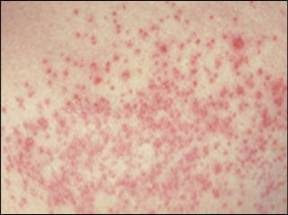
At the top of this blog entry is a picture of a skin yeast infection, and other pictures of skin yeast infections can be found here and here. [These are not for the faint of heart, so be forewarned!]

Typical skin yeast infection locations include groin folds, under the breasts, in the armpits, in the belly button, under the belly, in the folds of the elbows and knees, between the toes, etc. "Athlete's Foot" and "Jock Itch" are usually skin yeast/fungal infections, as are dandruff and ringworm.

Wikipedia describes jock itch (tinea cruris) in the following oh-so-attractive way:

Affected areas may appear red, tan, or brown, with flaking, rippling, peeling, or cracking skin.

The acute infection begins with an area in the groin fold about a half-inch across, usually on both sides. The area may enlarge, and other sores may develop in no particular pattern. The rash appears as raised red plaques (platelike areas) and scaly patches with sharply defined borders that may blister and ooze.

If the rash advances, it usually advances down the inner thigh. The advancing edge is redder and more raised than areas that have been infected longer. The advancing edge is usually scaly, and very easily distinguished or well demarcated.

The skin within the border turns a reddish-brown and loses much of its scale. The border may exhibit tiny pimples or even pustules, with central areas that are reddish and dry with small scales.

If infected with candidal organisms, the rash tends to be redder and wetter.

[Now, mind, there can be other reasons for itchy or burning rashes on the skin, so it's always good to have a rash checked out if you aren't sure. A few years ago I had a bad rash that I didn't get checked out becase I thought it was the world's worst case of yeast.....turns out it was shingles!!...yeowch!!! If I hadn't automatically attributed that burning/itching rash to skin yeast, I might have gotten into the doctor in time to be able to get an anti-viral that would have lessened my suffering. So don't hesitate to get it checked if you are unsure or if it seems worse than normal!]

Treatments for Skin Yeast Infections

If you have developed a skin yeast infection, you usually want immediate relief. Sometimes the infection is mild and just annoying, but usually it makes a person pretty uncomfortable. Some of the really bad ones can make you downright miserable, or even cause secondary bacterial infections which can become very serious. So what are your options for treatment?

There are many choices for skin yeast treatment, from the traditional medical approach to many folk remedies and "alternative" medicine options. What works for any one person varies a lot, so I have included a full range of choices so that you can experiment to see what works best for your body.

I put these together by listing all the treatments I personally had tried over the years (both successfully and unsuccessfully), as well as treatments others have said were effective for them (but I had never tried). Then I did a search about treatments that were recommended in various online sources and included many of those as well.

When people discuss what works for them for treating skin yeast, there is often a strong difference of opinion about the "best" treatments. I think this boils down to "Your Mileage May Vary"......that is, that various treatments vary in their efficacy for different people. This may simply be because different people have differing types of fungi affecting them, it may be because of subtle differences in body chemistry, or both.

I would also note that yeast/fungal strains can develop resistance to treatment over time. As a result, you may find that over time, the effectiveness of one type of treatment declines for you. Therefore, it's good to have multiple options in your arsenal and to switch them off occasionally. Keep experimenting, and keep mental notes on what works best for you.

Finally, a number of sources make the valuable point that it's important to continue treatment for skin yeast/fungus for quite a while after the symptoms disappear in order to fully extinguish the fungus. Discontinuing the treatment too soon may cause a cycle of recurrence.

Medical Disclaimers

Of course, any time you discuss stuff like this online, you have to include the obligatory medical disclaimer.

I'm not a doctor nor a healthcare professional. I have not personally tested out all of these, so I CANNOT attest to their safety or efficacy. Therefore I'm adding lots of caveats. Do further research about the safety of these possibilities, get medical advice as necessary, and go cautiously if you decide to try any.

This list is provided for informational purposes only and not intended as medical advice; I assume no responsibility for any actions taken on your part. Consult your healthcare provider as needed, yadda yadda yadda.

Traditional Medical Treatments for Skin Yeast Infections

Traditional medical treatments include anti-yeast creams, like those used with a vaginal yeast infection. Other options include anti-fungal creams, powders and sprays used for athlete's foot and jock itch.

Some of the most commonly used anti-yeast meds include the "-azole" family of drugs (including miconazole/Micatin/Monistat Derm and clotrimazole/Lotrimin AF). Sometimes these are mixed with mild anti-steroidal creams for symptomatic relief of the itching while the anti-yeast drug works on the yeast. (Some people feel this addition is harmless, while others feel it can act as a "fertilizer" to the yeast.)

But how do these medications work? From http://firstaid.webmd.com/yeast-infection-skin-rash-treatment:

Azole medications are a family of antifungal drugs that end in the suffix "-azole." They block the manufacture of ergosterol, a crucial material of the yeast cell wall. Without ergosterol, the yeast cell wall becomes leaky and the yeast die. Fortunately, ergosterol is not a component of human membranes, and azoles do not harm human cells.

Nystatin is another common anti-fungal cream that is used. It is part of a group of drugs called "polyene antifungals." Again from http://firstaid.webmd.com/yeast-infection-skin-rash-treatment:

Polyene antifungal medications include nystatin and amphotericin B. Nystatin is used for thrush and superficial candidal infections. Doctors reserve amphotericin B for more serious systemic fungal infections. The antifungals work by attaching to the yeast cell wall building material, ergosterol. These medications then form artificial holes in the yeast wall that cause the yeast to leak and die.

An over-the-counter "antifungal cream" often used for athlete's foot or other skin yeasts is "Tolnaftate" cream, usually in the 1% strength. This same drug is often found in aerosol sprays for athlete's foot under brand names such as "Tinactin" or "Desenex."

Other drugs include Allylamines, which inhibit the enzyme required for ergosterol synthesis. Some of the more common ones include "terbinafine hydrochloride" under the brand name of Lamisil, naftifine (Naftin), and "butenafine hydrochloride" under the brand name of "Lotrimin Ultra."

Because all of these common anti-fungal products are made with different drugs and have slightly different mechanisms of action, it may be useful to occasionally switch off brand names and try a new product if the old one is not working as well as it used to. Also remember the importance of continuing to treat for a while after symptoms have subsided to prevent frequent recurrence.

If a healthcare provider suspects that a yeast infection has gone systemic, oral antifungals may be prescribed. Examples of oral antifungals include terbinafine (Lamisil), itraconazole (Sporanox), and fluconazole (Diflucan). However, oral anti-fungals can have severe side effects and anyone using them must be monitored carefully.

"Folk Remedies" for Treating Skin Yeast

Most people try the traditional yeast/fungal treatments first. For some, they work like a charm. For others, they are really not very effective.

Some people actually find better (and faster) relief with some of the so-called "folk remedies" or alternative treatments. Still others find the best results when combining traditional and folk/alternative treatments.

Here's a list of some of the most common and widely used "folk remedies" for skin yeast/fungal infections:
  • Vinegar (usually white vinegar)
  • Garlic paste (fresh-crushed garlic)
  • Listerine (original formula, the yellow kind)
  • Grapefruit Seed Extract (dilute before use!)
  • Gentian Violet (will stain so use carefully)
  • Tea Tree Oil (may sting if not diluted a bit)
  • Probiotics (orally and also topically via the powder inside the capsules)
Some less commonly seen "folk remedies" for skin yeast/fungal infections include:

  • Oil of Oregano (diluted)
  • Oregon Grape Root extract
  • Coconut Oil
  • Baking Soda (may help lower the pH in the area)
  • Plain yogurt with probiotics
  • Lemon Grass
  • Urine (soldiers with foot infections in the field were often told to pee on their feet)
  • Aspirin dissolved in rubbing alcohol (used as a soak in the area)
  • Vicks Vapo Rub
  • Colloidal Silver
  • Goldenseal
  • Citronella Oil
  • Orange Oil
  • Onion extract
  • Patchouli
  • Lemon Myrtle
  • Selenium and/or Zinc supplements
  • Calendula with aloe vera gel
  • Whitfield's Ointment (3% salicylic acid and 6% benzoic acid; can create a burning sensation)
  • Hydrogen Peroxide
  • Rubbing Alcohol
  • Epsom Salts
  • Cod Liver Oil (applied topically)
Alternative Treatments for Skin Yeast

Among alternative healthcare treatments for skin yeast/fungal infections, a surprising entry is acupuncture, which I personally have found very useful (to my great shock).

Naturopaths like to treat skin yeast/fungal infections by considering whether there is a candida (yeast) overgrowth problem internally as well as externally.

Although there are oral anti-fungal prescription meds, these can have toxic side effects and must be monitored carefully. Therefore, many naturopaths prefer to use herbs to treat suspected systemic yeast.

Some of the commonly used over-the-counter herbal formulas for systemic yeast issues include Candidastat and Candicyn. Any health food store will probably carry these products or other, similar brands.

An Ounce of Prevention

Better than trying to cure skin yeast, of course, is trying to prevent it in the first place, or at least trying to prevent it from becoming a chronic, recurring problem. This is particularly critical for those with diabetes or immunocompromised systems.

Hygiene Issues

Hygiene is an important part of preventing skin yeast from recurring. If you have a skin yeast infection, you need to change/wash everything that comes into direct contact with it, EVERY SINGLE DAY.

In other words, you need to change your bath towel/washcloth DAILY, change your bra/socks/underwear daily (duh), change your sleeping clothes, etc. Wash these items in vinegar and HOT water; with bleach if chronic yeast is a problem. Otherwise, you may be chronically re-infecting yourself each day.

Washing your body occasionally with an anti-dandruff shampoo may be useful for preventing recurrence in some people. Nizoral shampoo has ketoconazole (an -azole drug) in it, Selsun Blue has selenium in it, and Head and Shoulders and Pantene Pro V have zinc products in them.

Treating your sex partner for yeast/fungal infections may also be necessary. Many women chronically re-infect themselves with vaginal yeast infections because their partners unknowingly have been affected too but do not receive concurrent treatment.

Wearing fabrics that "breathe" better around areas that are prone to skin yeast may lower the rate of recurrence. Many women find they have less issues with vaginal and skin yeast when they wear cotton underwear, and people who suffer from chronic athlete's foot often find better results with cotton socks and leather shoes.

Swimming pools and public shower common areas are common sources for getting a fungal infection. Wear sandals or flip-flops when walking in these areas. Also, if you or another family member has experienced skin yeast/athlete's foot, be sure to disinfect your shower floor daily for a while.

Keeping the area dry is important in preventing recurrence. Some people find that using a blowdryer set to "cool" after every shower on areas that tend to get skin yeast is effective in lowering the rate of recurrence.

Nutrition

Every yeast resource out there will tell you to cut carbs if you are truly facing a problem with yeast overgrowth. Cutting down on simple carbs like sugar, white flours, fruit juices, etc. in particular may help some people, especially those with diabetes or strong insulin resistance, because the yeast needs sugars in order to grow. Cut out the food source and theoretically the yeast should die.

On the other hand, sometimes cutting carbs makes no difference whatsoever. It's something that should be considered and tried in order to rule it out, but the slavish overattention to carb consumption demonstrates how strongly some in the medical field (and especially in alternative medicine) believe that yeast is always a function of overeating, of overindulging in sugars and refined foods, of what they assume are weight-related behaviors. Their implication is that if you just wouldn't eat those foods, you'll never have a problem with yeast. Yeah, right.

For some people, cutting out/down carbs helps, so it's worth trying.....but it's by no means a sure cure or totally necessary in all cases, especially since "skin yeast" is caused by a number of different fungal organisms, not all of which are sensitive to carb intake.

Another nutritional recommendation often seen is to cut out foods that contain yeasts or fungi. This is another unproven but commonly seen recommendation. Like carbs, it can't hurt to try and see if it helps, but it is based more on assumptions and tradition than on proven fact at this point.

Preventive Powders and Creams

Some people swear by daily dusting with powders to prevent/reduce the incidence of skin yeast. This may work because it helps keep the area dryer.

Some strongly prefer baby powder (with its high degree of corn starch, which makes the skin feel less "sticky"); others contend that corn-starch powders actually ultimately feed yeast and make the problem more chronic.

Another option is medicated powders like Gold Bond Powder; these don't have corn starch but do have menthol and other active ingredients in them may discourage yeast/fungus. Zeasorb AF is another powder sometimes mentioned that is highly absorptive but doesn't contain corn starch.

Some people find that daily use of creams like Balmex or Desitin (zinc oxide paste) tends to discourage fungal infections. Others prefer daily application of vinegar, tea tree oil, or other anti-microbial/anti-fungal substances.

Other people swear by applying antiperspirant to areas prone to skin yeast. You don't want to do this while you are having a skin yeast outbreak so you don't infect your deodorant stick, but between outbreaks, reducing the amount of perspiration there may help lower the risk for recurrence. Or so the theory goes, anyhow.

Probiotics

Many people have an imbalance in their gut flora, especially after illness and antibiotic use. In some people this can become chronic.

The theory is that if you use antibiotics and kill off both the "good" and the "bad" bacteria, yeast organisms may take the opportunity to overgrow instead, causing a constant problem with yeast overgrowth.

Probiotics are "good" bacteria that help colonize your gut and re-establish a better balance between yeast, "good" bacteria, and "bad" bacteria. This may then help improve digestion, absorption of nutrients from food, and reduce external yeast/fungal infections as well.

What's Worked Best for Me

Years ago, I rarely suffered from skin yeast issues. However, as my insulin resistance has intensified over time with PCOS, it's become more of an issue. Also, as I've gone through childbirth and breastfeeding (and now perimenopause), the hormonal changes associated with these things seem to trigger more skin yeast/fungal infections. Many other women report similar struggles during times of significant hormonal changes.

So, as a result, I've tried a number of these cures. Now, I can't tell you what will work for you....I'm sure it depends on the type of intertrigo you have. Your fungal infection or degree/non-degree of yeast involvement may be different from mine.

Still, I can share what things have worked the best for me, with the caveat of course that Your Mileage May Vary and See Your Healthcare Provider and all that.

For daily prevention, I find Gold Bond medicated powder works much more effectively for me than baby powder. It doesn't prevent every outbreak, but it sure cuts down on them and makes me more comfortable too.

I find careful attention to hygiene is very important, especially clean towels and nightshirts every day during an outbreak. I also find that occasional prophylactic bouts of probiotics are very beneficial as well.

Although some people swear by vinegar for skin yeast issues, I've never found it useful. Nor have I found Tea Tree Oil helpful, nor garlic. However, enough people have found these useful that they probably would be worth trying.

I have a nurse-practitioner friend who swears by Grapefruit Seed Extract for oral thrush in babies and mamas. I never had thrush or yeast problems while breastfeeding so I've never had to test out this theory, but I've heard very good reports from other breastfeeding moms who have had issues with thrush.

For everyday skin yeast issues, I didn't find Grapefruit Seed Extract that useful, but I may not have used it correctly. I tried it topically (highly diluted) and didn't find it that effective. So I tried it again, less diluted.....no help. Then I tried it full-strength, directly on the skin. BIG MISTAKE!! (It didn't hurt at first but after a while, wow, did it hurt. So always dilute grapefruit seed extract!!!)

From what I read online, I think Grapefruit Seed Extract may be very helpful to some, especially breastfeeding moms with thrush issues, or women with lots of candida involvement in their intertrigo. But for me personally, so far it hasn't helped that much.

When I develop an actual outbreak, the first thing I try is Tinactin, the over-the-counter athlete's foot "powder" spray. I don't just use it for feet; I use it externally wherever I need it. That usually is enough to knock the intertrigo out.

If it's not enough, I will alternate it with [yellow] Listerine applied topically to the problem areas. This was surprisingly effective.

I have tried some of the other anti-fungal over-the-counter remedies.....Lotrimin and Lamisil, I believe. I didn't find them nearly as effective as Tinactin, at least for me personally. YMMV.

Tolnaftate cream (over-the-counter antifungal cream) has also been useful at times. I have never found the vaginal yeast creams (Monistat etc.) helpful at all for skin yeast, but the Tolnaftate anti-fungal skin cream has been.

When things are at their MOST itchy and miserable, I often find that probiotic powder (from the capsules) applied directly to the worst spots helps reduce the itch. It doesn't seem to "cure" anything, but it really does seem to help lessen the symptoms.

Surprisingly, acupuncture has been very effective for yeast issues for me. I don't use it as my only or main treatment for skin yeast/fungus, but if I have a very bad flare-up, acupuncture is one of the fastest and most effective ways of getting rid of the worst of the problem.

I don't find that it prevents recurrences very well, but it does seem to take all the "oomph" out of an outbreak pretty quickly. I still have to follow up with other treatments, but it can dramatically improve things for me pretty darn quickly. Lest you attribute this to a "placebo effect," I hasten to add that I was a total disbeliever that this would help.....but it's helped enough times now that I seek it out if I have a case that's not responding quickly to the usual treatments.

These are the things that seem to work best for me, personally. What works for others seems to be highly variable, so don't limit yourself only to these. Explore all your options, both traditional and "folk/alternative." See what works best for you. And don't be afraid to try new things, because sometimes you get a different fungal strain or your strain becomes resistant to treatment. Keep exploring your options, and keep notes on what seems to work.

Summary

If you are at higher risk for skin yeast issues (insulin resistance, recent antibiotics, steroid use, diabetes, etc.), then it probably behooves you to be especially vigilant about preventing skin yeast issues, or being very proactive about treating them sooner than later if they do occur.

However, don't feel bad if you get skin yeast issues. Most people, fat or not, have a bout with it sooner or later in their lives. It can cause a lot of misery, so don't be shy about getting out there and getting some treatment.

What works best for prevention and treatment varies in each individual. Some folks do great with traditional medical treatments; some do better with "alternative" treatments. It's helpful to explore a variety of choices to see what works best for YOU.

For some people, treatment X works like a charm, while in others it doesn't help at all. Sometimes treatment X works well for a while and then suddenly doesn't work as well, so it's good to have an arsenal of choices available to you.

If you have a favorite skin yeast treatment that's not listed above, please feel free to share it in the comments section. Or you can share which treatment has been most effective for you.

Skin yeast is an annoyance for many many people of size, and often for people of average size too. It's good to know the variety of treatments and preventive methods available to you.