Showing posts with label Gynecological Care. Show all posts

Thursday, February 7, 2013

The Repercussions of Weight Bullying

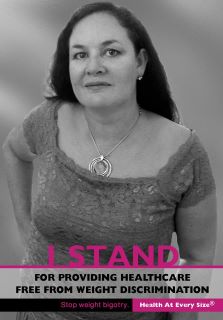
all images from istandagainstweightbullying.tumblr.com
I'm concerned about the increasing trend towards Weight Bullying among some healthcare providers.

As the pressure on providers to "do something" about the Obeeeesity Epidemic increases, so does the pressure for them to participate in weight bullying at appointments.

What is "weight bullying"?  Weight bullying is the unrelenting, negative focus on a patient's weight during medical appointments to the detriment of all other issues.

It is the constant harassment to lose weight ─ not just work on healthy habits, but actually put the primary focus on losing weight ─ by whatever means necessary, even radical ones.

It is blaming the patient's weight for everything that is wrong with that patient, even when such a connection is dubious.

It is overlooking other possible causes because the care provider cannot see anything besides the patient's weight ("fat distraction," also known as "size profiling").

It is limiting access to tests and treatments, based only on a patient's weight (or willingness to pursue losing weight).  It is denying treatment until a patient acquiesces and loses weight.

Sometimes this pressure for weight bullying comes from the insurance companies that providers have to answer to, sometimes from colleagues within the profession, sometimes from research articles that contend that care providers aren't doing enough to combat the  "obesity problem," etc.

Many articles in the popular media and in the medical research claim that doctors are rarely engaging in "obesity screening" or "weight loss counseling."  Funny how that doesn't seem to jibe with the experiences of most "obese" people, who report that the harassment over their weight and pressure for weight loss is unrelenting at most appointments.

Whatever the source of the pressure, care providers need to start recognizing that weight bullying is causing more harm than good for many obese people.

The Dreaded "Weight Talk"

There was a great article about this called "Dear Doctors, Quit It With The Weight Bullying" and it's by "Jess." It can be found here.

The topic of the  post, as you might guess, is weight bullying.  Specifically, "the weight talk" and pressure to lose weight, often without regard to why you're really at the doctor in the first place, and usually without even asking about your habits first (because you're only going to lie about them, right?).

Jess pointed out that when a routine health check-up becomes an exercise in shame, it tends to have a chilling effect on future doctor visits.  

And that is one of the most ominous effects of weight bullying at the doctor's, because putting off regular appointments can result in serious conditions going overlooked or undertreated, and thereby irreparably harming a person's health.

Here is what Jess experienced.  She was at her doctor's for a regular pap smear. Here's part of what happened:
...he asked what I ate, but he didn't wait for an answer. I had to exercise more, he said, having no idea how much I was exercising. I also needed to eat less than whatever it was I was eating which I hadn't gotten a chance to tell him. 
Dear god, what cutting-edge medical research! I certainly never thought of “eat less and exercise more,” especially not when I was bulimic, which incidentally is in that file of papers you’re holding which we like to call “records.” 
“I’m not concerned about it,” I said tightly, “and if it comes up again I’m going to have to find another doctor.”

“Any other doctor would tell you the same,” he said, as though I hadn't been coming to him, just as fat as now, for several years. 
“Well, I prefer a doctor who at least waits to hear what I eat before telling me to eat less." 
He looked exasperated. “There’s no possible way you’re not eating too much.”
Even though she fought back and fired this doctor, she found herself putting off her next yearly exam because she dreaded finding a new doctor who might put her through all that again.

When fat people get bullied, not believed, or made to feel like crap at the doctor's office, they tend not to not return. 

What a surprise. Imagine not being keen to keep going back for repeated harassment and derision.

Worse yet, they often lose trust in being able to get reasonable health care from other providers, and so tend to put off a return to ANY provider, not just the fat-phobic one.

Then doctors whine about how obese people avoid the doctor, and gees, how can we get fat people to be compliant with the recommended doctor visits?  How can we get them to improve their health?  How can we get them to regularly undergo tests and see specialists as needed?

The answer is, STOP THE WEIGHT BULLYING.

Weight Bullying Repercussions


Care providers greatly underestimate the negative impact of weight bullying.  It rebounds in so many harmful ways.

Weight bullying results in people trying over and over again to lose weight, even though research clearly shows that permanent success is very unlikely.  It results in weight cycling, which can increase the chances for gallstones, kidney cancer, further weight gain, and potentially many other issues.

Weight bullying results in fat people resorting to ever-escalating steps to try and lose weight.  When the usual recommendation of "eat less and exercise more" doesn't do enough, most dieters try to eat even less or exercise even more.  If that doesn't work, they go even further, sometimes to dangerous levels.

When that doesn't work, they try fasting, meal-replacement drinks, herbal supplements, or weight-loss drugs that have significant risks and which may do permanent harm to their systems.

When the weight loss doesn't last, many resort to surgery, maiming perfectly healthy organ systems in a desperate attempt to achieve thinness and "health," only to find other, unexpected complications instead. And still, even with stomach amputations and gut bypasses, most don't lose enough weight to achieve a "normal" BMI.  Does that really sound like a purely behavioral problem?  Or could something more be going on to cause their obesity?

With such poor results, so many negative side effects, and the extreme unlikelihood of achieving a "normal" BMI, does this sound like a goal worth pursuing?

Weight bullying also results in people (especially women) developing low self-esteem and poor body image.  Some develop eating disorders because of the shame and disapproval they have internalized.

Even when a full-on eating disorder does not occur, many people have developed harmful habits like overeating or binge-eating, and have internalized toxic attitudes about food and body image.

And, as we have seen, weight bullying discourages fat people from making regular doctor visits and makes them less likely to get tests that might help prevent/diagnose various diseases early.  In the end, this has far greater negative impact on fat people's health than choosing not to go on the latest diet.

In particular, fat people LOATHE:
  • being lectured about weight/pressured to diet when they are at the doctor's about something completely unrelated to weight
  • having every condition they experience blamed on their weight, even when it is clearly unrelated
  • being told they are liars (either to others or to themselves) when they try to share that they eat normally or are already exercising
  • being told that they just haven't tried "hard enough" or with the "right" program yet
  • having to have The Weight Discussion over and over again, every time they visit the doctor, despite previously explaining patiently why they have reservations about weight loss/dieting and why they are exercising their right to patient autonomy by declining this treatment
  • having weight loss promoted as the only treatment choice for whatever ails them, even when their condition has nothing to do with weight or there are alternative treatments to consider
  • having the risks associated with obesity exaggerated in order to scare them into losing weight ("You won't live to see 40!" "You'll never see your child grow up!"
  • not being given access to tests that people of "normal weight" would automatically receive with the same symptoms because the care provider has concluded that weight is the main issue
  • not being allowed access to needed treatment without having to lose weight first
But, but, but.....!

I know, I know.  Many doctors view it as part of their job to promote healthy behaviors, and that bringing up uncomfortable topics is part of good care. I understand that and I truly respect the difficult line that care providers walk when trying to treat all groups with respect and yet also promote better health.

However, there is a difference between promoting good nutrition/exercise and browbeating someone about their weight.

Providers need a better sense of when they cross the line between encouraging health and harassing someone about weight.  It's not that weight cannot ever be brought up, but rather that it should be a respectful and dynamic dialogue, not a one-sided lecture full of assumptions about what the fat person "must" or "must not" be doing, or pressure to lose weight no matter what extreme tactics must be used to do so.

Too many times, fat people try to share their concerns about the health downsides of yo-yo dieting, extreme restrictions, or the eating-disordered behaviors that dieting and weigh-ins can trigger, only to have their concerns completely dismissed or cut off.

Providers need to realize that many people who have opted out of the weight-loss paradigm have done so for very legitimate reasons, not out of laziness, gluttony, or lack of knowledge about the risks of obesity, but because it makes better sense for their body and their life and they feel healthier overall doing so.

Providers also need to understand that patient autonomy means respecting people's right to decline a recommended treatment (weight loss) and still receive respectful, considerate care.

Providers need to understand that repeatedly challenging a person's decision not to pursue weight loss and harassing them about their weight can result in the person avoiding  healthcare altogether until an emergency presents, and this certainly does not improve that person's health.

Furthermore, providers need to realize that promoting healthy habits doesn't have to involve weight loss or a weight discussion at all. 

Providers need to understand that promoting healthy habits can result in health improvements without significant weight loss, and that promoting weight loss as a goal at any cost often backfires and can result in extremely unhealthy behaviors.

By all means, promote more exercise and movement for patients...but don't tie it to weight loss as a goal. We know that exercise is beneficial, even when it doesn't lead to weight loss.  But if exercise is seen only as a means to weight loss, it is rarely sustained.

Exercise should be promoted as a goal in and of itself, not just as a weight loss tool.  

And don't forget to promote healthy habits for all your patients, not just the fat ones.  Don't make it about weight control, make it about lowering the risk for health complications.  Fitness is the best predictor of health, whatever a person's BMI, and may be the most efficient way to improve health for those who have difficulty losing weight.

Don't assume that a fat person never exercises, or that thin ones are exercising plenty.  The truth is that you can't tell how much a person exercises just by looking at them.

ASK THEM their habits and then advise them based on what you are told.  Find out what barriers there are to improvement of habits, and then help them strategize how to overcome those barriers.

Providers can and should encourage healthy behaviors ─ but it is more effective to do so without tying it to weight, without assumptions about what a person's habits "must" be (based only on their BMI), and without indulging in shaming and blaming.

As Deb Burgard says, "Listen to your public health messages with the ears of your fat loved one or colleague...Tease out the hate [speech] from the health speech."

Or as Ragen Chastain says, "People don't hate themselves healthy....We need to take weight out of the equation and make public health about public health and not public thinness."

Summary

I believe that most providers mean well, but they need to understand just how much weight loss pressure/weight bullying backfires in terms of a person's overall health.

Health care avoidance is a REAL issue for many people of size, and many have darn good reasons for doing so, based on past experiences.

One of the most important things that care providers can do for people of size is to build trust about the care they will receive ─ independent of weight ─ so that fat patients will not avoid the doctor and will utilize all the tools available to improve/monitor their health long-term.  

Providers, please divorce weight loss from the promotion of health.  By all means, encourage healthy habits, but don't keep tying it to weight loss.

Bringing up weight constantly, shaming patients about it, or harassing them to lose weight doesn't work. Instead, it alienates the very people it is trying to help, often discouraging them from seeking care at all.  And that certainly does not improve their health.  

Thursday, March 22, 2012

Mammogram Screening Guidelines: Why So Much Confusion?


Normal Mammograms
Previously, we talked about my recent mammogram experience and things you can do to improve the mammogram experience and make it more comfortable.

Now, in Part 2, we're going to talk about the conflicting guidelines over who should get a mammogram and when, and why there is all the confusion. [Strap on your seatbelts, this is not a quick or easy subject to cover.]

I've also decided to expand the series beyond two parts. In future posts, we will also discuss whether "obesity" is associated with breast cancer and how that impacts mammogram timing for us, proactive things that might help lower your risk for breast cancer, and how chemotherapy underdosing impacts breast cancer outcomes in obese women.

As before, I have caveats.  First, I don't pretend to be an expert on breast cancer or the pros and cons of screening.  I'm still learning about the subject at this point.  Please always do your own research and consult your healthcare provider about your decision-making.

Second, please note that I'm not trying to tell you what you should do about screening in your life.  I am simply trying to open a dialogue about breast cancer screening, the debate over when it should be done, and whether that has any special implications for us as women of size.

Screening Guidelines: Differing Recommendations 

One of the hardest healthcare decisions for me in my 40s (and now, as I transition into my 50s) was trying to make sense of the different mammogram screening recommendations from different organizations. If all the professional organizations with access to all the research on the topic can't agree with each other, how am supposed to decide what to do?  Gah!

But a decision had to be made, and I always prefer to do that with a little research.  So first, I looked at what the different organizations actually recommended currently, while also keeping in mind that these recommendations can change over time.

[Remember, nobody recommends against diagnostic mammograms. If you find a lump or other symptoms suggestive of cancer, a mammogram is definitely in order, whatever your age.  But that is different than recommending regular screening mammograms in low-risk women with no symptoms.]

Here is a sampling of the guidelines from several leading organizations.

The American Cancer Society currently suggests that women with an "average" risk for breast cancer should get a screening mammogram every year starting in her 40s.  So does the American College of Radiology.  The National Cancer Institute recommends screening every 1-2 years starting at 40.

On the other hand, the U.S. Preventive Services Task Force suggests that regular screening mammograms begin after age 50 (unless there are strong risk factors for breast cancer) and then be done only every 2 years.  This is in alignment with the practice in many European countries, where screening starts in the 50s and only occurs every other year.  In fact, one of the major arguments for the new USPSTF guidelines is that they bring the U.S. into alignment with the practice in the rest of the world.

Note that the USPSTF doesn't say that women in their 40s can't have mammograms; they simply suggest that women in their 40s discuss the pros and cons of mammogram screening with their care provider and make a decision based on the context of their own family history, risk factors, and values.  The same goes for women in their 50s in terms of frequency of screening ─ it can be more often than every 2 years, depending on your risk factors.  But the baseline recommendation for most women is screening mammograms every 2 years starting at age 50.

Here is a summary from one site of the USPSTF recommendations:
In 2009, the U.S. Preventive Services Task Force (USPSTF) — a group of health experts that reviews published research and makes recommendations about preventive health care — issued revised mammogram guidelines. Those guidelines include the following:
  • Screening mammograms should be done every two years beginning at age 50 for women at average risk of breast cancer.
  • Screening mammograms before age 50 should not be done routinely and should be based on a woman's values regarding the risks and benefits of mammography.
  • Doctors should not teach women to do breast self-exams.
  • There is insufficient evidence that mammogram screening is effective for women age 75 and older, so specific recommendations for this age group were not included.
The main point of contention for the USPSTF is the harm that can come from routine screenings.  It found that routine mammograms for women in their 40s did slightly reduce the deaths from breast cancer in this age group BUT that there was a lot of harm from false-positive screenings*, and that this harm from false-positives was being undervalued in the recommendations of most medical society guidelines.

As one article about the controversy notes:
The goal of mammography is to detect cancerous tumors before they become palpable, when they are smaller or in an earlier stage and easier to treat. A drawback, however, is that while mammography is highly sensitive and can detect clinically occult breast cancer, there is a high false positive rate. 
One study found that 24% of women screened over a 10-year period had false positive mammograms. That led to unnecessary workups, often including ultrasound, fine needle biopsy, and possibly, surgical biopsy. To make matters worse, breast surgery often results in scar tissue that makes it more difficult to spot suspicious lesions on future mammography. Roughly 60% – 85% of breast lesions that are biopsied are benign. 
The controversy over when screening should begin is based on the fact that mammography's ability to detect cancerous tumors is somewhat age-related. Premenopausal women have denser breast tissue than their older counterparts, making it harder to distinguish between normal and diseased tissue. This dense tissue has a whitish appearance on a mammogram—similar to the appearance of cancerous cells. After menopause, women's breasts have more fat, which has a grayish appearance that makes it easier to detect abnormal lesions.
The bottom line seems to be that the risk of dying of breast cancer in your 40s is small, and that the benefits and risks of mammography screening then are fairly similar.  Getting regular mammograms in your 40s does reduce your chances of dying of breast cancer somewhat (one report concluded it reduces the risk by an average of ~15%), but at the price of much anxiety, false-positive tests, scar tissue from unnecessary biopsies, treatment of questionable diagnoses, accumulation of radiation exposure, and added medical costs.

Their point was that each individual woman must weigh for herself how to balance the benefits and risks of such tests in the context of her own family history and medical values.

Screening Guidelines: The Controversies

As you might guess, the change in guidelines has been extremely controversial. Many cancer groups were up in arms about this recommendation, accusing the USPSTF of ignoring the science or of trying to ration healthcare.

Some researchers have charged that the USPSTF discarded, ignored, or misinterpreted a lot of research in coming up with its new guidelines.  One researcher pulled no punches when he wrote:
The USPSTF failed to understand the randomized controlled trials and used the lowest possible benefit in its calculations. The death rate from breast cancer has decreased by 30%, primarily because of screening. The agency ignored direct data with regard to decreasing deaths in real populations in favor of computer models. The USPSTF admits that its guidelines will result in unnecessary deaths from breast cancer that could be avoided by screening annually beginning at the age of 40 years.
On the other hand, others charge that universal screening is largely a waste of health care time, effort, and money.
At best the evidence for the salutary effects of routine mammograms...is equivocal, with many respectable large-scale studies showing a vanishingly small impact on overall breast-cancer mortality. For one thing, there are an estimated two to four false positives for every cancer detected, leading thousands of healthy women to go through unnecessary biopsies and anxiety...David Plotkin, director of the Memorial Cancer Research Foundation of Southern California, concludes that the benefits of routine mammography "are not well established; if they do exist, they are not as great as many women hope." Alan Spievack, a surgeon recently retired from the Harvard Medical School, goes further, concluding from his analysis of dozens of studies that routine screening mammography is, in the words of famous British surgeon Dr. Michael Baum, "one of the greatest deceptions perpetrated on the women of the Western world."
One of the major concerns many people had with the Task Force recommendations was that insurance companies or the government might stop paying for mammograms for women in their 40s.  However, the USPSTF does not set policy like this, and the government and insurance companies are still paying for mammograms for women in their 40s.

Other researchers point out that risk for aggressive breast cancer in the 40s is not spread equally among all ethnic groups.  Therefore, some are deeply concerned that USPSTF recommendations might impact people of color more negatively, resulting in more missed or delayed diagnoses in these groups.

On the other hand, one must consider the economic incentive to screening all women in their 40s. A number of onlookers have noted that if all these women in their 40s no longer get routine screenings, a significant portion of the market for mammograms disappears, and profit margins for testing centers and hospitals go down. While no one is charging that experts are manipulating guidelines for profit, economic incentives can subtly influence physician perceptions and practices. How do economic pressures factor into the vociferous push-back against the new guidelines?

Another significant concern is the "overdiagnosis" problem.  Basically, all tumors are not alike, and some tumors never become life-threatening (these are called "indolent" tumors).  Some even regress spontaneously.  Yet when universal screening is used, these indolent tumors are often discovered and treated with dangerous medications and procedures when they probably didn't need treatment in the first place.  This is another example of the dangers of false-positive screening tests. As one article explains:
A routine mammogram can find cancers that would never have become life-threatening, subjecting women to painful and toxic treatments they never actually needed...The detection of tumors that would never have caused trouble is known in the medical trade as overdiagnosis... 
Breast cancers generally behave in one of three ways. Some grow very aggressively and metastasize (i.e. spread to other tissues) long before any mammogram can detect them. Others grow more gradually and can be successfully treated if caught early. Still others grow so slowly that they'll never cause the woman a problem...The problem is that, even under a microscope, it's impossible to distinguish these different types of cancer from one another, and mammograms are better at catching the less dangerous kinds... 
Because scientists do not yet have a way to distinguish cancers that will turn life-threatening from the harmless ones, they must treat every case as if it were the worst kind. As a result...for every woman whose life is saved, several others are subjected to surgery, radiation therapy and sometimes chemotherapy that they didn't need, for cancers they never would have known about without the screening.
And of course, some of those treatments (like mastectomies, radiation, and chemotherapy) carry risk.  Sometimes they lead to other complications, like lymphedema, heart problems from radiation exposure, or organ damage from chemotherapy. So the concern about overdiagnosis is a very legitimate one.

Yet every woman who has had breast cancer diagnosed via a routine mammogram usually believes whole-heartedly that her life was saved with early diagnosis, even though many of these cases would likely not have been fatal.  This leads to the Overdiagnosis Paradox, where the beneficial effects of screening get exaggerated in people's minds because the screening finds the very tumors that are least likely to cause problems and are therefore most "curable," as described here:
“The more overdiagnosis the test causes, the more popular it is because there are more survivors,” [Welch] says. “The person who had a breast cancer diagnosed by mammography is tempted to view herself as being helped, but there are two other possibilities that are more likely,” he says. The first is that the person would have fared exactly the same without the mammogram, and the second is that the cancer the mammogram diagnosed was indolent and did not require treatment. “I always hope that the person who found cancer via mammography was helped,” says Welch, but on an individual level it’s impossible to say which category an individual person falls into. Statistically, the vast majority fall into the overdiagnosed category.
This is what makes decisions about routine mammograms so difficult, and why it's so politically difficult to discuss screening guidelines. Everyone has a story about someone they knew (maybe even themselves) who got cancer in their 40s and was "cured". Everyone wants to believe that it was a mammogram that made the difference, but based on the actual research, it's very hard to prove that routine mammogram screenings have any substantial impact on breast cancer mortality for women in their 40s. Yet the emotional power of those anecdotal stories of women who think they were "saved" by their mammogram is so powerful that it often trumps the actual evidence in people's minds.

And so the controversy continues.

Screening Guideline Changes: The Fall-Out

Since the new USPSTF guidelines came out in 2009, there has been a lot of conflicting opinions on what to do about them.

Many consumers have been quite confused about what to do, but the fear of breast cancer is so strong that most would still opt to have mammograms in their 40s, regardless of the new recommendations. The fear of "what if" is just too strong.

Mammograms are reassuring to many women; it feels like something controllable that you can do against the uncontrollable menace of lurking cancer.  And that need for a sense of control against the uncontrollable is very powerful, especially as we pass into middle age and face the specter of our own mortality. So many women are still opting for mammograms in their 40s, no matter what the recommendations say.

Since the Task Force recommendations came out, there have been some follow-up studies that examine the question of whether or not mammograms in a woman's 40s really does present enough benefit to offset the potential harms.  However, these studies have not clarified the issue at all. A 2011 LA Times article summed them up:
Three new studies examining the benefits of mammography have been released since the guidelines were revised, but they have only added to the confusion. 
A study published last March in the journal BMJ compared women who lived in a region of Denmark where mammography screening was offered to those who lived in areas without screening and found no reduction in breast cancer deaths associated with mammography. 
A similar study published in the journal Cancer in September compared breast cancer death rates in women from a region of Sweden with a public mammography program to those in an area without the program and found that deaths were 29% lower in the area with a screening program 
Yet another study that month, published in the New England Journal of Medicine, compared breast cancer deaths in women taking part in a Norwegian national screening program with those who were not screened, looking at mortality rates in those areas before and after the screening program began. This study found that breast cancer deaths had dropped since the mammography program began. But it calculated that most of the improvement was attributable to increased breast cancer awareness, which led women to seek treatment right away for any lumps or bumps they discovered, and new treatments. The contribution of routine mammography to the reduction may have been as small as 2%.
The article notes that the differing findings may be due to differences in study design since the studies above were observational (which may introduce inadvertent bias to the results) and the studies the USPSTF relied on for its guidelines were based on randomized, controlled trials, which are supposed to eliminate this sort of inadvertent bias.  But for the average consumer, the seeming contradictions between studies just muddies the decision waters more.

The problem is that the argument for regular mammograms is very emotionally charged.  Research may show that, on the whole, there is little societal benefit to screening in the 40s, but what if you forego mammograms in your 40s and miss a tumor before it spreads?  What if you are one of the few who might benefit from screening in your 40s?

Some types of breast cancer are very curable if caught early, and cancer is incredibly devastating to women and their families if not caught in time.  The specter of leaving children motherless is a very potent fear, so many women in their 40s opt to have screening anyhow.  And most care providers and medical organizations continue to recommend screening in the 40s for the very same reason.

Yet many of us in the childbirth field know that screening tests can be a blessing and a bane.  We know the harm that can come from injudicious or automatic prenatal screening tests and resulting interventions, and we know that the choice to have such tests are not always so clear-cut.  Yet the pressing question of "what if" and the fear of leaving your children motherless is so potent that many of us are afraid to opt out of testing, even as we intellectually acknowledge that there is a real case to be made for waiting.

Bottom line, there are no clear answers for when screening should begin and how often it should occur, and this is a source of great ongoing controversy.  


Most U.S. medical organizations and prominent medical groups (like ACOG, the American Cancer Society, the National Cancer Institute, and the Mayo Clinic) continue to recommend starting screening at 40, but this recommendation is not unanimous.

The National Breast Cancer Coalition recommends against screening women in their 40s, as does the Canadian Task Force on Preventive Health Care and many European countries. The National Institute of Health convened a conference about the topic, debated long into the night about it, finally recommended against routine screening in the 40s, and then the doctor who convened the conference came out against that recommendation.

Obviously, the issue is very contentious. In the end, it is left to women, in consultation with their providers, to decide what the best course is for their own situations.

Risk Factors for Breast Cancer

If the new trend for mammogram screening is on individualizing recommendations based on each woman's family history and risk factors, let's chat for a moment about these risk factors.

First, it helps to discuss what the risk is of getting breast cancer in the first place:
Age is the most important risk factor for breast cancer. The older a woman is, the greater her chance of developing the disease. Most breast cancers occur in women over the age of 50. The number of cases is especially high for women over age 60. Breast cancer is relatively uncommon in women under age 40. The NCI fact sheet Probability of Breast Cancer in American Women provides more information about lifetime risk. This fact sheet is available at http://www.cancer.gov/cancertopics/factsheet/Detection/probability-breast-cancer on the Internet.
Second, besides age, what are other risk factors for getting breast cancer?  The National Cancer Institute (from the U.S. Government) lists the biggest risk factors as follows:
Personal history of breast cancer―Women who have had breast cancer are more likely to develop a second breast cancer. 
Family history―A woman’s chance of developing breast cancer increases if her mother, sister, and/or daughter have been diagnosed with the disease, especially if they were diagnosed before age 50. Having a close male blood relative with breast cancer also increases a woman's risk of developing the disease. 
Genetic alterations (changes)―Inherited changes in certain genes (for example, BRCA1, BRCA2, and others) increase the risk of breast cancer. These changes are estimated to account for no more than 10 percent of all breast cancers. However, women who carry certain changes in these genes have a much higher risk of breast cancer than women who do not carry these changes. 
Breast density―Women who have a high percentage of dense breast tissue have a higher risk of breast cancer than women of similar age who have little or no dense tissue in their breasts. Some of this increase may reflect the “masking” effect of fibroglandular tissue on the ability to detect tumors on mammograms. 
Certain breast changes found on biopsy―Looking at breast tissue under a microscope allows doctors to determine whether cancer or another type of breast change is present. Most breast changes are not cancer, but some may increase the risk of developing breast cancer. Changes associated with an increased risk of breast cancer include atypical hyperplasia (a noncancerous condition in which cells have abnormal features and are increased in number), lobular carcinoma in situ (LCIS, abnormal cells are found in the lobules of the breast), and DCIS. Because some cases of DCIS will eventually become cancer, this type of breast change is actively treated. Women with atypical hyperplasia or LCIS are usually monitored carefully and not actively treated. In addition, women who have had two or more breast biopsies for other noncancerous conditions also have an increased risk of developing breast cancer. This increased risk is due to the conditions that led to the biopsies and not to the biopsy procedures. 
Reproductive and menstrual history―Women who had their first menstrual period before age 12 or who went through menopause after age 55 are at increased risk of developing breast cancer. Women who had their first full-term pregnancy after age 30 or who have never had a full-term pregnancy are also at increased risk of breast cancer. 
Long-term use of menopausal hormone therapy―Women who use combined estrogen and progestin menopausal hormone therapy for more than 5 years have an increased chance of developing breast cancer. 
Radiation therapy―Women who had radiation therapy to the chest (including the breasts) before age 30 have an increased risk of developing breast cancer throughout their lives. This includes women treated for Hodgkin lymphoma. Studies show that the younger a woman was when she received treatment, the higher her risk of developing breast cancer later in life. 
Alcohol―Studies indicate that the more alcohol a woman drinks, the greater her risk of breast cancer. 
DES (diethylstilbestrol)―The drug DES was given to some pregnant women in the United States between 1940 and 1971 to prevent miscarriage. Women who took DES during pregnancy may have a slightly increased risk of breast cancer. The effects of DES exposure on breast cancer risk in their daughters are unclear and still under study 
Body weight―Studies have found that the chance of getting breast cancer after menopause is higher in women who are overweight or obese. 
Physical activity level―Women who are physically inactive throughout life may have an increased risk of breast cancer. Being active may help reduce risk by preventing weight gain and obesity.
Yes, a higher body weight is listed as being a risk factor for postmenopausal breast cancer, which is probably true. However, they conveniently neglect to mention that a fair amount of research has shown obesity to be a protective factor against pre-menopausal breast cancer.  So how does that figure into mammogram screening decisions for fat women, especially those in their 40s?  More on that in our next post in the series!

The question of breast density is one that is receiving a lot of attention in the research now, with some sources suggesting that more aggressive mammogram screening should be saved for women in their 40s with very dense breasts (as well as those with high personal risk factors, like a family history of breast cancer).

Some authorities also suggest that African-American women begin screening at age 40, because they have higher rates of aggressive breast cancer and lower rates of survival after diagnosis. Because a significant amount of the research on mammogram programs has been done in Scandinavian countries (with predominantly white populations), it is imperative that more research on screening mammography be done among ethnically-diverse communities. Only then will we have a better understanding of the best screening timelines in this group.

The U.S. Government publishes an interactive Breast Cancer Risk Assessment Tool where you can plug in your particular family history and risk factors and figure out your own lifetime risk for getting breast cancer.  It can be found here.  This may help guide you as you consider your decision about when to begin mammograms and how often to have them.

Summary

There's no way to get around it, mammograms are physically and emotionally uncomfortable tests.  If researchers really want to catch more cases of early breast cancer, they really need to develop better tests. They also need a dependable way to determine which tumors are likely to be aggressive and which are likely to be indolent.

But unfortunately, mammography is the only real test we've got, so we have to make due for now. And the fact of the matter is that mammograms clearly DO save lives in older populations. In younger populations, however, the benefit is not quite so clear.

The question is not whether to do screening mammograms, but rather when to start and how often to do them.  And unfortunately, that is not an easy question.

Alas, mammography is not a perfect technology.  It is difficult to interpret the results of some mammograms, so it is easy to inadvertently miss a tumor or to diagnose one that isn't there. Because of the denseness of breast tissue in younger women, there are many false-positives.  In addition, there are many diagnoses of indolent tumors in this age group.  As one source notes:
Mammography is an inefficient method for detecting breast cancer. It’s much better at finding the indolent cancers that would have never caused harm than it is at finding the nasty, aggressive ones most helped by treatment. Statistics show that for 2,000 women screened by mammography over 10 years, one will be prevented from dying of breast cancer and 10 others will receive treatments for a cancer that would have never become life-threatening. That means that screening causes 10 times as many women to become cancer patients unnecessarily as it prevents from dying from breast cancer.
As women age, the benefits of mammography screening definitely begin to outweigh the risks of false-positives and overdiagnosis of indolent tumors.  No one questions whether mammograms are a good thing later in life; they clearly save more lives as women age and breast cancer becomes more prevalent.

No, the question is whether the harms outweigh the benefits for younger women.  And that is a much more difficult question.

The emotional argument is that saving even one life justifies any bother, any expense, any trouble with false-positives.  But taken to its logical extreme, does that mean we should do regular mammograms every year on all women in their 30s?  In their 20s?  In their teens?  What about men, since they get breast cancer too ─ shouldn't we be giving regular mammograms to them? Maybe we should bump up the frequency of mammograms to every 6 months?  Or how about every 3 months, "just in case"? Or every month?

This is the trade-off dilemma of every screening test.  At some point, the expenses and risks of false-positives outweighs the potential benefits of diagnosis.  The question is where you draw the line for benefits versus risks.

It seems clear that mammograms probably do save lives for some women in their 40s, but they probably also result in overdiagnosis and harmful treatment for many others in their 40s.

Weighing the relative public health implications of that and coming up with a reasonable guideline is extremely difficult.

My Personal Decisions

So I'm sure everyone is wondering now, what is my personal opinion on the subject?  Again, I reiterate that I am not an expert on the subject, just a layperson trying to educate herself on the topic.  And I'm not trying to influence anyone's decision on whether or not to screen.  You need to talk this over with your caregiver and make your own decision. But it would be a cop-out at this point to not share my thoughts after everything we've discussed.

Frankly, I found my opinion changing moment to moment, depending on which source I read.  This is a very emotionally charged subject, one with a lot of conflicting analysis from experts.  I truly found it very difficult to make up my mind.

Frankly, I could go either way on the topic.  But if I put on my evidence-based glasses, I tend to err on the side of opting out of screening, at least in the early-to-mid 40s. I found the arguments of the Cochrane group to be quite strong, and I place a lot more importance on the potential harms of overdiagnosis than some do.

And that is exactly what I chose to do in my mid-40s. I'd had many false-alarm mammograms already, due to my fibrocystic lumpiness and my lack of information on family medical history. However, after that I decided to opt out. I was concerned about cumulative exposure from all those mammograms (the radiation dose is very small, but I was concerned about how many I'd have over the course of a lifetime if I continued at the same pace), and I was sick of the frequent testing and associated anxiety. I felt my risk for premenopausal breast cancer was small enough that it wasn't a huge risk to opt out for a while. When the USPSTF guidelines came out, it confirmed to me that opting out was a reasonable decision and I decided to continue to opt out for a while longer.

But then I had a major gut-check, as four women in my circle of friends and family were diagnosed with breast cancer, all in their 40s.  Perhaps some were treated unnecessarily or perhaps some had such aggressive tumors that it wouldn't have made much difference anyhow, but how can you know that?  And that is why I came back to the subject and researched it again. This time it felt much harder to decide. Those anecdotal stories carry so much emotional weight, and the what-ifs are truly frightening.

In the end, age made the decision for me. I turned 50 this year, and all the major guidelines suggest starting screening in the 50s.  So I did, and I was quite relieved that my results were negative. I plan to get screened regularly, especially now that I have found how to make mammograms a bit more comfortable.

If I were to go back, I might consider mammograms near the end of my 40s, since the risk is probably a continuum that increases near the end of the 40s.

But if pressed about what I think others should do, my personal opinion is that it is reasonable for women to either choose to have mammograms OR opt out of them in their 40s. 

I think there is a reasonable argument to be made for either decision. In the early 40s, it seems to me like the balance seems to be in favor of minimal or no screening, but by the late 40s, it seems to me like the balance may start to tip in favor of screening again. And I definitely favor screening once women are at menopause.

Bottom line, to me it seems to me like more research is needed to clarify this issue.  Only then will we be able to more accurately evaluate the relative pros and cons of screening guidelines.

So what's the moral of the story?


The future of mammogram screening is a schedule based on your personal values and your individual risk factors, especially family history and perhaps ethnicity or breast density.  More research is needed to determine the best timing for various combinations of these risk factors.  Until that happens, individual counseling with your care provider is your best option.

What have YOU decided about screening mammograms?  Comments and discussion welcome.

*One option that may help lower the risk for false-positives is having prior mammograms on hand for comparison purposes.  Apparently, this can cut the risk for false-positive results significantly.  Either go to the same screening facility each time so that your prior results are available, or take a copy of your last mammogram with you for comparison. 
**For more information on finding a free or low-cost mammogram, see the bottom of this post.
References

Guidelines About Mammogram Screening
Media Articles About Mammogram Screening Controversies
Research Articles About Utilization and Timing of Mammography
Curr Opin Obstet Gynecol. 2012 Feb;24(1):38-43.  Screening mammography in women less than age 50 years. Kerlikowske K. PMID: 22037165
...RECENT FINDINGS: New data support a 15% reduction in breast cancer mortality for women aged 40-49 years after 10 years of screening; however, the absolute benefit is small and not outweighed by important harms...Risk-based screening that identifies and screens women aged 40-49 years with breast cancer risk similar to an average-risk woman aged 50-59 years results in similar benefits and harms of screening these high-risk women as screening average-risk 50-year-old women. SUMMARY: Practitioners should discuss with women aged 40-49 years the benefits and harms of undergoing screeningmammography before offering them screening. If women elect to undergo screening mammography, they should undergo biennial screening with digital mammography. Targeting screening for those women aged 40-49 years with risk factors that substantially increase the risk of breast cancer, such as high breast density, family history of breast cancer, and history of benign breast biopsy, could maximize the benefits and minimizes the harms of screening this age group.
Cochrane Database Syst Rev. 2011 Jan 19;(1):CD001877. Screening for breast cancer with mammography. Gøtzsche PC, Nielsen M.   PMID: 21249649
...MAIN RESULTS: Eight eligible trials were identified. We excluded a biased trial and included 600,000 women in the analyses. Three trials with adequate randomisation did not show a significant reduction in breast cancer mortality at 13 years (relative risk (RR) 0.90, 95% confidence interval (CI) 0.79 to 1.02); four trials with suboptimal randomisation showed a significant reduction in breast cancer mortality with an RR of 0.75 (95% CI 0.67 to 0.83). The RR for all seven trials combined was 0.81 (95% CI 0.74 to 0.87). We found that breast cancer mortality was an unreliable outcome that was biased in favour of screening, mainly because of differential misclassification of cause of death. The trials with adequate randomisation did not find an effect of screening on cancer mortality, including breast cancer, after 10 years (RR 1.02, 95% CI 0.95 to 1.10) or on all-cause mortality after 13 years (RR 0.99, 95% CI 0.95 to 1.03). Numbers of lumpectomies and mastectomies were significantly larger in the screened groups (RR 1.31, 95% CI 1.22 to 1.42) for the two adequately randomised trials that measured this outcome; the use of radiotherapy was similarly increased. AUTHORS' CONCLUSIONS: Screening is likely to reduce breast cancer mortality. As the effect was lowest in the adequately randomised trials, a reasonable estimate is a 15% reduction corresponding to an absolute risk reduction of 0.05%. Screening led to 30% overdiagnosis and overtreatment, or an absolute risk increase of 0.5%. This means that for every 2000 women invited for screening throughout 10 years, one will have her life prolonged and 10 healthy women, who would not have been diagnosed if there had not been screening, will be treated unnecessarily. Furthermore, more than 200 women will experience important psychological distress for many months because of false positive findings. It is thus not clear whether screening does more good than harm. To help ensure that the women are fully informed of both benefits and harms before they decide whether or not to attend screening, we have written an evidence-based leaflet for lay people that is available in several languages on www.cochrane.dk.
Ann Intern Med. 2009 Nov 17;151(10):727-37, W237-42. Screening for breast cancer: an update for the U.S. Preventive Services Task Force. Nelson HD, Tyne K, Naik A, Bougatsos C, Chan BK, Humphrey L; U.S. Preventive Services Task Force. PMID: 19920273
BACKGROUND: This systematic review is an update of evidence since the 2002 U.S. Preventive Services Task Force recommendation on breast cancer screening. PURPOSE: To determine the effectiveness of mammography screening in decreasing breast cancer mortality among average-risk women aged 40 to 49 years and 70 years or older, the effectiveness of clinical breast examination and breast self-examination, and the harms of screening. DATA SOURCES: Cochrane Central Register of Controlled Trials and Cochrane Database of Systematic Reviews (through the fourth quarter of 2008), MEDLINE (January 2001 to December 2008), reference lists, and Web of Science searches for published studies and Breast Cancer Surveillance Consortium for screening mammography data. STUDY SELECTION: Randomized, controlled trials with breast cancer mortality outcomes for screening effectiveness, and studies of various designs and multiple data sources for harms. DATA EXTRACTION: Relevant data were abstracted, and study quality was rated by using established criteria. DATA SYNTHESIS: Mammography screening reduces breast cancer mortality by 15% for women aged 39 to 49 years (relative risk, 0.85 [95% credible interval, 0.75 to 0.96]; 8 trials). Data are lacking for women aged 70 years or older. Radiation exposure from mammography is low. Patient adverse experiences are common and transient and do not affect screening practices. Estimates of overdiagnosis vary from 1% to 10%. Younger women have more false-positive mammography results and additional imaging but fewer biopsies than older women. Trials of clinical breast examination are ongoing; trials for breast self-examination showed no reductions in mortality but increases in benign biopsy results. Limitation: Studies of older women, digital mammography, and magnetic resonance imaging are lacking. CONCLUSION: Mammography screening reduces breast cancer mortality for women aged 39 to 69 years; data are insufficient for older women. False-positive mammography results and additional imaging are common. No benefit has been shown for clinical breast examination or breast self-examination.
Br J Cancer. 2011 Oct 25;105(9):1388-91. doi: 10.1038/bjc.2011.372. Epub 2011 Sep 20. Effects of annual vs triennial mammography interval on breast cancer incidence and mortality in ages 40-49 in Finland. Parvinen I, et al.   PMID: 21934688
...METHODS: Since 1987 in Turku, Finland, women aged 40-49 years and born in even calendar years were invited for mammography screening annually and those born in odd years triennially. The female cohorts born during 1945-1955 were followed for up to 10 years for incident breast cancers and thereafter for an additional 3 years for mortality. RESULTS: Among 14,765 women free of breast cancer at age 40, there were 207 incident primary invasive breast cancers diagnosed before the age of 50. Of these, 36 women died of breast cancer. The mean follow-up time for cancer incidence was 9.8 years and for mortality 12.8 years. The incidence of breast cancer was similar in the annual and triennial invitation groups (RR: 0.98, 95% confidence interval (CI): 0.75-1.29). Further, there were no significant differences in overall mortality (RR: 1.20, 95% CI: 0.99-1.46) or in incidence-based breast cancer mortality (RR: 1.14, 95% CI: 0.59-1.27) between the annual and triennial invitation groups. CONCLUSIONS: There were no differences in the incidence of breast cancer or incidence-based breast cancer mortality between the women who were invited for screening annually or triennially.
BMC Health Serv Res. 2012 Feb 6;12(1):32. Screening mammography beliefs and recommendations: a web-based survey of primary care physicians. Yasmeen S, et al.  PMID: 22309456 
...CONCLUSION: A majority of physicians...favour aggressive breast cancer screening for women from 40 through 79 years of age, including women with short life expectancy. Policy interventions should focus on educating providers to provide tailored recommendations for mammography based on individualized cancer risk, health status, and preferences.
Am Surg. 2012 Jan;78(1):104-6. Annual mammography screening: is it necessary? Hegar V, et al.  PMID: 22273325 
...we proposed a study to evaluate women at our institution in whom breast cancer is diagnosed within 1 year of a previously benign mammogram. A retrospective chart review was performed over a 4-year period...A total of 205 patients were included. The average age was 64 years. From our results, 48 patients, 23 per cent of the total, had a documented benign mammogram at 12 months or less before a breast cancer diagnosis. One hundred forty-three (70%) patients had a benign mammogram at 18 months or less prior. This study raises concern that 2 years between screening mammograms may delay diagnosis and possible treatment options for many women.
Cancer Causes Control. 2012 Jan;23(1):15-21. Epub 2011 Nov 10. Why mammography screening has not lived up to expectations from the randomised trials. Gøtzsche PC, Jørgensen KJ, Zahl PH, Mæhlen J.  PMID: 22072221
We analysed the relation between tumour sizes and stages and the reported effects on breast cancer mortality with and without screening in trials and observational studies. The average tumour sizes in all the trials suggest only a 12% reduction in breast cancer mortality, which agrees with the 10% reported in the most reliable trials. Recent studies of tumour sizes and tumour stages show that screening has not lowered the rate of advanced cancers. In agreement with this, recent observational studies of breast cancer mortality have failed to find an effect of screening. In contrast, screening leads to serious harms in healthy women through overdiagnosis with subsequent overtreatment and false-positive mammograms. We suggest that the rationale for breast screening be urgently reassessed by policy-makers. The observed decline in breast cancer mortality in many countries seems to be caused by improved adjuvant therapy and breast cancer awareness, not screening. We also believe it is more important to reduce the incidence of cancer than to detect it 'early.' Avoiding getting screening mammograms reduces the risk of becoming a breast cancer patient by one-third.
Ann Intern Med 2007; 146: 511-15.  Screening mammography for women 40 to 49 years of age: a clinical practice guideline from the American College of Physicians. Qaseem A, Snow V, Sherif K, Aronson M, Weiss KB, Owens DK; Clinical Efficacy Assessment Subcommittee of the American College of Physicians. PMID: 17404353  Free full text at:  http://www.annals.org/content/146/7/511.long.  Summary for patients at: http://www.annals.org/content/146/7/I-20.long
...The purpose of this guideline is to present the available evidence for screening mammography in women 40 to 49 years of age and to increase clinicians' understanding of the benefits and risks of screening mammography.
J Natl Cancer Inst. 2006 Sep 6;98(17):1204-14. Prospective breast cancer risk prediction model for women undergoing screening mammography. Barlow WE, et al.  PMID: 16954473
...RESULTS: Statistically significant risk factors for breast cancer diagnosis among premenopausal women included age, breast density, family history of breast cancer, and a prior breast procedure. For postmenopausal women, the statistically significant factors included age, breast density, race, ethnicity, family history of breast cancer, a prior breast procedure, body mass index, natural menopause, hormone therapy, and a prior false-positive mammogram. The model may identify high-risk women better than the Gail model, although predictive accuracy was only moderate...CONCLUSION: Breast density is a strong additional risk factor for breast cancer, although it is unknown whether reduction in breast density would reduce risk. Our risk model may be able to identify women at high risk for breast cancer for preventive interventions or more intensive surveillance.

How To Get A Free or Low-Cost Mammogram          
(from  http://www.cancer.gov/cancertopics/factsheet/detection/mammograms
All women age 40 and older with Medicare can get a screening mammogram each year. Medicare will also pay for one baseline mammogram for female beneficiaries between the ages of 35 and 39. There is no deductible requirement for this benefit, but Medicare beneficiaries have to pay 20 percent of the Medicare-approved amount. Information about Medicare coverage is available at http://www.medicare.gov on the Internet, or through the Medicare Hotline at 1–800–MEDICARE (1–800–633–4227). For the hearing impaired, the telephone number is 1–877–486–2048. 
Some state and local health programs and employers provide mammograms free or at low cost. For example, the Centers for Disease Control and Prevention (CDC) coordinates the National Breast and Cervical Cancer Early Detection Program. This program provides screening services, including clinical breast exams and mammograms, to low-income, uninsured women throughout the United States and in several U.S. territories. Contact information for local programs is available on the CDC’s Web site at http://apps.nccd.cdc.gov/cancercontacts/nbccedp/contacts.asp or by calling the CDC at 1–800–CDC–INFO (1–800–232–4636). 
Information about low-cost or free mammography screening programs is also available through NCI’s Cancer Information Service (CIS) at 1–800–4–CANCER (1–800–422–6237). Women can also check with their local hospital, health department, women’s center, or other community groups to find out how to access low-cost or free mammograms.

Monday, December 6, 2010

The Fat Vagina Theory: "Soft Tissue Dystocia"

One common misconception that many birth attendants have about labor in women of size is the "fat vagina" theory.

In this theory, birth attendants believe that women of size have a lot of extra fat tissue internally, crowding the maternal pelvis and birth canal.  Extra fat tissue then supposedly gets in the way and obstructs the passage of the baby through the bony pelvis and/or vagina.

In medical research they call this "soft tissue dystocia," but sometimes doctors will patronizingly explain it to patients as the "fat vagina" theory.

[Note: "Fat Vagina" is an actual term used by an OB to tell a friend of mine from ICAN why she had a cesarean ─ she was told her morbid obesity made her vagina "too fat" to let the baby out during labor ─ and she's not the only one who has been told that.  So although my sarcasm meter is certainly on when I use it, that's really a term that has been used with some women of size.]

Alas, it's not just doctors who buy into the "fat vagina" theory.  One TV birth show featuring a midwifery practice even promoted this same theory, encouraging a fat woman who wanted a Vaginal Birth After Cesarean (VBAC) at their birthing center to lose weight during pregnancy in order to "decrease the fat deposits in the vagina" and "make it possible" for the woman to have a VBAC. (As if no fat woman has ever had a VBAC without losing weight!  Sorry, they have. And so have I.)

Or there's the story one of my blog's readers emailed to me:
[The midwife] said I will have a large fat buildup around my birth canal and uterus so baby will get stuck in a natural birth. 
Alas, this "fat vagina" belief is a theory near and dear to many birth attendants' hearts.  They have been taught in medical or midwifery school that "soft tissue dystocia" is the cause of many cesareans in fat women, and they believe it with all of their hearts.  It's very difficult to get them to question its existence. 

But what does the evidence say? 

The Research, Such As It Is

One of the most frustrating aspects of the whole "fat vagina" theory is how little actual evidence there is on it, yet it is taught as if it is clearly established science. 

One study (Crane 1997) describes it as a possible reason for a higher primary cesarean rate in "obese" women:
Perhaps dystocia due to an increased deposition of soft tissues in the maternal pelvis may lead to the observed increase in the cesarean delivery rate.
One review (Vahratian 2005) noted that many studies attribute the increased rate of cesareans in "obese" women to soft tissue dystocia but that few prove it.
Several authors have speculated that this association [between obesity and cesarean rates] may be due to the added soft-tissue deposits in the pelvis of obese women, which coupled with a larger fetus might necessitate more time and stronger contractions to progress through labor.  However, direct evidence of fat deposition in the pelvis is needed to support this assertion.
The study noted that as yet, the authors promoting this theory have failed to provide this evidence.

Most studies discuss increased maternal fat deposits as if it is a proven concept, but no one has actually done much study showing a real difference in maternal fat compartments, let alone proven that it affects labor.

Barau et al., 2006, also favors the concept of soft tissue dystocia but acknowledges that:
There is no direct support of this concept by medical imagery studies.
So why are healthcare providers so devoted to this theory when there is very little actual proof of it? 

Most of the time, practitioners believe in the concept of soft tissue dystocia because they know that visceral fat can build up around internal abdominal organs, so they speculate that a similar thing must be happening in the maternal pelvis.

Furthermore, they often observe more tissue during pap smears in "morbidly obese" women, sometimes needing to use a larger speculum in order to hold open the vaginal vault and do the exam.  Therefore, they jump to the conclusion that there is more fat "crowding" the pelvis of women of size, and that therefore, this must be obstructing the passage of the baby through the mother's pelvis.

But just because a fat woman's vagina tends to have more tissue to hold back with a speculum does not necessarily mean that there is enough fat way up inside the pelvis (pelvic inlet) or at the pelvic outlet to be clinically significant.  

Remember, because the considerable weight of a fat woman's abdomen presses down with the weight of gravity, it may tend to make the vaginal walls more prone to collapse and look overly crowded, but it may not actually be so, or not enough to make much difference. And even if there was somewhat more tissue in a fat woman's vaginal area, remember......fat squishes.  It's unlikely that there would be enough tissue there to actually impede a baby's exit, even in very fat women. 

The one study we do have that actually did medical imagery to discover whether there are extra maternal fat deposits in the pelvis does not support the idea that there is enough extra soft tissue to be relevant to birth.

Wischnik (1992) did a study on the "fatty pelvis" to see whether fat compartments within the pelvis actually resulted in "functional reduction of the birth channel diameters."  They found slightly more fat compartments, but did not find it to be clinically relevant.  They concluded:
The common assumption can no longer be maintained, that adiposity necessarily causes soft tissue dystokia  [sic] due to larger fat compartments within the small pelvis.
So from a strictly evidence-based point of view, there is no substantiated medical evidence of enough increased deposits to be medically significant. 

All we have is the observation that there is slightly more tissue pushing in and thus more need for a stronger speculum during the pap smears of women of size. 

I think most medical providers then take a leap of logic and conclude that if fat women's babies don't come out as easily as skinny women's babies, it must be due to fat blocking the way....and the need for a bigger speculum during a GYN exam in some women of size just seems to confirm that bias. 

But I think they need to look more closely at this assumption.

Alternative Explanations

Unfortunately, despite a glaring lack of evidence, soft tissue dystocia is a concept that continues to be taught and widely believed. 

Barau 2006 argued that although there is no hard proof of soft tissue dystocia, it must exist because there is an increase in cesareans due to prolonged labor in obese women compared to average-sized women with similarly-sized babies. 

However, I will point out again that a higher rate of malpositioned babies among women of size could also explain their longer labors and increased rate of cesareans due to labor dystocia.

Babies who face their mothers' tummies (occiput posterior) don't fit as easily through the pelvis, present with a larger head diameter, and often experience long, slow, hard labors.  Research clearly shows that posterior babies have longer and slower labors and have a much higher cesarean rate than anterior babies. 

Although the subject needs further study, some research has found a higher rate of malpositioned babies in "obese" women, and very old obstetric research also often notes in passing a higher rate of occiput posterior and other malpositions in women of size as well.

And anecdotally, women of size often do seem to have more malpositions, especially occiput posterior, many of which result in cesareans.

Many of these fat women have been told they had cesareans because of their "fat vagina" or "too small" pelvis.  Yet if you read their stories carefully, they had all the signs and symptoms of a malpositioned baby instead. 

Furthermore, many women who had cesareans for "fat vaginas" went on to have subsequent vaginal births with babies that were even larger than their cesarean babies....without losing weight first. This would be impossible if the problem really were a "fat vagina." 

The key was having a well-positioned baby, not losing weight or reducing maternal pelvic fat deposits. 

Another problem with the concept of the "fat vagina" is the inconsistency with which this diagnosis is applied. If a ~275 lb. woman (like my friend from ICAN) is told that her vagina is "too fat" and prevented her baby from getting out, then it follows that a 350 lb. woman should not be able to birth a similarly-sized baby vaginally. Yet we know that women of that size can and do have vaginal births. I have birth stories on my website of vaginal births to women at 300, 350, and 400 lbs.  Yes, women of this size have a high cesarean rate because they are almost never given a real chance to actually have a vaginal birth.....but it can happen when they are given a realistic chance.

If fat vaginas truly prevented vaginal birth as much as some providers think they do, there would be NO vaginal birthers above a certain size. Sure, vaginal birth is always a combo of factors, including pelvic size/shape, the baby's size and position, (passenger, powers, position, etc.), so some variability in who gives birth vaginally is logical, but if soft tissue dystocia were a really significant factor, really supersized women would never birth vaginally.  Yet many can and do, if they have a well-positioned baby and are given a realistic chance.

In my opinion, the real issue behind a higher rate of "dystocia" cesareans in women of size is probably fetal position, not fat vaginas. 

However, because doctors are trained to blame obesity as the go-to diagnosis when they don't have another explanation, soft tissue dystocia gets blamed for "blocking" the baby's way out. 

But that's just lazy thinking, not actual proof of soft tissue dystocia.

What About Shoulder Dystocia?

Another fear that many doctors and midwives have is that extra soft tissue in a fat woman's vagina might cause such a tight fit for the baby that the baby's shoulders will get stuck ("shoulder dystocia"), which can be a true obstetric emergency.

This fear seems borne out by studies which have shown higher rates of shoulder dystocia in "obese" women. Yet many of these studies did not control for other factors, like macrosomia, diabetes, forceps/vacuum extractor, or induction, all of which increase the risk for shoulder dystocia, and most of which occur at higher rates in women of size. 

It's important to note that other studies have found that obesity is not a risk factor for shoulder dystocia when these other factors are controlled for. 

Furthermore, it is not extra fat crowding the vaginal walls that causes shoulder dystocia. Rather, shoulder dystocia is caused by obstruction by the bony pelvis, not soft tissues. A complex interplay of factors results in shoulder dystocia, including fetal position, maternal position and mobility, pelvic shape, induction, operative delivery, diabetes, and macrosomia. 

But justified or not, fear that "extra" soft tissue will cause shoulder dystocia is a big contributor to the high planned cesarean rate and early induction rate in women of size. 

But What If Soft Tissue Dystocia is Real?

Frankly, soft tissue dystocia as a concept has not been proven at all, but some care providers believe in it with all their heart and refuse to be dissuaded from the possibility, pointing out that it hasn't been disproven conclusively either.  That's a fair point.

To these providers I would argue that IF soft tissue dystocia were indeed real, then it is vital to change how most providers manage the labors of women of size in order to minimize its theoretical impact.

The typical way the labors of many "obese" women is managed often includes inducing early, breaking the bag of waters early, strongly encouraging early placement of an epidural "just in case," strictly limiting mobility, and using semi-sitting or lying back positions for pushing. Yet these measures often limit the amount of pelvic space the baby has to fit through.

If a bunch of extra fat is supposedly crowding things already, these restrictive protocols just make things worse.

IF soft tissue dystocia were real, mobility in labor would be even more important to women of size because it opens up the pelvic dimensions and gives "obese" women the best possible chance to help that baby fit through. Yet "obese" women have the most restrictions on their mobility in labor and are the least encouraged to try alternative positions for birth.

If a provider truly believes that soft tissue dystocia might be real, then the answer is not to pre-emptively induce or section women of size, but to give them every chance at creating more space in the pelvis. 

This means not having her in the usual lying back/semi-sitting position, which puts pressure on the tailbone and presses it into the pelvic cavity, reducing the space available. 

This means not requiring/pressuring her for an early epidural (as many practices encourage with women of size), so that she can move freely during labor and encourage her baby to be in a good position for birth. 

It means not breaking her waters early in labor, so the baby has the watery cushion to help it move into an optimal position. 

It means letting her stay upright as much as possible, so she can use gravity to help bring that baby down and press it through those supposedly fat-crowded walls. 

It means letting her push in whatever position feels comfortable to her, encouraging her to stay mobile, and letting her utilize things that will help her stay mobile more easily (a labor tub, a dangling support or trapeze bar, a squat bar, etc.).

Personally, I don't believe that soft tissue dystocia is clinically relevant, but if you are a provider and you firmly believe in its existence, follow that to its logical conclusion and utilize labor protocols that help that woman maximize her pelvic space, not inhibit it via restrictive protocols. 

Conclusion

Soft tissue dystocia is a belief that is near and dear to many doctors' hearts (and sadly, even to some midwives' hearts). Yet despite no research to support it, it as taught as if it is fact. 

At this point, soft tissue dystocia is NOT fact.  It has not been proven at all, and remains highly speculative as a possible cause of labor issues.

Furthermore, many women of size who have had their cesareans blamed on "fat vaginas" have gone on to have vaginal births in later births----without having lost weight first.  If soft tissue dystocia were really the cause of their cesareans, this would not have been possible. The issue for them was fetal position, not maternal soft tissue. 

The "morbidly obese" friend of mine who was told that her "fat vagina" was the cause of her cesarean?  She has since gone on to have TWO vaginal births.....at the same maternal weight, with similarly-sized babies.  So much for her "fat vagina" preventing the baby from coming out! 

And then there's the commenter on my blog who had a similar experience: 
I was told by my OB, while on the operating table and again at my 6 week check, that 'my vagina was too fat to birth a baby naturally'. Had a VBAC 3 years later though!

[Comment on 10-12-10, on Prenatal Weight Gain: The Importance of Study Design.]
Far too often, "fat vagina" is just a convenient excuse for lazy thinking, a handy scapegoat for the high cesarean rate in women of size, and a convenient excuse for blocking access to VBAC in yet another group.

And unfortunately, it prevents caregivers from examining their own care practices and how iatrogenic influences like weight bias, induction, fear of macrosomia, restrictive protocols, "failure to wait" and fetal position issues are the real factors driving the cesarean rate for women of size.