Showing posts with label obesity. Show all posts

Friday, June 29, 2018

Lipedema: My Story


June is Lipedema Awareness Month. In lipedema, a fat storage disorder, an abnormal accumulation of fat develops in the legs and lower body, sometimes extending to the arms and other body parts as well. It is sometimes known as "painful fat syndrome" or "big legs syndrome." Although no one knows its true incidence, it has been estimated to affect up to 11% of women.

To raise awareness about this condition, we have been doing an periodic series about lipedema. Here is what we have covered so far:
Today, I share some of my own story of dealing with lipedema and how it has influenced other health challenges.

My Story

Lipedema Posters from LASS, www.lass.org.au,
Lipoedema Australia Support Society
Like the woman above, I too have lipedema and went undiagnosed for many years, which probably made my lipedema worse. This is why I try to raise awareness of this condition. Far too many people of size have lipedema and aren't aware of it, thus missing out on possible treatments for it. I was one of them.

I only learned about lipedema when I was around 50 ─ but I found out about it from the internet, not from any doctor. I fit the classic profile of lipedema perfectly, with all the symptoms and nearly all the complications of it, but no care provider had EVER mentioned lipedema to me. No care provider had ever once thought to look more deeply into my inability to lose weight long-term or to question whether my abnormally heavy legs might mean something. They just chalked it up to bad habits and tried to pressure me to continue to diet, despite its many past failures.

Once I learned about lipedema, all kinds of light bulbs went off in my head. A-ha! So that's why I had that funny shape! So that's why I gained so much weight as a young adult, despite workng incredibly hard to try and lose weight. So that's why I had all those symptoms!

But even once I learned about lipedema, I didn't do much about it. I didn't think that there were many treatment options, so I didn't really bring it up with my care providers. I was more focused on my PCOS (Polycystic Ovarian Syndrome) and hypothyroidism, both of which seemed more treatable. But while treating those did help my overall health, it didn't address my lipedema.

When I finally did bring up lipedema at the doctor's, I had to educate my provider about it because she had never even HEARD of it. Once she read the articles I gave her, she agreed I definitely fit the classic pattern but was at a loss for what to do about it. It's in my medical record now as a sub-note under "obesity" but because there is no official international diagnostic code for lipedema yet (despite it having been known about since 1940) that's all she can really do. Lack of insurance coverage for lipedema treatment is a major barrier and the first step is an official diagnostic code for it.

I'm in Stage 3 lipedema, with the start of lipo-lymphedema (stage 4). I have the Type III classic "pantaloon" shape of my legs, complete with the shouldered ankles and fat pads by the knees, and the lipedema is now in my abdomen and my upper arms as well. I look at lot like the lady in the poster above, but with more cankles and less knees.

Sadly, my eldest daughter seems to have inherited my lipedema; she had the big gain in early adulthood too and is already Stage 2. I'm worried about what will happen with her in the future. On the other hand, my youngest daughter shows no signs of lipedema at all, so I'm hoping she avoided this genetic minefield. Time will tell as she's just a young teenager now.

In the hope that it will help others with lipedema, here is my lipedema story. I've tried to be detailed in case others find those details helpful.

Childhood

My childhood shape was very much like the pear above, except with thicker thighs. My lower legs and arms were mostly unaffected. That came later.

I am adopted, so I have only limited family medical history available to me. From what little I do know, it doesn't seem like my birth mother had significant lipedema at the time I was born. She did have other medical issues but apparently not lipedema. I would like to know if there was any history of large legs on either side of my biological family but so far have not been able to discover this information.

I was always "chubby" and pear-shaped to some degree as a child, even while eating the same healthy foods as my thin adoptive family. Although I am not athletic, I still rode my bike, played in the woods, swam competitively, took several years of dance and gymnastics, and played football and baseball with the neighborhood boys. While I preferred reading to running, I was a reasonably active kid. My chubbiness had nothing to do with poor eating habits or lack of exercise.

When I took gymnastics, the teacher was quite amazed at how limber I was, especially my back. I was much more limber than the other girls. I was able to do a no-handed back bend and pick up a cup off the floor with my teeth; no one else could. Now I realize that this was probably a sign of hypermobility, something many people with lipedema have. I was not double-jointed, but I was definitely more limber than most by far.

My adoptive mother was always bothered by my weight. She felt it was a negative reflection on her, and people would assume she was feeding me junk food. Being naturally quite thin, she simply didn't understand how I could be chubby, and she was afraid of how it would affect me. She was of the generation where a girl's looks were everything; she was afraid I'd never find a man, which in her worldview was the real measure of a woman's worth.

She wanted to put me on a diet at 5 years old but the doctor wouldn't let her. He just encouraged her to make me be as active as possible, so she was always booting me out the door to play. Didn't make me thin. When I was nine, we moved to a new town and the new doctor agreed to put me on a diet. It was a "healthy" diet, nothing radical, just mildly hypocaloric. I did lose some weight for a little while ─ until it came back, as it usually does. (And not because I slacked off.) So then I dieted again, and again the weight came back. So then we did it again, only this time with a lower calorie count, etc.

Thus began my many years of yo-yo dieting. I dieted off and on (mostly on) from the age of 9. Generally speaking, each diet was more rigorous as I got more and more desperate to lose weight.

Teens

Image by Sarah Bishop
Once I hit puberty at about 13, my weight increased quite a bit. Most of the gain was in my hips and legs; I became even more pear-shaped. I was smaller on top than on the bottom, but I did not have the extreme disproportion that some lipedema women have.

I had great difficulty buying regular pants because my waist was so much smaller than my hips. This is typical of women with lipedema. My mom made many of my clothes for me when I was younger in order to give me elastic waists. It was the only way to get pants that didn't gap hugely at the waist.

I wasn't extremely fat, though I was certainly perceived as fat by those around me. I can remember people staring at or remarking on my legs as a teen. One boy who was interested in me said, "Well, now I can see why you don't wear shorts!" (Nope, he most certainly did not become my boyfriend.)

When I was 13, my adoptive father had a heart attack; heart problems ran strongly in his family. Although we had always eaten healthy, our diet got even more rigid after that. We ate low-fat, semi-vegetarian, and rarely had sugar ─ yet I still gained weight.

So I continued to diet off and on via calorie restriction and carb restriction. My legs remained heavy even when the rest of me lost weight, but frankly I never become a "normal" size no matter what I did, and the weight always came back with extra. 

I started skipping periods occasionally due to PCOS but the PCOS went undiagnosed. Around age 15-16 I did some serious time with Weight Watchers (WW) and did lose a bit of weight, but not not nearly what was expected for the amount of time I was on the program and I never got to a "normal" BMI. Despite the weight loss, I still had a definite pear-shape and my periods stayed irregular.

I remember being treated suspiciously by the Weight Watcher leaders because I wasn't losing "enough" weight; they suspected me of lying about my intake. But I was very strict and carried a scale with me everywhere to weigh my food or carried my own healthy snacks with me when I went out in an effort to strictly control my calories. Still, the weight came back. Weight Watcher weigh-ins became a nightmare. I grew to really loathe weigh-ins because of the judgment I received at them.

I got more and more desperate and began to develop some eating-disordered behaviors ─ nothing major, but still not healthy, mainly trying to manipulate weigh-in results. I eventually quit WW in disgust because I wasn't losing weight anymore despite my most dedicated efforts, and because I was concerned the neurotic food behaviors and attitudes of the people at meetings were encouraging me to become more eating-disordered. Far from being "healthy," it felt like a very unhealthy place to be. I also tried Overeaters Anonymous, but was even more put off by that program because the extreme eating behaviors the other members described did not fit my experience. Again, it felt like a very emotionally unhealthy place to be.

Late Teens and Early 20s


During my senior year of high school, I started gaining weight like crazy ─ all while dieting and getting plenty of exercise, including biking, cross-country skiing, and even climbing a mountain, but none of that made any difference.

The weight gain accelerated in college. I took a Fitness Class in an effort to stem the weight gain. I was jogging, running stairs, biking, swimming, and lifting weights. I remember the coach criticizing my "HUGE legs" (his words, with that amount of emphasis). I gained 25 lbs. in a semester during that Fitness class, despite being on Weight Watchers again and getting tremendous amounts of exercise during the class. I'm pretty sure the coach thought I was binge eating in a closet somewhere but I wasn't. I was simply in the middle of a significant lipedema "flare."

My parents were horrified by my large weight gain. I moved out of the dorm so I could avoid "fattening dorm food" (even though my dorm-mates ate the same food and were skinny). I saw a number of doctors over the years, trying to figure out the weight gain, but found no answers. They noted that my thyroid TSH labs were borderline but because they were still within the "normal" range, they basically just told me to eat less and exercise more.

Although I had always been a healthy eater as a kid, I started developing more unhealthy eating patterns in response to all of this. I began alternating between restrictive diets and overindulging in "unhealthy" foods (though I was never a true binge eater). In desperation, I went back to WW several times during my college years, but found little weight loss and lots of food neurosis. Again, I manipulated for weigh-ins. I was concerned about what I was starting to do but felt such pressure at those weigh-ins. The basic food plan wasn't bad but the attitudes around food and weight in the WW meetings were extremely toxic. I quit to save my own sanity and because I was concerned I was headed for an eating disorder. I saw women around me in college with true eating disorders and how difficult that was. I realized I was headed in that direction if I didn't stop, so I did.

Over the course of several years, despite all the dieting and exercise, I gained about 100 pounds total, most of it in the lower body. I had a terrible time finding clothes to wear; there was no internet then and my college was in a fairly small town. Chain stores and Goodwill had nothing in my size. I lived in men's overalls because that's all I could find to fit.

It was hard to be positive about my body, but I was fortunate to have a boyfriend who loved me as I was. Being away from my mother's well-meaning but neurotic weight focus also helped boost my self-esteem and confidence. I developed a can-do attitude, worked hard for top grades, and didn't let me weight keep me from what I wanted to do.

Still, I was worried what my weight would do to my health. In desperation, eventually I joined a special medical weight loss clinic, following a low-calorie ketogenic diet. I lived on 500 CALORIES A DAY, far below starvation levels, in ketosis, for SIX MONTHS during my senior year of college. (This is slightly lower than the caloric intake of the Dutch famine victims in World War II, for about the same amount of time, and the Dutch famine is considered a severe famine exposure). I lost 50 lbs., but still had fat legs, hips, and arms, and never got remotely close to a "normal" size. By the end of the 6 months, I slowly began gaining weight back ─ while on 500 calories a day.  And I still wasn't thin enough to suit my mother.

That starvation diet was a real wake-up call. I saw how foolish such an extreme approach was and how awful I felt, so I stopped the program. That program made me realize that something else HAD to be going on physiologically and that it wasn't just about my intake and output. I quit blaming myself. I went back to eating normally. It didn't take long before I returned to my original weight plus a little more ─ but with much more abdominal fat than I'd had before. That's when the lipedema really began affecting my abdomen too.

In hindsight, I think I had a "perfect storm" combination of PCOS, hypothyroidism, and lipedema all hit me at once, and this triple-whammy caused the massive weight gain. I had gained about 100 lbs. despite multiple bouts of Weight Watchers, fitness classes, a starvation diet, and a million other things to try to stop the weight gain. Every doctor I consulted told me I just needed to eat less and exercise more; that it was just a matter of adjusting the math of intake vs. output, and having strong willpower. One endocrinologist I went to for thyroid testing told me that I was "just looking for an excuse for being fat."

I knew there had to be more to the story but eventually gave up going to doctors because my concerns weren't taken seriously and I was tired of the weight harassment. I just tried to live a reasonable life and accepted that I would always be fat.

Mid-20s to Early 30s


Eventually my weight stabilized in my mid-20s. I stopped dieting, which helped stop the weight yo-yos and probably also stopped a full-blown eating disorder from developing. Leaving dieting certainly boosted my self-esteem and improved my mental health!

Of course, I still encountered weight bias in my career and in the world. I was "morbidly obese" and people didn't hesitate to let me know it. I had a boss verbally pressure me to lose weight, and it came up in my job performance reviews...but only unofficially, so he didn't get into trouble. Another boss looked for a replacement for me because I wasn't "pretty enough" (code for too fat), as if physical appearance had anything to do with competency in my field. Fortunately I was very skilled and kept the job.

It was frustrating to have all kinds of assumptions made about me based on my size, but I didn't let it hold me back. I got married, achieved in my career, traveled a lot, acted on stage, and participated in many fun activities. I lived my life and was happy.

In my late 20s, I finally found a doctor who was willing to consider my symptoms of subclinical hypothyroidism. We did a trial of thyroid meds, which improved my life greatly. I stopped skipping periods and my skin issues improved. I had other PCOS symptoms that didn't abate but the thyroid meds blunted the worst of them. I felt like a reasonably normal human being again. I felt SO much better once I started on the thyroid meds, even though it made little difference to my weight or body size.

My lipedema did worsen in my 20s. My legs got larger, my arms got larger, and weirdly, my bust also got suddenly larger despite a stable weight. By my late 20s, it was quite hard to find clothes that worked for my body (large bust, small waist, very large hips).

My legs were pretty heavy by my 30s; I couldn't wear boots or knee-high socks anymore. It was hard to find clothes that fit me, even with big-city clothing stores. Still, my legs didn't interfere with my life too much. I had no mobility issues and I was able to be active. I wasn't any kind of athlete but took periodic aerobics or yoga classes and did a lot of folk dancing, walking, dancing in plays, and just generally enjoyed my life.

Mid-30s and early 40s; Four Pregnancies
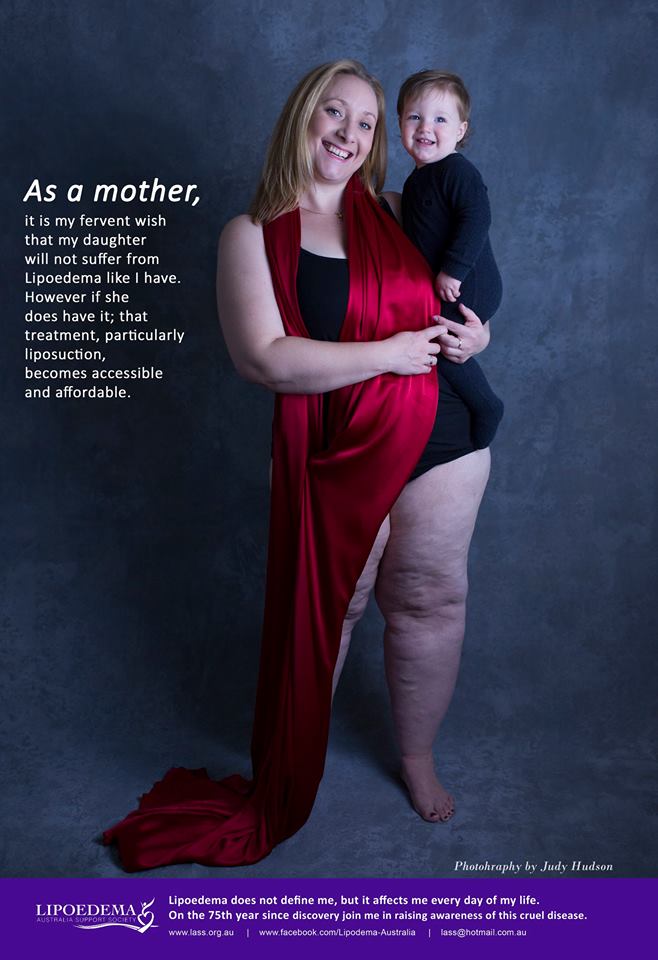
Poster from LASS (see above)
My husband and I decided to start a family in our 30s. I was lucky to have the ovulatory PCOS phenotype, so once my thyroid issues were treated, I never had any trouble with my cycles again and had no trouble getting pregnant, even into my 40s. I'm so glad we waited to try until after my thyroid issues were addressed!

I had four pregnancies between age 33 and 43, resulting in 2 girls and 2 boys. The first pregnancy was rough because there was no information on pregnancy at a larger size available then, and I encountered a lot of size bias in that pregnancy. I had a nightmare cesarean after a long hard induction and developed PTSD. Breastfeeding was rough at first because I got poor advice. Afterwards, I spent a lot of time educating myself about pregnancy and breastfeeding so I wouldn't go through anything like that again, and started my website to help other large moms get information and empowerment.

I had much better experiences with my later pregnancies. I did have another cesarean after a long hard labor with #2, but in some ways it was healing, even if it wasn't the birth I wanted. With my last 2 children, I had VBACs (Vaginal Births After Cesarean), and they went a long way towards restoring my faith in my body. So did breastfeeding all four of my children long-term.

Some women with lipedema find that pregnancy and birth worsen the lipedema. For the most part, my experiences were normal and I didn't experience the severe issues that some women with lipedema do in pregnancy. I didn't gain much weight and I didn't develop any serious complications.

However, I did gain more lipedemic fat in my abdomen with each pregnancy and I really started to feel the fat nodules under the skin there. This wasn't the result of pregnancy weight gain; I gained less than the weight of my babies with each pregnancy and ended all four pregnancies at about the same weight I started them. But despite being the same weight, I had quite a bit more abdominal fat afterwards. Classic lipedema.

Some women with lipedema find that pregnancy and birth result in secondary lymphedema. I did find I experienced severe swelling after the births of #1 and #4, but not the others. Why I had it with only some births but not others is not clear but it's interesting that I only experienced it with my daughters. Of course, birth interventions can also influence edema. It's my opinion that it takes a combination of factors to cause problems.

One major negative thing was that I had a LOT of back pain and joint issues (pubic symphysis and sacro-iliac joint issues) in my pregnancies. I had a lot of pain until I finally started seeing a chiropractor in my 3rd pregnancy. Since lipedema is associated with joint laxity and hypermobility, that (plus my history of car accidents) may well have been the source of my joint issues.

Seeing a chiropractor highly trained in pregnancy starting with #3 was extremely helpful in getting my back and pelvis aligned. It reduced my discomfort tremendously and helped the baby be in an easier position for birth. I strongly believe it was the reason I was able to have normal vaginal births (VBACs) with my last two children but not my first two. My last two babies were better-positioned and far easier to birth and I really credit that to the chiropractic care.

Despite being nearly 43 and "morbidly obese," my last pregnancy was my best. Even the edema and lipedema flare I had postpartum was a relatively small blip on the radar. Don't let the fact that some women with lipedema experience difficult pregnancies put you off having a baby; some women with lipedema do just fine in pregnancy. It's probably sensible to try to avoid the big interventions like inductions and cesareans whenever possible because they predispose to edema and complications afterwards. Remember that lipedemic bodies can give birth just fine naturally with a truly size-friendly provider.

Personally, I did not find that lipedema affected my pregnancies very strongly; my biggest difficulties were with weight bias/over-intervention by providers, and in dealing with hypermobile joints during pregnancy. However, I did find that pregnancy increased my abdominal lipedemic fat every time, despite almost no weight gain, and I did experience significant temporary edema after two of my births.

Perimenopause and Menopause


As I transitioned into middle age, I did find that my leg size increased quite a bit, especially as I went through perimenopause and menopause from my mid-40s to mid-50s.

More than simply a size change, the shape of my legs changed. I developed major fat pads and "folds" just under my knees, and I got some major-league "cankles" (calf-ankles). My arms have also gotten much larger now. I now have a truly significant amount of fat on my hips, abdomen, legs, and arms, and people really do stare. Although I am pretty at peace with my body in general, it's not always easy.

Clothing-wise, lipedema has made aging more challenging. Finding good clothing is always hit-and-miss due to my unique proportions. Cold weather outer gear and rain gear have been my biggest challenges, as I've written about before. I often have to buy men's gear, which goes to larger sizes than women's sizes but it is geared towards a big belly and no hips, which is not my shape. Still, it's better than nothing. I have found good coats in my size through Columbia Sportswear but I have yet to find a pair of rain boots, rain pants, or snow pants which really work well for me.

In summer, I do wear shorts and go swimming and the heck with anyone who doesn't like it. Most of the rest of the year I wear pants, the comfortable kind in cotton-and-spandex stretch fabric. I found my tolerance for restrictive fabric has diminished. Now, I mostly care about whether my clothes are comfortable. I wear pants or long skirts at work or when speaking to help others focus on me instead of staring at my legs. It's hard enough for people in our society to take fat people seriously; it's even harder when you have lipedemic legs. So in certain situations, I do cover my legs and arms to be taken more seriously, but that doesn't mean I always dress that way.

After some car accidents in my late 40s, I developed significant knee problems. I'm sure my weight didn't help the injuries, but I'd been at the same weight for many years without any problems so it wasn't all about my weight. Yet the orthopedic surgeon I consulted told me my knee pain could only have been caused by arthritis due to weight, despite an x-ray showing very little arthritis the year before the accident. He refused to do an MRI, saying it was pure coincidence that the pain developed after the accident. He was unwilling to treat my knee issues with anything other than weight loss or injections. We compromised on physical therapy but it didn't help. I haven't been back to an orthopedist since. I should have my knees replaced but am reluctant to risk having surgery cause a lipedema flare.

The difficulty in finding a doctor who doesn't blame everything on weight is a source of continuing major frustration to me, especially as I age. It's hard to be taken seriously as a person of size when you are young: it's even harder as a middle-aged woman. We are virtually invisible in society and especially in medicine.

Cancer


As if that wasn't enough, it gets harder. My lipedema was made worse by the fact that I was diagnosed with cancer in my mid-50s. Not any of the cancers that might be associated with weight, but lung cancer, a type of cancer that is completely unassociated with size. Talk about a shocker. I never smoked or had any other risk factors. The only possible risk was perhaps genetic ─ my birth father died of lung cancer in his late 50s ─ but doctors tell me this type of cancer is not directly inherited. Who knows why I got it.

My cancer was largely silent at first. I had very few major symptoms until it was advanced. The subtle early symptoms were things like breathlessness, some hoarseness, lack of endurance, and weak legs. I blamed it on being anemic and getting out of shape. I kept trying to get back into shape but just could not sustain my exercise program because it made me so fatigued. Yet nothing felt really alarming.

The first symptom that was really obvious and alarming was large lumps under my skin ─ subcutaneous tumors. At first I assumed they were lipedema nodules, but when they started appearing in areas not normally affected by lipedema (spine and shoulder) I thought they were lipomas (fatty benign tumors) or perhaps Dercum's Disease, which some patients get in addition to lipedema. However, the lumps on my body were not painful, unlike Dercum's Disease, so it didn't fit perfectly. I made an appointment to see a doctor but for various reasons the appointment got put off.

Eventually I developed severe respiratory symptoms. We thought it was pneumonia. I didn't see my normal care provider due to circumstances, and the other doctor didn't take it seriously. He should have done a chest X-ray but he didn't. He said it was just a sinus infection. We tried antibiotics but they didn't help. I kept going back to the doctor multiple times and he basically told me to tough it out and I probably just had asthma. (Cause you know, fat.) Due to all these delays, by the time my cancer was diagnosed, it had spread all over my body.

How did lipedema affect my cancer diagnosis? It certainly made it more difficult to figure out because we thought the subcutaneous tumors were part of lipedema or Dercum's. And of course the weight that goes with lipedema meant that my doctor did not take my respiratory symptoms, weakness, and fatigue seriously, even though they were very serious and debilitating. By the time my cancer was diagnosed, I was nearly dead.

I am lucky that my particular mutation of lung cancer does have some treatments available, and that means my prognosis is better than some. Many lung cancer patients die within the first year and I have already surpassed that. My targeted therapy treatments brought me back to life and made me mostly functional again. I'm not back to normal but I'm a lot better than I was! However, I am unlucky in that my cancer is not curable. It will likely kill me but the treatments are changing so rapidly that it's difficult to predict the future.

The cancer treatments and related complications have triggered the development of lipo-lymphedema ─ lymphedema on top of  the lipedema. This has been difficult. One of the side effects of my first cancer medication was severe ankle and foot edema. Although my feet had always been spared before (one of the defining aspects of lipedema), suddenly now I had massively swollen feet as well as legs. Eventually I changed medications and my foot swelling went away, but I still struggle with leg lymphedema.

I have to be honest; the increase in leg size has been quite challenging. It makes it harder to get around and it's very tiring. Cancer often involves muscle wasting; a lot of food energy is diverted to the tumors and the cancer starts cannibalizing your own muscle for additional energy. To be a large person with lipedema and then experience muscle wasting means that mobility becomes a real issue. After a stay in Intensive Care, I had trouble walking for a while. I had to go to rehab and get physical therapy before I could return to my home. Now I am much improved, but walking is still definitely exhausting and I don't go all that far. I miss taking a nice walk but am trying to build that up to that again.

Dealing with Lipedema


Dealing with lipedema has not been easy over the years, but has definitely gotten more challenging as I have aged and other health challenges have arisen. When I was younger, it was more of an aesthetic problem and a problem with finding clothing than a real interference in my life. It didn't affect my mobility much and I did most things I wanted to do. However, lipedema plus cancer has now affected my mobility and I find that very difficult, though I try not to let it get me too down. I work hard not to let lipedema or cancer define my life, but it's not easy some days.

The things that I have not found helpful in my lipedema journey are dieting of any kind and rigid attitudes about food. I don't follow either an anti-inflammatory diet nor a ketogenic diet; these approaches are simply somebody's guess at a treatment; there is absolutely NO proof that they help. At this point, nobody's even tested them so it bothers me to see them talked about in lipedema circles as if they are a proven treatment. They're not.

Unfortunately, many people in the lipedema community are still stuck in the dieting mentality and weight loss emphasis. Food restriction is a strong thread in many lipedema and medical organizations' guidelines. That is very off-putting to many people of size who would otherwise involve themselves in the lipedema community. Many care providers try to be understanding about weight issues, but the one thing most cannot understand is clients not actively trying to lose weight. They have been taught the "good fatty/bad fatty" paradigm; you can be fat, but that's no excuse for not continuing to try to lose weight. But for me, trying to lose even the 5-10% doctors recommend means playing Russian Roulette with my body because weight loss always ends in a rebound for me. Furthermore, I refuse to be a famine victim anymore. I'm done trying to starve myself.

Many women with lipedema, especially the more severe cases, choose weight loss surgery to try and cope with the physical effects of so much weight. This is a personal decision made by each woman and I am not here to judge it. However, from what I've seen, I don't believe it's very effective long-term for lipedema. Weight loss is mostly from other parts of the body and only minimally from lipedemic areas, and significant regain is very common after a few years. Personally, I am not interested in weight loss surgery of any kind because I have seen too many people with bad side effects after a few years. Lipedema is bad enough without adding malnutrition issues. But that's my choice; everyone gets to make their own choices about it.

Of course, we don't want to add to our lipedema by being excessive. I try to be sensible about carb intake and not over-indulge, but neither do I abstain from carbs, including sugar. I just try to be reasonable. My motto is everything in moderation (including moderation!). I try to avoid getting neurotic over food or making "good food/bad food" judgments; that is eating-disordered thinking. Some food is healthier for you than others but that doesn't make you a better person for eating it, nor will it make you skinny. I hear friends trotting out the usual "it's-a-lifestyle-change" cliché but if it eliminates major food groups or is highly restrictive, it's still a diet. Food Police moralism isn't helpful. Food is just food; simply be sensible about it.

I try to follow Health At Every Size® (HAES) paradigm instead of a weight-centric one. HAES is a health approach that de-emphasizes the scale, restrictive eating, and punitive exercise; it encourages intuitive eating and enjoyable movement. I aim for weight stability and reasonable eating habits, and use lab results to guide my health and nutrition decisions. I find my weight stays reasonably stable with that approach.

The cancer has made nutrition more challenging because the meds change the sense of taste and food is often very unappealing. Muscle wasting and malnourishment from cancer is real even for fat people, an irony which is not lost on me. My oncologist has emphasized the importance of eating and getting enough calories, even if they are not "perfect" nutrition. It's hard to let go of all the pressure from people to eat this or avoid that to "fix" my cancer, but my doctor says it's more important to just eat. Your body needs energy to deal with the cancer.

The care practices I personally have found most helpful in my lipedema journey include chiropractic care, medical massage, and complete decongestive therapy. The chiropractic care and massage helps address the hypermobility problems and muscle tightness than can occur. After I developed lipo-lymphedema from the cancer treatments, I found that Manual Lymph Drainage (MLD) and compression were immensely helpful in preventing some of the skin complications. At one point in cancer treatment, my legs had such severe swelling, my skin cracked and leaked lymph fluid. I developed a mild cellulitis infection, which we were fortunately able to nip in the bud with antibiotics. I've had to become much more careful about caring for my legs and keeping down the swelling. With MLD and compression, they are doing okay.

If I had unlimited money and no cancer, I would pursue specialized liposuction for the lipedema; it has to be done by specially trained doctors. Proper compression afterwards is critical. Research so far shows this type of liposuction to be quite helpful for many people. Sadly, most insurance will not cover this and my budget does not allow it, but it may be a valid choice for some people with lipedema.

Emotionally, I find it difficult to deal with the judgment heaped on people of size. When you say that you have lipedema, people think you are just making excuses. That I find really frustrating, especially when it comes from friends. I know some think I could lose weight if I tried harder, and that hurts. But I can't control what other people think, and anti-fat bias is so prevalent in our society it's no surprise they think that way. I try not to let those biases get in the way of friendship as long as they are respectful.

While I can't honestly say I'm thrilled with the appearance of my legs or arms, I don't let it bother me too much because there's realistically very little I can do about it. I don't like being stared at, but I try to see it as the other person's issue, not mine. Remember that how people react to you often has more to do with their own fears and insecurities, not yours. Let condemnation and judgment roll off of you.

I personally have been fortunate to have never struggled with depression the way that many people with lipedema have. That doesn't mean that dealing with lipedema and with cancer has not been frustrating or upsetting; it most certainly has! But depression is not one of my issues and I know that's lucky.

However, anger is one of my issues. Sometimes it makes me SO angry that I've been saddled with PCOS and hypothyroidism and lipedema. Talk about a genetic triple whammy! That is incredibly frustrating. And now cancer on top of that?!??! So incredibly unfair!!!!!!!

Having all of those conditions just sucks and I do sometimes indulge in the "Why me?" game. Sometimes I throw myself a really good pity party and let myself wallow in it for a while. I think that's reasonable and healthy ─ after all, having these conditions DOES suck and it is TOTALLY unfair. It's important to acknowledge and mourn your challenges and let yourself be angry. But spending too much time in anger is not healthy either; I don't want it to keep me from experiencing the positive things in life. So I pick myself up, brush off the negativity, and remind myself to count the blessings I do have. That helps counterbalance my pity party days.

Being adopted has added to my emotional frustration; I would really like to know more about my birth parents' genetic heritage so I could see how genetic any of this really is. I know there is an extremely strong history of diabetes and autoimmune disease on my birth mother's side, which leads me to suspect an autoimmune component to lipedema. However, it's been difficult to get more detailed information. I know there's a strong history of cancer on my birth father's side, and that he died of lung cancer at about the same age as I am now. However, there's no way to know if it's the same type of lung cancer or not, and we'll never know. That's a difficult burden, because I don't know how concerned to be for my children.

I try to remind myself that I also have good genes that balance these unfortunate ones, and I hope I passed on those good genes to my children. I try to remember the blessings I did inherit. Of course I have worries about my lipedema. How could I not? But now they've been supplanted by bigger worries, namely cancer. In the long run, lipedema is small potatoes compared to cancer. So while we have every right to be upset about our lipedema, remember to keep it in perspective. There are other challenges out there too. Keep it all in perspective.

Some days it's hard to be positive but mostly I look at my children and my spouse and feel blessed.

Final Thoughts


To summarize, I believe I've had lipedema my whole life, to one degree or another. I was never a "normal" size and I always had a pear shape, even as a young child. Puberty made it worse.

However, the lipedema really kicked into high gear as a young adult and I gained a tremendous amount of weight despite doing everything I could to stop it. Lipedema probably acted synergistically with PCOS and hypothyroidism and that's why the weight gain was so severe.

Dieting seemed to make the lipedema worse. The dieting made me gain weight rather than lose it over the long run, plus it took me close to an eating disorder. For me, it was much healthier to stop actively trying to lose weight. Instead, I follow the Health At Every Size approach and that has been incredibly helpful to me.

The lipedema in my legs and especially my belly got mildly worse with all my pregnancies and I had significant foot/leg edema after two of my pregnancies. However, other than that, it really didn't affect my pregnancies too much. I was fortunate in that way.

The lipedema got worse with peri-menopause and a major car accident but I was still mostly functional. My diagnosis of cancer threw a new wrench into the mix. The treatments for cancer made me develop lipo-lymphedema and I have struggled with that, but Manual Lymph Drainage and compression has helped. My mobility took a big hit; for a while I was in a wheelchair but I can now walk and climb stairs again.

While lipedema and cancer give me significant challenges, I get on with my life and I don't let it derail my happiness. I don't let it silence my voice, my contributions, or my opinions. I will not let the lipedema or the cancer define me.

I try to make sure that I continue to live my life with joy and purpose. Lipedema does interfere with my life, but I refuse to let it make me unhappy or to take away my pleasure in the important things of life. Cancer may take my life eventually but I will live as fully and as joyfully as I can until then.

How has lipedema affected you? And how do you try to handle it proactively?

Wednesday, June 13, 2018

The Lipedema Series

Sculpture by Marie-Madeleine Gautier
Over the years I have written a series of blog articles on lipedema (also spelled lipoedema), sometimes known as "painful fat syndrome" or "big leg syndrome." These have become some of my most popular articles.

Since June is Lipedema Awareness Month, I think it's time to add a link where you can find all of the series listed in one place.

Lipedema is a fat storage disorder. In lipedema, an abnormal accumulation of fat occurs in the legs and lower body. Over time, it may develop to include the arms and other parts of the body as well. It is usually progressive, though why it progresses severely in some and not in others is one of its great mysteries. 

Here is what we have covered so far:

Part One - Typical features of lipedema and how to differentiate between lipedema and lymphedema

Part Two - Different stages of progression, and why it's so important to be aware of lipedema

Part Three - Types of fat distribution patterns, pictures illustrating type and stage of lipedema, how lipedema is diagnosed

Part Four - Possible causes of lipedema, medical conditions associated with it

Part Five - Possible treatments for lipedema, broken down into several sub-posts

    Traditional Medicine Treatments - Manual Lymph Drainage, Compression
    "Weight Control" and Special Nutritional Approaches (trigger warning)
    Tumescent Liposuction - Specialized liposuction to take out diseased fat cells
    Alternative Medicine Treatments - Acupuncture, herbs, etc.
    Summary of Treatment Options - Summary of all the various treatments

Part Six - Coping with clothing challenges

Part Seven - Weight Bias in Lipedema Care (Part of the Turkey Awards Series)

Part Eight - Living Your Best Life with Lipedema

In addition, there have been some other miscellaneous posts about lipedema. These include:

References and Resources

Statues by Rachel Stams, Suze, and Brigitta Custer

Info About Lipedema and Support Groups

*Trigger Warning: Many of these sites are not fat-friendly or promote dieting behaviors


Monday, February 29, 2016

Zebra Awareness: Rare Disease Day

Medical students are taught to "think horses, not zebras" when diagnosing
a condition. In other words, consider first the most likely condition. In people
of size, this means that weight is often blamed and other explanations ignored.
Weight bias keeps many conditions from being diagnosed in high-BMI people.
February 29th is Leap Day, otherwise known as Frederick's Birthday to music nerds everywhere (think Pirates of Penzance ─ "...A paradox, a paradox, a most ingenious paradox....").

More importantly, today is also "Rare Disease Day," a day to call for more attention and research into rare serious illnesses. The National Organization of Rare Disorders states that in order to be a rare disease, there have to be fewer than 200,000 affected individuals in the United States. As one news release states:
Of the 7,000 diseases classified as “rare,” only about 400 have an effective treatment. Research of diseases that affect a tiny percentage of the population is woefully underfunded, say advocates from the National Organization for Rare Disorders (NORD), the national sponsor of Rare Disease Day.
Today this blog focuses on rare illnesses in honor of Rare Disease Day, but especially those that get ignored or shrugged off simply because the sufferers are fat. Sadly, weight bias plays a significant role in the under-diagnosis of and under-attention to many conditions in high-BMI people, and rare illnesses are no exception.

To raise awareness of rare conditions impacted by weight bias, here are a few brief descriptions.

Numerically Rare 

Dercum's Disease, sometimes known as Adiposis Dolorosa or Painful Fat Disorder, is a Rare Adipose Disorder (RAD). In this condition, small fatty growths (lipomas) occur under the skin and cause significant pain, perhaps by pressing on nearby nerves. These growths usually occur mainly on the trunk, upper legs, and upper arms. Swelling and significant weight gain are common in people with Dercum's Disease. Other symptoms can include fatigue, weakness, easy bruising, headaches, stiffness, irritability, depression, and memory or concentration issues.

Madelung's Disease, also known as Multiple Symmetric Lipomatosis (MSL), is another Rare Adipose Disorder. It also involves small fatty growths (lipomas) but these occur primarily on the neck, shoulders, upper arms, and upper trunk, while the rest of the body is average-sized or even thin. Its onset is characteristically later in life, between 30-60 years. Although it is most often found in alcoholic men of Mediterranean descent, it can be found in non-alcoholic women too.

Cushing Syndrome is an endocrine disorder caused by too much cortisol. It can result from external sources (like long-term use of steroids for another medical condition) or internal sources (a benign pituitary tumor causing the adrenal glands to produce too much cortisol). It results in weight gain, a highly rounded face and upper body, and truncal fat, while the arms and legs are typically average-sized. Thin purple streaks may appear on the skin, and the skin can be very fragile. Acne, facial hair growth, irregular periods, thinning scalp hair, high blood pressure, high blood sugar, and osteoporosis are common sequelae.

Intracranial Hypertension is an extremely debilitating disorder that is more common among women of size, although it can happen in people of any size. It is caused by a build-up of pressure within the skull due to too much cerebral spinal fluid. It results in massive, unrelenting headaches. In addition, it often results in vision changes and pulsating tinnitus. It can mimic the symptoms of a brain tumor, which is why it is sometimes called Pseudotumor Cerebri, though this is considered an outdated term by many now.

Autoimmune Thyroiditis is a chronic inflammatory condition of the thyroid, also called Hashimoto's Disease, in which the body's immune system periodically attacks the thyroid. Its symptoms commonly include unexplained weight gain, intolerance to cold, hair loss, menstrual irregularities, fatigue, and dry skin. It may exist as a condition on its own but often exists in conjunction with other conditions like PCOS and lipedema. (Although NORD lists this as a rare disorder, I think it is far more common than believed.)

Ehlers-Danlos Syndrome is a "group of hereditary connective tissue disorders characterized by defects of the major structural protein in the body (collagen)." Collagen helps hold together, strengthen, and provide elasticity to body tissues. There are several sub-types, with symptoms ranging from fairly mild to severe. Many people with lipedema (see below) have Ehlers-Danlos Type III, or hypermobility. Symptoms include lax joints, chronic joint pain, frequent tendinitis, and early development of osteoarthritis. Fragile tissues, including skin and blood vessels, are also common, leading to problems such as easy bruising and poor wound healing.

Hidradenitis Suppurativa is a skin condition that commonly presents as swollen, painful skin lesions in particular areas of the body (including armpits, groin, perineum, and breasts). It can begin as blocked or infected hair follicles or sweat (apocrine) glands. A hard, boil-like abscess filled with pus forms. In severe forms, these can form clusters of lesions and significant scarring can occur.

Acanthosis Nigricans is a skin condition characterized by darkened coloration and a "velvety" texture. It usually is seen in skin fold regions, especially in the groin area, under the arms, or on the neck. It is associated with insulin resistance, so it's common in women with Polycystic Ovarian Syndrome (PCOS). Although AN is usually relatively benign, there is a more aggressive form that can be associated with tumors.


Not Numerically Rare

There are other disorders that are commonly underdiagnosed in fat people because of weight bias. Even though these don't meet the 200,000 cases cut-off, these conditions tend to be chronically under-researched, under-funded, and under-treated, just like rare diseases.

And just like those who have rare diseases, many of these people face devastating medical problems, difficulty getting a diagnosis, difficulty finding information about their condition, and limited treatment options. Many feel very alone in facing their condition, especially when their weight is constantly blamed for their symptoms and they are continually given weight-loss prescriptions that may make things worse.

So even though the following conditions aren't truly "rare," the weight bias surrounding them means that many get treated like rare conditions do. Therefore I am including them as an addendum to my list.

Lipedema/lipoedema is called a "Rare Adipose Disorder" too, just like Dercum's and Madelung's Diseases, even though lipedema's incidence is estimated at about 11% of the population. The National Institute of Health's Genetic and Rare Diseases Information Center website does list lipedema on its site, though with an asterik stating that lipedema is not a rare disease.

However, as we recently discussed, weight bias has impacted the diagnosis and treatment of lipedema significantly. As one study put it:
This frustrating genetic disorder of fatty deposition is not particularly rare, but is rarely diagnosed because clinicians fail to recognize it.
Lipedema is characterized by a symmetrical enlargement of the lower body (waist to ankles) and sometimes the arms. It is bilateral (on both sides) and typically does not involve the feet. It tends to get worse at times of hormonal changes (puberty, pregnancy, menopause, gynecological surgery) and can cause sudden unexplained weight gains that do not respond to diet and exercise. In later stages, severe lymphedema can also develop, mobility can be affected, and skin infections can occur.

Polycystic Ovarian Syndrome (PCOS) is estimated to affect about 5-10% of the population, and can greatly impact a woman's hormones, menstrual cycle, fertility, and metabolism. Other side effects can sometimes include acne, hirsutism (unwanted hair growth on the face or body), alopecia (hair loss on the head), and cysts on the ovaries. Insulin resistance is deeply entwined with most cases, so there is a strong tendency towards weight gain, as well as diabetes and high blood pressure.

PCOS has become more recognized by the medical establishment in the last few years. Even so, many women with PCOS still go undiagnosed for years, receive substandard or shaming treatment, or are only given lectures about diet and exercise instead of being offered a wider range of care options. PCOS is certainly under-researched, with most of its research focusing narrowly on fertility and menstruation rather than whole-life health implications, and its research and treatment is quite impacted by weight bias.

Closing Thoughts

These are but a few of the rare diseases that can impact high-BMI people; there undoubtedly are many more. If you have others you'd like to share, please put them in the comments section.

Of course, there are many rare diseases that deserve attention and research dollars. Sadly, weight bias means that many of the above conditions are losing out in the race for research money, and that many people of size are not being appropriately treated for these conditions.

It's time to change that.


Wednesday, July 1, 2015

Lipedema, Part 4: Possible Causes and Associated Conditions

You can read the story of this mother
and daughter with lipedema here.
We have been talking about Lipedema (also spelled Lipoedema, as to the left), sometimes known as "painful fat syndrome," as part of Lipedema Awareness Month.

In this condition, an abnormal overgrowth of fat cells occurs in the legs and lower trunk, sometimes also including the arms or upper body as well.

Lipedema is rarely recognized by doctors. Often it is thought to be simple obesity, or it is confused with "lymphedema," the accumulation of lymph fluid in the interstitial areas.

In Part One of this series, we discussed the typical features of lipedema and how differentiate between lipedema and lymphedema.

In Part Two of the series, we discussed how it progresses, the different Stages of progression, and why it's so important to be aware of lipedema

In Part Three of the series, we discussed the different Types of fat distribution patterns, looked at some pictures to illustrate Type and Stage of lipedema, and detailed how lipedema is diagnosed.

Today we discuss the various theories of what might cause lipedema, as well as conditions that are often associated with it.

In later installments, we will discuss treatment options, as well as practical suggestions on how to deal with lipedema.

What Causes Lipedema?

No one knows what causes lipedema, but there are several theories floating around. More than one of these theories is probably involved.

Hormonal

Since lipedema is diagnosed almost exclusively in women and usually gets worse starting around puberty, most researchers assume it is hormonal:
As lipedema appears to be expressed most commonly at puberty, it is reasonable to assume that hormonal influence underlies the marked female limitation shown in our studies to date
Since lipedema often gets worse during times of major hormonal shifts, like puberty, pregnancy, and perimenopause, many researchers suspect that estrogen somehow plays a role in its development.

The estrogen connection is logical because usually only women are affected. However, occasional case reports of males can be found in the medical literature, usually secondary to other causes like liver issues.

On the other hand, some people with lipedema believe that males are also affected by lipedema but its presentation in males simply goes under-recognized because it does not have the classic pear shape that women get. It might be that male sufferers instead have an increased tendency towards weight gain or lymphedema but avoid the pear shape or extreme leg size that women tend to get.

It is also conceivable that males might merely be carriers of the traits, even if they don't present with symptoms themselves. Either way, it would be revealing to look in more detail at the close male relatives of women with lipedema.

However, estrogen can't be the only answer to lipedema because all women go through puberty, most go through pregnancy and menopause, yet only some develop lipedema. And there are lots of women who develop pretty severe lipedema even when they are childless or have not been through menopause yet. There has to be more to the story.

Estrogen-related events may trigger a cascade of reaction that makes lipedema worse, but it seems obvious that there has to be some other underlying issue to be triggered.

Genetics

It seems clear there is a strong hereditary component to lipedema. Anecdotally, it often seems to be handed down from generation to generation. In the research, reports of family history of lipedema ranges from 16% to 45%.

The hereditary link is not 100%, of course. Few things are. Lipedema can occur without a family history of it. But just as a tendency towards certain heights tends to run strongly in families, so does lipedema.

The picture below shows a mother and a daughter with Type III (full leg) lipedema.

The mother looks to be in Stage 3, with orange-peel texture on her skin, large fat pads on the knees, and the classic bracelet of fat at the ankle.

The daughter looks like she is transitioning into Stage 2. Her skin is mostly still smooth but starting to change, she has overgrowth at the hips, and fat pads are just starting at her knees. The beginnings of a bump at the ankle can be seen if you look closely.

Attempts have been made to document the family trees of people affected by lipedema. Although not every woman in family histories is affected by lipedema, there often does seem to be a history of at least a few women with notably big legs, hips, or arms.

This led some researchers to propose that lipedema is "a genetic condition with either X-linked dominant inheritance or more likely, autosomal dominant inheritance with sex limitation."

However, this has not yet been conclusively proven. At this time, no specific genes responsible for developing lipedema have been identified.

Inflammation

Some researchers now believe that inflammation plays a key role in lipedema. This is the trendy theory on many lipedema websites now, with many women promoting "RAD" (Rare Adipose Disorder) anti-inflammatory diets in hopes of halting the progression of lipedema or lessening its symptoms. One lipedema resource states:
Lipedema is...an inflammatory reaction to our environment, processed foods, high carb diets, hormonal events such as pregnancy and menopause and chronic, everyday, or event related stress.
That seems an overstatement of the evidence to me; we do not really know yet if lipedema is caused by an inflammatory reaction. And lots of other people are also exposed to processed foods, a toxic environment, and extreme stress, yet never develop lipedema. So again, there has to be more to the picture.

However, that's not to say that an inflammatory reaction could not be part of the picture. But is it really the main source of lipedema-related issues?

Many women with lipedema report that at times they have experienced a flare, a sudden MAJOR worsening of their lipedema despite no changes in diet or exercise, sometimes also with lymphedema, infection, or a change in skin texture. Some have come to call this an "inflammatory cascade."

If the inflammation theory is true, then people with lipedema may be able to minimize their condition by avoiding foods that tend to be inflammatory (dairy, sugar, and gluten are the usual culprits named), avoiding stress, and avoiding possible environmental triggers like the chemicals in plastics.

On the other hand, the field of nutrition, weight management, and alternative medicine is filled with fad diets and nutritional trends. The anti-inflammatory diet is extremely trendy these days, so it's not surprising to see inflammation proposed as the cause du jour in various diseases. It's far from proven that inflammation is the main culprit behind lipedema flares, though it could be one piece of the puzzle.

Bottom line, we should not jump to too-broad conclusions about inflammation's role without good supporting evidence. Women with lipedema may have prematurely latched on to an anti-inflammatory diet as a "cure" because it gives them a sense of control and a magical totem against the possibility of developing severe disabling complications.

Lipedema experts these days recommend many different diets, not just anti-inflammatory ones. Take the anti-inflammatory buzz with a big grain of salt, but don't dismiss it either. An anti-inflammatory diet is mostly just common sense, and it's probably good for everyone to avoid plastics and highly processed food anyhow. It's unlikely to harm anyone if it is reasonable and moderate. Women with lipedema may want to try a RAD diet ─ not for weight loss, but to see if it helps their symptoms. But don't take it as a guarantee that it will help.

On the other hand, no one is obligated to follow an anti-inflammatory diet just because they have lipedema. Some lipedema groups lay a pretty heavy guilt trip on anyone not following an anti-inflammatory diet, despite the lack of proof of any benefit from it. Remember, at this point, its value is unproven. In the end it may be shown to have some effect, but at this point, it's all conjecture.

Inflammation is an intriguing theory and deserves to be investigated more thoroughly. However, inflammation is an unproven theory, and this must be kept in mind.

Auto-Immune System

Some people also speculate that lipedema may have an auto-immune component. This seems to tie in with the inflammation theory in that the inflammation may be an auto-immune response to insidious environmental cues around us, including food sensitivities, plastics, or estrogen-promoting foods and substances.

Although there is little proof of ANY of these theories at this time, an auto-immune connection is one theory I am inclined to take seriously, since anecdotally, many women with lipedema also report high rates of autoimmune diseases running in their families, such as thyroid issues or lupus.

Of course, the same argument made against the inflammation theory can be made here. Autoimmune is another trendy theory these days, so caution must be applied when considering it too.

Endocrine Issues

Lipedema often seems to be accompanied by endocrine issues, leading some to speculate that this may be the original trigger for the overgrowth of fat cells or inflammation cascades.

One lipedema article states, "90 per cent of...cases have accompanying diagnoses of hormonal disturbance (thyroid, pituitary, or ovarian)." And the new Dutch guidelines on lipedema encourage testing patients for various endocrine issues.

On the other hand, many lipedema resources do not pay much attention to endocrine problems as a possible cause. In my opinion, this is a vastly under-researched aspect of lipedema and I would like to see MUCH more research done on it in the future.

Honestly, lipedema reminds me a bit of acromegaly. It's not the same condition at all, but the process behind it might have some similarities. Acromegaly occurs when a benign pituitary tumor causes too much Growth Hormone to be produced, and as a result the body size increases immensely, though in different ways than lipedema (affecting bones and certain soft tissues rather than fat cells). People with acromegaly grow so much they can end up very tall, with large hands, feet, jaw, prominent forehead bulges, and enlarged organs.

What if there were something similar happening with lipedema? What if the pituitary overproduces (or underproduces!) an important hormone and this causes hypertrophy/hyperplasia of fat cells? Wouldn't that explain why some people have such overgrowth of fat, despite strict diet and exercise? And why so many people with lipedema seem to have other endocrine issues? And why people get lipedema in such differing severities?

It just seems to me that some sort of endocrine issue HAS to be involved somewhere in this condition, and pituitary seems logical since it is the "master gland" controlling the other glands.

However, as with the other theories, there is no proof of any connection between pituitary issues and lipedema, so this idea also has to be taken with a large grain of salt. 

Abnormalities of the Lymph and Vascular System

It's possible that lipedema may only develop in people with underlying abnormalities in the vascular or lymph system, as one resource notes:
Foeldi and Foeldi have proposed that microangiopathy in the area of the affected adipose tissue sets off the condition leading to increased permeability to proteins and increased capillary fragility. 
Dr. Karen Herbst, one of the most pre-eminent specialists in Rare Adipose Disorders, speculates that abnormalities in the way the body transports fluids is at the heart of the problem in lipedema. She notes:
...Fat in lipedema...[shows] copious amounts of watery fluid upon incision of lesions and of ‘free fluid fat’ in biopsy specimens. The increased fluid suggests a basic abnormality in the interstitial transport and exchange of fluid, with resulting disruption of fat and accumulation of fluid due to increased hydrostatic pressure. So this means that fluid is either entering fat at a faster rate or leaving fat at a slower rate. In fact, both are likely to be true. I think lipedema has problems in both lymphatics and blood vessels.
In other words, the capillaries that supply fat cells in lipedema women are fragile and damage easily, resulting in frequent bruising. In addition, they may be more permeable and leak proteins into the spaces around fat cells. These proteins tend to attract lymph fluids and cause swelling. The lymph system itself may also be somewhat defective, and the two of these factors (vascular permeability and lymph fluid transport issues) can add together to make things worse.

Summary

The bottom line is that nobody really knows what causes lipedema, but it's probably a combination of several things. One recent hypothesis proposes:
Lipedema is an estrogen-regulated polygenetic disease, which manifests in parallel with feminine hormonal changes and leads to vasculo- and lymphangiopathy. Inflammation of the peripheral nerves and sympathetic innervation abnormalities of the subcutaneous adipose tissue also involving estrogen may be responsible for neuropathy. Adipocyte hyperproliferation is likely to be a secondary phenomenon maintaining a vicious cycle.
This is more or less saying "all of the above." In all likelihood there is a tendency to inherit lipedema, perhaps through an underlying problem with the lymph or vascular system. Or perhaps it's underlying endocrine or autoimmune issues, with a strong sensitivity to inflammation and estrogen exposure. Or perhaps it's all of these, or something else entirely.

Whatever the combination is, it tends to create overgrowth of fat cells in certain areas. It is not yet known whether this is due to hypertrophy (an increase in size of fat cells) or hyperplasia (an increase in number of fat cells) but it's probably both.

These fatty deposits have particularly fragile capillaries that tend to leak fluids and proteins. These stress the lymph system over time, leading to the secondary development of lymphedema in some cases.

One major question that lingers in my mind is why some women do not progress very severely in their lipedema, yet other women do. Some never go beyond Stage 1 or Stage 2, yet others rapidly develop Stage 4 lipo-lymphedema. Why do some experience such severe manifestations of this condition and others do not?

If we can figure this out, I believe we will find many of our answers about the base cause of lipedema and how to treat it.

Possible Associated Conditions

Many women with lipedema also have other conditions, commonly referred to as "co-morbidities." Here are a few that are commonly seen.

Hypothyroidism or Other Endocrine Issues

As noted above, there may be a connection between lipedema and endocrine issues.

Two of the leading experts in the field note that many women with lipedema have thyroid issues. If you think you have lipedema and have not been diagnosed with hypothyroidism, you might want to have your thyroid levels checked periodically.

Please note that it's important to read up on the controversies of thyroid testing before having these labs drawn. Have the Free T3 and Free T4 levels checked as well as the TSH levels.

Get your exact numbers, and know how your lab defines normal and abnormal results.  Compare your results to various cut-off recommendations; don't accept just "normal" or "borderline" from your care provider. Different doctors and labs use different cut-off recommendations; the same reading can get you an "abnormal" flag from one provider and a "normal" flag from another provider.

Although not all "borderline" numbers need treatment, many people with borderline thyroid numbers and symptoms find they benefit significantly from treatment. In my non-professional opinion, the presence of lipedema plus a TSH around 2.5 or more and symptoms of thyroid issues deserves consideration of a careful trial of meds, especially if there is a history of autoimmune issues in your family. You may need to seek out a naturopath, integrative medicine specialist, or other "alternative" practitioner in order to get this treatment, however, as many traditional doctors will not treat unless the TSH number is well above 5.5.

Some women with lipedema also find that they have adrenal issues, especially adrenal fatigue. This seems not uncommon in women with thyroid or other endocrine issues. Some lipedema doctors recommend getting adrenal testing to check adrenal functioning. However, whether adrenal fatigue is real is controversial in some circles.

Again, some speculate there is a connection between lipedema and pituitary issues. Since the pituitary is the "master gland" controlling all the other glands, perhaps that is the real source of the thyroid or adrenal issues, rather than something limited only to those specific glands. 

Polycystic Ovarian Syndrome (PCOS)

PCOS seems to be a common co-condition with lipedema, although many women with PCOS do not have lipedema. Since women with PCOS tend to have an excess of estrogen compared to progesterone, and since lipedema seems to be associated with estrogen-related life changes (puberty, pregnancy, perimenopause), it seems logical that there could be a crossover between PCOS and lipedema.

Typically, women with PCOS have "apple-shaped" bodies (lots of abdominal fat but average-sized legs and hips), which doesn't fit the lipedema body type at all. However, some women with PCOS have more of a pear-shaped body and might want to look at the symptoms of lipedema more closely.

Many women with lipedema have symptoms of PCOS and borderline thyroid levels. It's my own unscientific observation that these women often have fibromyalgia as well.

Not much research has been done on a possible connection between PCOS and lipedema, but this is an area ripe for exploration in the future. Best guess is that many women who have both PCOS and lipedema will benefit from treating their PCOS. It won't make the lipedema go away, but it might help lessen its impact and progression.

Insulin Resistance

Many women with lipedema also have strong insulin resistance, perhaps related to concurrent PCOS.

On the other hand, most doctors would blame the obesity common with lipedema as the reason for insulin resistance. But insulin resistance and obesity is a chicken-and-egg question ─ which causes which? Was there an underlying insulin resistance which predisposed the woman to gain a lot of weight and worsen the lipedema? Or did the person gain a lot of weight first and then develop insulin resistance and worsening lipedema?

Women's experiences suggest that the insulin resistance usually comes first and predisposes to everything else later, but it's hard to prove that. And of course, weight gain may make everything worse in a vicious circle.

Either way, if you have lipedema, you should check your insulin levels. If they are high, it would probably benefit you to try to normalize them. It might not affect the lipedema much, but it might help lessen further weight gain, and it probably would lessen the risk for diabetes, stroke, and heart disease later on.

Nutritional Deficiencies

Some resources note that many women with lipedema have very low levels of Vitamin D, iron, and Vitamin B12. No one is sure why this might be, but there are a couple of theories around.

Vitamin D is fat-soluble, so most doctors assume that extra fat sequesters Vitamin D in the body, making it less available in the blood. However, other doctors point out that there is actually no proof of this theory and it's often promoted as fact when it is really just a theory with no supporting evidence. Whatever the reason, many doctors now believe that high-BMI people need higher doses of Vitamin D supplementation than average-sized people.

Low iron levels (or low ferritin levels, which lead to iron-deficiency anemia) may be associated with hypothyroidism. This may particularly be a problem for women in perimenopause, when some experience very heavy periods before their bodies shut down menstrual cycles altogether.

People with hypothyroidism can tend to have lower stomach acid, which may be one reason why they don't absorb dietary iron or Vitamin B12 very well. Low stomach acid can also predispose to intestinal yeast overgrowth, which may also inhibit absorption of nutrients.

If women with lipedema have higher rates of hypothyroidism, and if hypothyroidism tends to lower stomach acid and make it harder to absorb certain nutrients, then it makes sense that women with lipedema might have more nutritional deficiencies. On top of that, years of restrictive dieting and bariatric surgeries like gastric bypass put some women even more at risk.

Some women with lipedema report improvement with an anti-inflammatory diet, as noted above. This diet often involves leaving out dairy and gluten, among other things. Interestingly enough, people with low stomach acid often report having trouble with dairy and gluten. So perhaps there is a connection.

None of these connections have been proven conclusively, but they certainly are interesting. Perhaps taking out dairy and gluten can help, or perhaps increasing stomach acid levels (via daily apple cider vinegar or Betaine consumption) makes it possible to process those foods more easily and improve levels of ferritin, Vitamin D, and Vitamin B12.

Either way, women with lipedema (especially those with hypothyroidism) should watch for nutritional deficiencies and treat if needed.

Eating Disorders

A number of lipedema resources note the possibility of eating-disorders. One clinic in Germany found that 74% of their patients with lipedema had eating-disordered behaviors.

This is probably an overestimate. Most women with lipedema do not have true eating disorders, but some have flirted with them. Others clearly do have eating disorders, and that must be addressed in order to improve health.

Eating disorders can occur with lipedema because people have spent years being shamed and lectured into trying to lose weight. Yet lipedemic fat is extremely resistant. Often their approaches get more and more extreme as each diet fails. Is it any wonder, then, that some develop eating-disordered behaviors?

Some do truly develop into the binge-eating, housebound stereotype that TV programs love to feature. Some overeat for emotional reasons. Some learn to binge and purge to try and control their weight. Others become fat anorexics, following rigid diet restrictions and extreme over-exercising in a futile effort to control their size. The study from Germany found that 16% of their lipedema patients were actually anorexic in their behaviors, more than were bulimic or binge-eaters.

Although most people with lipedema do not have eating disorders, it's important to recognize that some do, and that this is a recipe for serious difficulties. Care providers shouldn't automatically assume that a woman with lipedema has an eating disorder, but if one exists, it is vitally important that it get treated too.

Immune System

Some resources describe a generally depressed immune system in women with lipedema. This may make you prone to easily getting illnesses and having a hard time healing from them.

Whether this is a function of the lipedema itself or the possible accompanying issues (i.e. hypothyroidism, auto-immune issues, chronic nutritional deficiencies) is not clear, but it is probably a good idea to be very proactive about avoiding illness.

Fibromyalgia

Anecdotally, there seem to be a lot of women with lipedema who also experience fibromyalgia. Since some believe that fibromyalgia is an autoimmune issue, the possibility that lipedema also has autoimmune components might explain a connection.

Fibromyalgia is not the same as lipedema, of course, since fibromyalgia patients have tremendous sensitivity to touch/pressure all over their bodies, and pain is mostly limited to the legs in lipedema.

However, perhaps difficulty with efficient lymph drainage explains similar symptoms. One Manual Lymph Drainage (MLD) therapist notes that many women with fibromyalgia find some relief from their pain levels with MLD therapy. Research does seem to support that MLD can be an effective treatment both for lipedema and for fibromyalgia.

Varicose Veins

Many women with lipedema develop telangiectasias, or spider veins.

In spider veins, small red spidery capillaries are visible just beneath the surface of the skin, spreading out like a spider web. This is not dangerous, but some people are bothered by its looks.

If you look very closely you can see spider veins in the picture to the left. Look just above and to the inside of the knees at the faint red lines. (You can see other pictures of spider veins here.)

Varicose veins and Venous Insufficiency can also be a problem for some people with lipedema. Good blood flow can be impeded by the extra fat deposits and the fragility and permeability issues. This may lead to blood pooling in some areas instead of circulating efficiently.

Hypermobility

Some resources have noted that many women with lipedema tend to be hypermobile, that is, their ligaments tend to be looser than average and therefore the women more flexible, at least in childhood.

This seems to be borne out in anecdotal evidence, though the hypermobility can vary from mild to significant. This can then lead to joint issues later in life.

Fallen Arches

Some lipedema resources report that "flat feet" (a.k.a. fallen arches) is more common in women with lipedema.

Is this just a function of a typically higher weight, or is this related to the lax ligaments and hypermobility that some have noted with lipedema? No one is sure, but it does seem logical that if lipedema women have hypermobility and joint issues, they might also tend to have fallen arches.

Joint Issues

Knee osteoarthritis is another issue common to women with lipedema. One 2009 study found that more than half of their patients diagnosed with lipedema also experienced significant knee pain.

Knee osteoarthritis seems to be common as people with lipedema age, and at a fairly early onset compared with the general population. One resource notes "early onset of degenerative joint changes and arthritis" among the symptoms commonly associated with lipedema. 

Of course, some providers question whether knee arthritis is more common simply because women with lipedema tend to be heavier. However, the authors of the 2009 study noted (my emphasis):
Knee pain is a feature of lipedema, but can also be found in simple obesity. Nevertheless, it appears to be a phenotypic feature and is often a complaint in pure lipedema where the BMI is normal.
Doctors think that this increased rate of joint issues is probably because of three different factors. First, because the fat deposits tend to have pockets of fluid around them and because lymph flow is inhibited, this excess fluid will tend to flow to areas of least resistance ─ the joints. This can irritate the joints and cause pain.

Second, as lipedema progresses, fat pads around the knees build up and can alter the mechanics of the knees. The gait may be thrown off and stress the knees.

Third, hypermobility issues may exacerbate joint issues. As women with lipedema age, this hypermobility combines with gait changes and fluid irritation in the knee to result in significant knee pain and rapid development of arthritis, especially in the face of an injury or trauma to the area.

Muscle Weakness

In addition to joint issues, there may be an increased level of muscle weakness, as well as weak connective tissue and joint laxity in those with lipedema.

This is a significant finding because one way to treat knee issues is to strengthen the muscles around the knees. However, if these muscles weaken as lipedema worsens (and do not respond to physical therapy and strengthening exercises), that may be another reason why mobility can be so affected.

Mobility Issues

Between the joint issues, hypermobility, muscle weakness, pain, and lipo-lymphedema, mobility issues often become very significant in people with lipedema as they age. 

Unfortunately, many people with lipedema are denied joint replacement surgery because they have elevated BMIs and doctors refuse to operate on them until they lose weight. But significant weight loss to "acceptable" BMIs is nearly impossible for people with lipedema, so they are never able to get their knees or hips replaced, and their increasing pain levels continues to decrease their mobility. Some end up in wheelchairs or scooters, and this lack of mobility creates even more lymphedema and fat deposits in a vicious feedback loop.

That's why it's so important to stay as active as your circumstances permit. It slows the progression of lipedema and lymphedema, as well as being good for your heart and other systems.

Mobility issues is another reason why it's so important that lipedema becomes more recognized as a medical condition deserving treatment.

At this point, the medical stigma of obesity among many doctors means that this condition often goes undiagnosed, with unrealistic weight loss prescribed when symptoms arise. Sufferers are often denied access to the treatments that do work until they become progressively more disabled and immobile, and then are made fun of in society when they use mobility aids like scooters.

It's only by raising awareness of lipedema and its treatments that more women will get the treatments that will help most and the stigma surrounding this condition will diminish.

Skin Infections

Cellulitis infection with lipo-lymphedema;
notice the foot swelling from secondary lymphedema
Another common problem in the latter stages of lipedema is skin infections.

This is usually not a serious issue until Stage 3 lipedema, or if secondary lymphedema starts to develop. However, sometimes things like bug bites or a seemingly minor cuts or burn can result in serious swelling, redness, and infection, even in the earlier stages of lipedema.

This means that all people with lipedema need to be very vigilant in caring for their legs and watch for minor problems before they develop into major ones.

Erysipelas and cellulitis (bacterial infections of the skin and underlying tissues) are a problem in some people as lipedema becomes severe, and it can be hard to treat because decreased lymph flow inhibits healing.

Infections secondary to lipolymphedema are hard to heal. Many care providers prescribe inadequate dosages of antibiotics in heavier people with skin infections, not realizing that weight-based dosing is needed with some types of antibiotics, or unnecessarily worrying about overloading the person's kidney function.

If not stopped with antibiotics, a skin infection can spread to deeper layers and become necrotizing fasciitis. If it gets into the blood system, a person can get sepsis and even die. Therefore, preventing, watching for and early treatment of any skin infections is an important part of care in people with lipedema, especially in the later stages.


When high BMI people go to the E.R. with cellulitis or other skin infections, they are often under-dosed with antibiotics, even in hospitals that specialize in treating heavier people. 

This is a MAJOR problem. Research shows that high BMI people, especially people with a BMI over 50, are often given an antibiotic dose that does not reach full inhibitory response. This may result in an initial improvement of symptoms, but a drastic relapse later on as the bacteria mutate and adapt to the inadequate dosage of antibiotics.

If you have lipedema and develop a serious skin infection, you may need to be very proactive in advocating for yourself. Ask for a wound infection specialist, ask if the type of antibiotic they are prescribing should have weight-based dosing (some do and some don't).

If the wound does not respond well, ask about more proactive wound care, including IV antibiotics, more frequent dosing, and larger doses, as research shows that proactive care like this can improve outcomes better than traditional care.

Summary

As we have discussed in this series, lipedema is a condition that is often mistaken for simple obesity. Diets and weight loss do not substantially reduce its presence, and lipedema often gets worse as people age, sometimes leading to significant mobility issues and life-threatening infections.

Many fat people with lipedema go undiagnosed for years because physicians either have not been taught about this condition (despite it having been discovered in 1940), or have so much weight stigma that they do not recognize the condition as anything other than obesity. Some even deny it is a real clinical entity, despite the fact that is recognized as one by many groups, including the NHS in the U.K.

Fat disorders are only now beginning to get the research attention needed to expand our knowledge but recognition of this disorder still has a long way to go in many parts of the world. Thus many people with lipedema will likely continue to go undiagnosed for some time to come.

Many women discover their condition via massage therapists or physical therapists rather than doctors because doctors are so under-informed about lipedema. Even today, women are being told that there is "no such thing" as lipedema, that they just need to lose weight, to exercise more, or that they are just making excuses for being fat and lazy.

Others are accused of lying about their food intake or exercise habits. Friends, family, and acquaintances may harass them about their weight and think that "lipedema" is just making excuses for bad habits.

Some lipedema sufferers are diagnosed with lymphedema without any mention of lipedema. Some are only diagnosed with lipedema once significant lipo-lymphedema develops and their condition becomes very severe. The fact that many cases of lipedema are only diagnosed after severe lipo-lymphedema develops is a sad statement about the ignorance of lipedema among most doctors.

Even once a woman has a diagnosis of lipedema, care providers can be very apathetic about managing it, or overly pessimistic about its progression so they don't bother providing much care. Women with lipedema often have to fight for adequate care or insurance coverage of needed treatments.

No one really knows what causes lipedema but it likely is hereditary in many cases. It may involve some sort of endocrine, inflammation, and/or auto-immune disorder, and there may also be underlying abnormalities in the lymph or vascular system. As one resource puts it:
Often mistaken for obesity or unusual weight gain, lipedema is a fat-storage disease that almost exclusively affects women...This chronic disorder affects the legs and arms, causing an abnormal accumulation of fat cells that produce a noticeably disproportionate appearance. There's a genetic component in approximately half of all lipedema cases, and it's not just being overweight or out of shape -- it's truly a disproportion in the affected areas of the body. It's a condition that is not only an overgrowth of fat tissue, but it also has a vascular or lymphatic component with swelling.
In other words, it's really NOT about diet and exercise, but about something we don't completely understand yet. Hopefully, finding and treating the hormone or endocrine issues and/or reducing inflammation as much as possible will help. It likely won't make the lipedema go away, but it might help minimize it or slow the progression.

More care providers need to familiarize themselves with lipedema so women get diagnosed and treated earlier to keep the condition from progressing. Furthermore, if complications such as knee pain, cellulitis, or lymphedema occur, care providers need to know how to treat them appropriately, instead of just telling the patient to lose weight, as so often happens now.

As one research summary notes:
Lipedema is a genetically mediated disorder of fat deposition. It results in a characteristic pattern of lower-extremity enlargement that is resistant to diet and thus very demoralizing. It can eventually lead to lymphedema but should not be mistaken for lymphedema in its early stages...This frustrating genetic disorder of fatty deposition is not particularly rare, but is rarely diagnosed because clinicians fail to recognize it.
Hopefully, once more doctors get past their stigma and prejudices about obesity, more research will be done into how to treat (and hopefully prevent) lipedema.

*Next post: Treatment options


References and Resources

If you think you have lipedema and need help in getting it diagnosed, see this resource. Also print out some of the papers from the links below and take those to your appointment with you. Remind your doctor that this condition is now recognized by the National Health Service in the U.K. and that there is information online about how to diagnose and treat it.

Resources

*Trigger Warning: Many of these sites are not size-friendly. However, because they also contain valuable information about lipedema and its treatment, they are included here.
Blogs, Websites, and Facebook Pages from Those Dealing with Lipedema
Possible Causes of Lipedema

Child AH, Gordon KD, Sharpe P, Brice G, Ostergaard P, Jeffery S, Mortimer PS. 2010. Lipedema: An inherited condition. Am J Med Genet Part A 152A:970–976. PMID: 20358611 Free full text available here.
Lipedema is a condition characterized by swelling and enlargement of the lower limbs due to abnormal deposition of subcutaneous fat. Lipedema is an under-recognized condition, often misdiagnosed as lymphedema or dismissed as simple obesity. We present a series of pedigrees and propose that lipedema is a genetic condition with either X-linked dominant inheritance or more likely, autosomal dominant inheritance with sex limitation. Lipedema appears to be a condition almost exclusively affecting females, presumably estrogen-requiring as it usually manifests at puberty. Lipedema is an entity distinct from obesity, but may be wrongly diagnosed as primary obesity, due to clinical overlap. The phenotype suggests a condition distinct from obesity and associated with pain, tenderness, and easy bruising in affected areas.
Med Hypotheses. 2014 Aug 23. pii: S0306-9877(14)00295-3. doi: 10.1016/j.mehy.2014.08.011. [Epub ahead of print] Pathophysiological dilemmas of lipedema. Szél E1, Kemény L2, Groma G2, Szolnoky G2. PMID: 25200646
Lipedema is a common, but often underdiagnosed masquerading disease of obesity, which almost exclusively affects females. There are many debates regarding the diagnosis as well as the treatment strategies of the disease. The clinical diagnosis is relatively simple, however, knowledge regarding the pathomechanism is less than limited and curative therapy does not exist at all demanding an urgent need for extensive research. According to our hypothesis, lipedema is an estrogen-regulated polygenetic disease, which manifests in parallel with feminine hormonal changes and leads to vasculo- and lymphangiopathy. Inflammation of the peripheral nerves and sympathetic innervation abnormalities of the subcutaneous adipose tissue also involving estrogen may be responsible for neuropathy. Adipocyte hyperproliferation is likely to be a secondary phenomenon maintaining a vicious cycle. Herein, the relevant articles are reviewed from 1913 until now and discussed in context of the most likely mechanisms leading to the disease, which could serve as a starting point for further research.
Lipedema and Undertreatment of Skin Infections

Am J Emerg Med. 2012 Sep;30(7):1212-4. doi: 10.1016/j.ajem.2011.05.027. Epub 2011 Dec 12. Underdosing of common antibiotics for obese patients in the ED. Roe JL1, Fuentes JM, Mullins ME. PMID: 22169576
BACKGROUND: ...Obesity alters the pharmacokinetic profiles of various drugs. Although there are guidelines for dose adjustments for many of the antibiotics commonly used in the emergency department (ED), they are seldom used. METHODS: This is an institutional review board-approved retrospective study at an American Society of Metabolic and Bariatric Surgery Center of Excellence and a level I trauma center with annual ED volumes of more than 80,000 visits. Data were retrospectively collected from ED pharmacy records during a 3-month period in 2008. Any first dose of cefepime, cefazolin, or ciprofloxacin administered in our ED to a patient recorded as both more than 100 kg and with a body mass index greater than 40 kg/m(2) was compared with our hospital guidelines and found to either adhere or not adhere to those guidelines. RESULTS: ...Adherence rates for first dose of cefepime, cefazolin, and ciprofloxacin administered, respectively, were 8.0%, 3.0%, and 1.2%. CONCLUSION: Emergency physicians frequently underdose cefepime, cefazolin, and ciprofloxacin in obese patients. Underdosing antimicrobials presents risk of treatment failure and may promote antimicrobial resistance. Education is necessary to improve early antibiotic administration to obese patients.
J Prim Care Community Health. 2015 Apr 29. pii: 2150131915583659. [Epub ahead of print] Cellulitis in Obesity: Adverse Outcomes Affected by Increases in Body Mass Index. Theofiles M1, Maxson J2, Herges L2, Marcelin A3, Angstman KB2. PMID: 25925834
...This study was a retrospective chart review of 637 adult primary care patients designed to evaluate rates of treatment failure of outpatient cellulitis among patients of varying BMI. Treatment failure was defined as (a) hospital admission for intravenous antibiotics, (b) prolonged antibiotic course, or (c) requiring a different antibiotic after initial course. RESULTS: Adverse outcomes were not statistically significant between normal BMI and those with BMI ≥40 kg/m2. A subset of patients with a BMI ≥50 kg/m2 was noted to have approximately twice the rate of adverse outcomes as the normal BMI group...CONCLUSIONS: Patients with cellulitis weighing >120 kg or with a BMI ≥50 kg/m2 were at greatest risk for treatment failure in the outpatient setting, even when controlling for comorbid diabetes and tobacco use. As morbid obesity continues to become more prevalent, it becomes imperative that primary care physicians have better antibiotic dosing guidelines to account for the physiologic effects of obesity to minimize the risk of increased morbidity, health care costs, and antibiotic resistance.